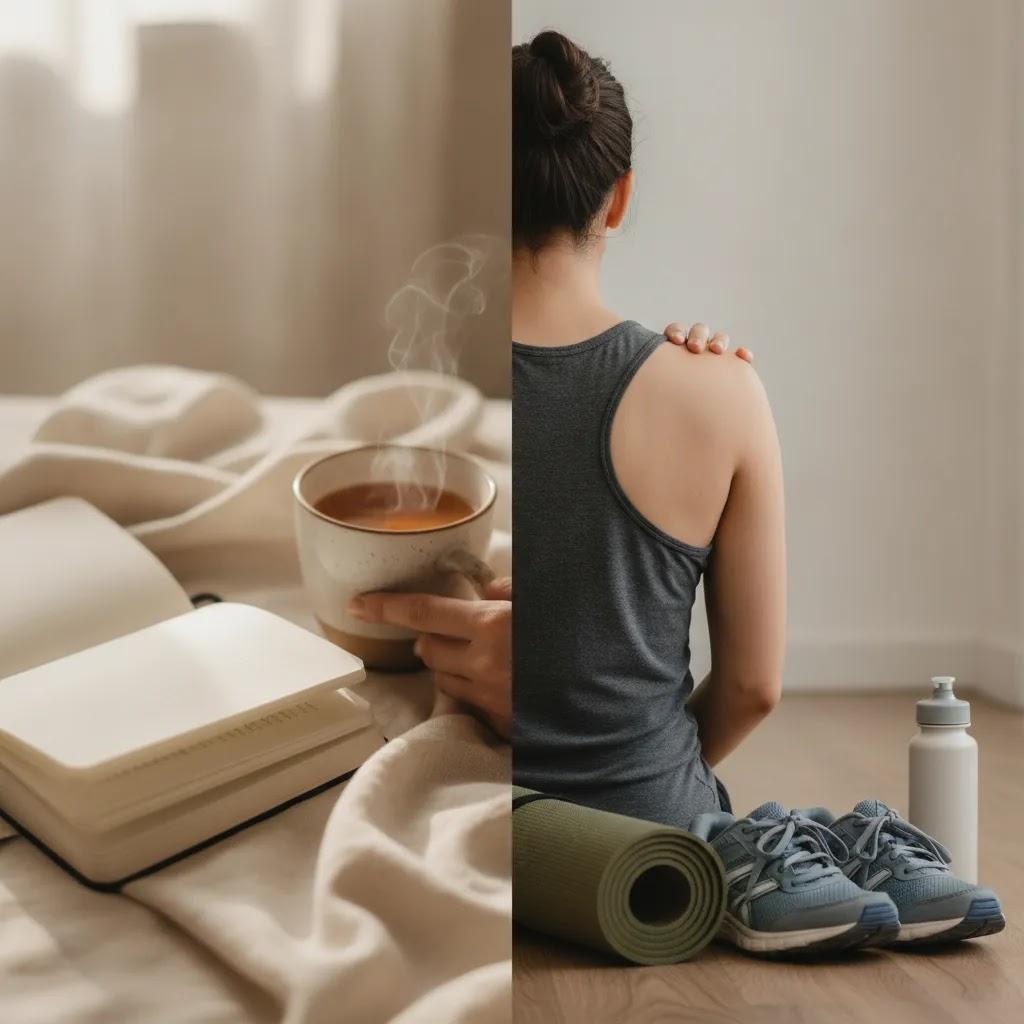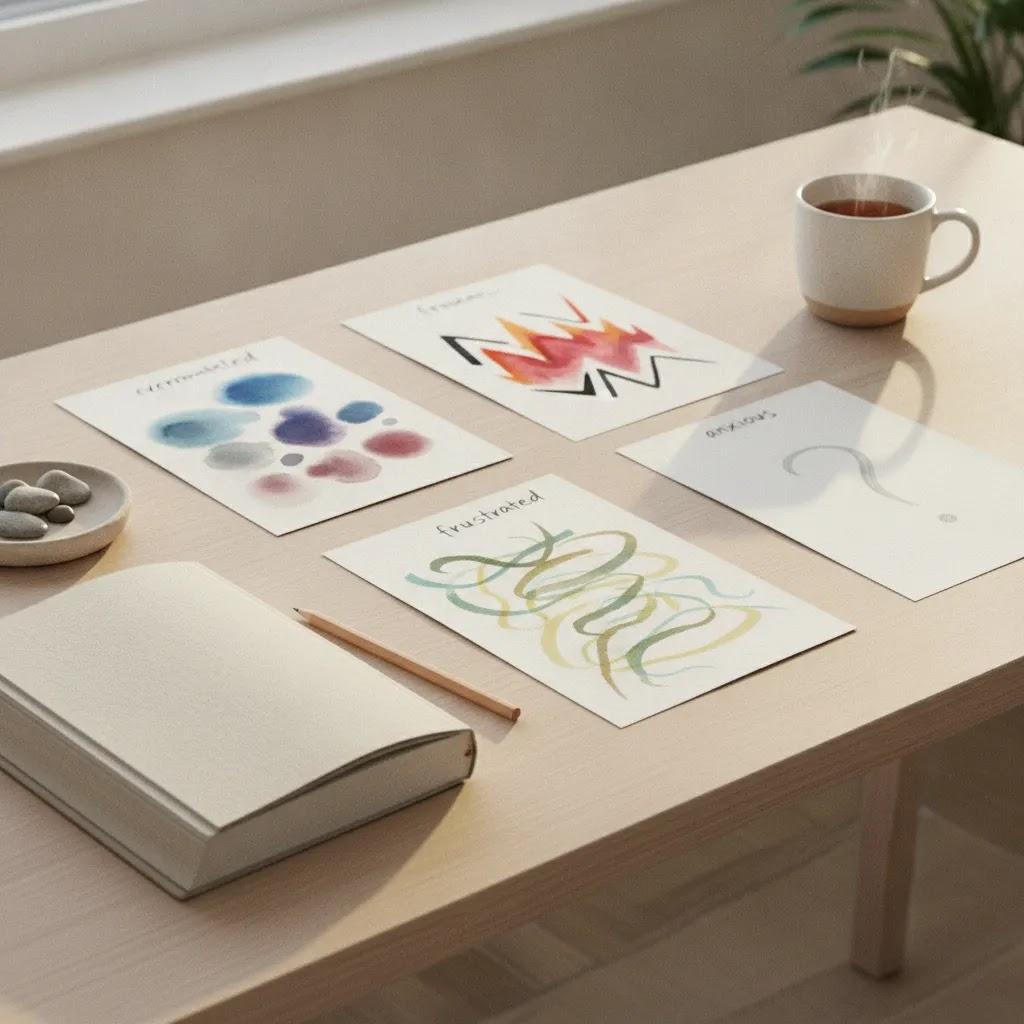
Coping works best when it matches the kind of stress you are in. If you feel activated, numb, overloaded, or hurt, different coping responses tend to help. This guide explains coping in simple terms and helps you choose one small action that fits your state.
Not all stress asks for the same kind of help. The coping method that steadies racing thoughts may feel useless when you are numb, overworked, grieving, or stretched thin by too many small demands at once.
This guide helps you sort coping by stress type so you can choose a response that fits the moment instead of forcing yourself into a one-size-fits-all routine. You will learn what coping means, which mechanisms tend to help different forms of stress, and how to build a simple personal system in about 20 to 30 minutes of reading and reflection. Difficulty level: Beginner. If you want a broader home base for this topic, you can also explore Anxiety Stress & Emotional Wellness.
What you'll need
- 10 to 15 quiet minutes
- A notes app, sheet of paper, or journal
- A simple stress rating from 1 to 10
- Willingness to try one small action, not a perfect plan
- Optional: drawing materials or a guided creative tool if words feel hard
What coping actually means
Coping is the set of thoughts, actions, habits, and supports you use to handle strain. Some coping methods help your body settle. Others reduce overload in your environment. Some help you express what feels stuck. Still others help you think clearly, ask for support, or recover after a hard stretch.
The useful question is not “what is the best coping technique?” Instead, ask: “Best for what kind of stress, in what state, and at what level of energy?” If your mind is racing, reflective writing may be too demanding. If you are shut down, a calming exercise may make you feel even flatter. Matching matters.
If you are still sorting out whether what you are feeling is stress at all, the guides on am i stressed and stress can help you put clearer language around the experience.
Types of coping: problem-focused, emotion-focused, and support-seeking
Many coping guides group coping into a few broad categories. You do not need these labels to cope well. Still, they can help you choose faster, especially when you feel foggy.
- Problem-focused coping: actions that try to change the situation causing stress. Examples include clarifying what is expected, making a plan, reducing tasks, having a logistical conversation, asking for a deadline change, or setting a boundary.
- Emotion-focused coping: actions that help you work with what you feel so it is more bearable. Examples include grounding, paced breathing, journaling, drawing, crying, taking a shower, listening to music, or naming what is happening without fixing it.
- Support-seeking coping: actions that bring in another person or system. Examples include asking someone to listen, requesting practical help, joining a support group, or reaching out to a qualified professional.
Coping categories and when they fit
These categories fit different moments. Problem-focused coping often helps when stress comes from solvable pressures, unclear expectations, or too much on your plate.
However, it can feel unhelpful when the stressor is not fixable right now. For example, grief, a health situation you cannot control, or waiting on someone else’s decision may need a different kind of care.
Emotion-focused coping can be especially useful when your nervous system is activated, your feelings are loud, or you are dealing with loss or relational pain. On the other hand, it may feel unhelpful when there is a simple practical fix you are avoiding. Regulating feelings is not the same as reducing the load.
Support-seeking coping tends to matter when stress feels too intense to carry alone, when you are stuck in the same loop, or when you need a kind of help you cannot provide yourself. Sometimes stress is less about personal strength and more about needing more hands, more time, or safer conditions.
How coping mechanisms add another layer
This guide’s mechanism approach works well with these categories. Mechanisms describe how a tool may help, such as downshifting, simplification, activation, expression, containment, or load reduction.
Meanwhile, the coping categories describe the direction of the response: changing the problem, caring for the feeling, or bringing in support. Using both lets you match the stress type and the kind of coping you actually need today.
A stress-type map for choosing coping

This guide organizes coping around mechanisms, not trends. A mechanism is the way a coping method may help. For example, slow breathing may support downshifting. A checklist may reduce uncertainty. A walk may discharge restlessness. A drawing prompt may help externalize a feeling when language feels blocked.
- Acute activated stress: racing thoughts, agitation, panic-like energy, urgency
- Chronic pressure stress: ongoing workload, caregiving strain, role overload, little recovery time
- Overwhelm from too many inputs: too many tasks, messages, choices, decisions, sensory load
- Shutdown or numb stress: flatness, heaviness, low drive, difficulty starting
- Relational or emotional pain stress: conflict, heartbreak, grief, rejection, loneliness
You may see yourself in more than one. That is common. Start with the stress type that feels most dominant today. If you want more help spotting your own patterns, the article on stressors can help you rank what tends to set stress off in the first place.
| Stress type | Common signs | Helpful coping mechanism | Example action |
|---|---|---|---|
| Acute activated stress | racing thoughts, agitation, panic-like energy, urgency | settling mechanisms | paced breathing, grounding with five sensory details, rhythmic movement, or a short walk |
| Chronic pressure stress | ongoing workload, caregiving strain, role overload, little recovery time | load-reduction mechanisms | lowering one demand, adding a recovery cue between tasks, protecting sleep, or asking for practical help |
| Overwhelm from too many inputs | too many tasks, messages, choices, decisions, sensory load | simplification mechanisms | make a three-item list, silence notifications for a block of time, reduce choices, or sort tasks into now, later, and not mine |
| Shutdown or numb stress | flatness, heaviness, low drive, difficulty starting | activation mechanisms | light movement, warm tea, music, sunlight, a shower, or one finishable task |
| Relational or emotional pain stress | conflict, heartbreak, grief, rejection, loneliness | containment and expression mechanisms | talk to a trusted person, write a short unsent note, draw the feeling, or create a boundary ritual |
Stress duration and intensity: acute, episodic acute, and chronic
Stress type is one part of the match. Duration is another. A coping method that helps for a short spike may not be enough for a months-long strain.
If you keep using short-term tools for long-term stress, you can end up blaming yourself. In reality, your system may never get a real chance to recover.
- Acute stress: a short-term spike. It may last minutes to days, often tied to a specific event, decision, or scare. The stress signal can be intense, but it is not constant.
- Episodic acute stress: repeated spikes. You may feel like you are always rushing, always dealing with another urgent situation, or always recovering from the last surge.
- Chronic stress: a longer ongoing strain, often weeks to months or more. It may come from workload, finances, caregiving, conflict, health concerns, or a persistent lack of safety or rest.
How coping changes with stress duration
Duration changes what usually helps. For acute stress, downshift tools can matter most, such as grounding, paced breathing, a short walk, or a brief containment practice. The goal is to reduce intensity so you can think, communicate, or take the next step.
For episodic acute stress, you often need two layers: a short-term reset for each spike, and a pattern change that reduces how often the spikes happen. That pattern change may include simplifying your schedule, building buffers, adjusting expectations, or strengthening your support system.
For chronic stress, coping often needs to include load reduction, boundaries, and recovery routines, not only regulation tools. You may still use grounding and expression. However, the biggest lever is often changing conditions so your body is not stuck in a steady drip of demand.
A simple coping check for acute vs chronic stress
A simple self-check can help: is this a one-off spike, a weekly pattern, or a months-long strain? If it is a one-off, prioritize steadiness and a small next action.
If it is a weekly pattern, look for one repeat trigger you can soften. If it is months-long, ask what would create real recovery time, even if it is modest, and what support would make the load more realistic. For a broad overview of how stress affects the body over time, the National Institute of Mental Health stress fact sheet may be helpful.
Step 1: Identify the kind of stress you are in
Step 1: Name the dominant stress pattern
Pause before picking a coping technique. Ask: does this feel like speed, pressure, overload, emptiness, or hurt? You do not need the perfect label. A rough match is enough.
One practical check is to notice where the stress shows up first. Fast breathing and restlessness often point to activation. Brain fog and task avoidance may point to overload or depletion. Emotional ache may point to relational stress. If your body is carrying much of the signal, resources in Nervous System & Body Healing may also feel relevant.
Signs of stress: body, mind, behavior, and when to get extra support
If you are not sure what stress type you are in, it can help to scan for signals in three places: body, mind, and behavior. You do not need every sign to “count” as stressed. Even a few can be enough to guide a better coping match.
Common physical signs
- Headaches, jaw clenching, or muscle tension (especially neck and shoulders)
- Sleep changes, trouble falling asleep, waking up early, or restless sleep
- Stomach discomfort, nausea, or appetite shifts
- Racing heart sensations, shallow breathing, or feeling keyed up
- Fatigue that does not match your day
Common mental and emotional signs
- Irritability, impatience, or feeling “on edge”
- Worry loops, racing thoughts, or difficulty turning your mind off
- Brain fog, concentration issues, or forgetfulness
- Feeling numb, flat, or detached
- Feeling unusually sensitive to criticism or conflict
Common behavioral signs
- Avoidance or procrastination, even on small tasks
- Withdrawing from people, canceling plans, or isolating more than usual
- Overchecking messages, doomscrolling, or seeking constant reassurance
- Changes in eating patterns, movement, or routine
- More conflict, snapping, or difficulty communicating calmly
Stress can be useful in short bursts. Acute stress may sharpen focus or help you respond to a real demand. However, stress tends to become too much when it lasts, keeps escalating, or starts reducing your ability to function, recover, sleep, or feel safe.
That is one reason matching coping to stress type and duration matters. A short downshift tool may help an acute spike. By contrast, long-term strain often needs real load reduction and support.
Extra support may be a safer next step if you notice ongoing sleep disruption, frequent panic-like episodes, chest pain, feeling out of control, using alcohol or drugs to get through the day, or any safety concerns including thoughts of self-harm. If symptoms feel medically urgent, contact local emergency services. For non-urgent but persistent distress, consider reaching out to a qualified licensed health professional for an assessment and personalized support. You can also review general stress signs and coping basics from the CDC.
Step 2: Match the stress type to the right mechanism

Step 2: Pair the problem with the kind of help it needs
This is the heart of the guide. Different stress types often respond to different coping mechanisms.
- Acute activated stress: use settling mechanisms. Try paced breathing, grounding with five sensory details, rhythmic movement, or a short walk. The goal is not deep insight. The goal is enough steadiness to think again.
- Chronic pressure stress: use load-reduction mechanisms. Try lowering one demand, adding a recovery cue between tasks, protecting sleep, or asking for practical help. Coping here is partly about changing conditions, not only changing feelings.
- Overwhelm from too many inputs: use simplification mechanisms. Make a three-item list, silence notifications for a block of time, reduce choices, or sort tasks into now, later, and not mine.
- Shutdown or numb stress: use activation mechanisms. Try light movement, warm tea, music, sunlight, a shower, or one finishable task that gives your system a small sense of completion.
- Relational or emotional pain stress: use containment and expression mechanisms. Talk to a trusted person, write a short unsent note, draw the feeling, or create a boundary ritual around the experience so it does not spill into everything.
For stress that is tightly linked with worry or fear, the article on how to reduce anxiety may give you additional ideas. If creative expression feels more approachable than talking, you might also explore what is art therapy.
Step 3: Choose one low-friction coping action
Step 3: Pick the smallest action you are likely to do
Many coping plans fail because they ask too much from a stressed mind. A useful coping choice is often small, specific, and easy to begin. Two minutes of breathing may be more helpful than promising yourself an hour of self-care you cannot face.
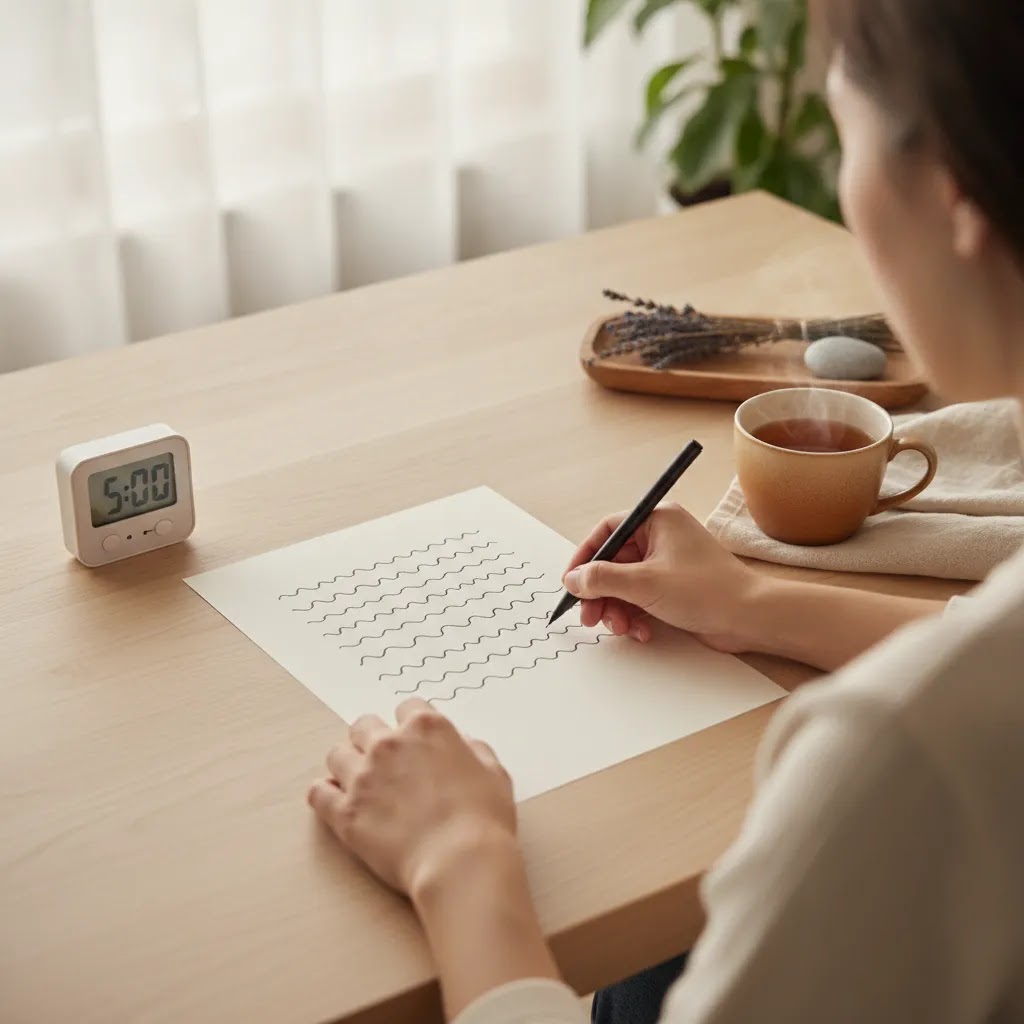
Try this formula: one stress type, one mechanism, one action, one short time limit. For example: “I am overloaded, so I will simplify by making a three-item list for five minutes.” Or “I am emotionally flooded, so I will contain it by drawing the feeling for ten minutes.”
If verbal coping feels hard, creative approaches may offer a gentler starting point. You can read more about that in art therapy singapore, explore art as therapy, and browse the wider Anxiety, Stress & Emotional Wellness section.
Step 4: Test whether the coping method is working
Step 4: Measure relief in a simple way
Coping does not need to make you feel amazing to count as useful. Ask whether the action changed your state by even 10 to 20 percent. Can you breathe a bit deeper? Focus a little better? Feel less flooded? Start the next task?
Use a quick before-and-after rating from 1 to 10. If the number does not shift, that does not mean you failed. It may mean the method did not fit the stress type, the stress is too intense for self-help alone, or a longer recovery period is needed.
Ultimately, you are looking for pattern recognition. Over time, this helps you build your own coping guide instead of copying someone else’s routine.
Step 5: Build a small coping plan you can repeat
Step 5: Turn one helpful response into a usable routine
Once a coping action helps, make it easier to repeat. Write down three personal matches:
- If I feel activated, I will use a settling action.
- If I feel overloaded, I will use a simplification action.
- If I feel flat or shut down, I will use a gentle activation action.
Keep the plan visible. Save it in your phone, put it on a sticky note, or tuck it into your journal. Stress narrows thinking. A pre-chosen plan lowers the effort needed in the moment.
If you notice your stress is frequent, escalating, or affecting sleep, work, eating, relationships, or safety, broader support may help alongside self-guided coping. Gentle self-help can be useful, but it is not the only path.
Pros and Cons
Strengths
- Stress-type matching makes coping more practical than generic advice.
- Beginners can start without learning complex mental health terms.
- The approach respects low-energy states where reflection feels hard.
- It allows both body-based and expressive coping, not only cognitive methods.
- It can reduce self-blame by showing why one technique may fail in one state and help in another.
Considerations
- Stress types can overlap, so the first coping choice may need some trial and error.
- Self-guided coping may not be enough for severe distress or urgent safety concerns.
- Progress may be gradual, especially if the main stressor is ongoing and external.
- Some people need support identifying whether they are activated, shut down, or overloaded.
A gentle tool that may help
If your stress becomes harder to explain in words, a creative structure may help you start without needing a perfect sentence first. Daily Lemons is built around guided emotional exploration with a soft, non-clinical tone, which may suit people who freeze up with traditional journaling or feel pressured by more directive wellness tools. Its approach leans toward short, guided, nonverbal or lightly verbal expression rather than heavy analysis.
That can be especially relevant for stress types that need containment, sensory focus, or gentle externalization. If you are comparing approaches, you might browse the broader Anxiety, Stress & Emotional Wellness resources, read about stress, or check the self-check support in am i stressed. If your nervous system feels keyed up or shut down, the Nervous System & Body Healing category may also help you find a more body-based entry point.
Common mistakes to avoid
- Using calming tools for every kind of stress. If your main problem is overload, better boundaries or fewer inputs may help more than another breathing exercise.
- Choosing coping methods that are too hard to start. A stressed brain usually does better with short, concrete actions.
- Judging a method too quickly. Some coping techniques help only a little at first. Small shifts still matter.
- Ignoring practical stressors. Some stress improves only when schedules, expectations, finances, or conflict patterns are addressed.
- Waiting until you are overwhelmed to decide what helps. A simple plan made ahead of time is easier to use.
What to do next
If this guide helped you sort your current stress, the next useful step is to learn your repeat patterns. You might start by identifying your main stressors, then check whether your experience fits common patterns of stress or anxiety. If your body feels like the loudest part of the experience, body-based regulation resources may be a better next read than thought-based advice. If words still feel blocked, creative reflection can be a gentle bridge. You may also want to read about art therapy benefits if expressive coping feels like a good fit.
Frequently Asked Questions
What is coping in simple terms?
Coping means the ways you respond to strain, pressure, or emotional difficulty. That can include calming your body, reducing demands, asking for support, expressing feelings, resting, or changing how you approach a problem. Good coping is not about looking calm from the outside. It is about using responses that may help you function, recover, or feel more steady.
What is the meaning of coping?
The meaning of coping is responding to stress or emotional difficulty in a way that helps you get through it. Coping can be internal, such as steadying your breathing or reframing a thought, and it can be external, such as reducing your workload, setting a boundary, or asking for support. Coping is not one technique. It is the overall set of responses you use when life feels heavier than usual.
What is coping with life?
Coping with life usually means finding workable ways to handle everyday demands, unexpected events, and emotional ups and downs without getting completely flooded or shut down. That can include basic recovery habits like sleep and food, practical problem-solving like planning and boundaries, and emotional skills like naming feelings, expressing them safely, and reaching out to other people. The goal is typically steadiness and functioning, not being cheerful all the time.
What does coping mean in feelings?
In feelings, coping means relating to an emotion in a way that helps you carry it. Sometimes that is calming your body so the emotion is less intense. Sometimes it is letting the feeling move through you by talking, writing, crying, or creating something. Sometimes it is containment, giving the feeling a place and time so it does not take over your whole day.
Is coping a good or bad thing?
Coping is usually neutral. It is simply what you do in response to stress. Some coping is helpful, such as resting, problem-solving, seeking support, or expressing feelings. Some coping can become unhelpful if it only numbs you short-term while making life harder later, such as constant avoidance or using substances to get through the day. If you are unsure, one gentle test is whether the coping method supports your functioning and recovery over time, not only your relief in the next few minutes.
Is there one best coping technique for everyone?
No. A coping method that helps with racing thoughts may not help with numbness, grief, or decision overload. Fit matters. The most useful technique often depends on whether your stress is acute, ongoing, practical, emotional, body-based, or mixed. That is why matching coping to stress type tends to work better than collecting random tips.
How do beginners start coping better?
Start small. Identify the dominant stress type, choose one matching mechanism, and try one low-effort action for a short period. Track whether it helped even a little. Beginners often do better with simple actions like grounding, task reduction, movement, or brief expression than with large routines that ask for a lot of energy and motivation.
What if coping techniques do not seem to work?
If nothing changes, the coping method may not match the stress type, or the stress level may be too high for self-guided support alone. Ongoing sleep disruption, panic, hopelessness, inability to function, or safety concerns deserve more support. In those cases, reaching out to a qualified health professional or local support service may be the safer next step.
Can coping include creative activities?
Yes. Creative coping can help some people externalize feelings, reduce pressure to explain everything in words, and create a sense of structure during emotional overload. Drawing, color work, collage, or simple mark-making may be especially approachable when journaling feels too verbal or formal. The goal is expression and regulation, not artistic skill.
What is the difference between coping and avoiding?
Coping usually helps you face, regulate, or move through stress in some way. Avoidance often helps only briefly while making the problem harder later. The line can be subtle. A short break may be healthy coping. Constant numbing, scrolling, or postponing difficult tasks may offer relief for a moment while increasing stress over time.
How long does it take for coping habits to help?
Some coping methods may help within minutes, especially grounding or sensory-based tools. Others, such as boundary changes, better sleep routines, or repeated emotional processing, may take longer. Helpful change is often uneven. You may notice earlier signs like less reactivity, slightly better focus, or a faster return to baseline rather than dramatic relief all at once.
Can coping solve the cause of stress?
Sometimes it can help you address the cause, especially if the coping method includes problem-solving, communication, or reducing demands. Sometimes it mainly helps you carry the stress more safely while the situation is still ongoing. If the source is structural, such as workload, caregiving strain, finances, or conflict, practical support may matter as much as emotional tools.
Key Takeaways
- Coping works best when it matches the type of stress you are in.
- Acute stress, overload, numbness, and emotional pain often need different mechanisms.
- Small, low-friction actions are usually easier to use than ambitious self-care plans.
- A coping method can be useful even if it improves your state only a little.
- If stress is severe, persistent, or tied to safety concerns, self-help alone may not be enough.
Conclusion
Coping is easier to trust when it feels fitted to your real experience. You do not need a perfect routine or a dramatic breakthrough. You need a response that meets the kind of stress you are in, asks only a little of you, and gives your mind or body a bit more room.
That is the value of sorting coping by stress type. It turns a vague idea into something you can actually use. If you want a softer next step, you can explore Daily Lemons’ emotional wellness resources, read more about stress patterns, or try a creative approach if words feel too heavy right now. A small, workable response still counts.
This article is for educational purposes only and does not replace medical, mental health, or crisis support. Coping methods may help with everyday stress, but they are not a guarantee of relief and may not be sufficient for severe or persistent distress. If you feel unable to stay safe, are in immediate danger, or need urgent help, contact local emergency services or an appropriate crisis resource right away. For formal care decisions, consult a qualified licensed professional and verify current credentials, scope of practice, and service details directly.