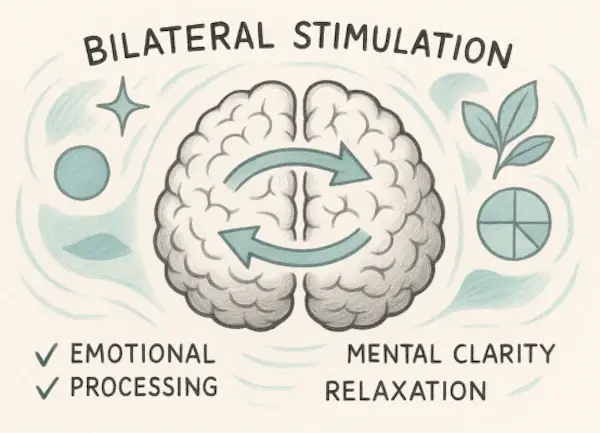
In the realm of mental health, where trauma often leaves indelible marks on individuals' lives, innovative therapeutic approaches are critical. Among these, art therapy emerges as a profound method that not only provides solace but actively engages with the neurological processes that underlie healing. A key component to this approach is the concept of bilateral stimulation, which plays a pivotal role in addressing trauma and enhancing mental health.
Art therapy, an expressive form of treatment, creates a safe space for individuals to explore traumatic memories through symbols and artistic expressions. These symbols serve as conduits between emotional experiences and linguistic communication, facilitating a deeper understanding and integration of traumatic events (Gantt & Tinnin, 2007; Morgan & Johnson, 1995). An essential element of this process is bilateral stimulation—a mechanism hypothesized by Talwar (2007) to involve the engagement of both brain hemispheres, particularly through the integrative and planning functions of the prefrontal cortex.
By stimulating both hemispheres of the brain, bilateral stimulation fosters a dynamic interaction between the rational, sequential processing of the left hemisphere and the holistic, emotional insights of the right hemisphere. This interplay aids in the creation of coherent narratives from fragmented traumatic experiences, enabling their complete processing and storage in long-term memory. The result is not just a recollection of trauma, but rather a transformation—a reconfiguration of past events into narratives that can be understood and integrated into the broader context of one's life.
Several therapeutic practices incorporate bilateral stimulation, offering varied pathways to healing. Eye Movement Desensitization and Reprocessing (EMDR), for instance, is renowned for its use of bilateral eye movements to desensitize traumatic memories. Similarly, art therapy utilizes the bilateral engagement inherent in creative processes—drawing, painting, or sculpting—to facilitate the same therapeutic outcomes. As clients engage in creating art, their hands alternately stimulate neural pathways across hemispheres, promoting integration and emotional release.
Moreover, therapies such as rhythmic drumming and dance inherently involve bilateral movements, further illustrating the versatility and effectiveness of this approach. These activities naturally foster synchronization between mind and body, encouraging a sense of groundedness and coherence essential to overcoming trauma.
Examples of the Efficacy of Bilateral Stimulation
Consider the case of Sarah, who had endured years of traumatic events. Despite numerous CBT sessions, she found herself trapped in cycles of recurring nightmares and heightened anxiety. It was not until she began EMDR therapy that she experienced significant relief. By following a therapist's guided eye movements, Sarah engaged both hemispheres of her brain, facilitating a profound reprocessing of her traumatic memories. This bilateral stimulation enabled her to desensitize the emotional charge associated with her past, leading to decreased anxiety and the cessation of her nightmares—an outcome that eluded her through talk therapy alone.
Similarly, Michael, a veteran struggling with PTSD, found his progress plateaued during traditional therapy sessions, as recounting his experiences often retraumatized rather than relieved him. Through art therapy, specifically utilizing bilateral hand movements in painting, he accessed a non-verbal form of expression that allowed him to process emotions previously locked away. The rhythmic motion of brush strokes across the canvas engaged both sides of his brain, helping him integrate traumatic memories into his conscious narrative without the distress that verbal recounting provoked.
These examples underscore the potent efficacy of bilateral stimulation in trauma therapy. Where words find limits, the integrative power of engaging both brain hemispheres opens new pathways to healing, offering hope and resolution to those for whom conventional therapies alone have proven insufficient.