Meditation Singapore: Classes, Studios, Retreats (2026)
Some people search for meditation in Singapore because they want a quieter mind. Others are simply tired, overstimulated, or curious about whether a guided class might feel easier than trying to sit alone with an app. This guide is for that search. It focuses on where meditation usually shows up in Singapore, how classes, studios, and retreats tend to differ, and what to check before you book. If you are still mapping the wider emotional support picture, our Art Therapy Singapore hub can help you explore related paths at your own pace. You do not need to pick one perfect option right away. A clear shortlist is often enough to begin.
Top picks at a glance
If you are choosing between a class, a studio membership, and a retreat, start with your energy level rather than the most impressive-looking option.
- Best for total beginners: Short guided group classes with an instructor who explains posture, breathing, and what to expect.
- Best for stressed professionals: Weekly evening sessions near MRT-accessible neighborhoods, especially if you are already noticing job stress singapore patterns.
- Best for structure: Studios offering beginner series or multi-week mindfulness programs.
- Best for deeper immersion: Weekend or residential retreats with clear silence, schedule, and accommodation details.
- Best for a gentler first step: Community meditation circles, wellness centers, or mindfulness workshops connected to broader mental wellness singapore resources.
Where meditation shows up in Singapore
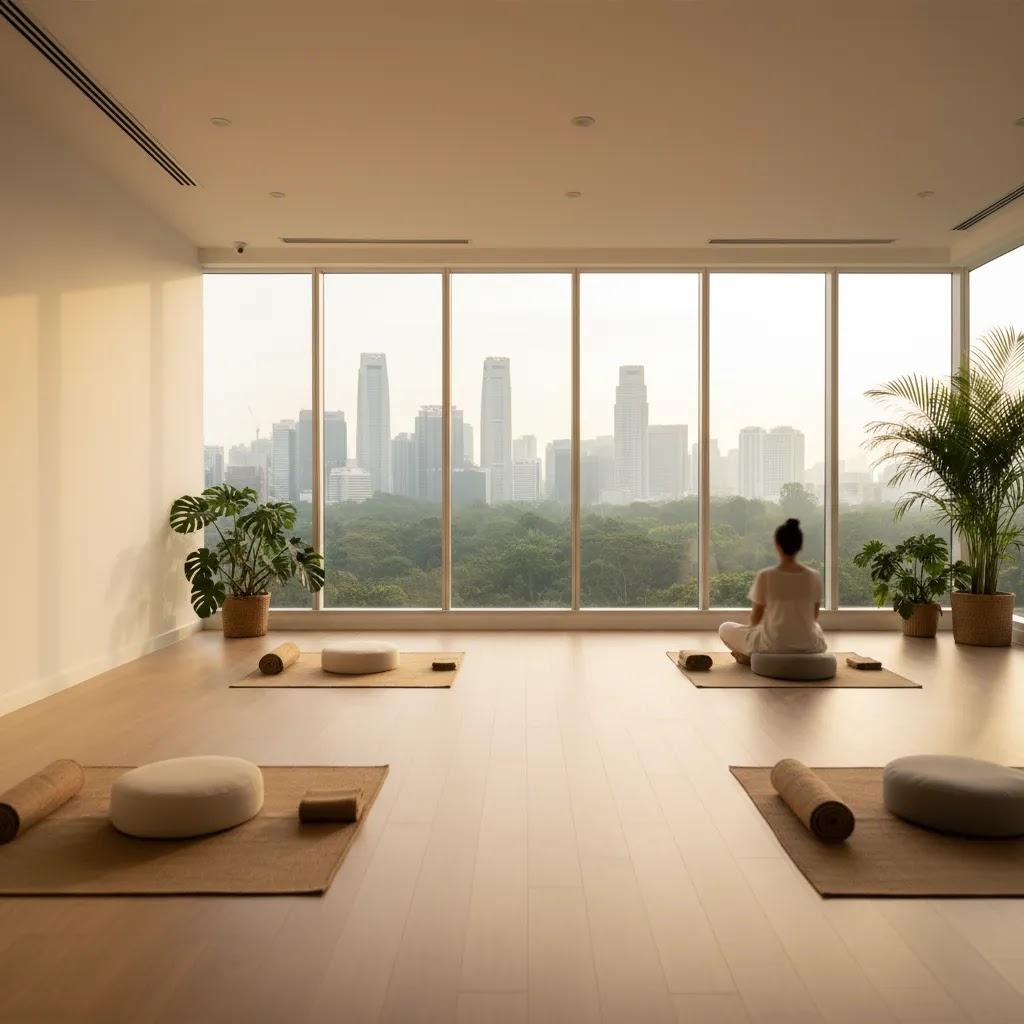
Meditation in Singapore is not one single thing. You will usually find it in four kinds of places: dedicated meditation centers, yoga or wellness studios, retreat organizers, and community or spiritual spaces. Each can feel quite different.
Dedicated centers often offer the clearest teaching line. That may mean mindfulness, Zen, Vipassana, or secular guided practice. Yoga and wellness studios tend to blend meditation with breathwork, movement, or relaxation classes. Retreat organizers focus on longer sessions and immersive schedules. Community spaces may be lower-cost, but they can vary more in teaching style and consistency.
If your search is really about stress, sleep, overwhelm, or emotional regulation, it may help to read this topic alongside Anxiety, Stress & Emotional Wellness and our broader guide to stress levels in singapore. Meditation can be helpful for some people, but the right format matters as much as the idea itself.
Types of meditation you will commonly find in Singapore (and how they feel)
Here’s the thing: two sessions can both be called “meditation” and feel completely different. Before you book, it helps to know what style is being taught and what a first session typically looks like. This is not about choosing the “best” tradition. It is about choosing something you can actually tolerate and return to.
Buddhist meditation (temple or tradition-linked settings)
You may find classes that include a short talk, guided sitting, and sometimes chanting or bowing. The practice itself may be breath-based, compassion-based, or open awareness, depending on the lineage. A first session often includes instructions on posture and attention, plus a period of silence.
What many people overlook is the devotional layer. Some groups include chanting, offerings, or ritual elements. That can feel grounding for some people and uncomfortable for others. A beginner-friendly organizer should be able to tell you clearly what is included so you can opt in without guessing.
Zen-style sitting (often simpler, sometimes more silent)
Zen-oriented sessions often emphasize steady posture and longer periods of quiet sitting. You might receive brief instructions, then sit in silence with minimal guidance. Some formats include walking meditation between sits.
If you are drawn to simplicity and discipline, this can feel clean and stabilizing. If you are already anxious or self-critical, longer silence with fewer prompts may feel exposing at first.
Vipassana-style practice (insight-oriented, often structured)
Vipassana is commonly described as training attention and observing experience clearly, often through breath awareness and body sensations. In a first session, you might get specific technique instructions, then practice quietly, sometimes with a short Q&A afterward.
This style can feel practical and methodical. It can also bring up a lot of internal noise if you are new, because the practice asks you to notice what is already there rather than cover it with music or constant guidance.
Secular mindfulness (common in studios and courses)
Many Singapore meditation offerings are secular mindfulness. A first class often includes a guided breath practice, a body scan, and a short reflection. The teaching tone is usually simple and everyday, and the goal is often to build steadier attention and more awareness of stress patterns.
If you want something straightforward without spiritual framing, this is often the easiest entry point.
Mantra-based meditation (repetition as the anchor)
Mantra-based sessions use repetition, sometimes silently, sometimes aloud, as a stabilizing point for attention. A first session usually involves learning the phrase or sound, then practicing repetition for a set period. Some settings include devotional language or chanting, while others keep it more neutral.
If your mind races and you do better with a clear object to hold onto, repetition can feel more supportive than open silence. If you feel uneasy around chanting, ask how the session is run before you arrive.
Breathwork-led meditation (more “felt” and body-forward)
Some classes blend meditation with breathwork techniques that are more active than simple breath awareness. A first session may include instructor-led breathing patterns, music, and a longer rest period at the end. This can feel calming, energizing, emotional, or all three.
Consider this: active breathwork can feel intense for some people. If you are prone to panic feelings, dizziness, or feeling easily overwhelmed, it may help to start with gentler, slower guidance and ask the instructor what the breathing intensity is like.
How to choose a style based on what you actually need
From a practical standpoint, “best meditation singapore” is usually code for “what will help me with what I am dealing with right now.” A few fit signals can help you choose without expecting guaranteed outcomes:
- Stress and constant stimulation: Many people prefer secular mindfulness or gentle guided classes at first, especially when the session includes clear prompts and a predictable structure.
- Sleep and evening unwind: Look for shorter, quieter sessions with a calm pace and an emphasis on settling the body. If a listing sounds energizing, it may not match your timing.
- Racing thoughts: Mantra-based practice, structured mindfulness, or teacher-led guidance can feel easier than long open silence in the beginning.
- Emotional overwhelm: A shorter class with options to pause, adjust posture, or ask questions may feel safer than an intensive silent format. If you are raw, choosing “less intense but consistent” is often the kinder move.
The reality is that the label matters less than transparency. You deserve to know whether a session includes chanting, long silence, philosophical teaching, active breathing, or a strict container, before you commit.
Classes, studios, and retreats compared
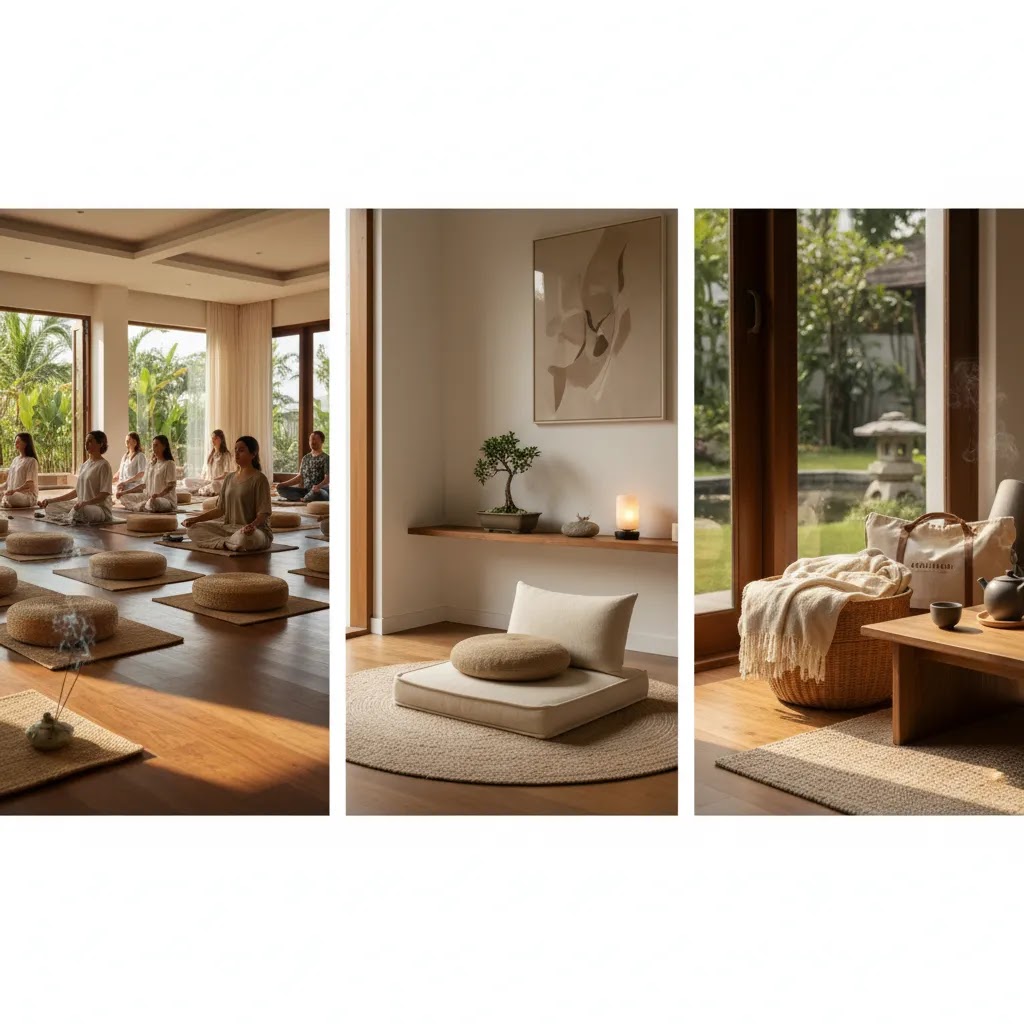
A meditation class is usually the most accessible entry point. You book a single session or a short series, meet an instructor, and try one method for 30 to 90 minutes. This suits people who want guidance without a big commitment.
A studio setup often means recurring classes, memberships, or bundled programs. That can be useful if you know consistency helps you more than one-off inspiration. It may also suit people already exploring mindfulness singapore options and wanting a regular place to practice.
A retreat is different. It asks for more time, more quiet, and sometimes more emotional space. A day retreat may feel restorative. A silent or residential retreat may feel intense, especially if you are brand new or currently stretched thin. Longer is not always better. The best choice is often the one you can realistically absorb.
Cost also tends to rise with duration, teacher profile, and venue type. Single classes may be the easiest low-risk trial. Structured courses can offer better continuity. Retreats can offer depth, but they may also require more planning, travel, and downtime afterward.
What to expect at a retreat or half-day course (silence, schedule, and intensity)
Retreat descriptions can sound peaceful, but the container is often more specific than people expect. Even a half-day course can include long stretches of quiet and a surprisingly full schedule. Knowing the usual “rules of the room” helps you book something aligned with your current capacity.
Common retreat features (even for day formats)
- Silence: Some retreats are fully silent, some are partially silent (for example, silence during practice blocks), and some are quiet but conversational. If silence is required, it should be stated clearly.
- Schedule density: Many retreats run on a structured timetable: sitting meditation, walking meditation, short breaks, and talks. You may be practicing for many hours across the day, even if each block is “only” 30 to 60 minutes.
- Phone policies and “digital detox” rules: Digital detox events may ask you to keep your phone away during the session, or for the full day. Some residential retreats restrict phone use more strictly. This can feel relieving, or it can feel stressful if you need to be reachable.
- Guidance and Q&A access: Some retreats include regular teaching and time for questions. Others are mostly self-practice with minimal interaction. If you are new, access to questions can be a major safety and comfort factor.
- Movement options: Some retreats include gentle movement, stretching, or yoga. Others are sitting and walking only. If your body struggles with long sitting, check whether movement is built in.
Read this before you book
Think of it this way: retreats are not just about meditation. They are also about logistics, boundaries, and what happens if you do not feel okay mid-way through. Before booking, it can help to check:
- Meals and dietary needs: Are meals included, and can they accommodate common dietary restrictions?
- Accommodation details (if residential): Room type, shared bathrooms, lights-out expectations, and whether bedding is provided.
- Accessibility: Stair access, walking requirements, seating options, and whether chairs are available.
- Leaving early policy: Is it allowed, and how is it handled? Some retreats strongly discourage it. For a first retreat, flexibility matters.
- Support if someone feels emotionally unsettled: Is there a clear point of contact, and is guidance available if a participant feels overwhelmed during silence?
A gentle risk note for intensive practice
Longer silence and intensive practice can feel activating for some people, especially if you are already under pressure, grieving, or not sleeping well. That does not mean you are “bad at meditation.” It just means intensity has effects. For many beginners, a half-day course or a day retreat is a safer first test than a multi-day silent retreat, because you can learn how your mind and body respond without committing to a long container.
Five common meditation options to look for
1. Beginner guided meditation classes
These are often the easiest place to start. Look for classes that explicitly say beginner-friendly, guided, or introductory. The strongest options usually explain what the session includes, whether sitting on the floor is required, and how long silent periods last.
Good for: First-timers, anxious beginners, people who want clear instruction.
Things to know: A class that sounds simple on paper can still feel vulnerable in practice. A warm teacher matters.
2. Mindfulness-based courses
These are often multi-week programs built around breath awareness, body scan work, and daily home practice. If you have come across searches like mindful meditation guided or mindful body scan meditation, this is the format most likely to include them.
Good for: People who prefer structure, repeat practice, and a gradual learning curve.
Things to know: These programs often ask for homework or daily practice. That helps some people and frustrates others.
3. Studio meditation sessions inside broader wellness spaces
Some Singapore studios place meditation alongside yoga, sound sessions, breathwork, or recovery classes. That can be useful if stillness alone feels hard and you want a softer on-ramp through movement or sensory support.
Good for: People who dislike rigid settings, want flexibility, or are comparing meditation with other stress relief activities singapore readers often look for.
Things to know: Studio quality varies. Some classes are meditation-first. Others are mostly relaxation with a short quiet ending.
4. Community or donation-based meditation groups
These may be held in community venues, non-profit spaces, or spiritual organizations. They can lower the financial barrier and make trying meditation feel less formal.
Good for: Budget-conscious readers, exploratory visits, people seeking a simple recurring practice.
Things to know: Lower cost does not always mean lower quality, but session style, accessibility, and teacher training can be less standardized.
5. Day retreats and residential retreats
Retreats can range from a half-day digital detox style session to several days of silence. In Singapore, shorter urban retreats may be easier to try before considering overnight or destination formats.
Good for: People wanting deeper immersion, fewer distractions, and a dedicated pause.
Things to know: If you are emotionally raw, sleep-deprived, or overwhelmed, a long silent retreat may feel like too much too soon. Starting smaller is often wiser.
Finding free or low-cost meditation in Singapore (without guessing)
If cost is a barrier, you are not stuck. Singapore has a mix of free, donation-based, and low-cost options, but the experience can vary more. A little screening upfront helps you avoid walking into something that feels mismatched.
Where free or donation-based sessions often show up
- Community and spiritual centers: These may offer weekly practice sits, beginner introductions, or guided sessions that are free or donation-based.
- Intro events and open houses: Some organizers run free first sessions or low-cost introductions as a way to help new people try the method.
- Lunchtime or after-work sessions: Shorter sits sometimes appear at convenient times because they are designed for busy schedules and lower commitment.
- Group practice circles: These can be simple and consistent, sometimes led by volunteers or rotating facilitators.
What to check before you show up
What many people overlook is that low-cost does not always mean casual. Some groups run a very tight container. Before you go, it helps to confirm:
- Registration requirements: Some sessions require sign-up even if they are free, especially if seating is limited.
- Punctuality rules: Some places lock doors after a start time to protect silence.
- Attire and seating expectations: Comfortable clothing is usually enough, but some venues ask for modest attire. Ask whether chairs are available if you need them.
- Newcomer instructions: Look for clear guidance on where to sit, whether to bow or chant, and whether questions are welcomed at the end.
Tradeoffs versus paid classes (and how to screen for fit)
Free or donation-based groups can be excellent, but they can be less standardized. You might see larger groups, fewer beginner explanations, or a format that is more tradition-specific. Paid classes often include clearer onboarding, a smaller group, and more time for questions, though that is not guaranteed.
To screen for beginner fit, reuse the same checklist from “How to choose well in Singapore”: can you tell the session length, how much guidance is provided, how long silent periods last, and whether the style is secular or tradition-linked? If the listing is vague, it is reasonable to ask for clarification before you commit your evening.
Cost expectations (in SGD) for common formats
Prices move based on venue and teacher, but these ranges are common enough to help you plan:
- Free or donation-based group sits: $0 to $20 suggested donation is a common range.
- Drop-in classes: Often around $20 to $50 per session, depending on location and class length.
- Course bundles: Multi-week programs are commonly priced as a package, often around $150 to $500+ depending on total hours and what is included.
- Day retreats or half-day courses: Often around $80 to $250+, sometimes including tea or a meal, sometimes not.
- Residential retreats: These can range widely once accommodation and meals are included, often from a few hundred dollars to $1,000+ depending on duration and venue.
Consider this: the listed price does not always include what you actually need. Check whether cushions, meals, printed materials, or follow-up sessions are included, and whether refunds or rescheduling are possible.
Pros and Cons
Strengths
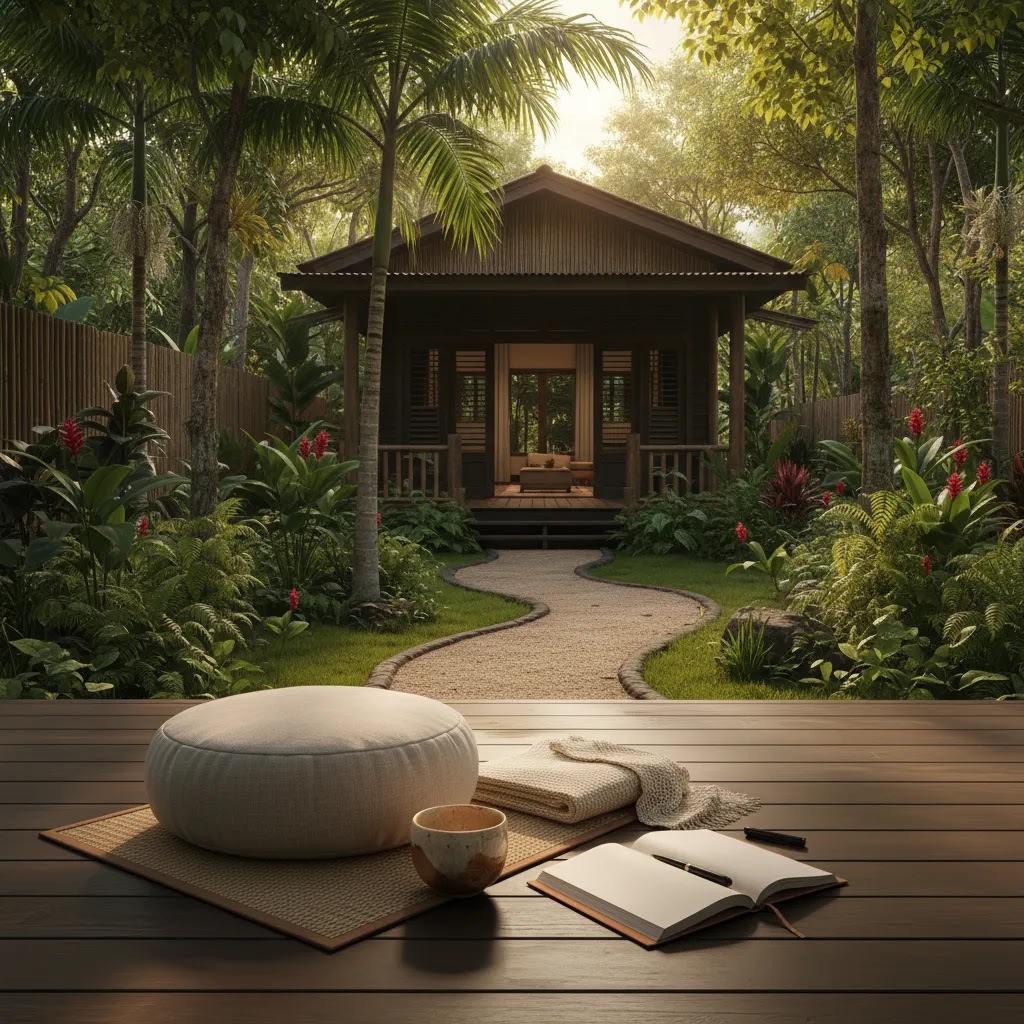
- Meditation options in Singapore are varied, so you can usually choose between secular, spiritual, group, private, short-form, and retreat formats.
- Beginner classes often provide more support than trying to learn from videos alone.
- Urban studios and evening schedules can make regular practice more realistic for working adults.
- Retreat formats may offer a stronger sense of immersion if everyday life feels noisy or fragmented.
- Meditation can sit well alongside broader self-reflection paths, including mental health singapore education and creative practices such as art therapy singapore.
Considerations
- Not every class labeled meditation offers the same depth, teaching quality, or level of guidance.
- Some beginners feel discouraged if the first session includes long silent periods without enough preparation.
- Retreats may be expensive once venue, meals, and time off work are factored in.
- A highly structured meditation setting may not suit every nervous system, especially during periods of acute stress or grief.
Who this search may suit
This search usually fits readers who want a calmer, more intentional way to handle mental overload, but do not want to jump straight into a highly clinical setting. It may also suit people who have tried journaling or self-help content and found it hard to stay with. If words feel crowded, meditation can sometimes create a little space around them.
It may be especially relevant if you are exploring emotional support options more broadly, including our resources on Art Therapy Singapore and the cross-topic article on benefits of art therapy for adults. Different paths help in different ways.
A gentle way to keep exploring
DailyLemons is built for people who do not always process feelings through neat explanations. If meditation interests you but you also want softer, creative ways to notice what is happening inside, our broader resources may help you compare what feels supportive. You might explore meditation alongside mindfulness, emotional wellness, and expressive practices rather than treating it as the only path. If sitting still feels difficult, that does not mean you are doing anything wrong. It may simply mean another doorway fits better right now.
How to choose well in Singapore
Start with the format, not the brand. Ask yourself whether you want one guided class, a four to eight week program, or a retreat. A single class is easier if you are testing comfort. A course is better if you want progression. A retreat works best if you are ready to make space around the experience.
Then check the teaching style. Some places teach secular mindfulness. Others come from Buddhist, Zen, or mixed wellness traditions. None is automatically better. What matters is clarity. You should be able to understand what kind of meditation is being taught and whether that aligns with what you are looking for.
Pay attention to beginner fit. Useful signals include clear session length, posture options, guidance level, silence expectations, class size, and whether questions are welcomed. If the listing is vague, ask before booking.
Review practical access. In Singapore, travel time matters more than many people expect. A beautiful studio across the island may not become a real routine. Check MRT access, evening availability, and cancellation terms. Retreat logistics matter too. Look for start and end times, accommodation details, meal information, and whether silence is optional or required.
Finally, notice your own response. A meditation option can be respected and still not feel right for you. If you leave a trial class feeling grounded, curious, or gently tired, that is different from feeling flooded, pressured, or ashamed for not being able to “clear your mind.” Good teaching usually leaves room for being human.
Frequently Asked Questions
What is meditation in Singapore usually like for beginners?
For beginners, meditation in Singapore often starts with a guided group session lasting 30 to 60 minutes. An instructor may walk you through breathing, posture, and where to place attention. Some classes include a short body scan or gentle reflection at the end. The best beginner options usually explain that wandering thoughts are normal, not a failure.
Are meditation studios and mindfulness courses the same thing?
Not always. A studio may offer drop-in sessions with different teachers and styles, while a mindfulness course usually follows a set structure over several weeks. If you want flexibility, a studio may suit you better. If you want consistency and a clearer learning path, a course may feel easier to build into your week.
How much do meditation classes in Singapore usually cost?
Pricing varies by venue, teacher, and format. Single classes are often the lowest-commitment option, while multi-week courses and retreats cost more because they include more guided time and, in some cases, venue or accommodation costs. Always check whether the listed fee covers materials, meals, or follow-up sessions before you book.
What should I bring to a meditation class?
Most classes only require comfortable clothing and a willingness to sit quietly for a period of time. Some places provide cushions, mats, or chairs. If you have back, knee, or sensory comfort needs, it is reasonable to ask what seating options are available. A beginner-friendly space should be able to answer that clearly.
Do I need to follow a spiritual tradition to attend?
No. Many meditation options in Singapore are secular and focus on attention, breathing, and self-awareness. Others are rooted in spiritual traditions. The useful question is whether the teaching context is made clear upfront. You should not have to guess whether a session is devotional, philosophical, or purely skills-based.
Is a retreat better than weekly classes?
Not necessarily. A retreat offers more immersion, but that does not make it the better first step for everyone. Weekly classes are often more sustainable and easier to integrate into daily life. If you are new to meditation, a retreat may be more helpful after you already know how you respond to guided silence and extended practice.
What if meditation makes me feel restless instead of calm?
That can happen. Meditation does not always feel peaceful right away, especially if you are tired, stressed, or unused to slowing down. Sometimes a shorter guided class, a movement-based mindfulness session, or another reflective approach fits better. You can also explore adjacent resources such as nervous system education, breath-based practices, or creative expression.
Can meditation replace other kinds of support?
Meditation may be one helpful practice, but it does not replace every kind of support. If you are dealing with significant distress, relationship strain, grief, or ongoing emotional overwhelm, you may want a broader mix of care. Meditation can sit alongside community support, counseling, medical care, or creative approaches depending on your situation.
How do I know if a meditation teacher is credible?
Look for clear teaching background, transparent class descriptions, and realistic claims. Credible teachers usually explain their approach without promising dramatic results. For retreats or deeper programs, it also helps to review policies, student expectations, and whether support is available if a participant feels unsettled during longer periods of practice.
Are there free meditation classes in Singapore?
Yes, free or donation-based sessions do exist, often through community groups, spiritual organizations, and occasional introductory events. The experience can vary more, so it helps to confirm practical details in advance, including whether you need to register, whether late entry is allowed, how long the session runs, and whether the format includes chanting or long silent periods.
What is a meditation center in Singapore, and how is it different from a yoga studio class?
A meditation center typically focuses on meditation as the main practice, often with a clear tradition or teaching method and a more consistent format week to week. A yoga or wellness studio class may include meditation, but it is often blended with movement, breathwork, sound, or relaxation, and the style can change depending on the teacher. Neither is automatically better. The more useful question is which setting gives you the level of guidance and structure you need right now.
What should I expect at a Buddhist meditation class if I am not Buddhist?
You can often attend without being Buddhist, but the experience may include cultural or devotional elements depending on the group. You might hear chanting, short teachings, or specific etiquette such as bowing. Many places are welcoming to beginners, but it is reasonable to ask in advance what the session includes and whether there is any expected participation in chanting or ritual, so you can join in a way that feels comfortable and respectful.
What is a digital detox meditation session, and is it beginner-friendly?
A digital detox meditation session usually means a set period of practice where phones are put away, sometimes for a few hours, sometimes for the whole day. The intention is to reduce stimulation so meditation feels more available. It can be beginner-friendly if the session is clearly guided and you know the rules in advance. If being unreachable would make you anxious, check the phone policy before booking and consider a shorter class first.
Practical planning notes
For most readers in Singapore, the easiest first test is a short class close to home or work. Evening sessions can fit busy schedules, but weekend mornings may feel less rushed. If you are browsing retreat options, check whether they are city-based day programs or involve travel beyond Singapore. Also look at cancellation policies, silence expectations, meal arrangements, and how physically demanding the schedule may be.
If your goal is less pressure rather than more self-optimization, choose the option that feels most doable this month, not the one that sounds most impressive.
Key Takeaways
- Meditation in Singapore usually appears as guided classes, structured mindfulness courses, studio sessions, community groups, and retreats.
- Beginners often do best with shorter guided formats before considering long silent retreats.
- Teaching style, accessibility, and emotional readiness matter as much as price or prestige.
- A realistic option near your routine is often more useful than an aspirational one across the island.
- Meditation can be one supportive path, but it does not need to be the only one you explore.
Conclusion
Searching for meditation in Singapore is usually less about finding the single best place and more about finding a setting you can actually return to. A short guided class, a clear beginner course, or a well-explained day retreat can each be a good starting point. If you want a softer, wider view of emotional support, you might also explore DailyLemons resources on mindfulness, stress, and creative reflection. You can begin with what feels manageable, notice what helps, and leave the rest for later. That is still a meaningful start.
This article is for general educational purposes only and does not provide medical, psychiatric, or crisis care advice. Meditation experiences vary by person, setting, and teaching style, and outcomes are not guaranteed. Independently verify current schedules, prices, qualifications, and policies directly with any studio, center, or retreat organizer before booking. If you are in immediate danger, feel unable to stay safe, or need urgent support, contact local emergency services or an appropriate crisis resource in Singapore right away.