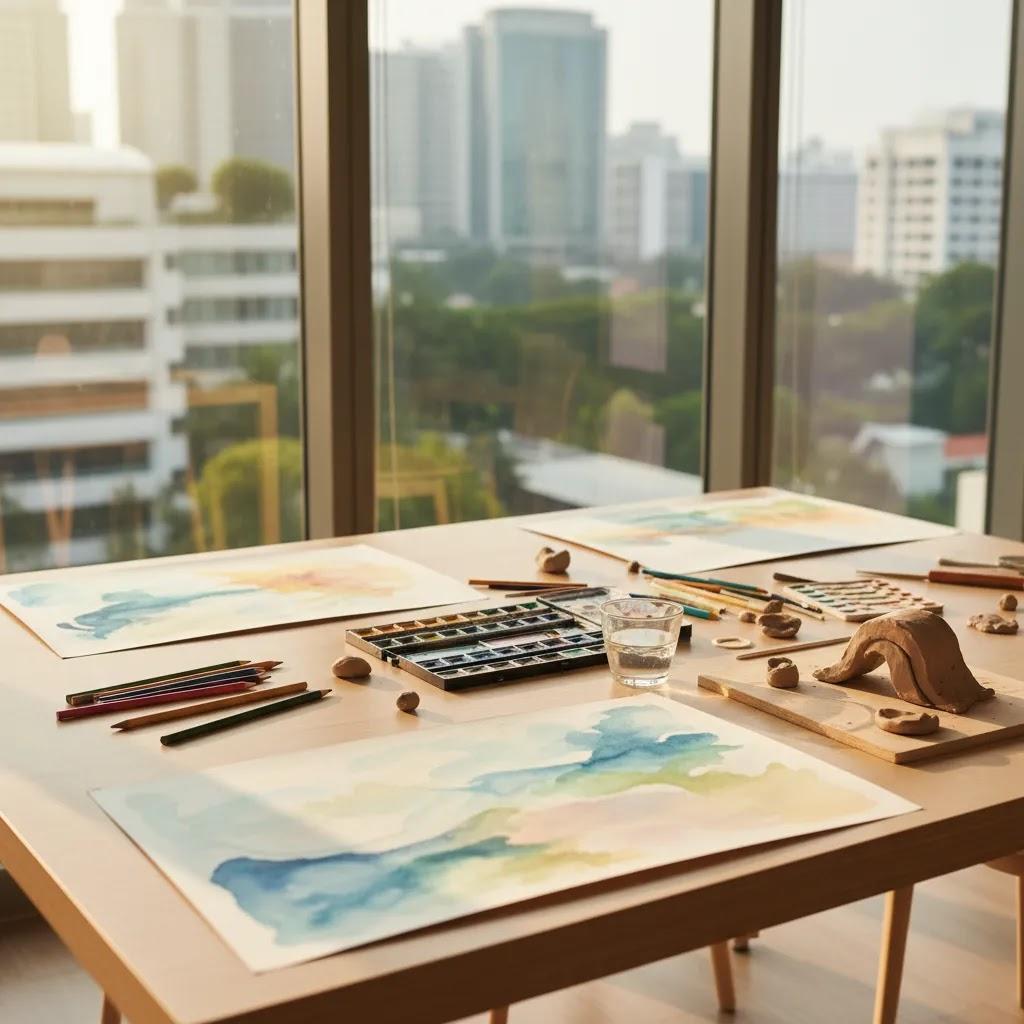
Mental Health Issues in Singapore (2026 Guide)
Who tends to carry the heaviest mental health burden in Singapore? The answer is not one single group, and that is where many readers get stuck. Some concerns show up more often in young people. Others build around work, caregiving, isolation, money pressure, grief, or chronic stress. Looking at mental health singapore patterns through the lens of age and life stage can make the picture much clearer. This article focuses on who is most affected, which concerns appear most often, and why those patterns matter. It is written for readers who want a grounded starting point, whether you are worried about yourself, your child, or someone close to you. Where relevant, this guide also points to gentler support options that may sit alongside formal care.
A quick population snapshot
Mental health issues in Singapore do not fall evenly across the population. The same broad label can hide very different lived experiences. A school-aged child who is overwhelmed may show it through behavior, sleep disruption, or withdrawal. A young adult may feel persistent distress around identity, relationships, study pressure, or uncertainty about the future. A middle-aged parent may look outwardly functional while carrying long-term stress, burnout, grief, or financial strain.
This is one reason broad national data needs careful reading. Rates can shift depending on what is being measured, how people describe distress, and whether a survey captures short-term strain or longer-lasting difficulty. If you want a closer look at how major local data is usually interpreted, the singapore mental health study offers helpful context.
For everyday readers, the practical question is simpler: which concerns tend to show up most often, and in which groups do they appear most visibly? That is the focus here.
Mental health issues in Singapore, what recent local data suggests
If you have looked up mental health statistics in Singapore, you have probably noticed that different sources can sound like they are describing different realities. Here is the thing, they are often measuring different things. Several major local signals often referenced in public discussion include the Ministry of Health’s National Population Health Survey (for a broad adult snapshot), Institute of Mental Health youth research (focused on younger age ranges), and global disease burden work that is sometimes reported locally to show how much disability and distress can be linked to mental health conditions across the life course.
At a high level, the story these sources tend to point toward is not that one group is suddenly struggling and everyone else is fine. The pattern is more like this:
- Youth and young adults often show a higher visible burden, especially for mood and anxiety related concerns, and this can show up in school, sleep, relationships, and daily functioning.
- Adults across a wider age range still experience significant stress, low mood, and anxiety, but it may be less visible because many people keep going through work and caregiving responsibilities.
- Public awareness and help-seeking appear to be increasing, which can change how much distress is reported and how early people are willing to name what is happening.
What many people overlook is why the numbers vary so much from one study to another. Some common reasons include:
- Self-report versus diagnosis. Some surveys ask people to describe how they have felt recently. Others count conditions that have been assessed and diagnosed. Those will rarely match perfectly, because many people feel distressed without ever seeking formal assessment, and some people have a diagnosed condition that may be currently well-managed.
- Different age bands. A study focusing on ages 15 to 35 is not interchangeable with one looking at ages 18 to 74, or one that includes younger adolescents. Rates can look higher or lower depending on the life stage being studied.
- Different definitions of distress. Some sources look at “poor mental health” as a broad signal of well-being. Others focus on specific conditions. These measures are not identical, and they should not be read as if they are.
- Time windows. Questions about the past two weeks, past year, or lifetime experience can produce very different prevalence estimates.
From a practical standpoint, it helps to read stats without panic. A rising reported rate can mean more people are struggling, but it can also reflect better awareness, lower stigma, more accurate screening, or more willingness to answer honestly. A stable rate does not always mean things are fine either, it can also mean people are not reporting, not recognizing their own distress, or not being reached by surveys.
So if you are trying to make sense of mental health issues in Singapore, the most useful takeaway is not one single percentage. It is noticing which groups tend to carry higher strain, what kinds of pressure sit around them, and whether they have realistic ways to get support before things become a crisis.
Most prevalent concerns and who they affect
Across Singapore, the most commonly discussed mental health concerns tend to cluster around anxiety, depression, stress overload, burnout, sleep problems, trauma-related distress, and emotional difficulties linked to family or school pressure. That does not mean everyone experiences them in the same way.
- Anxiety-related distress often appears across all age groups, but it is especially visible in youth, students, and adults under sustained performance pressure.
- Low mood and depression can affect any demographic, though younger groups often attract more public attention because distress may surface earlier and more visibly in school or online life.
- Burnout and chronic stress are common among working adults, caregivers, and people balancing multiple roles at once.
- Sleep disruption cuts across age groups and often overlaps with anxiety, grief, overwork, and screen-heavy routines.
- Loneliness and isolation may weigh heavily on older adults, caregivers, and young people who are socially connected online but still feel emotionally unsupported.
If you are exploring stress-related patterns more broadly, DailyLemons also organizes resources under Anxiety, Stress & Emotional Wellness for readers who want gentler, non-rushed next steps.
Children and teens

Children and teens are one of the groups most often highlighted in conversations about mental health in Singapore youth. That attention is not only about severity. It is also about timing. Emotional strain can become visible in school routines, friendship changes, irritability, avoidance, shutdowns, headaches, stomach discomfort, sleep struggles, or sudden drops in motivation.
For younger children, adults may first notice behavior rather than words. A child may not say they feel overwhelmed. They may cry more easily, cling, resist school, complain of physical discomfort, or become unusually defiant. In older children and teens, distress may show up as isolation, angry outbursts, self-criticism, perfectionism, academic fear, or hours of numbing screen use.
School pressure, social comparison, family conflict, bullying, identity stress, and disrupted sleep often interact rather than acting alone. Questions around screen time and mental health in children and adolescents also come up often. Screen use is rarely the whole story, but excessive or emotionally avoidant use may intensify sleep problems, comparison, overstimulation, and difficulty winding down.
For a fuller look at age-specific warning signs and family concerns, see youth mental health singapore.
Academic stress and test anxiety
Academic pressure is one of the most common stress themes in mental health in Singapore schools, and it does not only show up as “being busy.” For some students, it becomes test anxiety, a fear response that can make exams and even revision periods feel physically and emotionally unsafe.
Test anxiety is not just “nerves.” It usually means the body treats evaluation as a threat. A student may know the material and still freeze, blank out, or spiral into self-criticism. It can show up days or weeks before an exam, especially when the pace of school leaves little space to recover.
Common signs can include:
- Sleep disruption during exam periods, trouble falling asleep, early waking, or restless sleep
- Nausea, headaches, stomach discomfort, or tightness in the chest before school or tests
- Avoidance, procrastination, or suddenly “not caring” as a way to reduce pressure
- Perfectionism, over-checking, and panic over small mistakes
- Blanking out during timed work even after revision
- Irritability, shutdowns, or tearfulness that seems out of proportion to one test
Now, when it comes to why this can be so common, the causes are usually layered. High expectations, competitive environments, and constant comparison can make performance feel tied to worth. Peer dynamics can matter too. Bullying, social exclusion, or feeling behind can add a quieter fear of being judged, not just graded.
Consider this, many students do not need a dramatic overhaul to get a little more breathing room. Gentle supports that may help include:
- Protecting sleep as a non-negotiable anchor. A tired brain typically feels more threatened, more reactive, and less able to retrieve information under pressure.
- Small routine cues for regulation. The same short wind-down routine after studying, the same music while packing a bag, or a consistent “start line” before revision can signal safety and reduce spiraling.
- Low-pressure decompression. A short walk, shower, or quiet snack break can sometimes help the nervous system shift out of fight-or-flight more than another hour of forced studying.
- Non-verbal expression when words feel like pressure. Simple drawing, color-based reflection, or even marking a page with shapes can help a student externalize what they are carrying without turning it into a debate.
- Scaling the task down. Some students do better with “ten minutes, then stop and check in” rather than open-ended revision that never feels complete.
The reality is that test anxiety can become serious when it starts narrowing a student’s life. If a child or teen is refusing school, cannot sleep for days, is having panic episodes, is not eating, or is talking about wanting to disappear or hurt themselves, it is a sign to involve school-based support or qualified professional help sooner rather than later. Support is also worth considering if the student’s functioning is clearly dropping across weeks, not just a stressful weekend.
Young adults
Young adults, especially those in late teens through their 20s, are often among the most affected groups for anxiety, mood-related distress, identity strain, and future-related uncertainty. This stage of life can look flexible from the outside, but it often carries unstable routines, academic pressure, financial worry, changing relationships, and pressure to appear capable.
In Singapore, young adults may be navigating transitions all at once: school to work, dependence to independence, family expectations, competitive environments, and digital comparison that never fully switches off. Emotional strain in this group may look like procrastination, panic before deadlines, social withdrawal, numbness, overthinking, sleep reversal, or feeling detached even while staying busy.
This group may also be more willing to talk about emotional struggles than older generations, which can make prevalence appear higher. Part of what we are seeing may be greater visibility, not only greater distress. Even so, public concern around youth mental health crisis in Singapore remains understandable because early strain can affect learning, relationships, confidence, and help-seeking habits later on.
Working-age adults and caregivers
Adults in their 30s to 50s may be less publicly discussed than teens, yet they often carry layered pressure that is easy to miss. Work demands, caregiving, parenting, money concerns, relationship strain, and long periods of emotional suppression can create chronic overload. Many people in this group continue functioning outwardly, which can delay support.
Common concerns here include burnout, irritability, emotional flatness, stress-related sleep loss, persistent worry, and a sense that recovery never quite happens even after rest. Caregivers can be especially affected because their own emotional bandwidth is often treated as secondary. Mothers, single parents, and adults supporting both children and older relatives may feel this acutely.
Some readers in this group are not looking for a mental health counselor in Singapore right away. They may first want privacy, emotional language, or a non-verbal way to notice what is building. That is part of why creative support can matter. If talking feels hard, drawing, color-based reflection, and guided prompts may offer a softer entry point. DailyLemons explores these themes further in benefits of art therapy for adults.
Older adults

Older adults can be overlooked in mental health conversations because distress may be hidden behind physical illness, bereavement, retirement shifts, isolation, or the belief that emotional hardship should simply be endured quietly. Yet this group may face significant challenges linked to loneliness, caregiving loss, mobility changes, chronic pain, and reduced social roles.
In some families, older relatives may not use the same emotional vocabulary younger people do. Instead of saying they feel low or anxious, they may talk about poor sleep, body aches, appetite changes, fatigue, or not wanting to burden others. That can make distress harder to spot.
Demographic risk here is often shaped less by age alone and more by social connection, health burden, family support, and whether the person has meaningful routines. Older adults who are isolated, grieving, or dealing with multiple life changes at once may be particularly affected.
What shapes risk across groups
Age matters, but it is not the whole story. Several factors can increase the likelihood that emotional distress becomes harder to carry.
- High performance pressure, especially in school or work settings
- Financial strain and housing or caregiving burden
- Family conflict, low emotional safety, or limited support
- Grief, trauma, or major transitions that have not been processed
- Sleep disruption and heavy screen use, which may worsen mood regulation and overwhelm
- Social stigma, which can delay help-seeking even when distress is serious
How mental health is viewed in Singapore also affects who gets support soon enough. In families or settings where distress is minimized, people may wait until daily functioning is already significantly affected. In settings where emotional language is more accepted, concerns may surface earlier, which can make support easier to access.
Support options and where DailyLemons fits
If you are trying to make sense of common mental health issues in Singapore, a gentle resource can help before you are ready for formal care. DailyLemons is not a replacement for urgent or specialist support, but it can be a useful companion for reflection, emotional check-ins, and creative self-expression. That may be especially helpful for teens, overwhelmed adults, neurodivergent users, or anyone who struggles to explain feelings in words.
You might explore the broader Art Therapy Singapore hub if you are curious about creative support paths, or read across related guides to understand population patterns more clearly. Some readers start with data, some with youth concerns, and some with practical emotional tools. A slower, more visual approach may help you notice what is present before deciding what kind of support fits best.
Pros and Cons
Strengths
- Looking at mental health by demographic group makes broad national discussions easier to understand.
- This lens helps parents, teachers, caregivers, and adults identify which pressures are more common at different life stages.
- It reduces the risk of assuming one age group is the only group struggling.
- It encourages earlier support by showing that distress can look different across children, teens, adults, and older adults.
- It makes room for gentler support options, including creative and non-verbal approaches, not only formal counseling.
Considerations
- Demographic patterns describe trends, not individual certainty.
- Public attention on youth may unintentionally hide the needs of caregivers and older adults.
- Labels like anxiety or depression can oversimplify what is really a mix of social, emotional, and practical pressures.
- Rates can look different depending on how studies define distress and who feels safe enough to report it.
How to choose the right kind of support

If this article feels uncomfortably familiar, the next step does not have to be dramatic. A useful starting point is matching the kind of support to the level of strain.
1. Start with urgency. If there is immediate risk, talk of self-harm, inability to stay safe, or a child in acute crisis, urgent professional help matters more than self-guided support.
2. Look at the pattern, not one bad day. A short stressful period is different from several weeks of shutdown, panic, sleep disruption, persistent sadness, or withdrawal from daily life.
3. Match the format to the person. Some people want a counselor, some want school-based support, and some can only begin with private reflection or creative expression. The best first step is often the one a person can actually tolerate.
4. Consider the life stage. A 7 year old mental health issue may show up through behavior and body complaints. A teen may need privacy and trust. A working parent may need low-pressure, flexible support that fits around caregiving.
5. Reassess if things are not easing. Gentle tools can help with awareness, but if distress is deepening, interfering with eating, sleep, school, work, or safety, professional assessment becomes more important.
Where to seek help in Singapore (first steps and official pathways)
Once you decide that support would help, the next question is often, where do we actually start? The Singapore ecosystem can feel confusing because it includes schools, community services, public healthcare, and private providers. Most people do not begin at the most specialized level. They start with an entry point that feels accessible, then get guided toward the right next step.
Some common first steps include:
- School-based support. For children and teens, school counselors, form teachers, and pastoral care structures are often the first point of contact. This can be a practical option because it is already part of the student’s environment. It can also help identify whether difficulties are mainly academic, social, emotional, or a mix.
- Public healthcare entry points. Many families and adults begin by speaking with a primary care doctor, who can help with an initial screen, check whether sleep, stress, or physical factors are intensifying the situation, and refer onward if needed. This route can feel more manageable for people who are unsure what they are dealing with.
- Youth-focused services. Singapore also has youth mental health touchpoints supported by national agencies, including services such as the Community Health Assessment Team (CHAT) as an example of a youth-friendly starting point for early concerns. These are often designed to reduce barriers for young people who feel unsure about formal care.
- Specialist services when indicated. If distress is severe, persistent, or clearly affecting safety and functioning, referral to specialist mental health services may be appropriate. In Singapore, the Institute of Mental Health (IMH) is a key institution in the national mental health landscape, alongside other public and private providers.
What many people overlook is the “what happens next” piece, and uncertainty can delay help-seeking. While processes vary by setting, a first appointment typically includes questions about what has been happening, how long it has been going on, sleep and daily routines, school or work impact, relationships, and any immediate safety concerns. Some services may use brief questionnaires as part of screening. If the person is a child or teen, caregivers may be asked for context too, often with some time set aside to hear the young person privately depending on age and setting.
Confidentiality is a common worry, especially for teens. In general, services aim to keep information private, but there are limits. If there is a serious safety concern, such as risk of harm to self or others, professionals may need to involve caregivers or emergency services. It can help to ask directly, “What are the confidentiality limits here?” before sharing the hardest parts.
If you are supporting someone, it can also help to separate two goals. One is emotional relief, the other is safety and functioning. Gentle tools like reflection and creative expression can support the first goal. If safety or functioning is at risk, the pathway usually needs to shift toward professional assessment.
If there is immediate danger, talk of suicide or self-harm, severe disorientation, violence risk, or a person cannot stay safe, treat it as urgent. In Singapore, that typically means contacting local emergency services right away or going to an emergency department. Urgent pathways exist because waiting and self-guided tools are not designed for crisis-level situations.
For readers who want to understand how population research shapes national conversations, you can also refer back to the singapore mental health study context for how local studies are framed and interpreted.
Frequently Asked Questions
What are the most common mental health issues in Singapore?
Commonly discussed concerns include anxiety, depression, chronic stress, burnout, sleep difficulties, trauma-related distress, and loneliness. The exact pattern varies by age and life context. Students may show more school and social pressure, while adults may carry work, caregiving, and financial strain. Older adults may be more affected by isolation, grief, and health-related life changes.
Who is most affected by mental health issues in Singapore?
No single group is the only one affected, but young people often receive the most attention because distress can become visible in school, online life, and developmental transitions. Working adults and caregivers are also significantly affected, especially where chronic stress and burnout build quietly over time. Older adults may be overlooked even when loneliness and grief are weighing heavily.
Why is mental health important in Singapore?
Mental health matters because emotional strain can affect learning, work, family life, relationships, sleep, and physical well-being. In a high-pressure environment, distress may be normalized until it becomes much harder to carry. Paying attention early can support better coping, stronger communication, and more timely access to the kind of help that fits the person’s actual situation.
How is mental health viewed in Singapore?
Views vary widely. Some families, schools, and workplaces are becoming more open to emotional well-being, while others still carry stigma or prefer to keep struggles private. That mixed environment can shape whether people seek support early or wait until things feel unmanageable. Public awareness is growing, but comfort with talking openly about distress is still uneven across generations and settings.
What causes mental health issues in youth in Singapore?
Youth distress is usually shaped by several pressures at once rather than one single cause. Academic expectations, friendship strain, bullying, family conflict, identity questions, poor sleep, heavy screen use, and social comparison may all play a role. Some young people are also more sensitive to overstimulation or change, which can make ordinary school and social demands feel much heavier.
What constitutes a mental health crisis in a child?
A child may be in crisis if they are at immediate risk of harm, talking about wanting to die, showing severe agitation, becoming unreachable, refusing all food or fluids, or behaving in a way that suggests they cannot stay safe. Sudden extreme changes in behavior also matter. In those situations, urgent professional or emergency support is more appropriate than waiting to see if things pass.
Is screen time the main reason children and teens are struggling?
Usually not on its own. Screen time can worsen sleep loss, overstimulation, comparison, avoidance, and emotional overload, but it often interacts with existing pressure rather than creating all distress by itself. A child’s mental state is more likely shaped by the full picture, including school demands, relationships, family climate, and how digital use fits into daily routines and regulation.
Can art therapy help people affected by stress or emotional overload?
It may help some people, especially those who find verbal expression difficult or exhausting. Creative methods can support emotional awareness, regulation, and reflection in a gentler way. They are not a substitute for urgent or specialist care, but they can complement formal support or offer a first step for people who feel blocked by traditional talk-based approaches.
What are the top 3 mental health issues in Singapore?
It depends on how a study defines and measures mental health, but the concerns most commonly discussed in Singapore are anxiety-related distress, depression or low mood, and chronic stress or burnout. Sleep disruption often sits alongside these and can make everything feel heavier. Patterns also vary by life stage, with school pressure showing up more in youth and workload or caregiving stress showing up more in adults.
What is the prevalence of mental health issues in Singapore?
Prevalence depends on the source because studies measure different age groups and different definitions of distress. Some surveys capture self-reported “poor mental health” or recent distress, while others count assessed conditions. If you are trying to interpret local numbers, it helps to check the age range, the time window, and whether the measure reflects self-report or diagnosis, rather than comparing headlines across studies.
What are the top 5 most common mental health issues?
In everyday conversations and many public health discussions, five commonly cited concerns include anxiety-related distress, depression or low mood, chronic stress or burnout, sleep difficulties, and trauma-related distress. In real life, these often overlap. For example, chronic stress can disrupt sleep, and poor sleep can intensify anxiety and low mood.
What are the 7 most common mental illnesses?
Lists vary depending on the country and how conditions are grouped, but commonly referenced categories include depressive disorders, anxiety disorders, trauma-related disorders, substance use disorders, eating disorders, bipolar disorder, and psychotic disorders. If you are using a list like this to make sense of someone’s experience, it can help to treat it as a map of possibilities, not a way to label a person. When distress is persistent or severe, professional assessment is the safest route for clarity.
Key Takeaways
- Mental health issues in Singapore affect multiple groups, not only youth.
- Anxiety, low mood, stress overload, burnout, sleep problems, and loneliness are among the most common concerns.
- Children, teens, young adults, caregivers, and older adults may show distress in very different ways.
- Risk is shaped by pressure, support, stigma, sleep, grief, transitions, and family context, not age alone.
- Gentle, creative tools may help with reflection, but urgent or high-risk situations need professional care.
Conclusion
Mental health patterns in Singapore make more sense when you look at who is carrying what kind of pressure. Young people may be highly visible, but they are not the only group struggling. Adults balancing work and caregiving, and older adults living with loss or isolation, may be carrying just as much in quieter ways. If you are trying to understand where you or someone you love fits, start small and stay honest about what is showing up. If a softer, more creative route feels easier than forcing everything into words, DailyLemons offers a place to keep exploring at your own pace.
This article is for educational purposes only and does not provide medical, psychiatric, legal, or crisis advice. Mental health experiences vary by person, age, and situation. Creative wellness resources, including art-based reflection, may complement support but are not substitutes for diagnosis, urgent care, or treatment from a qualified licensed professional. If a child or adult may be at immediate risk, is talking about self-harm or suicide, or cannot stay safe, contact local emergency services or an appropriate urgent support service in Singapore right away. For formal guidance, refer to relevant authorities and qualified professionals where appropriate.