Why Is Singapore So Stressed? Causes and Pressures (2026)
Why can life in Singapore feel so tightly wound, even when things look stable from the outside? For many people, stress in Singapore is not only about being busy. It often grows from layers of pressure at once: work expectations, school competition, family duty, housing costs, social comparison, and the quiet feeling that you should always be coping better than you are. This article focuses on those root causes and cultural pressures, rather than offering a generic stress overview. If you are trying to make sense of your own experience, or someone you care about seems stretched thin, this can help you name what may be happening. For a wider view of local creative support options, you can also explore Art Therapy Singapore.
Why stress feels so concentrated in Singapore
Stress can show up anywhere, but in Singapore it often feels especially compressed. The country is dense, fast, highly organized, and strongly shaped by achievement. That mix can create efficiency and opportunity. It can also make pressure feel very visible.
If you miss a milestone, struggle at work, fall behind financially, or simply need more rest than the people around you, it may feel hard to hide. Many people are moving through systems that reward speed, competence, and self-control. That can make ordinary human limits feel like personal failure, even when they are not.
This is why a simple “just relax” approach rarely fits. Stress in Singapore is often tied to structure and culture, not only personal habits. If you are exploring broader emotional support, our guides to mental health singapore and Anxiety, Stress & Emotional Wellness can help place this topic in a wider context.
Common signs of stress (mind and body)
Here’s the thing, stress is not always dramatic. For many people, it shows up as small changes that become “normal” over time. In a fast environment, you might even forget what it feels like to be fully settled, until your body starts asking for attention.
Common signs of stress often fall into three overlapping buckets:
- Physical: sleep changes (trouble falling asleep, waking often, feeling unrefreshed), headaches, jaw clenching, neck and shoulder tension, faster heartbeat, fatigue, appetite changes, skin flare-ups, or digestion changes like nausea, bloating, constipation, or diarrhea.
- Emotional: irritability, feeling “on edge,” tearfulness, feeling numb or flat, feeling unusually overwhelmed by small tasks, or feeling less patient with people you usually care about.
- Cognitive: racing thoughts, difficulty focusing, forgetfulness, looping worries, catastrophizing, or struggling to make decisions that normally feel straightforward.
Consider this: one hard week can be stressful without meaning anything is “wrong.” The more helpful question is whether the stress is passing through you, or stacking up in you.
Normal stress vs. piling-up stress
Normal stress tends to come with a clearer start and end, and recovery still works. You might feel tense before a deadline, then loosen up after. Piling-up stress is when the pressure keeps arriving faster than your system can discharge it, so your baseline shifts.
If you want a simple self-check, look back over the last 2 to 4 weeks and ask:
- What has changed in my sleep, even if I am still “functioning”?
- What has changed in my appetite, digestion, or cravings?
- What has changed in my patience, especially with people close to me?
- What has changed in my ability to focus, remember, or start tasks?
If several areas have shifted and stayed shifted, it may be a sign that your stress load is not just temporary busyness.
The reality is, some stress signs can overlap with other health issues, and sometimes they can escalate. If you are experiencing persistent insomnia, panic-like symptoms, significant appetite or weight change, or you feel unable to stay safe, it may be worth seeking professional support sooner rather than waiting for it to “settle.”
The pressure system behind everyday stress
For many people, stress is not one dramatic event. It is a stack of smaller demands that rarely switch off. A packed train ride. A late-night message from work. Worry about parents getting older. Tuition schedules. Rising bills. A social feed full of people who seem ahead.
Each pressure may look manageable alone. Together, they can create a constant background hum in the body and mind. You may notice irritability, trouble sleeping, shallow breathing, overthinking, emotional numbness, or the sense that rest never fully feels like rest.
That pattern matters because it changes the question. Instead of asking, “Why am I not handling this better?” it may be kinder and more accurate to ask, “How many things am I carrying at once?”
Some people find it useful to pair reflection with nonverbal forms of expression, especially when words feel thin or repetitive. That is part of why interest in art therapy singapore has grown alongside more familiar stress support approaches.
Work culture and performance pressure
Work stress in Singapore often comes from more than workload alone. A strong performance culture may reward reliability, speed, and long-term upward movement. That can be motivating. It can also make people feel that slowing down is risky.
Common stress drivers include:
- Long hours or blurred work-home boundaries
- Pressure to appear responsive at all times
- Fear of losing pace in a competitive labor market
- Management styles that value output over recovery
- Quiet stigma around burnout, overwhelm, or asking for help
In many workplaces, stress becomes normalized because everyone seems tired. Once that happens, people may stop noticing how much strain they are under until the body starts forcing the issue through sleep disruption, headaches, digestive changes, or emotional shutdown.
This does not mean every job in Singapore is unhealthy. Many employers are trying to improve well-being support. Still, workplace stress often grows where high standards meet limited psychological breathing room.
Common sources of work stress in Singapore (and how they escalate)
From a practical standpoint, it can help to separate “a lot to do” from the types of work pressure that tend to intensify stress over time. Workload matters, but so does how much control you have, how clear the rules are, and whether the environment feels psychologically safe.
Common sources of work stress often include:
- High workload with limited control: you are responsible for outcomes, but you cannot influence deadlines, staffing, or priorities.
- Unclear expectations: shifting goals, vague instructions, or success criteria that feel subjective. This can create constant second-guessing.
- Time pressure and constant urgency: work that is always “due yesterday,” where speed becomes the main measure of competence.
- Difficult workplace relationships: tension with a manager, conflict in a team, office politics, or feeling excluded. Social stress at work can drain you even when tasks are manageable.
- Job mismatch: your role does not fit your strengths, values, or temperament, so each day requires more self-control than it should.
What many people overlook is how these combine. A heavy workload can be tough. A heavy workload plus unclear expectations plus a difficult manager often becomes something else entirely, because your nervous system never gets certainty or closure.
Burnout vs. stress (in plain language)
Stress often feels like pressure and tension, your system is mobilized. Burnout often feels like the “cost” of too much mobilization for too long, especially when recovery is not possible and effort stops feeling meaningful.
At work, burnout can look like emotional exhaustion, cynicism or detachment, and a sense that you are less effective even though you are trying just as hard. It can sneak up when stress is normalized and you keep pushing because everyone else seems to be pushing too.
How to identify your top 1 to 2 work stressors
Instead of trying to fix everything at once, you might start by identifying what is actually driving the stress signal in your body. A few prompts that can help:
- When do I feel the most physical tension, and what usually happens right before it?
- Is my stress mostly about volume (too much work), uncertainty (not sure what “good” looks like), or social risk (fear of judgment, conflict, or consequences)?
- If I could change only one thing this month, would it be deadline pace, role clarity, relationship dynamics, or after-hours contact?
- What is the smallest evidence I would accept that things are improving: fewer late-night pings, clearer priorities, a calmer meeting, one protected recovery block?
Naming your top stressor is not the same as blaming yourself or your workplace. It is simply a way to stop treating “work” like one giant cloud and start seeing the specific pressure points that may be most draining.
School, achievement, and early comparison
Pressure in Singapore can start early. Students may absorb the idea that performance is closely tied to future security, family pride, and self-worth. Even highly capable children and teens can begin to feel that there is little room for trial, pause, or ordinary imperfection.
That pressure may continue into university and early adulthood. The habit of measuring yourself against peers can become deeply ingrained. A person may look accomplished on paper and still feel chronically behind.
This matters because adulthood stress is often built on patterns learned much earlier. If you were praised mainly for outcomes, you may struggle to rest without guilt. If mistakes felt costly, uncertainty at work or in relationships may hit harder.
For readers who want softer practices around emotional regulation, our mindfulness singapore guide may be a useful companion, especially if traditional productivity advice leaves you colder rather than calmer.
Student stress and test anxiety in Singapore
Think of it this way: when evaluation is high-stakes and frequent, stress does not only live in the study schedule. It can start attaching itself to identity. A test stops being “one paper,” and starts feeling like proof of worth, proof of effort, proof of future.
Test and exam anxiety is one way this can show up. It may look like:
- Blanking out during a paper even when you studied
- Nausea, stomach discomfort, or sudden bathroom urgency
- Spiraling thoughts like “If I mess this up, everything is over”
- Avoidance, procrastination, or feeling unable to start revision
- Sleep disruption right before exams, then exhaustion afterward
Now, when it comes to Singapore context, many families and schools care deeply about education because it is tied to opportunity and security. Still, that can create a strong pressure channel for young people. Peer comparison can intensify it, and teasing or bullying dynamics can make school feel socially risky as well as academically demanding.
Social media can add a separate layer. Instead of comparing only within class, students may compare across schools, across social circles, and across highlight reels. That visibility can quietly fuel social anxiety, even for students who are doing well.
Gentle supports often start smaller than people expect:
- Micro-recovery during study weeks: short decompression points that are not “earned” by perfect productivity, like a slow walk, a shower, stretching, doodling, or ten minutes away from screens.
- Noticing catastrophic self-talk: you do not have to force positive thinking, but it may help to spot when your mind turns one result into a total life story.
- Asking for support earlier: a teacher, school counselor, trusted adult, or family member may be able to help adjust expectations or reduce isolation before it becomes a crisis point.
The goal is not to remove all stress. It is to help stress stop consuming your attention and self-worth at the same time.
Family duty, caregiving, and saving face
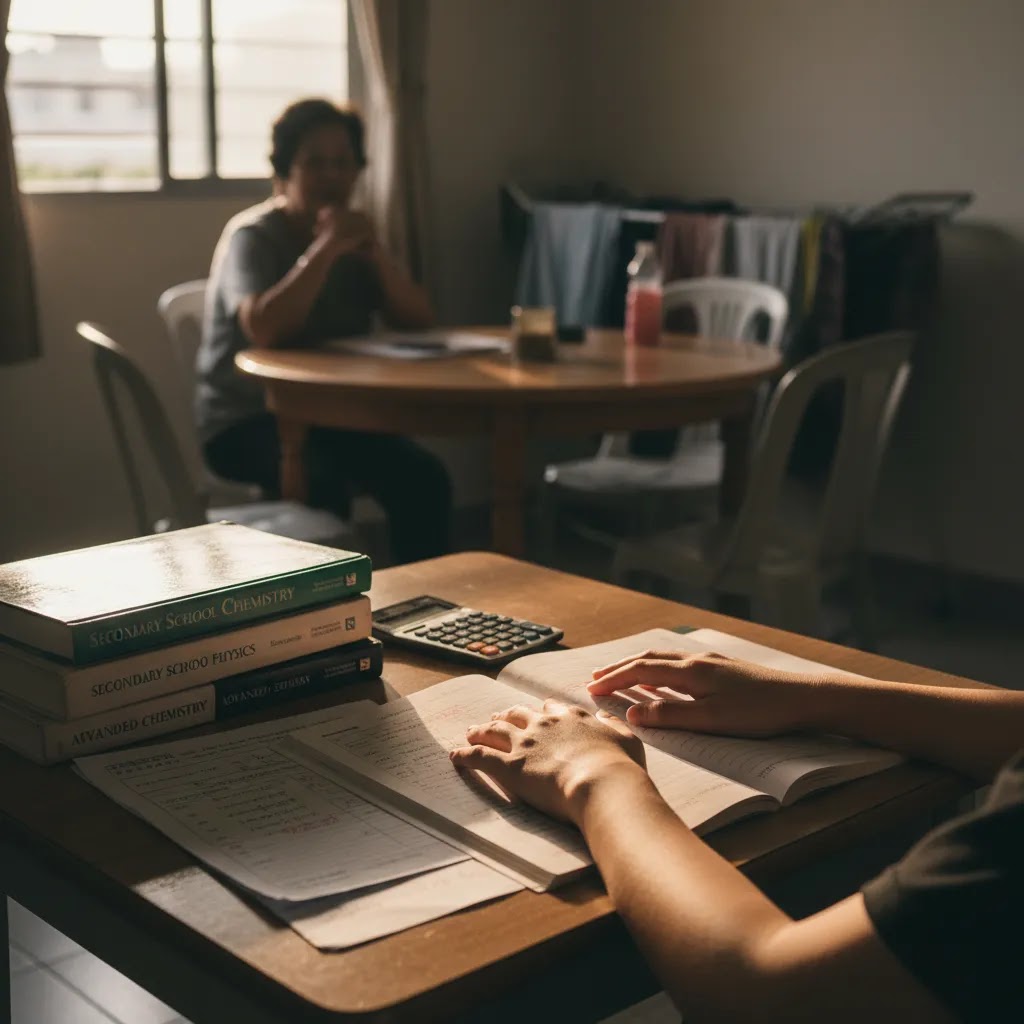
Culture shapes stress very quietly. In Singapore, many people feel a strong pull toward responsibility, respect, and not becoming a burden. Those values can create closeness and resilience. They can also make it hard to admit that you are struggling.
Family-related stress may include:
- Supporting aging parents while managing your own work life
- Pressure to marry, have children, or meet expected timelines
- Trying to avoid conflict by staying silent
- Feeling you must remain “functional” for everyone else
- Worry about embarrassment, judgment, or loss of face
This is one reason stress management in Singapore cannot be reduced to individual techniques alone. If your stress is tied to duty, identity, and family expectations, the problem may not be that you lack discipline. You may be carrying emotional obligations that are hard to set down, even briefly.
Money, housing, and the cost of stability
Financial strain does not always look like crisis. Sometimes it looks like constant calculation. Can I afford a home? Am I saving enough? What if caregiving costs rise? What happens if I need to take a break from work?
Singapore is often associated with order and prosperity, but that image can make personal money stress feel strangely isolating. People may assume they should be able to manage. If they cannot, shame can layer on top of pressure.
Housing concerns can be especially emotional because they are tied to adulthood, partnership, independence, and long-term planning. Stress grows when major life steps seem financially narrow or delayed.
That kind of uncertainty may leave people feeling stuck in “survival competence.” You keep functioning, keep planning, keep showing up, but your nervous system may rarely get the message that it is truly safe to soften.
Social media, image, and constant comparison
Stress in Singapore is also shaped by visibility. Social media can make achievement feel permanent and public. Career moves, weddings, travel, fitness, parenting, home upgrades, and polished routines all become part of the comparison field.
In a status-aware environment, digital life may intensify the pressure to appear composed and successful. Even if you know posts are curated, your body may still read them as evidence that everyone else is coping better.
This matters for emotional well-being because comparison often steals recovery time. Instead of resting, you may scroll. Instead of processing your own feelings, you may start auditing your life against someone else’s timeline.
If you are trying to build a gentler base for daily coping, our resources on mental wellness singapore may help you explore steadier rhythms that do not rely on outward performance.
Who may feel these pressures more sharply
Stress does not land evenly. Some groups may feel the weight of Singapore stress more intensely, including:
- Students and young adults facing academic or career uncertainty
- Women balancing paid work, caregiving, and emotional labor
- Parents trying to support children in high-pressure systems
- People caring for older family members
- Neurodivergent people navigating sensory and social overload
- Anyone recovering from grief, heartbreak, burnout, or major change
That last point matters. Existing emotional pain can reduce your margin. A workplace demand or family conflict that once felt manageable may hit very differently when you are already stretched thin.
What may help when stress starts to pile up

No single answer fits everyone, especially when the causes are structural and cultural. Still, some responses tend to be more useful than trying to “push through” indefinitely.
Name the source, not just the feeling
It may help to ask whether your stress is coming mainly from work pace, family duty, financial fear, social comparison, or cumulative overload. Naming the source often makes the next step clearer.
Choose support that fits your nervous system
Some people want practical planning. Others need rest, movement, therapy, spiritual support, or creative expression. If sitting still and talking feels hard, visual or sensory approaches may feel safer. You can read more about the benefits of art therapy for adults if you are curious about gentler nonverbal support.
Reduce invisible pressure where you can
This might mean muting comparison-heavy accounts, setting clearer work boundaries, sharing caregiving load, or questioning timelines that are hurting more than helping.
Build smaller recovery points
If life cannot slow down much right now, shorter forms of regulation may still help. Quiet walks, sketching, breathing, stretching, prayer, music, or five minutes without input can create a little more space inside a crowded day.
DailyLemons can be one gentle place to keep exploring. If you are looking for creative, non-pressured ways to understand your emotions, you might browse our Art Therapy Singapore resources and wider stress content whenever it feels useful.
Pros and Cons
Strengths
- Singapore’s structure and efficiency can create predictability, which some people find grounding.
- High standards may support ambition, skill-building, and strong personal discipline.
- Close family networks can provide practical and emotional support during hard periods.
- Growing public conversation around emotional well-being may make help-seeking feel more possible than before.
- People can access a mix of approaches, including counseling, mindfulness practices, and creative support.
Considerations
- The same systems that create opportunity may also normalize chronic pressure and overwork.
- Family and social expectations can make stress harder to talk about openly.
- Financial and housing concerns may keep people in a prolonged state of uncertainty.
- Social comparison can intensify stress even during periods that look successful from the outside.
Frequently Asked Questions
What is stress in Singapore usually referring to?
It usually refers to the pressure many people feel from work, school, money, family expectations, and social comparison. In Singapore, stress is often discussed not just as personal overwhelm, but as a response to a fast, achievement-focused environment. The experience can look different across age groups, but the pattern is often cumulative rather than caused by one single issue.
Why does work stress in Singapore feel so common?
Many jobs involve high expectations around speed, responsiveness, and consistency. People may also worry about job security, career progression, and keeping up in a competitive market. If recovery time is limited, work pressure can spill into sleep, relationships, and physical tension. The stress often comes from the culture around performance, not just the number of tasks on a to-do list.
Is Singapore stress mainly a work problem?
No. Work is only one part of it. Stress may also come from academic pressure, caregiving, financial strain, relationship expectations, housing concerns, and social comparison. For many people, several of these pressures are active at the same time. That is why stress management in Singapore often needs a broader view than workplace productivity tips alone can offer.
Why do students and young adults seem especially affected?
Pressure can begin early through competition, exams, and future-planning. Young people may feel that each decision carries long-term consequences, which can make ordinary uncertainty feel much heavier. Social media can add another layer by turning milestones into visible comparisons. Even very capable students may struggle if their sense of worth becomes too tightly tied to achievement.
How can I tell if I am dealing with chronic stress rather than a short busy phase?
If the pressure feels nonstop, recovery may stop working the way it used to. You might feel tired but unable to relax, emotionally flat, irritable, restless, or mentally noisy even during downtime. Sleep disruption, headaches, and trouble focusing can also show up. If these patterns persist or start affecting safety or daily functioning, professional support may be worth considering.
Are there gentler options if talking about stress feels hard?
Yes. Some people find it easier to process stress through drawing, movement, guided reflection, breathing, or sensory-based activities rather than direct conversation alone. That can be especially helpful if you feel shut down, overwhelmed, or unsure how to explain what is wrong. Creative approaches may support expression, but they are not a substitute for urgent or high-risk care.
What does stress management in Malay usually mean in Singapore searches?
It often reflects a practical search for coping information, emotional support, or local resources in a preferred language. The need behind the search is usually the same: clearer ways to understand pressure and respond to it. Language access matters because people may engage more comfortably with support that feels culturally and linguistically familiar.
Can mindfulness or art-based practices really help with Singapore stress?
They may help some people, especially when stress is making words feel crowded or repetitive. Mindfulness can support awareness of tension patterns, while art-based practices may create space for expression without needing perfect explanations. Neither approach is a magic fix, and results vary, but both can be useful parts of a wider support plan built around your real sources of stress.
What should I do if stress is affecting my safety or ability to cope?
If stress is becoming overwhelming to the point that you feel unable to stay safe, function, or care for yourself, seek urgent support right away through local emergency services or an appropriate crisis resource in Singapore. Self-help content can be useful for reflection, but it is not enough for immediate risk, severe distress, or situations that need prompt professional intervention.
What are the symptoms of stress?
Stress symptoms often include a mix of physical, emotional, and cognitive signs. Physically, it may show up as sleep changes, headaches, muscle tension, fatigue, appetite or digestion changes, and a persistently “wired” feeling. Emotionally, you might notice irritability, numbness, tearfulness, or feeling overwhelmed by small tasks. Cognitively, it can look like racing thoughts, difficulty focusing, forgetfulness, or constant worry. If symptoms persist, intensify, or affect safety, it may be worth seeking professional support.
Why do I get stressed so easily?
People often feel stressed “easily” when their baseline load is already high. That can happen with ongoing work pressure, financial uncertainty, caregiving, poor sleep, or constant comparison, even if each stressor seems manageable on its own. Past experiences can also lower your margin, so a new demand hits harder than it would have before. Sometimes what looks like sensitivity is actually your body signaling that it has been carrying too much for too long.
What are the top 3 health issues in Singapore?
Health priorities can change over time, and different organizations may rank them differently. Public health discussions in Singapore often highlight chronic conditions such as diabetes and hypertension, and broader concerns like heart health. Many people also pay attention to emotional strain because stress can affect sleep, energy, and daily functioning. For current, official updates on national health priorities, it is best to check Singapore’s Ministry of Health guidance.
Which country has the highest stress rate?
It depends on how “stress rate” is defined and measured. Surveys vary in questions, sampling, and what they count as stress, so results can shift year to year. If you are asking because you want to validate your experience, it may help to focus less on rankings and more on patterns: what is driving your stress, how long it has been present, and whether you are getting enough recovery and support.
Key Takeaways
- Stress in Singapore is often shaped by systems and culture, not only personal coping style.
- Common root pressures include work demands, academic competition, family duty, financial strain, and social comparison.
- Many people experience cumulative stress, where several manageable pressures build into chronic overload.
- Gentler responses may include boundaries, smaller recovery practices, and nonverbal or creative forms of support.
- If stress becomes severe or affects safety, urgent professional help is the right next step.
Conclusion
Singapore stress often makes more sense once you stop treating it as a personal weakness and start seeing the wider pressure system around it. High expectations, visible comparison, family duty, and financial strain can all press on the same nervous system at once. If that feels familiar, you are not failing at life. You may be responding to a very demanding environment. Small shifts can still matter, especially when they match the real source of strain rather than forcing another ideal on top of it. If you want a gentler next step, you can keep exploring DailyLemons resources on emotional wellness, mindfulness, and creative support at your own pace.
This article is for educational purposes only and does not provide medical, psychiatric, legal, or financial advice. Experiences of stress vary by person, context, and support needs. Any mention of emotional wellness approaches, mindfulness, or art-based practices should not be treated as a guarantee of outcomes. If you are in immediate danger, feel unable to stay safe, or need urgent support, contact local emergency services or an appropriate crisis resource in Singapore right away. For formal care decisions, verify current qualifications, scope of practice, fees, and policies directly with the relevant provider or organization.