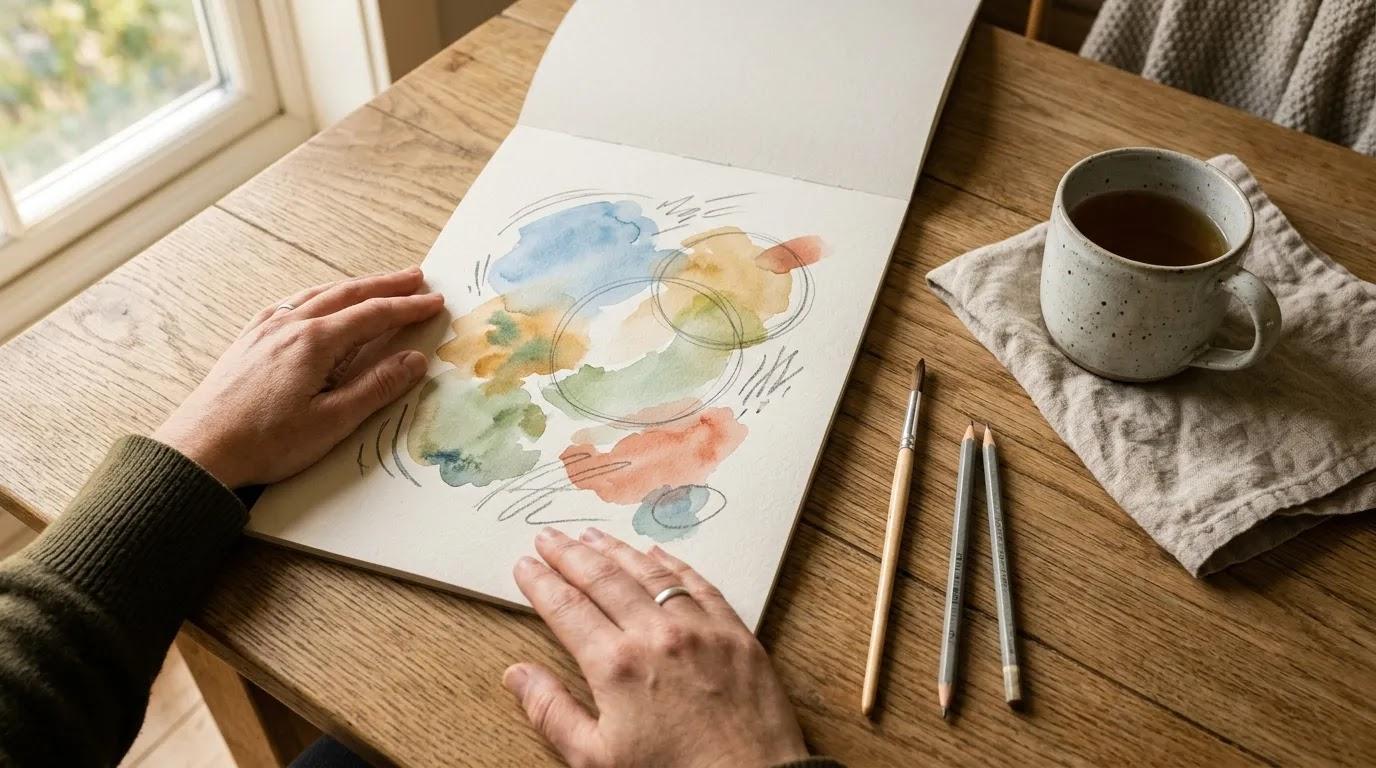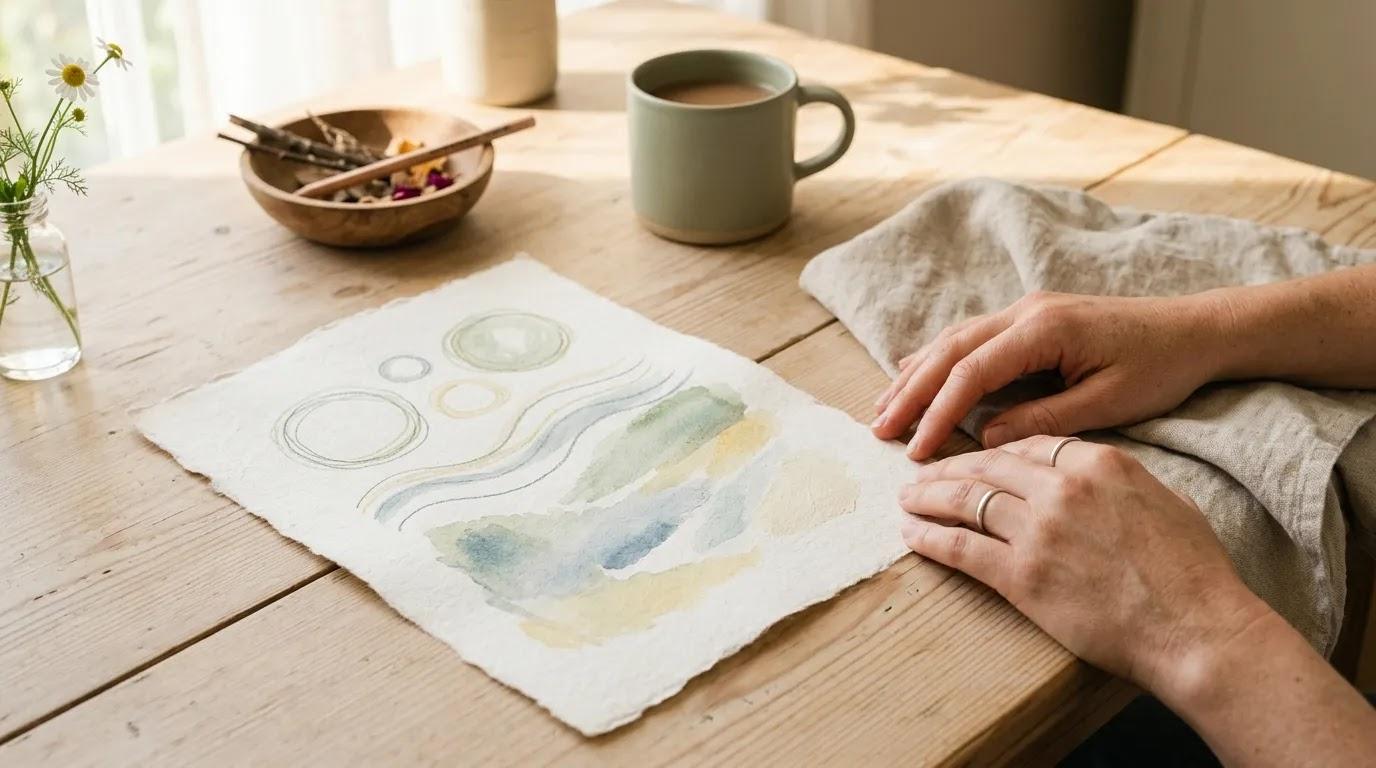
The best online art therapy programs offer a gentle path into creative reflection, with each activity building on the one before it. The options below include daily apps, downloadable guides, and video courses that make room for beginners without asking for artistic experience.
Best Online Art Therapy Programs: Curriculum, Format, and Fit
Not every resource labeled “art therapy” is a complete program. A guided exercise may still be useful, especially on a hard day. But the best online art therapy programs usually follow a deliberate order: first building comfort, then practicing awareness, then moving toward reflection or action. This comparison separates programs with a clearer sequence from single-topic resources.
| Product | Brand | Price | Best for | Key strength | Main drawback | Program structure |
|---|---|---|---|---|---|---|
| Daily Lemons Art Therapy | Daily Lemons | Free | Beginners seeking a progressive creative practice | Guided 10-minute art-making sessions with no art skills needed | n/a | 48 exercises across 10 progressive phases |
| LINA: Art Therapy app | Lina Therapy | n/a | Short somatic art practices for stress and anxiety | 15-minute guided art therapy and somatic emotional release | n/a | n/a |
| The Complete Shadow Work Guide | Lina Therapy | n/a | Readers interested in Jung-based reflection | 50+ pages of exercises, techniques, and prompts | n/a | One-time PDF download |
| Online Courses | Therapy in a Nutshell | n/a | People who prefer psychoeducational video lessons | Bite-sized videos teaching mental health skills | n/a | Online video courses |
| The Guide of Art Therapy for Covid-19 Patients | The Guide of Art Therapy for Covid-19 Patients | n/a | People affected by quarantine or hospitalization contexts | Designed to psychologically support seniors, hospitalized people, and people in quarantine | n/a | Downloadable guide |
What the Best Online Art Therapy Programs Should Include
A curriculum is more than a collection of prompts. It gives you a place to begin and reduces the pressure to decide what you should explore first. For someone who feels emotionally overloaded, that structure can be the difference between closing an app and staying with a small practice long enough to notice something useful.
Look for a sequence that starts gently. Early sessions may focus on marks, color, breath, simple shapes, or sensory attention. Later sessions can invite more personal themes, such as identity, boundaries, grief, self-compassion, or the future. The pace should leave room for choice. A program does not need to interpret your artwork to be meaningful.
If you are deciding between self-guided resources and live support, our guide to online art therapy explains the difference. A self-guided curriculum can be a helpful complement to care, while a credentialed art therapist can offer individualized support and pacing for more difficult material.
Sometimes putting a pen to paper and writing freely just feels like too much to ask, and that's okay. Daily Lemons offers a softer alternative built around pictures instead of paragraphs. Rather than facing an empty page, you can follow brief, repeatable drawing sessions that ease you in gently. Feel free to browse the broader Digital Art Therapy & Apps category too, so you can weigh your options and find whatever pace feels right for you.
Preparing for a Self-Guided Art Practice
A little preparation can make a self-guided session feel more contained. Choose a spot where you can be reasonably comfortable and have enough privacy to focus for a few minutes. This does not need to be a dedicated studio. A kitchen table, a corner of a bedroom, or a quiet place with headphones may be enough.
Simple materials are usually sufficient: paper, markers, colored pencils, crayons, or a digital drawing tool. You do not need a specialized art kit or polished supplies for the practice to matter. The goal is to make marks and notice what emerges, not to produce a finished piece.
It can also help to decide on a manageable session length before you begin. Ten or 15 minutes may feel more approachable than an open-ended activity. If strong feelings arise, you can pause, put the materials aside, and return to a more grounding activity. You can stop at any point.
1. Daily Lemons Art Therapy: Best for a Progressive Daily Curriculum
Daily Lemons takes the top place because it offers the clearest published curriculum among these options. Its journey contains 48 exercises arranged across 10 progressive phases. The sequence begins with low-stakes creative exploration, then gradually moves into present-moment awareness, emotional literacy, identity, resilience, relationships, and future-focused reflection.
Each practice takes about 10 minutes. The format follows a consistent rhythm: learn the purpose, settle into the present, check in, create, and reflect. That predictable flow may be especially helpful if traditional journaling feels like too much work or meditation leaves your thoughts racing.
Standout strengths
- A defined 48-exercise journey offers more continuity than isolated prompts.
- Sessions use simple shapes, color, and movement, so artistic ability is not required.
- Brief daily practices may be easier to return to during periods of stress or burnout.
- The app combines embodied art-making with optional reflection rather than asking you to explain everything first.
Limitations to keep in mind
- The free app is self-guided, so it does not provide the individualized feedback of a live therapist.
- A structured sequence may feel less flexible if you only want one specific topic immediately.
- Creative reflection can bring up strong feelings, and an app is not emergency support.
Who it is for: This is the strongest match for beginners, teens, busy adults, and people who want a gentle routine with a clear next step. It may also suit people who process experience visually or find words difficult in the moment.
Who should look elsewhere: Choose live support if you need an individualized therapeutic relationship, are working through overwhelming memories, or want professional assessment. Readers comparing local options can also review art therapy in Singapore.
Pricing: Free. You can explore Daily Lemons Art Therapy on iOS.
2. LINA: Art Therapy App: Best for Short Somatic Art Practices

LINA: Art Therapy app is built around 15-minute guided practices that combine art-making with somatic emotional release. Its published description emphasizes helping users process anxiety, release stress, and notice what emotions may be communicating. Like Daily Lemons, it does not require art skills.
The appeal is its concise, body-aware format. If you tend to notice emotions first as restlessness, tightness, agitation, or a feeling you cannot quite name, a guided visual practice may feel more approachable than a writing exercise. Still, the available description presents it as a guided practice rather than a clearly documented multi-stage curriculum. So it is harder to assess how sessions build over time.
Why it stands out
- 15-minute sessions create a contained window for creative practice.
- Its focus on somatic emotional release may appeal to people who prefer body-based reflection.
- The app explicitly welcomes users without art experience.
Where the details are thinner
- Published information does not specify the number of sessions or the order in which they are completed.
- Its curriculum depth is less clear than Daily Lemons’ 48-exercise, 10-phase journey.
- Current pricing is not stated here.
Who it is for: LINA may suit you if you want a short guided session with an emphasis on emotional release and physical awareness, rather than a longer course of progressive lessons.
Who should look elsewhere: Choose another option if you need a fully mapped curriculum before committing, or if you want support from a credentialed professional. If regional availability and privacy are part of your decision, our review of a mental health app in Singapore may help clarify what to check.
Pricing: n/a.
3. The Complete Shadow Work Guide: Best for Jung-Based Written and Creative Prompts
Picture something you can save to your desktop and return to whenever you need it, no subscription, no app to open. That's the idea behind Lina Therapy's Complete Shadow Work Guide, a PDF resource running past 50 pages, built around Jungian principles and filled with reflective prompts and hands-on exercises. You pay for it once, receive the file right away, and if it's not the right fit, there's a 30-day window to get your money back.
This is a different kind of structured resource. Rather than a guided app experience, it gives you materials to work through at your own pace. That may feel freeing if you like revisiting a prompt, printing pages, or creating in a paper sketchbook. It also asks for more self-direction than a voice-guided session.
What works well
- More than 50 pages provide substantial material for self-paced exploration.
- Jung-based prompts offer a clear thematic focus on hidden feelings, patterns, and inner conflict.
- A one-time purchase may appeal to people who prefer not to manage a subscription.
- The PDF format can be used away from a phone screen.
Considerations
- It is a focused shadow work guide, not a broad art therapy curriculum.
- PDF exercises may feel less supportive than a live or app-guided experience when difficult feelings arise.
- Current price information is not available here.
Who it is for: This guide may fit reflective adults who are curious about Jungian ideas and enjoy working independently with written prompts, techniques, and creative exercises.
Who should look elsewhere: It may not be the best first choice if the phrase “shadow work” feels intense, if you want short daily guidance, or if you are seeking a program that begins with basic emotional grounding.
Pricing: n/a.
4. Therapy in a Nutshell Online Courses: Best for Bite-Sized Video Learning
Therapy in a Nutshell offers online courses made up of bite-sized videos that teach mental health skills. Its courses have been taken by more than 100,000 students, which suggests the format has reached a large audience looking for accessible education.
It ranks fourth here because it is not specifically presented as an art therapy curriculum. Still, it can be a reasonable alternative for people who prefer learning concepts through video before deciding whether to try a creative practice. Some readers may find that understanding a skill first makes it easier to approach a drawing exercise with less uncertainty.
Strengths
- Bite-sized lessons may make learning feel less overwhelming.
- Video instruction can suit people who prefer to listen and watch rather than read long guides.
- The courses teach mental health skills in an online format.
- More than 100,000 students have taken the courses.
Trade-offs
- The courses are not described as art therapy programs.
- Published information here does not identify a creative or nonverbal curriculum.
- Current pricing and course-by-course structure are not stated here.
Who it is for: This option may suit a learner who wants mental health education in short videos and feels comfortable with a more informational format.
Who should look elsewhere: If you are specifically looking for guided drawing, sensory creative work, or a nonverbal entry point during emotional overwhelm, an art-focused app or guide may be a closer fit.
Pricing: n/a.
5. The Guide of Art Therapy for Covid-19 Patients: Best for Quarantine-Related Contexts
Think of a patient staring at the same four walls day after day, or a senior weathering quarantine with little to hold onto for comfort. This is who the guide was quietly built for. The Guide of Art Therapy for Covid-19 Patients arrives as a soft, downloadable companion designed to lighten that emotional load, particularly for those whose situation narrows what kind of comfort or connection feels within reach.
It appears last because it is a targeted guide rather than a broad, progressive online art therapy program. That is not a criticism of its purpose. A focused resource may be the more appropriate choice for a person in the situation it was created to address.
Reasons to consider it
- It is designed for people in quarantine, hospital settings, and older adulthood.
- Its stated purpose recognizes the emotional weight of isolation.
- A downloadable guide may be easier to share in supported care environments.
- It uses art therapy as a source of psychological support for a defined audience.
Limits of fit
- It is focused on Covid-19-related contexts rather than general emotional wellness.
- Its broader curriculum sequence is not specified here.
- Current pricing is not stated here.
Who it is for: This guide may be relevant for caregivers, older adults, people in quarantine, or people receiving hospital-based support who want a resource developed around those circumstances.
Who should look elsewhere: People seeking an ongoing daily routine for anxiety, burnout, identity, relationships, or creative self-exploration may find a broader curriculum more suitable.
Pricing: n/a.
Shared Strengths and Limitations of the Best Online Art Therapy Programs

Strengths
- Creative exercises can offer an alternative when talking or journaling feels difficult.
- Structured prompts reduce the pressure of facing a blank page.
- Short digital sessions may fit around school, caregiving, work, or low-energy days.
- Programs can help you build a personal collection of images, notes, and reflections over time.
- Self-guided options may be an accessible first step before deciding whether to seek live support.
Considerations
- An online program cannot replace crisis services, individualized assessment, or live therapeutic care.
- Not all products using art therapy language provide a progressive curriculum or credentialed support.
- Creative activities can sometimes surface painful memories or intense emotions unexpectedly.
- Privacy practices, availability, and features can change, so review each provider’s current policies before sharing personal work.
Art Therapy, Creative Wellness, and Expressive Arts: What Is the Difference?
Imagine sitting with someone whose entire professional path has been shaped around exactly this kind of work, an art therapist who has trained to hold both craft and care in the same hands. Nothing about the session is left to guesswork: how the time unfolds, the quiet safety that surrounds you, the careful attention paid to whatever your art brings to the surface, all of it is woven in with intention. It isn't a checklist to move through, but a kind of companionship, someone present with you as you slowly uncover what your own creativity is trying to say.
Self-guided art-based wellness apps, courses, and prompts can still be useful for reflection. They may offer a gentler place to begin if you want to use color, shape, or movement to notice what is present without explaining it all at once. Their limits matter too: they do not provide the individualized relationship or real-time support available in professional art therapy.
Expressive arts is a broader term that may include collage, clay, movement, music, photography, writing, drama, or other creative media alongside drawing and painting. Different materials can suit different moments. Someone who feels stuck with a pencil may find that arranging images, working with clay, or moving to music feels more accessible.
How to Choose the Right Structured Program
Match the format to your energy
Start with the amount of structure you want. A full journey can be useful if you would rather not decide what to do every day. Daily Lemons is the clearest fit in this roundup for a progressive pathway, since its 48 exercises are arranged across 10 phases. A PDF guide can offer structure too, but you will usually choose your own pace and decide how deeply to engage with each prompt.
Then consider your preferred way of learning. Video courses may work well if you want explanations and concepts. A guided art app may be easier if you need to do something with your hands before you can reflect. There is no superior format. The more useful question is: what can you realistically return to when you are tired, stressed, or unsure what you feel?
Check the session length. A 10-minute practice may feel possible between responsibilities. A 15-minute practice may give you a little more time to settle. Longer PDF exercises can be meaningful but may require a quieter window and more emotional energy.
Look for scope and safety
Look closely at scope and safety. Formal art therapy is provided by trained, credentialed art therapists. Self-guided digital resources may be art-therapy-informed and supportive, but they should not claim to diagnose, interpret your artwork, or replace professional care. The American Art Therapy Association and the British Association of Art Therapists both describe art therapy as a professional mental health practice delivered by qualified practitioners.
Finally, choose the emotional tone that feels safest. Some people want a gentle introduction through color and shape. Others are ready for deeper themes, such as shadow work or personal patterns. You do not have to force yourself into the most intense option for the experience to count. A small practice you can return to may be more valuable than a demanding program you avoid.
How to Check an Art Therapist’s Credentials
If you are considering live support, ask about the practitioner’s training, professional registration, experience, session format, fees, and privacy practices before booking. You might also ask whether they work with the themes or circumstances you want to bring, and how they approach moments when an exercise feels overwhelming.
The American Art Therapy Association and the British Association of Art Therapists are examples of professional bodies that describe standards for art therapy training and practice. Licensing requirements and protected professional titles vary by location, so it is useful to check what applies where you live rather than relying on a job title alone.
A self-guided program can be a gentler starting point if you want to explore creative reflection at your own pace. Live support may be more appropriate if difficult memories, major life changes, illness, caregiving, disability, or overwhelming feelings are shaping the experience. You do not need to decide everything in advance. A short conversation about fit and boundaries can help you understand what kind of support feels right.
How the Best Online Art Therapy Programs Were Evaluated

We prioritized curriculum clarity because the central question is not simply whether an option offers art or wellness content. It is whether it gives you a meaningful sequence to follow. We assessed programs using five practical criteria: the degree of published structure, accessibility for people without art skills, session format, relevance to emotional reflection, and transparency around what the resource is designed to do.
Value and pricing were considered where pricing was available. Daily Lemons is listed as free. The other options did not provide current price information in the material reviewed, so they are marked n/a rather than estimated. We also compared features only where they were clearly described. This is a fit-based ranking, not a clinical endorsement or a promise that one program will work the same way for every person.
Frequently Asked Questions
What is an online art therapy program?
An online art therapy program may include guided drawing exercises, creative prompts, videos, reflection activities, or live sessions. A structured program goes further by arranging activities in a deliberate order. It may begin with simple grounding practices and later invite more personal reflection. Self-guided apps and downloadable guides can be supportive, but formal art therapy is delivered by a trained and credentialed art therapist.
What happens in a session with a professional art therapist?
A professional art therapy session may begin with a conversation about what feels present for you, followed by an invitation to create using materials that fit the session. The art therapist may offer guidance, help pace the experience, and make space for you to reflect on your own images, feelings, or associations. You do not need art skills, and there is no single correct way for the artwork to look.
How can I verify whether an art therapist is qualified?
Ask about the practitioner’s art therapy training, registration or licensing, professional membership, experience, fees, format, and privacy policy. You can also check the standards published by bodies such as the American Art Therapy Association or the British Association of Art Therapists. Requirements vary by country, state, or region, so confirm the rules that apply where you live.
Do I need to be good at art to use these programs?
No. The programs in this list are designed for people without art training. The purpose is not to create polished work. It is to notice feelings, sensations, memories, or ideas through marks, colors, shapes, and images. If self-criticism shows up, beginning with a short and simple exercise may help you focus on the experience rather than the result.
What supplies do I need for an online art therapy program?
Paper and a few basic materials, such as markers, colored pencils, crayons, or pens, are often enough. Some programs can also be used with a digital drawing tool. You do not need expensive or specialized supplies. A comfortable place, a manageable amount of time, and the option to pause can matter more than the materials themselves.
Can art therapy include collage, clay, photography, or other creative activities?
Yes. Art therapy and expressive arts practices may use many forms of creative expression, including collage, clay, photography, writing, movement, music, and drama. Drawing and painting are common, but they are not the only options. The material that feels most approachable may change from one day to another.
Which option has the clearest curriculum?
Daily Lemons has the clearest published curriculum in this comparison. Its journey includes 48 exercises across 10 progressive phases, beginning with accessible creative exploration and moving toward broader reflection. The other options may still be useful, but their available descriptions provide less detail about the sequence, number of lessons, or how one activity connects to the next.
Can an app replace working with an art therapist?
No. An app can offer short creative practices and help you build a reflective routine, but it cannot provide the individualized relationship, assessment, pacing, and real-time support of a credentialed therapist. If an exercise brings up feelings that feel too big to hold alone, reaching out to a qualified professional or a trusted local support service may be a gentler next step.
Are art therapy apps useful for anxiety or burnout?
They may be useful as a low-pressure way to pause, make something, and reflect. Some people find that moving a pen, choosing colors, or following a prompt feels more accessible than trying to explain everything in words. Results vary, and an app should not be treated as emergency care. If you feel unsafe or unable to cope, seek immediate local crisis or emergency support.
Should I choose a PDF guide or an app?
An app may be a better match if you want regular reminders, guided pacing, and a clear session flow. A PDF guide may suit you if you like working offline, printing pages, or taking more time with one topic. The decision can be simple: choose the format that asks the least from you on the days when your energy is already low.
Key Takeaways
- Daily Lemons ranks first because it offers a documented 48-exercise curriculum across 10 progressive phases.
- LINA may suit people looking for short, 15-minute guided somatic art practices.
- The Complete Shadow Work Guide is a self-paced PDF with 50+ pages of Jung-based exercises and prompts.
- Video courses and targeted guides can be useful alternatives, though they are not necessarily comprehensive art therapy curricula.
- The right option is one that matches your energy, preferred learning style, and need for human support.
Recap
Each option serves a different purpose. Daily Lemons is the strongest choice among the best online art therapy programs for a clear creative journey. LINA is geared toward short somatic practice. The remaining resources may fit readers with a specific interest in shadow work, video education, or quarantine-related support.
| Rank | Product | Best for | Price |
|---|---|---|---|
| 1 | Daily Lemons Art Therapy | A progressive daily art therapy curriculum | Free |
| 2 | LINA: Art Therapy app | 15-minute somatic art practices | n/a |
| 3 | The Complete Shadow Work Guide | Jung-based self-guided prompts | n/a |
| 4 | Online Courses | Bite-sized video learning | n/a |
| 5 | The Guide of Art Therapy for Covid-19 Patients | Quarantine and hospitalization contexts | n/a |
Conclusion
The best online art therapy program is not necessarily the most intense one. It is the one that gives you enough guidance to begin, enough room to make your own meaning, and a pace you can live with. Daily Lemons stands out for its structured 48-exercise path and brief, beginner-friendly creative sessions. If a gentle visual practice feels easier than finding the right words, you can explore Daily Lemons Art Therapy whenever a small moment of reflection feels welcome.
This article is for general informational purposes only and is not medical, psychological, or crisis advice. Online programs and apps may support reflection and emotional wellness, but they do not replace care from a qualified professional. If you are in immediate danger, feel unable to stay safe, or are concerned about someone else’s immediate safety, contact local emergency services or an appropriate crisis resource right away. Product features, pricing, privacy practices, and availability may change.