Art Therapy for Children: Age-Based Guide (2026)
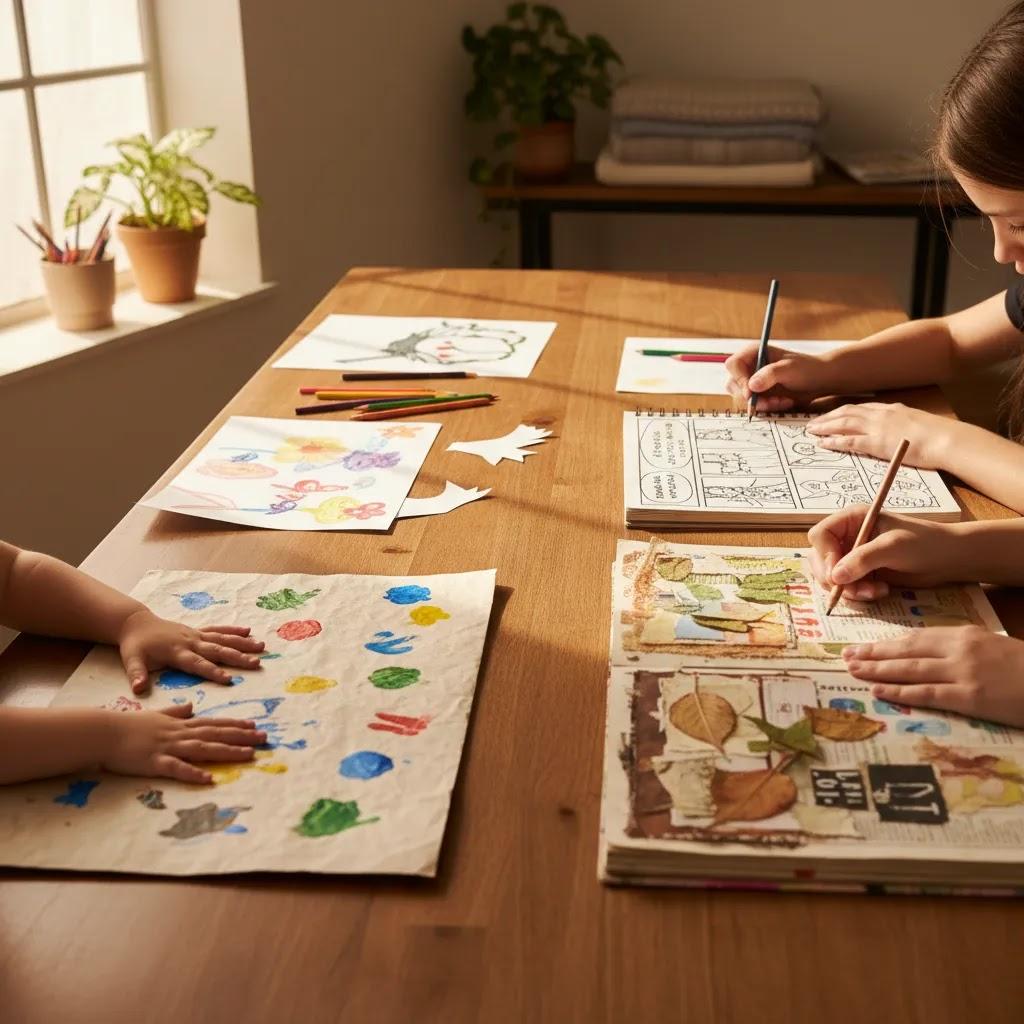
A scribbled page from a 4-year-old, a comic strip from a 10-year-old, and a layered collage from a 15-year-old may all be doing the same quiet job: helping a child show what is hard to say out loud. That is why age matters so much in art therapy for children. The materials, pace, goals, and likely outcomes often shift with development, attention span, sensory needs, and communication style. This guide is for parents, caregivers, educators, and curious readers who want a clearer picture of what changes from one age group to the next. If you want the broader hub first, you can start with Art Therapy Fundamentals. From here, we will stay focused on one question: what age-based approaches tend to look like, and what results are realistic to expect.
Contents
Provider qualifications, credentials, and regulation (what to check)
What happens in a typical child art therapy session (step-by-step)
Art therapy vs play therapy (and other expressive approaches)
Who this guide is for
This article is written for beginners and intermediate readers, but it should still feel useful if you work with children professionally. If you are trying to understand what is art therapy for children, how it differs by age, and what outcomes are realistic rather than idealized, you are in the right place.
You will not need an art background to follow this. The goal is simple: help you notice what tends to fit a preschooler, a school-age child, a preteen, or a teen, so your expectations stay grounded and kind.
What you’ll learn
How child development changes the structure of art therapy
Why the same activity may work very differently at age 4 versus age 14
What materials and prompts tend to fit each age band
What emotional, behavioral, and communication outcomes may emerge over time
How neurodivergence can change pacing, sensory setup, and visual structure
What caregivers can reasonably hope for, and what not to expect too quickly
Which signs suggest a setting is child-centered rather than generic
How to choose between individual, school-based, and community support options
Why age shapes the process
Art therapy is not one fixed activity with one fixed outcome. A child’s age influences attention span, symbolic thinking, language level, impulse control, body awareness, and tolerance for frustration. That means an approach that feels natural for a 7-year-old could feel too abstract for a preschooler or too childish for a teenager.
In early childhood, the focus may lean toward sensory exploration, rhythm, routine, and very simple choices. In later childhood, art can become a bridge between feelings and stories. By adolescence, the work may become more reflective, identity-centered, and collaborative.
Age also affects how progress shows up. A younger child may not say, “I feel more regulated.” You might instead notice fewer explosive transitions, more flexible play, or an increased ability to separate from a caregiver. An older child might begin naming emotional patterns, asking for space, or using creative work to talk about grief, school pressure, or friendship conflict.
If you are also exploring targeted outcomes, these related reads may help: benefits of art therapy for children and art therapy benefits for kids.
Ages 3 to 5: early childhood approaches
What sessions often look like
For younger children, art therapy usually works best when it feels concrete, sensory-safe, and lightly structured. Sessions may include washable paint, clay, thick crayons, tearing and gluing, simple stamping, or drawing around a short story or feeling theme. The therapist often watches process closely: how the child approaches the table, handles mess, responds to choices, shifts between activities, and seeks help.
What helps at this stage
Preschool children are often still building the foundations of self-expression. They may communicate more through movement, repetition, color preference, or the way they engage with materials than through direct explanation. A useful approach tends to include routine openings and closings, clear visual boundaries, and a low-pressure invitation to explore rather than perform.
Likely goals and outcomes
At this age, progress may show up as better turn-taking, smoother transitions, reduced fear around mess or mistakes, more spontaneous play themes, or more confidence in choosing materials. Caregivers may also notice that the child brings home symbols or stories that open small windows into their inner world.
For children with sensory or communication differences, the setup may need more visual structure and fewer overwhelming choices. That is one reason some families also explore art therapy benefits for autism or the more specific topic of benefits of art therapy for children with autism.
Ages 6 to 9: school-age approaches

How the work changes
By early elementary years, many children can follow multi-step activities, reflect a little more on cause and effect, and use images to represent people, places, and events with greater intention. Art therapy may include feeling maps, “safe place” drawings, masks, comic panels, collage stories, or clay scenes that show home, school, or friendship experiences.
What therapists often watch for
The child’s themes matter, but so does flexibility. Can they begin without freezing? Do they erase repeatedly? Do they rush to finish? Do they become distressed if the picture does not match the idea in their head? These patterns can help adults understand perfectionism, anxiety, frustration tolerance, or relational stress.
Common outcomes
Children in this age group may begin to use art as a bridge into conversation. They might explain a drawing after making it, compare colors to emotions, or show different parts of themselves in a more direct way. Outcomes can include stronger emotional vocabulary, improved classroom coping, and a more visible link between body sensations and feelings.
Because school pressure often starts rising here, some readers also find it useful to explore art therapy benefits for students and related support topics in Anxiety, Stress & Emotional Wellness.
Ages 10 to 12: preteen approaches
Why this stage is distinct
Preteens sit in a transition zone. They often want to be taken seriously, but they may still rely heavily on images, metaphors, and playful distance to talk about vulnerable experiences. Art therapy at this age often works best when it respects growing independence without demanding adult-style insight too soon.
Useful techniques
Activities may include identity collage, “inside-outside” self-portraits, stress thermometers, visual timelines, comic-based problem solving, or mixed-media work around friendship, family change, and body image. Choice tends to matter more now. Many preteens engage better when they can personalize materials, themes, or format.
What progress may look like
You may see greater willingness to discuss peer conflict, school embarrassment, anger, loneliness, or family tension. Some children begin recognizing patterns such as “I shut down when I feel judged” or “I get loud when I feel left out.” That level of reflection can be meaningful, even if it arrives unevenly.
For some families, this is also the point where emotional support starts overlapping with broader concerns such as test stress or social anxiety. If that is relevant, art therapy for anxiety may offer a useful next layer of reading.
Ages 13 to 17: adolescent approaches
What teens usually need most
Teenagers often respond best when art therapy does not feel childish, forced, or overly interpretive. They may want privacy, autonomy, and a say in the medium. A strong therapist typically avoids overreading every image and instead invites meaning from the teen’s own perspective.
Common formats
Approaches may include photography, digital collage, sketch journaling, symbolic painting, zines, music-and-image pairings, or artwork built around identity, belonging, grief, relationships, and future fears. Adolescents can usually tolerate more abstraction, but they still benefit from clear boundaries and emotional pacing.
Expected outcomes
Teens may use the creative process to externalize feelings they do not want to speak directly. Growth could show up as stronger self-awareness, more nuanced emotional language, healthier coping choices, or better communication with trusted adults. At the same time, art therapy is not a shortcut. A guarded teen may need time before any visible shift appears.
It can also help to remember that some patterns continue across the lifespan. For a wider perspective, see benefits of art therapy for adults.
What outcomes may look like by age
Families often ask whether art therapy “works.” A gentler and more useful question is: what kind of change would fit this child’s developmental stage?
In younger children
Outcomes may be more behavioral and relational than verbal. You might notice improved transitions, more pretend play, less avoidance of certain themes, or increased tolerance for sharing space and materials.
In school-age children
Changes often become easier to spot in daily routines. Some children begin naming feelings sooner, recovering more quickly after upsets, or communicating school worries with less shutdown.
In preteens and teens
Outcomes may show up in reflection, self-advocacy, and emotional nuance. A young person might ask for quiet time before melting down, describe a conflict with more clarity, or use creative work to discuss topics that felt unreachable before.
What outcomes do not always mean
One vivid drawing does not automatically reveal a fixed truth. One calm session does not mean a child is suddenly fine. Progress is often uneven, especially during stress, family change, grief, academic pressure, or neurodevelopmental differences. That does not mean the process is failing. It may simply mean development is not linear.
What to look for in a child-centered art therapy approach
If you are comparing options, it helps to look beyond “does this place offer art?” and ask how the support is adapted to children.
1. Developmental fit
The activities, room setup, and pace should match the child’s age and communication style. Preschoolers usually need very different expectations from teens.
2. Emotional safety
A good setting usually avoids pressure to produce attractive art or reveal personal meaning before the child is ready. Safety often looks quiet and ordinary: predictable routines, respectful language, and room for refusal.
3. Sensory awareness
Some children love paint and clay. Others may find sticky textures, strong smells, noise, or visual clutter overwhelming. A thoughtful approach adapts materials rather than forcing them.
4. Caregiver communication
Caregivers usually need enough feedback to understand themes, goals, and next steps, while still protecting the child’s privacy. The balance matters.
5. Realistic goals
Be cautious around promises of quick emotional change. Helpful goals are often modest and observable: improved expression, better frustration tolerance, more flexible play, or stronger coping after stress.
If you are also comparing local service formats, the cross-hub guide on art therapy singapore may help with provider types, programs, and cost context in that market. You can also browse the broader Art Therapy Fundamentals category for related topics.
Provider qualifications, credentials, and regulation (what to check)
Here’s the thing: “art therapy” can mean different things depending on where you live, who is using the title, and what professional rules apply locally. From a practical standpoint, it helps to treat credentials and policies as part of emotional safety, not as paperwork.
What credentials may matter
Titles vary by country and region. Some places have clear registration pathways for art therapists. Other places have looser terminology, where someone may offer “art-based sessions” without formal art therapy training. If you are unsure what you are looking at, ask the provider to explain their training in plain language.
Depending on your location, a credible provider may be able to show:
Specialized training in art therapy (not only general counseling or only art instruction)
Experience working with children, including child development knowledge and age-appropriate practice
Membership or registration with a relevant professional body (requirements and names differ by region)
Clear safeguarding policies, especially when working with minors (consent, privacy, reporting duties, and caregiver involvement)
Ongoing supervision or consultation, which is common in child-focused helping professions
What “scope of practice” means in simple terms
Scope of practice is the boundary around what a provider is trained and permitted to do. Some professionals can offer supportive, creative emotional work but cannot provide certain clinical services. Others may be licensed to assess and treat a wider range of concerns. In real life, this affects what your child can reasonably receive in that setting and who should be involved if needs change.
Consider this: if a child has safety concerns, severe distress, or complex needs, art therapy may be one part of support, but it may not be enough on its own. Some families choose a team approach, for example, pairing art therapy with a licensed clinician, school-based support, or pediatric care, depending on what is going on.
A short checklist of questions to ask
What many people overlook is that “experience with kids” is not the same as “experience with your kid’s situation.” If any of these areas matter to your family, it is reasonable to ask directly:
What ages do you work with most, and what does a typical session look like for that age?
How do you adapt sessions for neurodivergence, including sensory sensitivities or high movement needs?
Have you supported children with very limited speech, selective mutism, or strong reluctance to talk in session?
What is your approach if a child has had a scary experience or ongoing stress at home or school?
How do you involve caregivers, and what information will you share or not share?
What would make you suggest additional support, or a different type of provider?
A thoughtful provider can usually answer these questions without promising outcomes. That matters, because children are not predictable, and ethical support avoids guarantees.
What happens in a typical child art therapy session (step-by-step)
If you are new to this, it can help to picture the shape of a session. Most child-centered art therapy sessions are not “make a craft and go home.” They often have a gentle rhythm so the child knows what to expect, even when feelings are messy.
A simple session flow you may see
Every therapist has their own style, but a common structure looks like this:
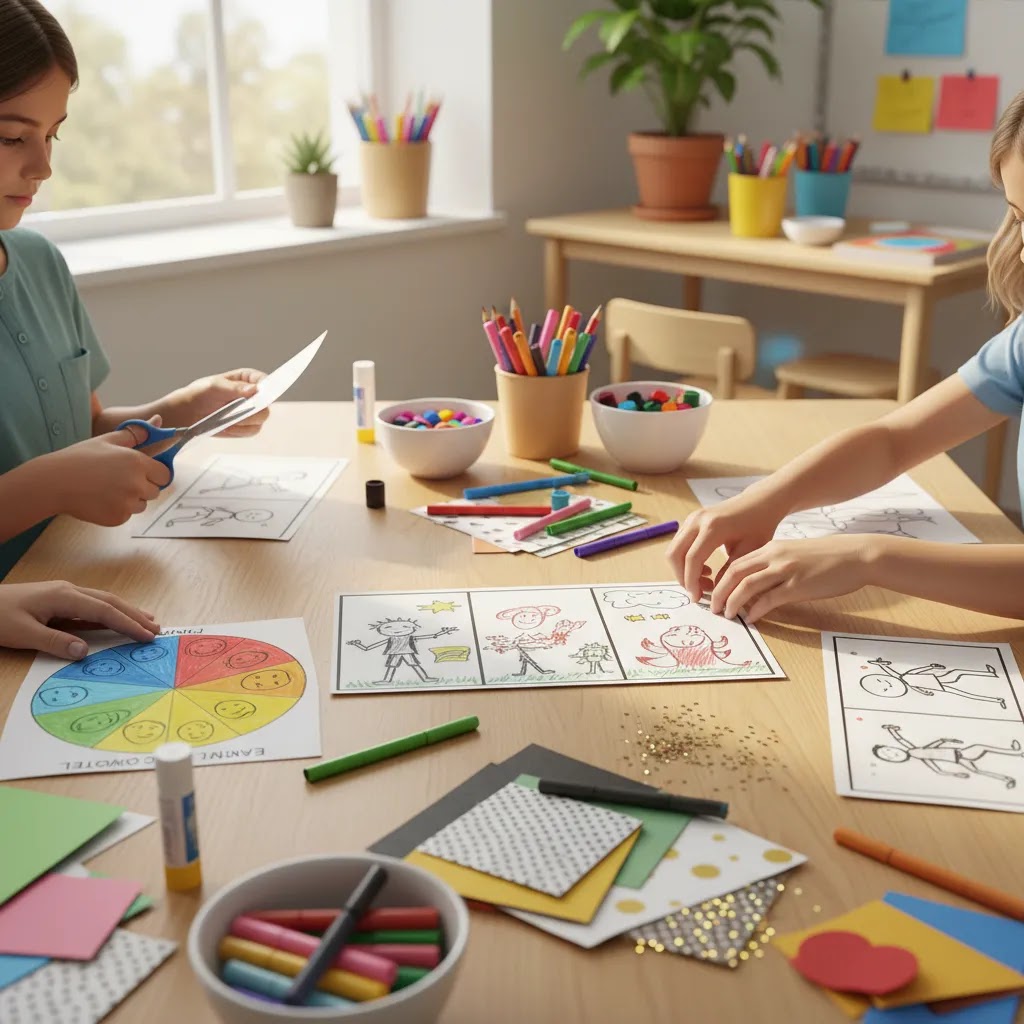
Arrival and settling: A short transition routine, sometimes a choice of seat, a simple visual check-in, or a familiar opening activity.
Warm-up and orienting: The therapist may reflect the child’s mood, offer a small prompt, or help them pick materials without rushing.
Art-making time: The child creates with support. The therapist may track themes, choices, and emotional shifts, and may offer options or boundaries if the child feels overwhelmed.
Gentle reflection: Some children like to name their work, tell a story about it, or point to parts they like or dislike. Others prefer the therapist to reflect observations without asking for explanations.
Closing and transition back: Clean-up can be part of regulation. The session may end with a predictable closing step, a plan for next time, and a transition to the caregiver.
Materials you may see, by age
Materials are usually chosen to match attention span, motor skills, and sensory comfort. A therapist may offer a limited set of options so the child has choice without being flooded.
Ages 3 to 5: Thick crayons, washable markers, finger paint or washable paint, play dough or soft clay, large paper, simple collage pieces, glue sticks, stamps.
Ages 6 to 9: Markers and colored pencils, watercolor, oil pastels or chalk pastels, collage materials, clay, simple mixed media, comic panels or templates.
Ages 10 to 12: More complex collage and mixed media, sketch materials, painting, clay, printable prompts or visual scales, “inside-outside” templates, identity-based projects.
Ages 13 to 17: Sketch journaling, painting, advanced collage, photography or digital formats (when offered), zines, symbolic work, personal creative projects the teen helps define.
What caregivers usually see or hear afterward
Parents often want to know, “What did my child draw, and what does it mean?” The reality is that interpretation on demand is usually avoided. Art can be meaningful without being decoded into one correct message, especially with children who are still developing symbolic thinking and trust.
In many settings, caregivers get a brief update that covers:
How the child arrived and transitioned into the session
General themes (for example, “school felt big today,” “lots of control and order showed up,” or “they wanted to work with strong colors and firm pressure”)
Skills being supported (choice-making, frustration tolerance, emotional labeling, sensory regulation)
Any practical next steps (for example, predictable routines, sensory considerations, or coordination with school support)
Privacy boundaries vary, and they should be explained upfront. A child often benefits when they know the space is not a report card, while caregivers still receive enough information to feel oriented and safe.
Pros and Cons
Strengths
It can give children a nonverbal path into feelings that may be hard to explain directly.
Age-based approaches can be adapted for attention span, sensory preference, and communication style.
Creative work often provides concrete starting points for conversation between child, caregiver, and therapist.
Progress can appear in multiple forms, including play, regulation, flexibility, and self-expression, not only spoken insight.
It may feel more approachable than talk-heavy support for children who resist direct questioning.
Considerations
Outcomes are rarely immediate, and younger children may show change indirectly rather than clearly.
Not every child enjoys the same materials, and some may find certain sensory experiences overwhelming.
Art therapy is not a substitute for urgent or intensive care when safety concerns are present.
Parents may expect verbal explanations too soon, which can create pressure and reduce usefulness.
Art therapy vs play therapy (and other expressive approaches)
Now, when it comes to choosing support for a child, the most common decision is not “art therapy or nothing.” It is often “art therapy or play therapy,” or a mix of approaches that all look creative from the outside. The differences can be subtle, but they can matter for fit.
A parent-friendly distinction
Art therapy tends to emphasize creating an image or object that can hold a feeling at a safe distance. The art becomes a shared reference point: “this is the worry,” “this is the storm,” “this is the part of me that wants to hide.” For some children, that visual container makes talking, or even just noticing, more possible.
Play therapy tends to emphasize communication through play itself. A child might express themes through role play, dolls, miniatures, sand, games, movement, or imaginative stories. For younger children especially, play can be their most natural language.
Which might fit, based on age and communication style
Think of it this way: you are trying to match the medium to how your child already shows you who they are.
If your child is highly active or resists sitting: play-based sessions, or art therapy that allows movement and short bursts, may be a better starting fit than long table work.
If your child is visual and likes to draw privately: art therapy may feel safer because the page “speaks” first.
If your child needs symbolic distance: both can help, but art can offer a concrete object (a mask, a creature, a collage) that holds emotion without requiring direct disclosure.
If your child gets flooded by open-ended play: some children do better with the quiet boundaries of materials and a beginning-middle-end structure.
If your child is very young: many providers lean heavily on play, sensory exploration, and simple art-making rather than expecting sustained image-based reflection.
Many child providers blend modalities
The reality is that many clinicians do not practice in a single lane. A child session may include drawing, movement, games, storytelling, and sensory work, because that is often what developmentally makes sense.
If you want to understand what your child will actually be doing, it can help to ask:
Is the session mostly table-based art-making, mostly play, or a mix?
How do you support a child who avoids the activity, gets stuck, or gets overwhelmed?
Do you use structured prompts, or is the child leading most of the time?
How do you decide what to introduce next, and how do you track progress in a child?
Those answers often tell you more than the label on the website.
Who this kind of support may fit best
Age-based art therapy approaches may be especially helpful for children who seem emotionally flooded, quiet, easily frustrated, visually expressive, or resistant to direct conversation. It can also fit children who communicate more comfortably through images, stories, movement, or sensory play than through long verbal check-ins.
This does not mean every child will connect with it right away. Some need time to warm up. Others may respond better to a blended approach that includes family support, school support, or another therapeutic style alongside art-making.
A gentle DailyLemons note

DailyLemons focuses on soft, accessible emotional exploration, especially for people who do not always connect with talk-heavy wellness tools. If you are still sorting through questions, you might keep exploring slowly through our educational content rather than trying to answer everything at once. A good next step could be reading one narrower topic that matches your concern, such as children’s benefits, autism-related applications, student stress, or anxiety-related support. That way, you can compare ideas side by side without rushing yourself into one conclusion.
Common mistakes families make
Expecting polished art
The value is usually in the process, not the picture. A child who smears paint, tears paper, or repeats one symbol may still be communicating something meaningful.
Asking for interpretation too quickly
Children do not always know what their image “means,” and they do not need to explain it on command. Pressing for a lesson can close the door that art just opened.
Choosing by age label alone
Chronological age matters, but so do sensory needs, communication style, developmental profile, and life stress. Two 8-year-olds may need very different setups.
Looking only for dramatic change
Some of the most meaningful shifts are small: a child stays at the table longer, tolerates a mistake, uses one new feeling word, or brings up a difficult event through a drawing.
Where to go from here
If you want a broader map of the topic, start at the main art therapy hub. If you already know the area you want to explore, these deeper reads may help you narrow the question:
Frequently Asked Questions
What is art therapy for children?
Art therapy for children is a guided form of emotional support that uses drawing, painting, collage, clay, and other creative processes to help children express, explore, and communicate experiences that may be difficult to put into words. The approach is usually adapted to age, attention span, sensory needs, and communication style rather than following one fixed activity format.
How is art therapy for children different from a regular art class?
An art class usually centers on skills, techniques, or finished projects. Art therapy centers on expression, emotional processing, and the child’s experience while creating. The artwork itself may matter less than how the child approaches it, what themes appear, and whether the process helps build regulation, communication, or self-understanding.
At what age can children start art therapy?
Some children can begin in the preschool years, often around ages 3 to 5, if the environment is developmentally appropriate. At that stage, the work is usually simple, sensory-aware, and play-based. Older children and teens may engage in more reflective or symbolic activities. Fit matters more than finding one perfect age cutoff.
Do children need to be good at art for this to help?
No. Artistic skill is not the goal. Many children benefit precisely because art gives them another way to communicate without needing polished results. A child who draws very simply, uses repetitive shapes, or avoids detail may still be expressing something important through choice, pacing, color, and story.
What outcomes are realistic to expect?
Realistic outcomes may include better emotional expression, stronger frustration tolerance, improved transitions, more flexible play, clearer communication about stress, or greater willingness to talk after creating. These changes often appear gradually and may differ by age. It is common for progress to look indirect at first, especially in younger children.
Can art therapy help anxious children?
It may help some anxious children by giving them a structured way to externalize worries, notice body signals, and practice calming routines through creative work. Outcomes vary by child, setting, and support needs. If anxiety is the main concern, the related guide on art therapy for anxiety may offer a more focused starting point.
Is art therapy useful for autistic children?
For some autistic children, art-based support may offer a more accessible form of expression, especially when visual structure and sensory preferences are respected. That said, no single method fits everyone. Materials, pacing, and communication style usually need adjustment. Families often benefit from looking at autism-specific applications rather than assuming a general child approach will translate well.
How often do children usually attend art therapy?
Frequency varies by setting, budget, goals, and availability. Some children attend weekly, while others are seen through school programs, group settings, or shorter-term support arrangements. Consistency often matters more than intensity. A predictable rhythm can make it easier for children to build trust and use the space more meaningfully over time.
What should parents ask before choosing a provider?
Helpful questions include how the work is adapted by age, how sensory needs are handled, what caregiver communication looks like, what goals are realistic, and how progress is observed. It also helps to ask about qualifications, policies, and scope of practice. A thoughtful provider should be able to explain their approach in clear, child-centered language.
Is art therapy effective for children?
It may be effective for some children, especially when the approach fits the child’s developmental stage, sensory profile, and communication style. Effectiveness is also shaped by practical factors such as the relationship with the therapist, consistency over time, caregiver support, and whether the child’s needs match the provider’s scope. Many families find it helpful to watch for small, observable shifts, such as easier transitions, more flexible play, or a new willingness to express feelings, rather than expecting a quick, dramatic change.
Which is better, EMDR or art?
Neither is universally better, because they are different types of support and may serve different goals. EMDR is a structured method used by trained clinicians and is often discussed in the context of processing distressing memories, while art therapy uses creative work to support expression, regulation, and meaning-making in ways that may be less direct. Some children may benefit from one approach, others from a combination, and some may need a different level of care depending on safety, intensity of distress, and developmental fit. If you are comparing options, it helps to ask about the provider’s training, how sessions are adapted for children, and what signs would indicate that additional support is needed.
Does art help with Alzheimer’s?
Some people with Alzheimer’s or other dementias may respond well to art-making because it can offer sensory grounding, routine, and a nonverbal way to connect. The goal is typically comfort, engagement, and quality of life rather than “fixing” memory changes. The right fit often depends on stage, supervision needs, and the environment. If dementia care is part of your family’s situation, it is wise to consult qualified medical and care providers about safety, appropriate activities, and support plans.
How to tell if a child is gifted in art?
Giftedness in art is usually less about making “pretty” pictures and more about a child showing unusual observation, visual memory, persistence with complexity, or a strong ability to communicate ideas through images for their age. You might notice advanced control of materials, inventive use of symbols, or a consistent desire to create without prompting. At the same time, artistic skill and emotional needs are separate. A child can be highly skilled and still use art to cope, or be emotionally expressive without technical ability. If you are curious, a supportive art teacher or a child-focused creative mentor can often give clearer feedback than comparing your child to others.
Key Takeaways
Art therapy for children is most useful when it matches the child’s developmental stage, not just their chronological age.
Preschool, school-age, preteen, and teen approaches often differ in structure, materials, goals, and expected outcomes.
Progress may appear as behavior, regulation, or communication changes rather than immediate verbal insight.
Child-centered support should feel emotionally safe, sensory-aware, and realistic about pacing.
Families often do best when they look for small, observable shifts instead of dramatic breakthroughs.
Conclusion
Art therapy for children makes more sense when you stop treating childhood as one category. A 4-year-old, 9-year-old, and 16-year-old may all need creative emotional support, but the approach should not look the same. Age shapes how children play, symbolize, tolerate frustration, share meaning, and build trust. If you are exploring this for your child, it may help to hold two ideas at once: the process can be deeply valuable, and the signs of value may be small at first. If you want to keep reading at your own pace, the DailyLemons art therapy hub and child-focused follow-up articles can help you narrow the next question gently rather than all at once.
This article is for educational purposes only and does not replace advice from a qualified licensed professional. Art therapy may support emotional expression and coping, but outcomes vary by child, age, setting, and individual needs. If a child may be at risk of harm, is in severe distress, or needs urgent support, contact local emergency services, a crisis resource, or an appropriately licensed clinician right away. If you are evaluating services, check the provider’s current credentials, scope of practice, and applicable local regulatory standards. In the United States, professional information may be reviewed through bodies such as the American Art Therapy Association.