Benefits of Art Therapy for Children (2026 Guide)
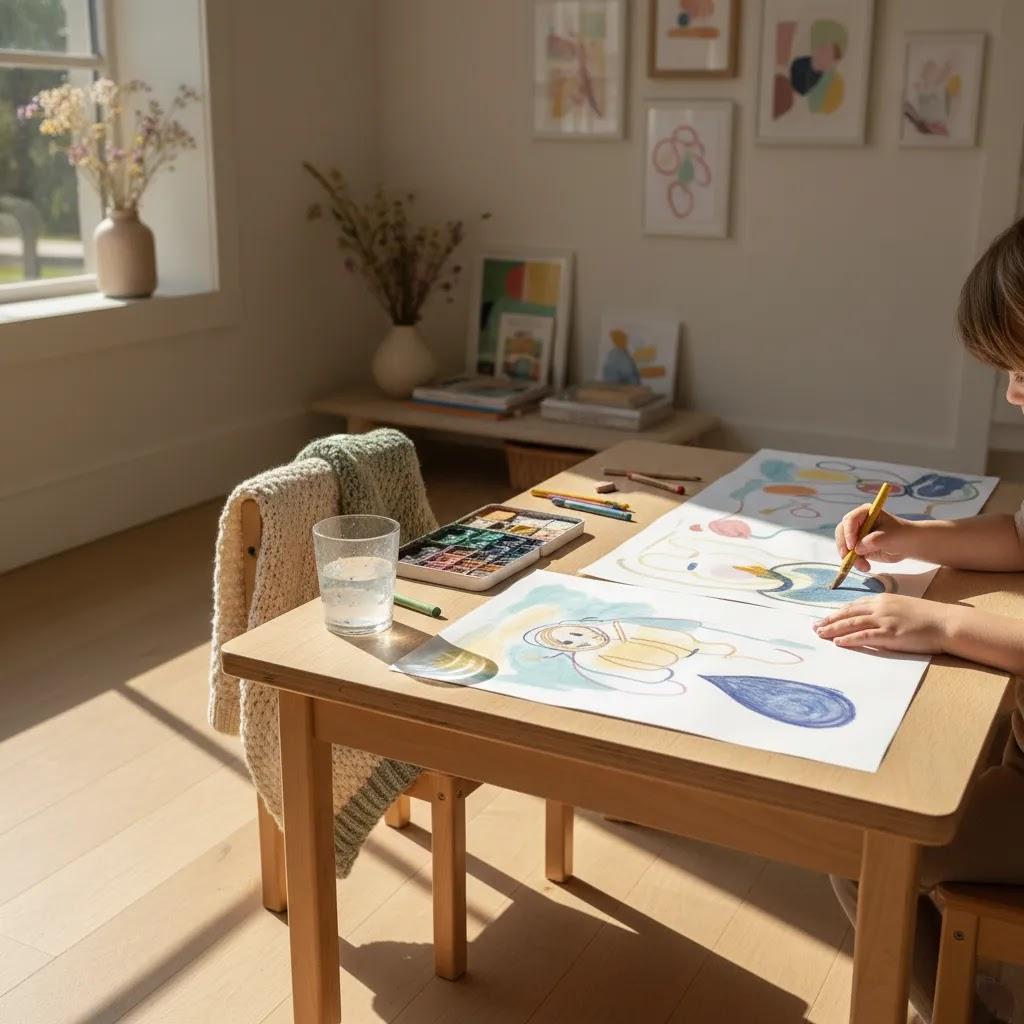
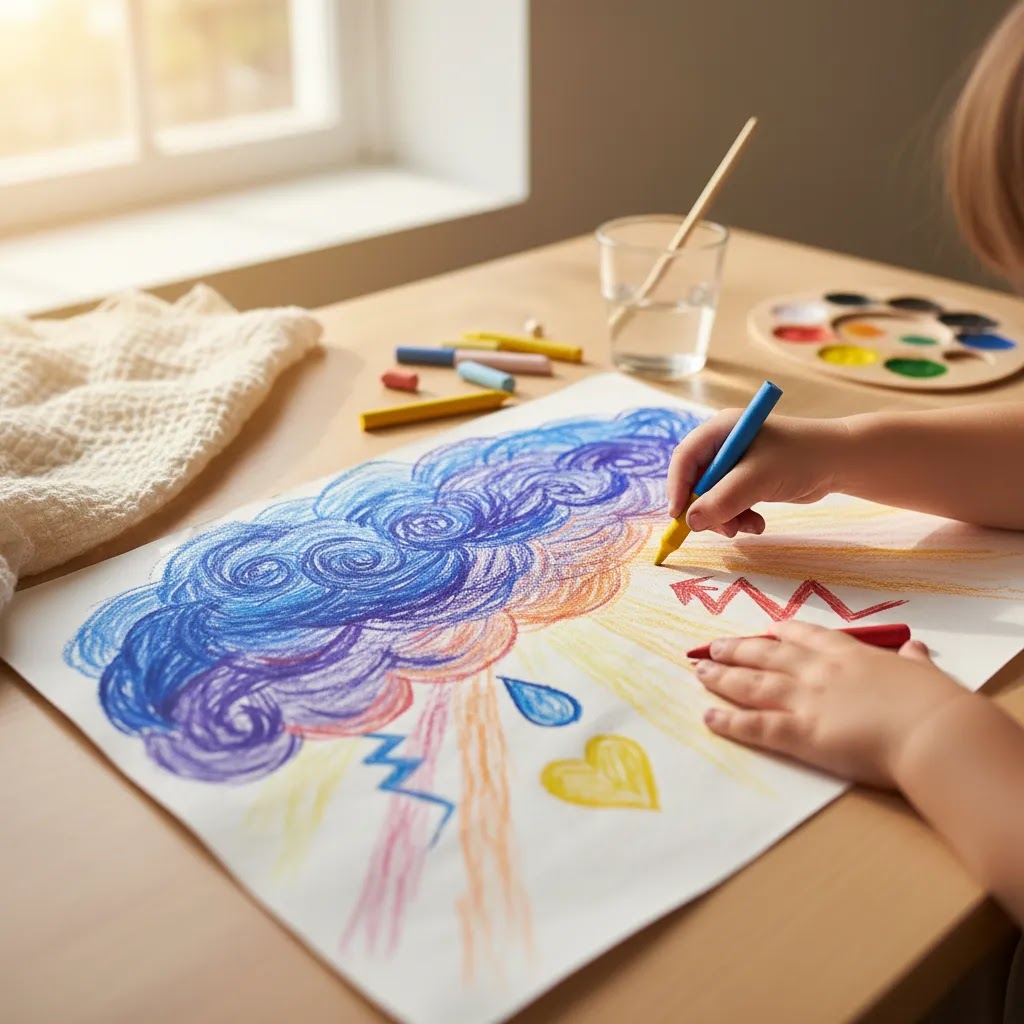
Children often show feelings before they can explain them. A tight grip on a crayon, a stormy page of color, or a quiet drawing with one tiny figure can say a lot. That is one reason the art therapy for children conversation matters. This article focuses on one specific question: why art therapy works differently for children than it does for adults. Rather than offering a broad overview, it looks closely at six child-specific differences, from how children communicate through images to how play, family context, and nervous system regulation shape the process. If you are a parent, caregiver, educator, or simply trying to understand the benefits of art therapy for children, this can help you notice what makes the experience more developmentally sensitive and often more approachable for young people.
Contents
Why This Topic Matters
Many adults picture therapy as talking. Children usually do not work that way. They are still building language, emotional awareness, impulse control, and the ability to sit with big feelings long enough to describe them clearly. Art therapy can meet them in a different place.
The benefits of art therapy in children are often tied to development rather than verbal insight alone. A child may communicate through movement, symbols, repetition, color choices, or the way they approach a task. That does not mean every drawing has a hidden message. It means the creative process itself can offer another path for expression, observation, and connection.
This matters for children dealing with stress, grief, family change, school strain, migration, social isolation, or emotional overwhelm. It may also matter for children who are neurodivergent, highly sensitive, or simply more comfortable showing than telling. If you want broader background on how creative work supports emotional expression, our guide to art therapy benefits can help. For a wider hub of related resources, you can also explore Art Therapy Fundamentals.
6 Ways Art Therapy Works Differently for Children
1. Children communicate through images before they can fully explain feelings
Adults often arrive with words like overwhelmed, numb, angry, or ashamed. Children may not have those labels yet. Even when they do, they may not trust them, use them consistently, or know how to connect them to what happened.
Art gives children another language. A page can become a place to show fear, confusion, loneliness, or hope without needing a polished explanation. This is one of the clearest art therapy benefits for children. The image can carry meaning before the child is ready to talk about it directly.
That difference is especially relevant for children who shut down under direct questions. A therapist may notice themes, choices, pace, and sensory needs while keeping the process gentle rather than interrogative.
How art therapy is different from “arts and crafts” (and why that matters)
Here’s the thing: a lot of people hear “art therapy” and picture a calming activity, like coloring or a fun craft hour. Those activities can be supportive, but art therapy is not defined by the supplies. It is defined by intention and relationship.
In practice, the “therapy” part usually means the creative work is held in a supportive, trained setting where the process is paced to the child, and the meaning is treated carefully. The focus is not on making something impressive. It is on helping a child express, organize, and explore what they might not yet be able to explain, with an adult who knows how to stay steady with whatever shows up.
What many people overlook is how a trained provider may use choices that look small but matter a lot for kids, like which materials are offered, how much structure is given, and when to pause and reflect. A child who feels flooded might do better with contained, predictable materials. A child who feels shut down might do better with more sensory options. None of this requires over-interpreting. It is more about noticing and supporting: what helps the child stay present, what overwhelms them, and what helps them feel safe enough to show a little more.
Some child-friendly directives can look simple on the surface, but they are often meant to invite personal meaning rather than one correct answer. Examples might include:
“Draw a safe place.”
“If this feeling had colors, what would they be today?”
“Draw what it feels like on the inside, then what it looks like on the outside.”
Consider this: the point is not that a “safe place” drawing means the same thing for every child. One child might draw a fort, another might draw a grandmother’s kitchen, another might draw a made-up planet. The meaning is personal, and a careful approach tends to let the child lead that meaning instead of forcing a neat interpretation.
2. Play is part of the process, not a distraction
With adults, creative work may feel reflective and intentional. With children, it often blends with play. That is not a lesser version of therapy. It is often the most developmentally appropriate one.
Children test, pretend, scribble, build, tear, glue, repeat, and switch directions quickly. Through that play, they may work through control, safety, separation, belonging, or frustration. A child making and remaking a scene is not necessarily avoiding the work. The play may be the work.
This is one reason art therapy sessions for children can look less linear than adult sessions. The structure may be softer, more sensory, and more flexible while still being purposeful.
Art therapy vs play therapy for kids (quick comparison)
Now, when it comes to choosing support, families often compare art therapy and play therapy because both can be child-centered and developmentally appropriate. Both may include imagination, symbolism, and a lot of nonverbal communication. Both also tend to rely on trust and steady attunement more than “perfect” explanations.
A simple way to think about the typical difference is the main language used. Art therapy often uses images and materials to help a child show what is going on, and it may leave a tangible product, like a drawing, collage, or clay form. Play therapy often centers more on enactment, like role-play, scenes, figurines, or storytelling through play, and the “product” may be more in the experience than on a page.
From a practical standpoint, here are a few cues that sometimes help caregivers decide what to explore first:
If your child likes making, building, or working with their hands, art-based sessions may feel more natural.
If your child prefers pretend, characters, or acting out stories, play-based sessions may feel less exposing.
If your child is very self-conscious about drawing, a provider might use lower-pressure materials (like collage or clay), or a play format might reduce performance anxiety.
If your child has a shorter attention span, a more movement-friendly play approach might fit better, although some art formats can also be brief and flexible.
If your child is sensory-sensitive, the choice of materials can matter a lot either way, since some children dislike sticky glue, strong smells, or certain textures.
The reality is many child therapists blend elements of both approaches. You might not need to choose a strict lane. What matters most is whether your child feels safe with the provider and whether the approach respects their pace.
3. Regulation often comes before reflection
Adults can sometimes talk while upset and make sense of their reactions later. Many children need to feel safer in their bodies first. A child who is dysregulated may not be able to reflect, listen, or answer meaningfully, no matter how kind the question is.
Art materials can support regulation through rhythm, pressure, repetition, and sensory engagement. Coloring, tearing paper, shaping clay, or making contained patterns can help a child settle enough to stay present. This is part of why some people also find value in mandala art therapy benefits, especially for structure and calm.
For children, the creative act may first help with settling, then expression, then meaning-making. That sequence can be very different from adult talk-based work.
4. Developmental stage changes what the art means and how the session should be guided
A five-year-old, a ten-year-old, and a sixteen-year-old may all benefit from art therapy, but not in the same way. Younger children may use simpler symbols, shorter attention spans, and more sensory exploration. Older children may be more self-conscious, more verbally aware, and more concerned with whether their art looks “good.”
This means the benefits of art therapy for children depend partly on matching the activity to the child’s age, regulation level, and comfort with creative work. A prompt that feels freeing to one child may feel confusing or exposing to another.
Good child-centered art therapy is not about forcing interpretation. It is about creating enough structure, choice, and emotional safety for the child’s developmental stage.
5. Caregivers often shape the outcome more than they do in adult therapy
Children live inside relationships. Their routines, sleep, transitions, stress levels, and emotional safety are influenced by home, school, and caregiving patterns. Because of that, art therapy for children often works best when the adults around them are part of the support system.
That does not mean a child loses privacy. It means caregivers may need guidance on how to respond to emotional expression, how not to over-interpret artwork, and how to create a calmer environment between sessions. In many cases, small changes outside the room support what happens inside it.
This is one reason parents sometimes ask not only what is benefits of art therapy for children, but also how they can support the process gently at home. Often, the answer is through curiosity, consistency, and less pressure to explain everything.
6. Art therapy can be especially helpful when words feel risky, unfamiliar, or culturally loaded
Children who have moved countries, experienced displacement, or live between languages may find visual expression more accessible than direct emotional conversation. The same can be true for children from families or communities where discussing feelings openly feels unfamiliar, unsafe, or simply not natural.
In those situations, art therapy and counseling for migrant and refugee children may offer a softer bridge. Images, symbols, and sensory materials can reduce the pressure to “say it right.” They may also allow a child to move at their own pace without having to translate every feeling into adult language.
This does not mean art removes cultural complexity. It still needs thoughtful, ethical, and developmentally sensitive care. Yet for many children, creative work can make emotional expression feel less exposed and more manageable. If you are comparing related approaches, our article on expressive arts therapy vs art therapy may help clarify the differences.
Pros and Cons
Strengths
It gives children a way to express feelings that may be hard to put into words.
It can feel safer and less direct than sitting face to face answering questions.
It supports regulation through sensory, repetitive, and hands-on activities.
It can match a child’s developmental stage more naturally than adult-style talk formats.
It may help caregivers notice patterns without pushing a child to explain too much, too soon.
It can be useful across many situations, including grief, transitions, school stress, and emotional shutdown.
Considerations
Not every child enjoys art materials, and some may feel self-conscious or frustrated by them.
Artwork should not be over-interpreted, especially by adults looking for one fixed meaning.
Benefits are often gradual and may depend on the child’s environment, readiness, and support system.
Creative activities at home are not the same as working with a trained art therapist.
Children dealing with intense distress may need broader support beyond art-based sessions alone.
Who This Approach May Help Most
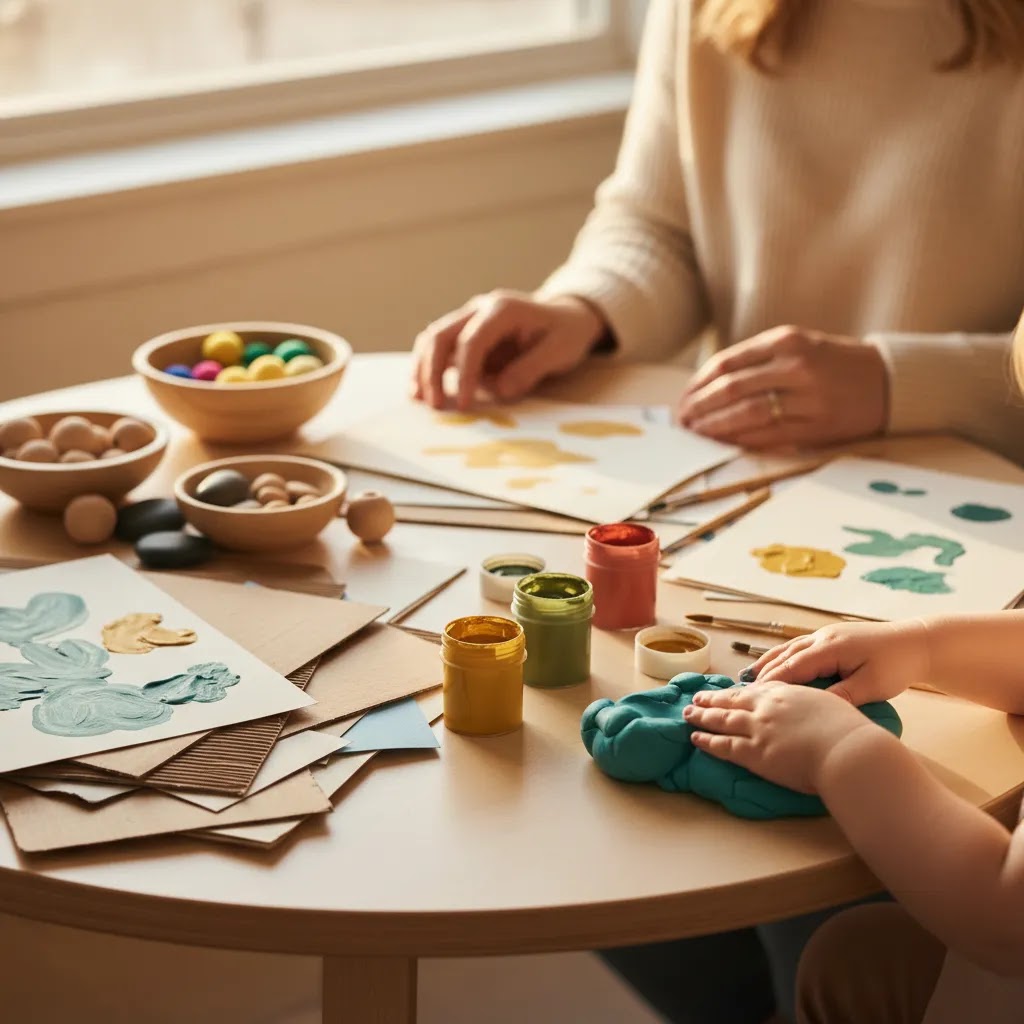
Art therapy may be especially helpful for children who struggle to name feelings, avoid direct emotional conversations, or become overwhelmed quickly. It can also suit children who respond well to images, color, movement, and hands-on activities. Neurodivergent children, children navigating family change, and children adjusting to new schools, languages, or homes may find this approach more accessible than purely verbal support.
It is not only for children who love drawing. A child can benefit even without artistic confidence. What matters more is whether creative expression feels like a gentler doorway than explanation. If emotional strain shows up alongside worry, tension, or overwhelm, families may also find related support ideas in Anxiety, Stress & Emotional Wellness.
A Gentle Next Step With DailyLemons
If you are still sorting out what kind of creative support feels right, DailyLemons can be one calm place to keep exploring. Our resources focus on emotional expression in a non-clinical, low-pressure way, which can be especially helpful if a child or caregiver feels unsure where to begin. You might start with foundational reading on child-centered creative support, then compare broader art therapy benefits with more specific formats and activities.
If structured visual practices feel relevant, you can read about mandala art therapy benefits. If you are trying to understand whether a wider multimodal approach might fit better, our look at expressive arts therapy vs art therapy may help. You can also browse the wider Art Therapy Fundamentals section whenever you feel ready.
How to Choose Art-Based Support for a Child

If you are exploring the best benefits of art therapy for children in real life, the first question is not whether a child makes “good art.” It is whether the setting feels safe, age-appropriate, and responsive to the child’s needs.
1. Look for developmental fit
A younger child may need shorter activities, more movement, and more sensory options. An older child may want privacy, clearer goals, and less playful framing. A good approach usually matches the child’s age, attention span, and comfort level rather than using the same prompt for everyone.
2. Notice how the adult guides the process
Helpful support tends to sound curious, not controlling. The adult does not rush to decode every image or tell the child what the art “really means.” Gentle questions, reflective language, and room for choice often matter more than technical art skill.
3. Pay attention to regulation, not just expression
Some children need grounding before they can express much at all. Activities with clear boundaries, repetitive motion, or tactile materials may help them settle. If a child becomes more distressed during or after creative work, slower pacing or a different format may be needed.
4. Include caregivers without taking over
Children usually do better when the adults around them respond with steadiness. That may mean keeping routines predictable, lowering pressure, and showing interest without demanding explanations. Caregiver involvement helps most when it protects the child’s pace instead of speeding it up.
5. Keep expectations realistic
Art therapy is not a quick fix, and a single drawing rarely explains everything. The benefits of art therapy for children may show up as small changes: more willingness to engage, calmer transitions, clearer emotional signals, or easier connection with a trusted adult. Those shifts can matter a lot, even if they are gradual.
Where Art Therapy Shows Up for Children (Schools, Clinics, Hospitals) and What to Expect
What many people overlook is that art therapy for children does not only happen in private offices. It can show up in schools, community programs, clinics, and hospital settings. Where it happens can shape what the sessions look like, how goals are set, and how information is shared with caregivers.
In schools
School-based support is often focused on helping a child function more comfortably in the school day. Sessions may be shorter, sometimes in small groups, and the setting may be a counseling office, a classroom corner, or another designated space. The goal may be things like smoother transitions, better tolerance for frustration, less shutdown during the day, or a safer way to express what is going on socially.
School settings can also come with real limits. Time is finite, privacy can be harder, and the work may need to align with school policies. Caregivers may get general updates, but not a detailed play-by-play of what the child created or said, especially if that would compromise trust.
In private clinics or community practices
In a private setting, sessions may be longer and the environment is often designed specifically for creative work, with more consistent access to materials and a more predictable routine. Goals may be broader, and pacing may be slower if needed. Caregiver involvement can vary, but many providers include periodic check-ins to support the child outside the session without turning the child’s private space into a family report-out.
In hospitals or medical settings
In medical environments, art therapy may focus on coping and comfort during a stressful time. Sessions might happen bedside, in a playroom, or during longer stays. The work is often practical: reducing distress, giving a sense of control, and helping children express what is hard to say in a setting where they may feel watched or overwhelmed. Confidentiality expectations can be different here too, because the care team may coordinate closely, and safety needs may require more communication.
Confidentiality and caregiver involvement: what to expect
Think of it this way: children typically need some privacy to be honest, and caregivers typically need enough information to support the child well. Different settings balance this differently. You can usually ask the provider upfront:
What gets shared with parents or caregivers, and what usually stays private?
How will safety concerns be handled if they come up?
Will teachers, school counselors, or medical staff be involved, and in what way?
How do you get consent for materials, photos of artwork, or sharing examples in meetings?
A quick safety and quality checklist
From a practical standpoint, it can help to look for basics that support safety and trust, regardless of setting:
Materials are age-appropriate and supervised, especially when items could be sharp, small, or messy.
The space feels predictable and respectful, including how artwork is stored or handled.
The provider explains boundaries in a way a child can understand.
There is a clear plan for caregiver communication and for urgent safety issues.
The child is not pressured to explain or “perform” through their art.
If a child talks about wanting to disappear, seems unsafe, or shows signs of severe distress, seek immediate support from a licensed mental health professional, pediatric provider, or local emergency service. Art-based support can be helpful, but urgent safety concerns need prompt human care.
Frequently Asked Questions
What are the main benefits of art therapy for children?
Art therapy may help children express feelings, build emotional awareness, and feel more regulated through hands-on creative work. For many children, the process feels less pressured than direct conversation. The benefits often depend on the child’s age, comfort with materials, and the safety of the environment around them.
Is art therapy only helpful for children who like drawing?
No. A child does not need to be “good at art” or even especially interested in drawing. Some children respond better to clay, collage, paint, or simple mark-making. The value is usually in expression, sensory experience, and relationship, not artistic talent or polished results.
How does art therapy work differently for children than adults?
Children often rely more on images, play, and sensory experience than on long verbal reflection. Sessions may be more flexible, more structured around regulation, and more influenced by developmental stage. Caregivers also tend to affect outcomes more directly because children depend on their wider environment.
Can parents do art therapy at home?
Parents can absolutely offer supportive creative time at home, but that is not the same as formal art therapy. Home activities can encourage expression and connection. A trained art therapist brings clinical judgment, developmental understanding, boundaries, and a more careful way of holding what comes up.
Should adults interpret a child’s drawings?
Usually, it is better to stay curious than certain. A single image can mean many things, and children often create for sensory, playful, or practical reasons as much as symbolic ones. Asking open questions such as “Want to tell me about this?” is often gentler than assuming what the picture means.
Can art therapy help children dealing with relocation or cultural transition?
It may. Children adjusting to migration, displacement, language changes, or cultural transition sometimes find visual expression easier than direct emotional talk. Art can reduce pressure around finding the right words. Still, support should be culturally sensitive, paced carefully, and responsive to the child’s lived context.
How long does it take to notice benefits?
That varies. Some children seem more settled or engaged quite quickly, while deeper trust and expression may take longer. Progress is often uneven. You may notice small changes first, such as more openness, fewer shutdown moments, or better tolerance for talking about feelings after creative work.
What if a child refuses art activities?
That can happen, and it does not mean the child is failing. Refusal may signal discomfort, fatigue, sensory dislike, fear of being judged, or simply that a different medium would fit better. A flexible approach matters. Sometimes another creative or relational format is a better match.
Is art therapy enough on its own?
Sometimes it may be one helpful part of support, but not always the whole picture. Children with complex emotional struggles, safety concerns, or major changes at home or school may need additional care. Art therapy often works best as part of a broader, thoughtful support system.
What is the 3 3 3 rule for children?
The “3 3 3 rule” is a simple grounding idea that some caregivers use to help a child settle during stress. One common version is: name 3 things you can see, 3 things you can hear, and move 3 parts of your body, like wiggle fingers, roll shoulders, or press feet into the floor. It is not a cure for distress, but it may help a child shift from overwhelm into the present moment. If it makes a child more agitated, it is usually a sign to go slower, simplify, or ask what feels safer.
What are the 3 C’s of art?
You may see different “3 C’s” depending on who is teaching it, so it helps to treat this as a flexible idea, not a universal rule. A common version is that art involves creativity, communication, and connection. For children, that can mean: making something (creativity), showing something they cannot easily say (communication), and feeling seen by a supportive adult (connection). In art therapy, those elements are often more important than technical skill.
Does art help with Alzheimer’s?
It may. Some people living with memory loss find that art-making supports mood, engagement, and a sense of identity, even when words are harder to access. Still, Alzheimer’s is a complex medical condition, and art is not a substitute for medical care. If you are considering art-based support for an older adult, it is usually best to coordinate with the person’s medical team and choose an approach that is safe, respectful, and adapted to their abilities.
What are the benefits of art therapy for children with autism?
Some autistic children may find art therapy supportive because it offers a nonverbal way to express preferences, feelings, and internal experience, without pressure to explain everything in words. Depending on the child, benefits could include more comfortable communication, better tolerance for sensory experience when materials are chosen thoughtfully, and a steadier way to practice flexibility and regulation. The fit matters a lot: sensory sensitivities, motor planning, and the child’s need for predictability should shape the materials, pacing, and how much structure is offered.
Key Takeaways
Children often express feelings through images, play, and sensory experience before they can explain them clearly.
Art therapy for children usually emphasizes regulation, developmental fit, and relationship more than adult-style verbal insight.
Caregiver response and the child’s wider environment can strongly shape the benefits.
Creative work may be especially helpful for children who find words difficult, unfamiliar, or emotionally risky.
The goal is not perfect artwork. It is safer expression, steadier connection, and a gentler way to explore what a child may be feeling.
Conclusion
The benefits of art therapy for children are not just smaller versions of adult benefits. They are often rooted in how children grow, communicate, play, and regulate. That is why creative work can be such a meaningful fit for children who struggle to explain what is happening inside. Images, color, repetition, and making can offer a softer doorway into feelings that may otherwise stay hidden or come out sideways. If you want to keep exploring, you might start with our guides on art therapy for children and broader art therapy foundations. You do not have to figure it all out at once. A small, thoughtful next step is enough.
This article is for educational purposes only and is not medical or mental health advice. Art therapy may support emotional expression and well-being, but it is not a substitute for individualized care from a qualified professional. Outcomes vary by child, setting, and support system. If a child may be at risk of harm, needs urgent help, or is experiencing severe distress, contact a licensed clinician, local emergency services, or an appropriate crisis resource right away.