
Mental Wellness Singapore Beyond Therapy (2026 Guide)
If you have ever searched for mental wellness singapore support, you may have noticed something frustrating. Most results jump straight to therapy, hotlines, or crisis care. Those services matter. They can be deeply important. But they are not the only kinds of support people look for, and they are not always the first step that feels possible.
Sometimes you want something gentler. A support group. A mindful movement class. A creative practice that helps you express what feels tangled. A school talk, community workshop, or digital tool you can try quietly at home. For many people in Singapore, especially teens, busy adults, caregivers, and people who find talking hard, these softer entry points can make emotional care feel more reachable.
This article looks at the broader mental wellness singapore picture beyond one-to-one therapy. You will find practical categories of support, what they tend to offer, who they may suit, and how to judge whether an option feels credible and safe. If you are still exploring, you might also find it helpful to read about meditation singapore as one possible starting point.
Why support beyond therapy matters
Therapy is valuable, but it is not the only door into emotional care. Some people are not ready for a formal setting. Some cannot afford weekly sessions. Some do not connect well with purely verbal formats. Others are not in acute distress, but still know they need steadier support than “just push through it.”
This is where broader singapore mental wellness options come in. They can offer structure, reflection, social connection, and practical coping tools without requiring you to explain everything all at once. That can be especially helpful if you feel emotionally flooded, numb, or unsure what you are even feeling.
These options also serve different functions. A mindfulness class may help with attention and settling. A peer group may reduce isolation. A creative practice may help you process feelings nonverbally. A workshop may give language to something you have been carrying alone. None of these automatically replace skilled clinical care, but they may complement it or help you decide what kind of support feels right next.
DailyLemons often speaks to this middle space, where emotional support does not have to begin with pressure or heavy language. Gentle, reflective tools can sometimes help you notice what needs attention before you choose a bigger next step.
Community-based options in Singapore
Many people looking for mental wellness sg support do better when care feels human and local. Community-based options can be less intimidating than formal appointments, and they often focus on belonging as much as information.
Peer support groups
Peer groups usually bring together people facing a shared theme, such as caregiver stress, grief, burnout, youth pressure, or loneliness. The value is not expert advice alone. It is the feeling that you do not have to explain the basics from scratch.
Group spaces vary a lot. Some are professionally facilitated. Some are community-led. Some are open drop-ins, while others use registration and screening. If you are considering one, ask who runs it, what confidentiality rules apply, and whether it is meant for emotional sharing, skills practice, or both.
Community workshops and wellness talks
Mental wellness talks singapore programs often sit in schools, community centers, libraries, and social service settings. They may cover stress, sleep, emotional regulation, caregiving, or communication. These sessions can be useful if you want education first and personal disclosure second.
The tradeoff is depth. A one-hour talk may help you understand a topic, but it usually will not give individualized support. Still, for many people, education lowers shame. It can help you recognize patterns and feel less alone.
Faith-based or identity-based support circles
Some people feel safer in spaces shaped by culture, language, spirituality, or shared identity. This may include women’s circles, youth groups, Chinese-speaking wellness sessions, or caregiver communities. If you have searched for mental wellness in chinese resources, you are not alone. Language fit can change whether support feels usable.
It helps to check whether a group welcomes emotional discussion openly or focuses more on general encouragement. Both can be useful, but they are not the same experience.
How to find low-cost or free mental wellness support (and what “free” often means)
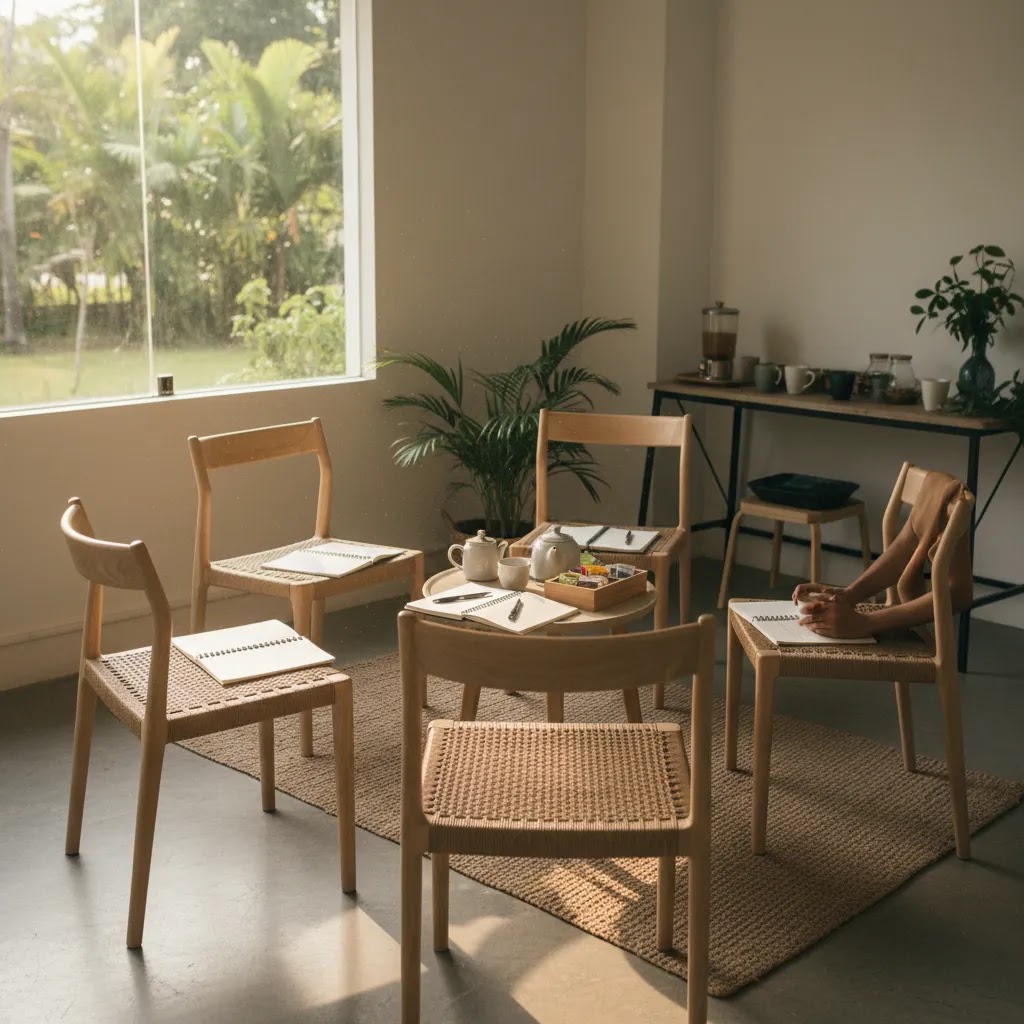
Cost is one of the biggest reasons people look beyond private sessions. The reality is, “free” and “subsidized” support in Singapore may still come with tradeoffs, and knowing those tradeoffs upfront can help you choose something you can actually stick with.
What free or subsidized support usually looks like
Free and low-cost options are often designed to help more people access care, so they may be structured differently from private providers. That can include group-based formats, time-limited sessions, eligibility criteria (such as age or residency), and some waiting time depending on demand.
Consider this: those limitations do not automatically mean low quality. A well-run group or a short-term skills program may be exactly what you need if your goal is stability, connection, or learning practical coping tools. It simply helps to know what you are signing up for, especially if you were hoping for open-ended one-to-one support.
Practical places to start searching
From a practical standpoint, many lower-cost pathways in singapore mental wellness begin with community and public systems that can assess needs and connect you to the right level of support. People often find help through community-based teams, youth-focused assessment routes, school or polytechnic supports, and online resource directories or helplines run or referenced by public agencies.
What many people overlook is that “finding support” is sometimes less about picking a perfect service on your own, and more about finding a credible entry point that can help you navigate options, including what is subsidized and what is appropriate for your situation.
A quick cost-clarity checklist before you join
Before registering for a program, it helps to ask a few simple questions, even if the service is advertised as low cost.
- What is the total fee, not just the per-session price?
- Are there any registration fees, deposits, or required materials?
- Is the program time-limited, and what happens after it ends?
- Do subsidies apply to me, and what documents are needed to confirm eligibility?
- What is the cancellation and refund policy?
- Is there pressure to buy a package or upgrade to a more expensive tier?
Clarity here protects your energy. It also reduces the risk of starting something that feels financially stressful, which can quietly make emotional support harder to receive.
Creative and body-based support
Not every form of support needs to start with talking. This matters because emotional strain often shows up in the body first, or in the frustrating sense that words are not enough.
Art-based and expressive practices
Creative support can include art therapy, guided drawing, collage, movement, music, or reflective workshops that use color and imagery. These formats may suit people who freeze in conversation, teens who struggle to articulate what is wrong, or neurodivergent adults who process better through structure and sensory cues.
If you want to understand this path more clearly, the benefits of art therapy for adults may offer useful context. You can also browse the broader Art Therapy Singapore category for related reading.
Mind-body classes and calming practices
Yoga, breathwork, tai chi, guided relaxation, and somatic-style classes often sit under the wider umbrella of mental wellness singapore services, even though they may not be labeled that way. Their role is usually regulation rather than deep exploration. They help you slow physical activation, restore a sense of rhythm, and build safer contact with your body.
If you are comparing options, mindfulness singapore can be another gentle route. Some people start there because it feels private and low pressure. Others find stillness difficult and prefer movement or drawing first. That difference matters.
Why these options appeal to people who “cannot meditate”
A common assumption is that calm support means sitting quietly with your thoughts. For many people, that is exactly what does not work. If silence makes you more restless, a body-based or creative practice may feel more accessible because it gives your attention somewhere to go.
This does not mean one approach is better. It means fit matters. A structured, sensory activity can make emotional care feel more possible than a blank page or silent room.
Digital and self-guided support
Digital support has become part of the singapore mental wellness landscape because it meets people where they already are, on their phones, at odd hours, in private. That convenience can be meaningful if you are overwhelmed, caring for others, or unsure whether you want outside support yet.
Mood tracking, guided reflection, and wellness apps
A mental wellness app singapore search can lead to journaling tools, breathing prompts, mood trackers, guided audio, or creative reflection apps. These tools may help you notice patterns, name emotions, and build small routines. They can also be easier to revisit than a notebook if you prefer visual structure or short prompts.
DailyLemons is one example of a softer, non-clinical resource designed for emotional exploration, especially for people who do not always want to explain themselves in formal language. Used thoughtfully, tools like this may support reflection between other forms of care rather than acting as a full substitute for higher-support needs.
Online classes and recorded workshops
Many programs now offer virtual circles, recorded talks, or guided practices you can revisit. This can help if commuting feels draining or if you want to try a format quietly before joining in person. Digital access can also support people who need visual repetition or predictable structure.
Limits of self-guided care
Self-guided support can be flexible and affordable. It can also fall short if you are feeling isolated, highly distressed, or stuck in patterns you cannot untangle alone. Apps and recorded content do not assess risk, hold boundaries in real time, or respond like a trained person can.
That does not make them useless. It simply means they work best when you match the tool to the level of support you need.
Online counseling in Singapore: how it works, what to check for safety and quality

Online counseling has become one of the most searched mental wellness sg options because it can feel less intimidating than walking into an office. It may also be easier to schedule around school, work, caregiving, or social anxiety. Still, online support varies widely, so it helps to understand how it typically works and what to screen for.
How online counseling usually works, step by step
Most online counseling services follow a fairly similar flow.
- You choose a provider or complete an intake form describing what you want help with, your availability, and any preferences like language or therapist gender.
- You book a session slot, sometimes after a brief matching call or short questionnaire.
- Sessions usually run on video, phone, or text-based platforms, depending on what the service offers. Video is common for deeper work, while phone can feel easier if you do not want to be seen.
- Payment is typically upfront per session or via a package. Some platforms include messaging check-ins, while others keep support limited to the scheduled time.
- After the session, you may receive follow-up resources, suggested exercises, or the option to schedule the next session. Some services ask you to complete brief check-ins between sessions.
Here’s the thing: convenience can make it easier to start, but it also makes it easier to pick a service quickly without checking details. A few extra questions upfront can protect your privacy and your sense of safety.
Common modalities you might see listed, in plain language
If you browse online counseling profiles, you may see a lot of acronyms. These labels can be helpful, but they are not the whole story. Many therapists blend approaches based on your needs.
- CBT (cognitive behavioral therapy) is typically structured and skills-based. It often focuses on patterns between thoughts, feelings, and behavior, and may suit people who want practical tools and clear homework-style steps.
- ACT (acceptance and commitment therapy) often focuses on making space for difficult thoughts and feelings while still moving toward what matters to you. It can feel less like arguing with your mind and more like changing your relationship with it.
- EMDR is often used for trauma-focused work. It is usually more specialized and may not be offered by every provider. If this is listed, it is reasonable to ask about specific training and whether online delivery is appropriate for you.
- Schema therapy often explores long-standing patterns, needs, and coping styles, especially those that show up in relationships. It can be deeper and more exploratory over time.
- EFT (emotionally focused therapy) is often associated with relationship work, but can also be used to understand emotional cycles and attachment needs.
Think of it this way: if you want something structured, skills-based approaches may feel steadier. If you want space to explore history, relationships, and deeper patterns, a more exploratory approach may fit. If you are dealing with trauma, it is especially important to ask how the provider handles pacing and safety, and what support exists if you feel overwhelmed between sessions.
Safety and quality checks that matter online
Because online counseling can feel informal, some people forget it is still a service that should have clear boundaries. A few basic checks can make a real difference.
- Credentials and scope: check the provider’s stated qualifications, registration where applicable, and what they are trained to help with.
- Privacy and data handling: ask how sessions are conducted, whether the platform is encrypted, how notes are stored, and what happens with your personal data.
- Crisis boundaries: clarify what the service can do if you are at risk or in immediate danger. Many online services are not designed for crisis response, and they should say that plainly.
- Location and licensing realities: if the provider is overseas, ask whether they can ethically and legally support clients located in Singapore, and what that means for accountability and referral options.
The reality is that online counseling can be a meaningful part of mental wellness singapore support, but it works best when the service is transparent about limitations and escalation pathways. If a provider is vague about safety planning, confidentiality limits, or what to do in a crisis, that is a sign to slow down and ask more questions before you commit.
School, workplace, and family settings
Some of the most accessible mental wellness singapore support is embedded in everyday environments rather than specialist centers. These settings can be easier to enter because they feel familiar and practical.
Schools and youth programs
Mental wellness singapore school efforts may include counseling access, emotional literacy lessons, group workshops, or referral pathways through educators and student support staff. For teens, the best first step is often the one that feels least exposing. A school counselor, teacher, or youth worker may help open that conversation.
Parents and caregivers should check what a school actually offers, whether support is one-off or ongoing, and how privacy is handled. Young people often engage more honestly when they know what will and will not be shared.
Workplace wellness and employee support
Mental wellness day singapore initiatives and workplace well-being programs may include talks, screenings, digital tools, coaching, or employee assistance services. These can be useful entry points, especially for stress, burnout, and sleep disruption.
Still, workplace support has limits. Employees may worry about privacy or whether a session is truly independent. If a service is connected to your employer, ask how data is handled, what stays confidential, and whether you can access external referrals.
Caregiver and family support
Families often need support too, not only the person who seems to be struggling. Caregiver groups, parent talks, and family education programs can reduce blame and confusion. They may help adults respond more calmly when a teen shuts down, becomes irritable, or cannot explain what is wrong.
If you are looking for everyday practices rather than a formal service, stress relief activities singapore can give you ideas that fit around school or family life.
How to evaluate an option carefully
Not all wellness services are equal. Some are thoughtful and well held. Some are vague, overpromising, or simply not suited to what you need. A little checking can save you time, money, and emotional energy.
- Check the purpose. Is the service meant for education, peer support, creative exploration, stress management, or deeper personal work?
- Check who runs it. Look for clear facilitator backgrounds, relevant qualifications where appropriate, and honest scope of practice.
- Check privacy. Ask what is confidential, what may be shared, and how digital data is stored.
- Check structure. A clear format often feels safer than a vague promise of healing or transformation.
- Check fit. Ask yourself whether you want to talk, move, create, listen, or learn first.
You can also explore broader themes in Anxiety, Stress & Emotional Wellness if your main goal is everyday regulation rather than formal care decisions.
Be cautious with services that make absolute claims, dismiss therapy entirely, pressure you into packages, or suggest one method works for everyone. Emotional support is rarely that simple.
When gentle support is not enough

Broader wellness services can be meaningful, but there are times when they are not enough on their own. If you feel unable to stay safe, are in immediate danger, are thinking about harming yourself, or are unable to function day to day, urgent support matters more than educational or wellness content.
This also applies if a teen or loved one shows severe withdrawal, escalating distress, confusion, or signs that everyday support is not containing what is happening. In those situations, use appropriate emergency or crisis resources in Singapore and seek help from a qualified medical or mental health professional.
For non-urgent but more complex concerns, you may still use wellness tools alongside professional care. Many people combine approaches over time. A reflective app, a support circle, or a creative practice may sit beside counseling, medical care, or school support rather than replacing them.
Mental wellness hotlines and “first step” pathways in Singapore
If you are searching mental wellness hotline singapore options, it helps to know that there are different types of “urgent” doors, and they are built for different needs. Some services are for immediate danger. Some are for crisis support when you are struggling to stay safe. Others are there to help you figure out what kind of help fits, even if you are not in crisis.
Which door to try first: emergency, crisis, or navigation
Consider this: you do not have to be at your worst to ask for help, and you also do not need to guess perfectly. Still, these categories can reduce uncertainty.
- Emergency services and hospital A&E are appropriate if there is immediate danger, serious injury risk, or you cannot stay safe right now.
- Crisis hotlines are designed for moments when you feel overwhelmed, unsafe, or at risk, and need real-time support and grounding.
- Navigation or triage lines help you talk through what is going on and connect you to the right next step, even if it is not an emergency.
The reality is, people often wait because they feel they are “not bad enough.” If you are unsure, a navigation or crisis line can still be a first step, especially if you are worried about safety, spiraling thoughts, or a teen who feels out of reach.
Core national entry points people use in Singapore
These are commonly referenced first steps for emotional support and crisis care in Singapore. Availability and operating hours can change, so it is still worth double-checking the most current details before you rely on them.
- National Mindline 1771, which may offer phone support and digital channels such as WhatsApp and webchat for assessment, support, and referrals.
- Samaritans of Singapore (SOS) at 1767, which is commonly used for suicide crisis support.
- SOS CareText via WhatsApp, for people who find texting easier than calling.
- If immediate safety is a concern, you can go to any hospital A&E for urgent assessment and support.
What to expect when you contact a hotline or triage service
One reason people avoid calling is fear of saying the “wrong thing” or being judged. Most hotlines are used to uncertainty. You can start with something as simple as, “I do not know what I need, but I do not feel okay.”
Common questions may include what you are feeling right now, whether you are alone, whether you feel safe, whether you have thoughts of harming yourself, and what support you already have around you. If the service is a triage or navigation line, they may also ask practical questions about your age, location, and whether you are open to being referred to community or medical services.
Confidentiality is important, but it is not always unlimited. If there is a serious and immediate risk to safety, services may need to take steps to protect life. If you are worried about this, you can ask directly, “What are the limits of confidentiality here?” A credible service should be able to answer clearly.
What many people overlook is that you are allowed to pause. If you hang up, feel overwhelmed, or realize you cannot talk yet, that does not mean you failed. You can call back, switch to text if it is available, or ask someone you trust to sit with you while you reach out. The first step is often not a perfect conversation. It is simply making contact.
Frequently Asked Questions
What counts as mental wellness support beyond therapy in Singapore?
It usually includes services that support emotional well-being without being limited to one-to-one therapy sessions. Examples include peer groups, community workshops, mindfulness classes, art-based programs, workplace support, school-based services, wellness apps, and family education sessions. These options can help with stress, emotional awareness, social connection, and self-expression. They vary widely in depth and quality, so it helps to check who runs them and what they are designed to do. Some are educational. Some are reflective. Some are better seen as complements rather than substitutes for professional care.
Is therapy still better than other mental wellness singapore options?
Not always better, but often different. Therapy may offer more individualized attention, privacy, and support for complex or persistent struggles. Broader wellness services may be more accessible, less intimidating, and easier to try first. The right fit depends on what you need right now. If you want gentle structure, community, or nonverbal expression, another format may feel more possible. If safety, severe distress, or major functioning problems are involved, therapy or medical support may be more appropriate. Many people use both over time rather than choosing one forever.
Are mental wellness apps useful, or do they just feel superficial?
They can be useful if you treat them as tools, not miracles. A good app may help you notice patterns, build small routines, and find language for your inner state. That can be meaningful, especially if you are overwhelmed or private. Still, apps have limits. They do not offer live human judgment, personalized safety assessment, or the depth of an ongoing therapeutic relationship. Their value often depends on consistency and fit. If an app feels rigid, overly cheerful, or emotionally flat, you may be less likely to return to it.
What should I look for in a support group or workshop?
Start with clarity. You want to know the purpose, the facilitator, the format, and the privacy rules. Is it a psychoeducation talk, a sharing circle, or a guided skills group? Is the group open to everyone, or meant for a specific audience such as caregivers, young adults, or teens? Ask whether there are group guidelines and whether participation is optional. A thoughtful space usually explains what it can and cannot offer. If the event sounds vague, overpromising, or emotionally intense without clear boundaries, it may not be the right first step.
Can schools and workplaces really support mental wellness well?
They can help, especially as an entry point. Schools may offer counseling access, youth programs, teacher referrals, or emotional wellness education. Workplaces may offer talks, employee assistance, or wellness days. These services can make support easier to reach because they are embedded in daily life. Their limitations are usually privacy, time, and depth. A school or employer program may not be enough for ongoing or complex needs. It helps to ask what the service covers, who sees any records, and whether external referrals are available if more support is needed.
What if I want support in Chinese or in a culturally familiar setting?
Language and cultural fit matter more than many people expect. If you express feelings more naturally in Chinese, or feel safer in a group that understands your community context, that can affect how supported you feel. Look for organizations, talks, or facilitators that openly mention language access or culturally responsive programming. You can also ask directly before joining. A service does not need to be perfect to be useful, but if you spend all your energy translating yourself, the support may feel harder to use. Comfort and clarity are part of access.
How do I know if a wellness service is credible?
Look for plain, specific information. Credible services usually explain who they are for, what the format is, who facilitates them, and what limits apply. They do not promise to fix everything or suggest that one method works for every person. If a service involves deeper emotional work, check the facilitator’s background and experience. For digital tools, review privacy information carefully. A credible service also respects choice. It should not pressure you into expensive packages or make you feel guilty for needing another kind of support.
Can art-based or body-based approaches help if I struggle to talk about feelings?
Yes, they may. Many people process emotion through sensation, image, rhythm, or movement before they can describe it in words. Art-based and body-based practices can offer structure without forcing immediate explanation. That can be especially helpful for teens, trauma survivors, caregivers under strain, or neurodivergent people who find traditional discussion tiring or abstract. These approaches are not magic, and they do not suit everyone. But for some people, they create enough safety and expression to make deeper reflection possible later on.
Are community mental wellness services cheaper than therapy?
Often, yes, but not always. Talks, support groups, and digital tools may be free or lower cost than private sessions. Group programs and workshops also tend to be more affordable than one-to-one services. The tradeoff is usually personalization. Lower-cost options may offer less privacy, less continuity, or less tailoring to your situation. That does not mean they are lower value. If your main need is connection, education, or a gentle starting point, they may be exactly right. Always check the full fee structure before signing up, especially for multi-session programs.
What is National Mindline 1771, and is it only for emergencies?
National Mindline 1771 is commonly described as a national entry point in Singapore for mental health support, including emotional support, basic assessment, and guidance on where to go next. It is not only for emergencies. Some people contact it when they feel stuck, overwhelmed, or unsure what kind of help fits, even if they are not in immediate danger. If you are worried about privacy, eligibility, or what will happen after you reach out, you can ask those questions at the start of the conversation. Services like this typically aim to help you take a clearer next step, not force you into a single path.
If I need immediate help in Singapore, should I call a hotline or go to A&E?
If there is immediate danger, serious injury risk, or you cannot stay safe right now, going to any hospital A&E is an appropriate urgent option. A&E can help with immediate assessment and safety planning. Hotlines are often helpful if you are in crisis, feeling unsafe, or need support in the moment but can still remain physically safe while you talk or text. If you are unsure which is appropriate, you can still reach out to a hotline or navigation service and ask, “Do I need emergency care right now?” If you feel you might act on harmful thoughts, choosing the more urgent option is typically safer.
What should I do if I feel suicidal or worried about someone’s safety in Singapore?
Take it seriously and treat it as an urgent situation. If you or someone else is in immediate danger, contact local emergency services or go to a hospital A&E right away. If you are in crisis and need someone to talk to now, SOS 1767 and SOS CareText (WhatsApp) are commonly used options for suicide crisis support in Singapore, and National Mindline 1771 may also be used to seek urgent guidance and next-step referrals. If you are supporting someone else, staying with them (or ensuring they are not alone) and reducing access to obvious means of harm may help while you arrange urgent support. If you are unsure what to say, you can keep it simple: “I’m here with you, and I’m going to help you get support right now.”
How does online counseling work in Singapore, and is it confidential?
Online counseling usually involves booking a scheduled session by video or phone, completing an intake form, and paying per session or as a package. Confidentiality typically applies, but it is not always unlimited. Most services have boundaries related to serious and immediate safety risks, and they should explain what happens if a crisis comes up. Because privacy practices vary, it helps to check how the platform handles data, whether sessions are recorded, how notes are stored, and what happens if you stop using the service. If a provider cannot answer these questions clearly, that is a reason to pause and choose a more transparent option.
Where does DailyLemons fit into the mental wellness singapore picture?
DailyLemons fits best as a gentle, non-clinical companion for emotional exploration. It may be useful if you want reflective prompts, creative support, or a softer way to notice what you are feeling without the pressure of formal language. That can be helpful between other forms of care or when you are not ready to speak at length. It is not a crisis service and should not be used in place of urgent or higher-level support when safety is a concern. It is one option within a wider mental wellness ecosystem.
Key Takeaways
- Mental wellness singapore support goes beyond therapy and includes community, creative, digital, school, and workplace options.
- Gentler formats may feel more accessible if talking is hard, cost is a concern, or you are not ready for formal care.
- Art-based and body-based approaches can help when emotions feel difficult to explain in words.
- Credibility matters, check purpose, facilitator background, privacy, and whether claims feel realistic.
- Wellness support can complement therapy, but urgent safety concerns require crisis or medical help right away.
Conclusion
The mental wellness singapore landscape is broader than many first searches suggest. Beyond therapy, there are quieter forms of support that may meet you where you are: a community circle, a school-based conversation, a guided creative practice, a body-based class, or a digital tool that helps you check in gently. These options are not all meant to do the same job, and that is part of their value.
You do not need to force yourself into the most formal path first if that is not where you are. You can begin with what feels tolerable, clear, and safe. If you want to keep exploring, DailyLemons offers one gentle way to reflect on emotions without pressure, and its wider content can sit alongside your research into care options. Small, credible steps count. Sometimes the most useful question is simply, “What kind of support can I actually receive right now?”
This article is for educational purposes only and does not provide medical, psychiatric, legal, or crisis advice. Mental wellness services may vary in quality, scope, language access, privacy practices, and suitability for different needs. Always verify current qualifications, fees, policies, and confidentiality terms directly with the provider or organization before joining. If you are in immediate danger, feel unable to stay safe, or need urgent help, contact local emergency services or an appropriate crisis support resource in Singapore right away.