
Youth Mental Health Singapore Signs for Parents (2026)
What changes are part of growing up, and what changes may mean your child needs support? That question sits underneath many quiet searches about youth mental health Singapore families make late at night. A teen who used to talk may now shut their door. A child who once enjoyed school may start avoiding it. Not every mood shift means something serious, but patterns still matter. This guide is for parents and caregivers who want a calmer way to notice warning signs, understand what may be going on, and take a sensible next step without rushing to labels. If you want broader context first, our guide to mental health singapore can help place youth concerns within the wider support picture.
Why youth mental health deserves close attention
Youth mental health is not only about moments of crisis. More often, it shows up as a gradual shift in how a young person sleeps, studies, socializes, eats, copes, or speaks about themselves. Parents in Singapore may find this especially hard to read because school pressure, packed schedules, family expectations, and heavy screen use can make distress look like “normal stress” for longer than it should.
That is why patterns matter more than one difficult day. If a change lasts for weeks, affects daily functioning, or seems to shrink your child’s world, it is worth paying attention. This could include dropping activities they once cared about, increased irritability, frequent physical complaints before school, or a sudden need to avoid friends.
It may also help to zoom out. Some family concerns sit within wider social patterns discussed in our article on the singapore mental health study. Population-level trends do not explain one child, but they can remind parents that emotional strain among young people is not rare or “just your family getting it wrong.”
Youth mental health in Singapore, what recent public data suggests
Parents often wonder: is it just my child, or is something bigger going on? The reality is that Singapore has been paying closer attention to youth mental well-being in recent years, through public education efforts and updates from national institutions.
Publicly shared findings from sources such as the Ministry of Health (MOH) and the Institute of Mental Health (IMH), alongside mainstream reporting, have repeatedly pointed to a meaningful share of youths and young adults reporting emotional distress, anxiety, low mood, or stress that interferes with daily life. Different studies use different definitions and age ranges, so the exact numbers are not always comparable. Still, the overall direction matters: many young people report struggling, and many families are navigating this quietly.
Here is the thing: even when data is self-reported, it still matters. Self-reported surveys cannot diagnose anyone, and they do not replace a professional assessment. They do tell you what people are experiencing and willing to say out loud. For parents, that can be a helpful reminder that your child may not be “overreacting” just because the stress is not visible from the outside.
What protective factors can look like in real family life
Singapore discussions around youth well-being often highlight protective factors such as social support, resilience, and self-esteem. Those can sound abstract, but they become practical when you translate them into home life and community life.
- Social support can mean at least one steady adult your child trusts, plus one or two safe peers. From a practical standpoint, you can support this by keeping contact with a trusted relative, coach, teacher, or mentor, and by making it easier for your child to maintain healthy friendships.
- Resilience often grows when a young person feels allowed to struggle without being shamed for it. Consider this: resilience is not only about pushing harder, it is also about recovering, asking for help, and learning that a bad week does not define them.
- Self-esteem is usually strengthened by being seen for more than performance. You can help by naming effort, values, and small choices, not only results. Many young people absorb the message that they are only as good as their last grade, their last comment, or their last achievement. A more stable message at home can buffer that.
A plain-language reminder about what statistics can and cannot do
Population trends cannot tell you what your child is going through. A child can look “high-functioning” and still feel deeply unsafe inside their own thoughts. Another child can look disruptive or unmotivated and actually be overwhelmed or scared. Use data as context, not as a checklist. Your child’s pattern over time, and their level of distress or impairment, matters more than whether they “fit” a public headline.
Signs parents should watch at home, in school, and online

A single sign rarely tells the whole story. What tends to matter is a cluster of changes, especially if they are new, persistent, or getting stronger.
At home
- Withdrawing from family, spending nearly all free time alone, or seeming emotionally flat
- Frequent anger, snapping over small things, or tearfulness that feels hard to explain
- Sleeping far more or far less than usual
- Changes in appetite, energy, or personal care
- Loss of interest in hobbies, sports, music, gaming, or routines they usually enjoy
- Harsh self-talk such as “I’m useless” or “Nobody cares what happens to me”
At school
- A sudden drop in grades or repeated incomplete work
- School refusal, lateness, or frequent requests to stay home
- Increased perfectionism, panic around tests, or avoidance of presentations
- Conflict with teachers or friends
- Repeated headaches, stomachaches, or other stress-linked complaints before school
Online and socially
- Pulling away from trusted friends while becoming more reactive to social media
- Late-night scrolling that seems to worsen sleep and mood
- Obsessive checking, social comparison, or distress after going online
- Posts, messages, drawings, or searches that suggest hopelessness, self-harm, or wanting to disappear
Some of these overlaps also connect to broader mental health issues in singapore, but youth signs often show up through behavior first, not polished words. A young person may not say “I’m overwhelmed.” They may just stop going out, stop sleeping well, or start fighting more.
What signs can look like by age group
Parents often expect distress to look verbal and obvious. In younger children, it usually does not.
Children roughly ages 6 to 11
You may notice clinginess, more meltdowns, regression, stomachaches, headaches, irritability, or sudden school resistance. Some children become unusually perfectionistic. Others become quiet and blank rather than visibly upset.
Early teens roughly ages 12 to 14
This stage can be messy even in healthy periods, so look for duration and intensity. Watch for sharp changes in friendships, body image concerns, secrecy that feels fear-based rather than privacy-based, persistent anger, or intense dread around school and performance.
Older teens roughly ages 15 to 18
Warning signs may include isolation, hopeless comments, heavy self-criticism, risk-taking, disrupted sleep, academic shutdown, or using alcohol or other substances to cope. Some older teens look “fine” on the outside but are barely holding themselves together privately.
If your child struggles to explain feelings in words, nonverbal approaches may feel safer. Some families explore creative options through resources such as Art Therapy Singapore, especially when talking directly feels too exposed at first.
What can drive youth distress in Singapore, pressure points and risk factors parents may notice
Parents often ask “What caused this?” The honest answer is that youth distress usually does not have one simple cause. Think of it this way: it is often a stack of pressures, personality factors, and life events that builds until a young person’s coping capacity runs out. Two teens can be in the same school, same family, same routine, and still experience things very differently.
What many people overlook is that you can pay attention to possible influences without turning it into blame. The point is not to find the perfect explanation, it is to notice what might be pushing your child closer to the edge.
Common pressure points Singapore parents often recognize
- Academic stress and performance pressure, including fear of disappointing others, fear of falling behind, or constant comparison. Some youths look fine until exam periods, then their sleep and mood collapse.
- Social media exposure, including social comparison, online conflict, humiliation, or feeling “always on.” Late-night scrolling can also worsen mood simply by wrecking sleep.
- Peer conflict and relationship stress, including exclusion, shifting friend groups, bullying, or early romantic stress. For many youths, peer belonging does not feel optional, it can feel survival-level important.
- Family stress, such as conflict at home, caregiving burdens, financial strain, high criticism, or unpredictability. Even when parents try to shield children, tension tends to leak through tone, routine, and emotional availability.
- Chronic health conditions or ongoing physical discomfort that makes school and social life harder, or that creates a constant sense of being “different.”
- Perfectionistic temperament or high sensitivity, where the child sets harsh internal standards and reads small setbacks as personal failure.
- Big transitions, such as changing schools, exam years, moving, parental separation, or friendship breakups. Even “good” transitions can be destabilizing for some youths.
Internalizing vs externalizing distress, why it matters
Some youths turn pain inward. Others turn it outward. Both can be serious.
- Internalizing style can look like quiet withdrawal, constant worry, stomachaches, headaches, perfectionism, people-pleasing, or “I’m fine” said too quickly. These youths can be missed because they are not disruptive.
- Externalizing style can look like anger, rule-breaking, frequent conflict, impulsive behavior, defiance, or sudden risk-taking. These youths can be misunderstood as “just attitude” when distress is actually underneath.
Consider this: a child who is acting out may still be scared, ashamed, or exhausted. A child who is silent may be drowning. Paying attention to the emotional pattern, not just the behavior, helps you respond more accurately.
Why many youths avoid help, and how parents can lower resistance
Even when help is available, a young person might avoid it because they fear being judged, labeled, punished, or controlled. Some worry that adults will overreact and take away their phone, their freedom, or their privacy. Some parents also hesitate, sometimes out of worry about stigma, school records, or “making it worse” by talking about it.
From a practical standpoint, a few small moves can make support feel safer:
- Offer choices where you can: “Would you rather talk to the school counselor, a doctor, or a private counselor?” Choice can reduce the feeling of being forced.
- Explain what you are not going to do: “I’m not here to scold you, I just want to understand what it has been like.”
- Keep the first step small: a short consultation, a single check-in, or an initial school conversation, rather than committing them to a long process on day one.
- Be clear about safety boundaries: “If I think you are not safe, I will get urgent help. Otherwise, we can move at a pace you can handle.”
How to respond without making your child pull away
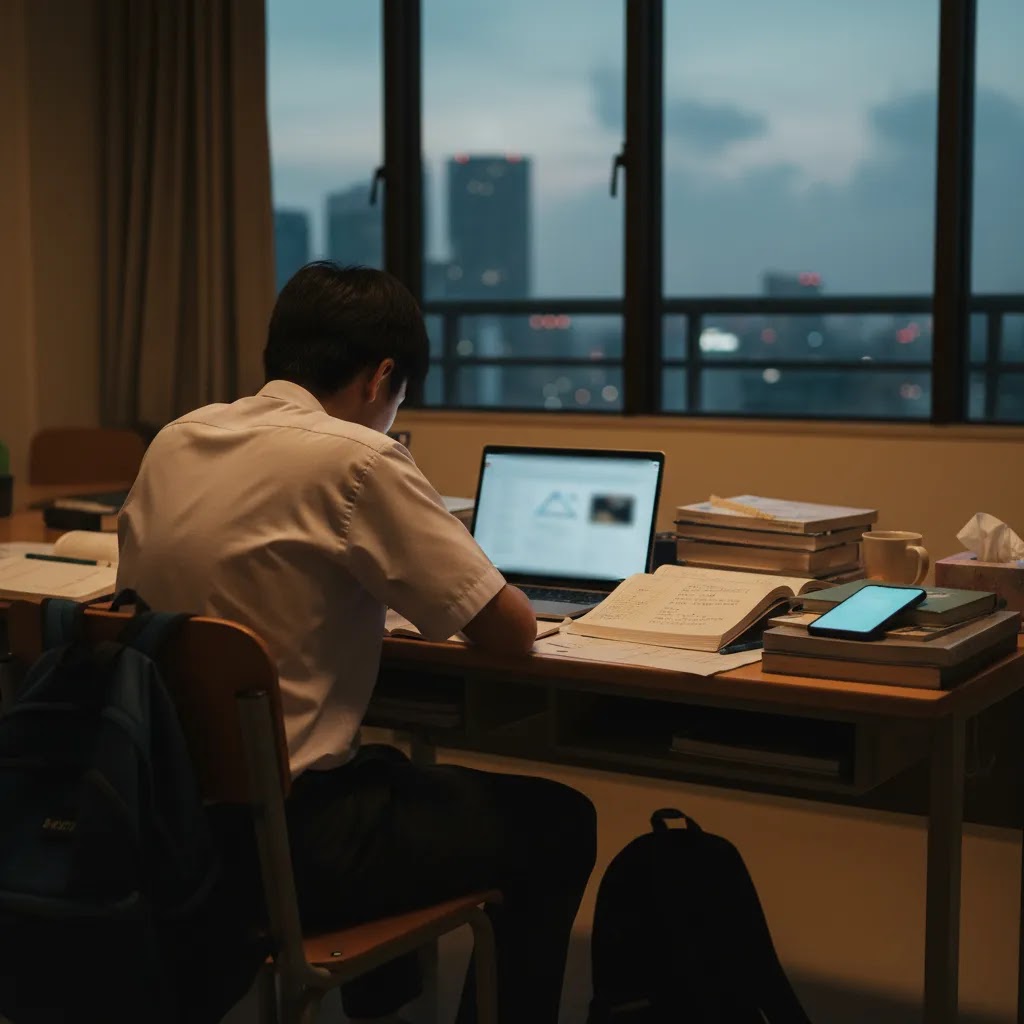
The goal is not to force a big conversation in one sitting. The goal is to make it easier for your child to feel safer telling the truth.
- Pick a low-pressure moment, such as a walk, car ride, or quiet part of the evening.
- Start with observations, not accusations. “I’ve noticed you seem more tired and have stopped seeing your friends.”
- Ask short, open questions. “Has anything felt especially heavy lately?” works better than a long speech.
- Stay calm if the answer surprises you. A big parental reaction can shut the door quickly.
- Avoid turning the first talk into a lecture about grades, screens, or attitude.
- If they do not want to talk, keep the door open and return later.
It can also help to offer different ways to express what is going on. Some young people find it easier to draw, rate their day with colors, or write a few words instead of speaking face to face. While youth needs differ from adult needs, the broader benefits of art therapy for adults also point to a useful principle: creative expression can help feelings become more visible when language is stuck.
If your child mentions self-harm, says they do not want to be here, talks about feeling unsafe, or seems unable to function, treat that as urgent. Stay with them, remove immediate means of harm where possible, and contact emergency services or an appropriate urgent support resource in Singapore right away.
Where families in Singapore often start
Many parents want one perfect door. In practice, the best starting point depends on urgency, your child’s age, your budget, and whether they will accept support at all.
School-based support
For many families, the first signal comes from a teacher, form tutor, school counselor, or year head. This can be a practical place to ask what they are seeing in the classroom, whether attendance patterns have changed, and what support the school can provide.
Primary care or a general doctor
If your child has sleep problems, appetite changes, panic-like reactions, ongoing fatigue, or repeated physical complaints, a doctor may help rule out medical issues and advise on referrals.
Private counseling or therapy
This may suit families who want more choice, faster access, or a provider with youth-specific experience. Ask whether the practitioner regularly works with children or teens, how parent involvement is handled, and what confidentiality limits apply.
Community and youth services
These can be especially helpful when cost is a concern or when a young person may engage better with a community-based setting than a clinic-style one.
If your family is also looking at stress-driven patterns rather than one single issue, you may find helpful background in Anxiety, Stress & Emotional Wellness. It can support better questions before you choose a service.
Singapore where to get help, starting doors and crisis options
Once you start looking for support, the system can feel confusing. What many people overlook is that you do not need the “perfect” entry point to begin. A useful way to think about Singapore support is “no wrong door.” If you start somewhere sensible, the next step is usually a referral, a handoff, or clearer guidance based on what your child needs.
Common starting doors, and what each is usually best for
- School counseling and student support teams: often a practical first step for school stress, social issues, attendance changes, and early concerns. Schools may also help coordinate adjustments, monitor behavior, and support a return to routine.
- Polytechnic or ITE student services, university counseling services: often relevant for older teens and young adults. Many students find it easier to start here because it feels closer to their daily life and less like “going to a clinic.”
- Polyclinic or GP: a common path when sleep, appetite, panic-like symptoms, fatigue, or physical complaints are part of the picture, or when families want medical guidance and referral options.
- Public hospital or specialist outpatient pathways: typically used when symptoms are persistent, complex, or significantly affecting functioning, or when there are safety concerns that need closer monitoring. Families may reach these services via referral.
- Community-based youth and family services: often helpful when family stress, relationship conflict, caregiving strain, or practical pressures are part of the situation. These settings can feel less intimidating for some youths.
- Private youth-experienced counseling or therapy: may suit families seeking faster access, specific approaches, or greater scheduling flexibility. It can be a good option if your child will engage and you can sustain the cost and routine.
Now, when it comes to “which one should I choose,” start by asking two questions: Is my child safe right now? And will my child actually show up for this first step? Sometimes the best first door is the one your child can tolerate.
If your child is in crisis, what to do in Singapore
If there is immediate risk, treat it as urgent. If your child has made a suicide attempt, is seriously injured, has taken substances in a dangerous way, is violent, or you cannot keep them safe at home that night, go to the nearest hospital Emergency Department or call 995 for an ambulance. If there is imminent danger or severe aggression, call 999 for police assistance.
If your child is expressing suicidal thoughts or you are worried about safety but it is not an immediate medical emergency, Singapore has crisis support options you can use to get real-time guidance:
- National mental health helpline: 1771 (for mental health advice and linkage to services)
- Samaritans of Singapore (SOS): 1767 (24/7 support for people in crisis)
- IMH Mental Health Helpline: 6389 2222
If you are not sure which to use, a safer approach is to choose the most urgent option you can justify. It is generally better to overreact slightly to a potential safety risk than to underreact and hope it passes.
What to expect when you make first contact
First contact often involves a brief triage. The goal is usually to understand urgency and fit, not to solve everything in one call or one appointment.
You may be asked:
- What changes you have noticed, and for how long
- Whether your child has talked about self-harm, suicide, or feeling unsafe
- Whether there has been a sharp drop in school attendance or daily functioning
- Any known triggers, recent events, or major changes at home or school
- Whether substances are involved
- Any existing medical conditions or medications
Consider this: preparing a simple timeline can make the first step much easier. Note when changes started, what you have tried, what has helped even a little, and what has clearly made things worse. If school is involved, it may help to summarize attendance issues, teacher feedback, or any recent disciplinary incidents. If safety is a concern, say it plainly.
A gentle support option alongside formal care

DailyLemons is not a crisis service, and it is not a replacement for licensed youth support in Singapore. What it may offer is a softer in-between space for reflection, especially for young people who struggle with direct verbal sharing. The brand is built around non-clinical, low-pressure emotional exploration, which can feel more approachable for families who are not ready for a highly formal first step.
That may be useful if your child resists traditional journaling, finds direct questioning overwhelming, or responds better to visual structure and guided creativity. Parents can also use DailyLemons content as a way to understand emotional patterns more gently before starting bigger conversations. If you are exploring the emotional expression side of support, the broader Art Therapy Singapore category may help you compare ideas and formats at your own pace.
Used well, resources like this can complement school support, counseling, family conversations, and medical guidance. They tend to work best as a bridge, not a substitute, especially where risk or safety concerns are present.
How to choose the right kind of support for your child
Parents often feel pressure to choose quickly and choose perfectly. A calmer approach is to compare options across a few practical filters.
1. Start with risk level
If there is any concern about immediate safety, self-harm, suicidal talk, extreme withdrawal, or inability to manage daily life, urgent support comes first. This is not the moment to test self-help tools or wait for things to settle on their own.
2. Match the format to how your child communicates
Some young people can talk openly with the right person. Others freeze in direct conversation. If your child is visual, sensory, or easily overwhelmed, a creative or structured format may be more realistic than expecting a long sit-down talk.
3. Check youth-specific experience
Ask whether the provider regularly works with children or adolescents, not just adults. Youth care often involves family dynamics, school pressures, developmental differences, and different engagement styles.
4. Ask about parent involvement and privacy
This matters more than many parents expect. A teenager usually needs some privacy to speak honestly, while parents still need enough communication to support safety and practical care. Ask how updates are handled and what would be shared if risk rises.
5. Look at access, cost, and follow-through
A theoretically ideal service is not very helpful if your child refuses to go, the wait is too long, or the logistics collapse after one visit. Consistency often matters more than choosing the most impressive-looking option.
If you want a broader sense of how emotional strain is showing up across the country, reading about the singapore mental health study and related mental health issues in singapore may help you place your child’s experience within a wider context without assuming every pattern means the same thing.
Pros and Cons
Strengths
- This topic helps parents notice patterns early, before a child reaches a more visible breaking point.
- Behavior-based warning signs are easier to observe than waiting for a child to explain everything clearly.
- A youth-focused lens helps families distinguish everyday stress from changes that may need support.
- Singapore-specific pathways make the guidance more practical for local parents.
- Creative and nonverbal options can widen access for children and teens who do not engage well with direct talk.
Considerations
- No article can tell you exactly what one child is experiencing.
- Some signs overlap with typical development, school pressure, physical health issues, or family stress.
- Parents may either overread small changes or miss quieter forms of distress that look like tiredness or attitude.
- Digital and self-guided tools may support reflection, but they are not enough for urgent or high-risk situations.
Frequently Asked Questions
What is youth mental health in Singapore?
Youth mental health in Singapore refers to the emotional and psychological well-being of children, teens, and young people within the local school, family, and social context. For parents, the most useful focus is not a formal definition but whether a young person’s mood, behavior, sleep, school functioning, or relationships have changed in a lasting way.
What are the first warning signs parents usually notice?
Parents often notice withdrawal, irritability, sleep changes, school avoidance, lower motivation, frequent physical complaints, or a loss of interest in usual activities. One sign on its own may not mean much. A pattern lasting several weeks, especially if daily life is shrinking, is usually a stronger reason to check in gently.
How do I know if it is stress or something more serious?
Stress is common, especially around exams, social conflict, and major transitions. Concern rises when the change is persistent, affects sleep, appetite, school attendance, friendships, self-care, or safety, or seems out of proportion to the trigger. If your child talks about hopelessness, self-harm, or not wanting to be here, seek urgent help immediately.
Should I talk to my child first or get outside help first?
If there is no immediate danger, a calm conversation is often a reasonable first step. Share what you have noticed and keep the tone gentle. If your child seems highly distressed, refuses school for an extended period, or mentions safety concerns, it may help to contact school support, a doctor, or a youth-experienced therapist sooner.
Are school counselors enough?
They may be a very good starting point, especially for school-related stress, social difficulties, and early concerns. Still, some young people may need support beyond school if the issues are persistent, complex, or affect many parts of life. School support and outside care can sometimes work well together rather than as either-or options.
What if my teen refuses to talk?
That is common. Try shorter check-ins in lower-pressure settings instead of one big conversation. You can also offer other forms of expression, such as drawing, rating feelings with colors, or writing a note. If the refusal comes with strong withdrawal, hopeless comments, or sharp functional decline, seek outside guidance even if your teen is not ready to open up yet.
Can creative approaches help?
They may help some young people express emotion more safely, especially if direct conversation feels too intense. Creative supports can be useful alongside family conversations, school care, or therapy. Their role is usually to open expression and reflection, not to replace urgent assessment or specialized care where risk is present.
What are the most common mental health concerns affecting youths in Singapore right now?
Many families report concerns that cluster around anxiety, low mood, chronic stress and burnout, sleep disruption, self-esteem struggles, and social or peer-related distress. Some youths show distress through irritability, anger, risk-taking, or school refusal rather than sad mood. Public reports and local discussions often highlight that a meaningful share of youths and young adults describe emotional distress that affects daily life, but those patterns still need to be interpreted carefully, because experiences differ widely by individual.
Who should I contact in Singapore if my child is in crisis or feeling suicidal?
If you believe there is immediate danger or you cannot keep your child safe, go to the nearest hospital Emergency Department or call 995 for an ambulance. If there is imminent danger or severe aggression, call 999 for police assistance. If the situation is urgent but not an immediate medical emergency, you can contact crisis support such as SOS at 1767 (24/7), the IMH Mental Health Helpline at 6389 2222, or the national mental health helpline at 1771 for guidance and linkage to services.
What is the national mental health helpline in Singapore, and when should families use it?
The national mental health helpline is 1771. Families may use it when they are worried about a child or teen’s mental well-being and want advice on what to do next, which services might fit, or how to navigate support pathways. If there is immediate risk of harm, emergency services or the Emergency Department is typically the safer first choice.
What are protective factors that can support youth mental well-being in Singapore?
Protective factors often discussed in Singapore contexts include strong social support, resilience, and self-esteem. In daily life, that can look like a young person having at least one trusted adult, a few safe peer connections, a home environment where struggle can be talked about without shame, and routines that protect sleep, recovery time, and a sense of competence beyond academics. Protective factors cannot prevent every crisis, but they may reduce risk and make it easier for a youth to accept help earlier.
Where can parents learn more without jumping straight into crisis content?
It can help to read broader, lower-pressure resources first. DailyLemons offers category pages such as Anxiety, Stress & Emotional Wellness for general emotional strain and articles that give wider Singapore context. That kind of reading may help you ask better questions before choosing a service or starting a harder conversation at home.
Key Takeaways
- Youth distress often appears as changes in behavior, sleep, school functioning, and relationships before a child explains it in words.
- Parents should watch for patterns, not isolated bad days.
- Low-pressure conversations usually work better than intense confrontations.
- Support in Singapore may begin through school, a doctor, community services, or private youth-focused care.
- Creative and reflective tools may complement care, but urgent safety concerns need immediate professional help.
Conclusion
Parents rarely get a neat, obvious signal. More often, you are noticing small shifts that do not quite add up yet. That is enough reason to pause and look closer. Youth mental health Singapore families are concerned about often lives in those patterns: the quieter child, the angry child, the exhausted child, the child who says “I’m fine” a little too quickly. You do not need to force certainty before taking a next step. If you want a gentler place to keep learning, you might explore DailyLemons resources on emotional wellness and creative expression, then use that clarity to decide whether your child may benefit from school support, community care, or a youth-focused professional conversation.
This article is for educational purposes only and does not provide medical, psychological, or crisis advice. DailyLemons is a supportive wellness resource and not a substitute for licensed care, diagnosis, or emergency help. If a child or teen may be at immediate risk, talks about self-harm, suicide, or feeling unsafe, contact local emergency services or an appropriate urgent support resource in Singapore right away. Service availability, qualifications, fees, and access pathways may change and should be verified directly with the relevant provider or organization.