Art therapy applications can offer a private creative pause when you have ten quiet minutes, speaking feels too difficult, or leaving home is simply not possible. An app cannot recreate the skilled human support of an in-person art therapy session, but it may fit more naturally in those real moments. This guide ranks five situations where a digital option can be the more accessible choice, while staying honest about its limits. If you are still learning the basics, this overview of an art therapy app can help you understand what guided creative practice may look like on a phone or tablet.
How Art Therapy Applications Compare
Art therapy applications are not all designed for the same purpose. Some focus on a short guided drawing practice, while others emphasize somatic release, writing, lessons, or downloadable prompts. The comparison below reflects stated product features rather than clinical outcomes. “n/a” means pricing information was not available.
| Product | Brand | Price | Best for | Key strength | Main drawback | Format |
|---|---|---|---|---|---|---|
| Daily Lemons Art Therapy | Daily Lemons | Free | Short, guided creative check-ins | 10-minute practices designed for grounding and emotional regulation | Available on iOS | Guided digital art therapy app |
| LINA: Art Therapy app | Lina Therapy | n/a | Longer somatic creative practice | 15-minute guided art therapy and somatic emotional release | Pricing details are not stated | Art therapy app |
| Palette Well-being app | Palette Wellbeing | n/a | Self-led drawing with lessons | Supports digital and traditional drawing methods | Pricing details are not stated | Self-guided art therapy app |
| Life Note | My Life Note AI | n/a | People who prefer written reflection | AI mentors, saved entries, and multiple perspectives | Requires writing rather than visual making | AI journaling app |
| The Guide of Art Therapy for Covid-19 Patients | Digital Art Therapy | n/a | A specific quarantine or hospital support context | Created to support senior citizens, hospitalized patients, and people in quarantine | Limited stated use context | Downloadable guide |
| The Complete Shadow Work Guide | Lina Therapy | n/a | Self-paced Jung-inspired prompt work | 50+ pages of exercises, techniques, and prompts | A PDF may feel less responsive than an app | PDF guide |
For a broader view of available formats, including different kinds of art therapy apps, it helps to separate a quick in-the-moment practice from a longer reflective resource. They may serve different needs on different days.
Art Therapy Applications and Guided Creative Apps Are Not the Same Thing
Imagine having someone nearby, quietly present, who has devoted real time to learning how to sit with whatever your creativity brings forward, that's what makes formal art therapy different. A trained, credentialed therapist offers far more than a practiced eye for interpreting images; they bring careful attentiveness, an instinct for pacing that honors your readiness, and judgment grounded in genuine clinical preparation. The art created is only one small piece of something larger. It's the bond formed between you two, the safety of the setting, and the softness with which that person meets whatever comes up that truly gives the process its depth.
When an app hands you a prompt to sketch, color, or jot down a few words, it's offering a moment to pause and notice, not a trained eye interpreting what your lines or colors might mean. That distinction matters, but it doesn't diminish the value of the practice itself. A few quiet minutes with color or a blank page can still be a meaningful way to check in with yourself. It just helps to know what you're actually getting: a gentle nudge toward reflection, not a substitute for guided art therapy.
If you are looking for formal art therapy, check whether the provider lists relevant qualifications, professional registration, and the organization that recognizes their credential. In the United States, the American Art Therapy Association and the Art Therapy Credentials Board provide information about the profession and credentials. Human support may be more appropriate if difficult feelings are persistent, creative work brings up material that feels hard to hold alone, or you want someone to help you make sense of the process over time.
1. A Private Pause During a Stressful Day
Why an app may fit better: A difficult moment rarely waits for an appointment. You may be sitting in a parked car, on a school break, or alone in a room where you do not want to explain what is happening. A guided app can offer a private, contained activity without travel, scheduling, or conversation.
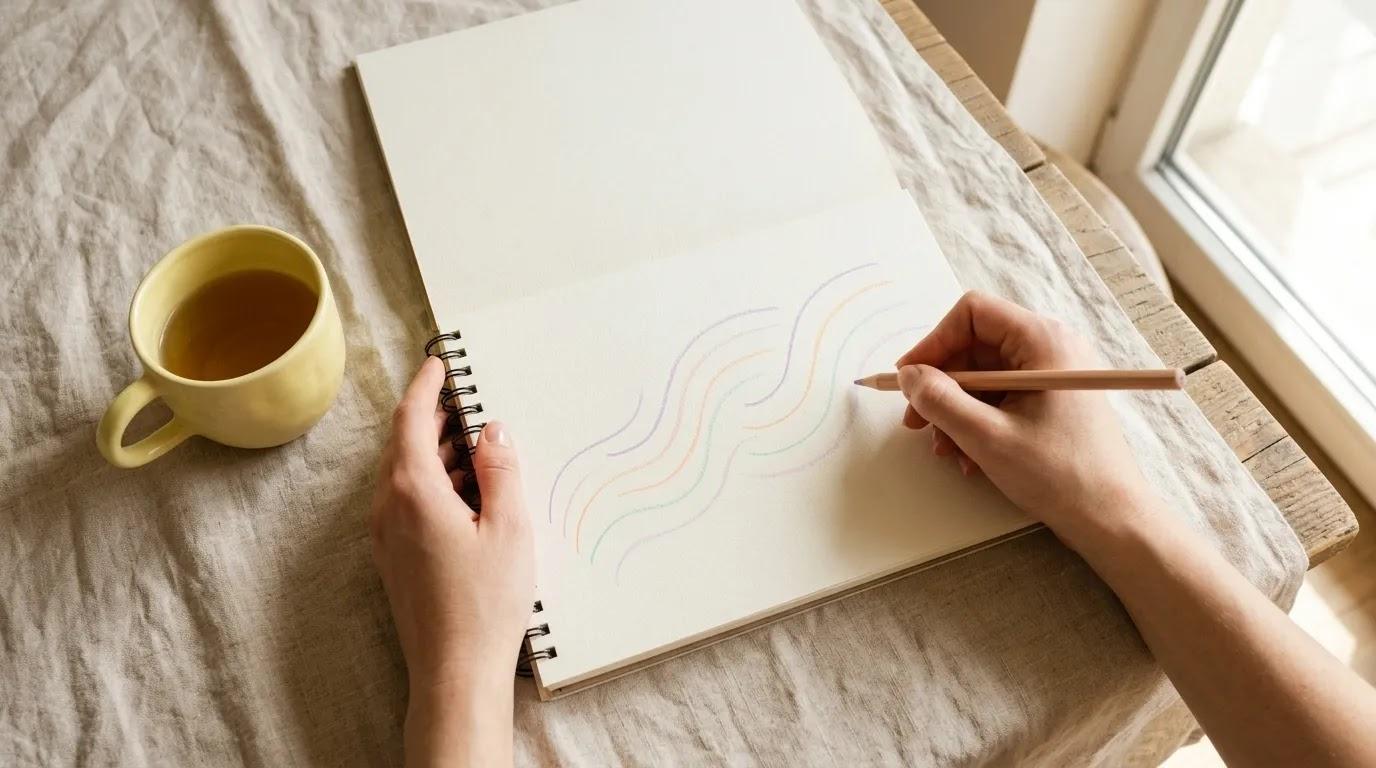
Picture someone who's too wound up to sit still for meditation and too worn out to put thoughts into words on a page, that's exactly who Daily Lemons Art Therapy was built for. No planning, no blank page anxiety, no pressure to create something gallery-worthy. Just about 10 minutes spent moving a pencil or brush, playing with color and shape, and letting your mind settle a little in the process.
There are moments when a full, wide-open session feels like too much to ask of yourself, and what you really need is something small and manageable. LINA: Art Therapy tends to work well here, with sessions landing around 15 minutes and centered on somatic release, a way of letting emotions move through the body rather than stay stuck. You don't need any art experience to begin, same as always. The real difference comes down to time: a shorter, more contained practice is often easier to fold into a day that's already full.
- Private and available where your phone is available
- No need to arrange a session before you begin
- Can give your attention a gentle, physical task
- May be easier than finding the right words immediately
2. Reflection Between Professional Sessions

Why an app may fit better: Professional support often happens at set times, while feelings can shift many times between appointments. A self-guided practice may give you a way to notice and externalize an experience before it becomes a blur of half-remembered thoughts.
Picture jotting down a rough week through a quick sketch instead of a paragraph of words, that's the kind of moment Daily Lemons is built around. Through short, guided exercises and gentle prompts, the app gives you a structured way to notice what you're feeling, one small creative step at a time. What you make is yours to hold onto or bring into a conversation with a qualified professional, whenever and however you choose. Daily Lemons won't try to read meaning into your art or stand in for personalized care, that line matters, and we're careful to keep it clear.
This can be especially useful for people who arrive at a session saying, “I do not know where to start.” A visual record may offer one small starting point. For readers exploring professional support alongside digital tools, this guide to art therapy in Singapore explains more about the role of credentialed human care.
- Creates a small reflection habit between appointments
- May help you remember emotional shifts and recurring themes
- Lets you decide what, if anything, to share
- Can reduce the pressure of beginning with a blank verbal question
Choosing Materials and Digital Tools for How You Feel
Different materials may change the feeling of a creative check-in. A pencil can offer quiet control and the option to erase. Markers may feel more immediate and bold. Paint can invite movement and mess, while collage may help when choosing images or arranging fragments feels easier than drawing. A phone or tablet can be especially useful when you need a contained activity with no setup or cleanup.
You might choose a digital practice if privacy, low energy, limited space, or portability matter most. Physical materials may feel more grounding if you want texture, pressure, or a break from the screen. There is no correct medium for a feeling. A quick scribble on a phone and a layered paper collage can both be honest responses to the same day.
The finished image does not need a fixed interpretation. You may notice that a color, shape, or material felt comforting, irritating, or neutral, but you do not need to assign it a meaning. Let the choice be simple: use what feels available enough to begin.
4. When Travel or Scheduling Gets in the Way

Why an app may fit better: Transportation, caregiving, work hours, illness, cost, and location can all make in-person sessions harder to access. An app or downloadable guide cannot provide the same relational support as a qualified art therapist, but it can create a lower-barrier moment of creative care at home.
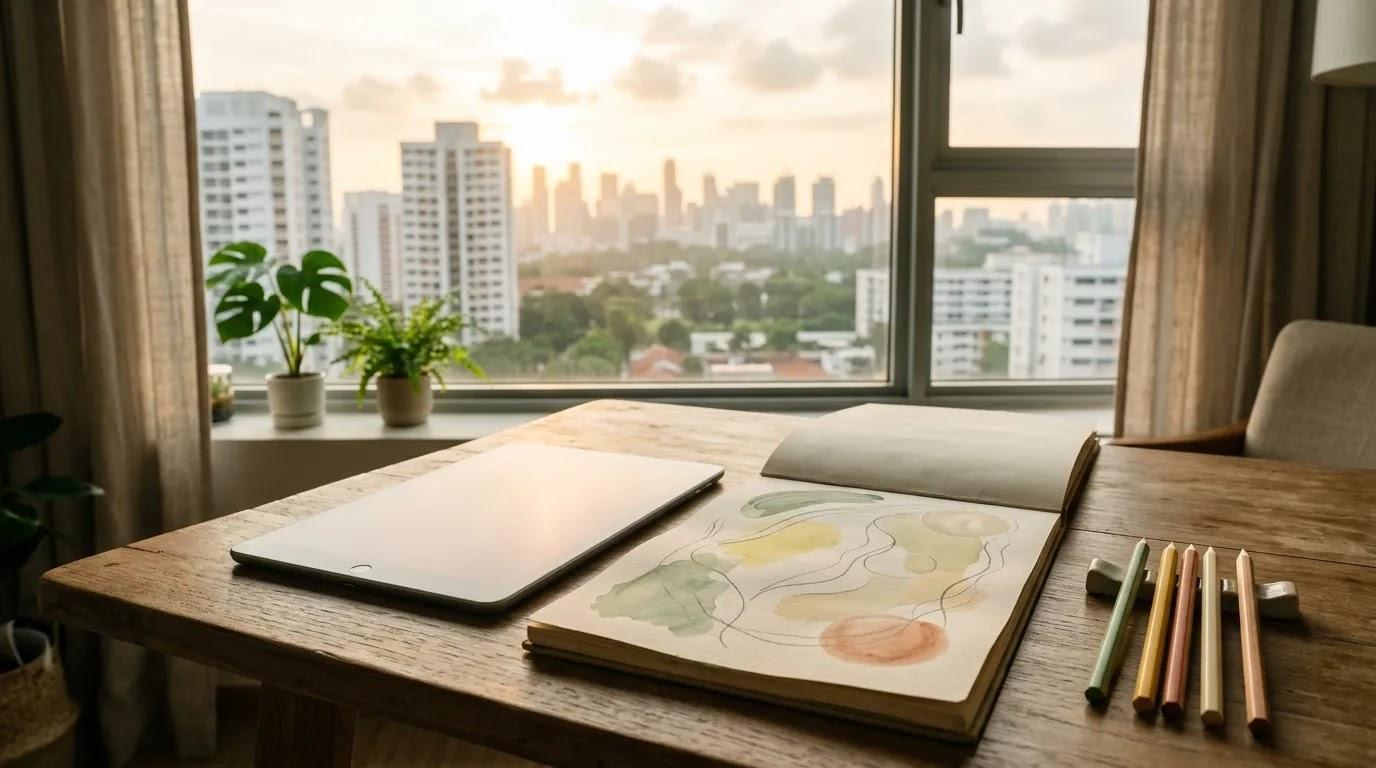
Picture sketching on paper at your kitchen table, then picking up your tablet later to follow a short video lesson from a working artist, that's the rhythm Palette Well-being app is built around. It brings self-guided art therapy and daily creative exercises to your phone, tablet, or iPad, while welcoming both traditional and digital drawing tools. If you love the feel of real materials but still want a bit of gentle structure and guidance, this could be a nice fit.
Picture someone sitting alone in a hospital room, or an older adult confined to quarantine with little to occupy their mind, this is exactly who the Guide of Art Therapy for Covid-19 Patients was made for. It's a downloadable resource built with a narrow, intentional focus: offering psychological support to those facing isolation during illness or confinement. That focus can be valuable in the right moment, but this isn't positioned as a broad, everyday tool for managing ordinary stress.
- Removes travel time from the first step
- Allows you to work at a pace that feels manageable
- May help caregivers and housebound users access a creative prompt
- Can be used without coordinating calendars with another person
Creating a Supportive Space for a Creative Check-In
A creative check-in does not need a perfect setting. A familiar chair, a corner of a table, or a parked car may be enough. If you are using paper materials, gathering a pencil, a few colors, and a surface before you begin can make the activity feel less interrupted. If you are using an app, headphones or a quieter moment may help you stay with the prompt.
A short time boundary can also make the practice feel more contained. You might give yourself five or ten minutes, then decide whether you want to continue. You are allowed to stop if an image, memory, or feeling becomes too intense. Looking around the room, drinking water, or shifting to a simpler sensory activity can be a gentle way to return to the present.
Privacy may need some practical attention too. On a shared device, check whether artwork is saved automatically, whether notifications could appear during a session, and what permissions the app requests. If you use physical artwork, choose a place to store it that feels comfortable. You can keep, cover, change, or discard what you make.
5. Low-Pressure Creative Exploration
Why an app may fit better: Not every creative practice needs to begin with a crisis or a big story. Some people want a gentle way to explore patterns, identity, feelings, or self-compassion without committing to an open-ended therapeutic conversation. Digital resources can offer a small structure that makes starting feel less exposed.
If you're the kind of person who likes to sit with a journal and move through reflection prompts in your own time, Lina Therapy's Complete Shadow Work Guide might feel like a gentler fit. It's a 50-plus-page PDF rooted in Carl Jung's approach to shadow work, filled with exercises and prompts you can return to whenever you need. You get it instantly after a one-time purchase, and there's a 30-day money-back guarantee if it doesn't end up being right for you. For those who'd rather work through things slowly on paper than navigate a session on their phone, this format tends to feel more natural.
Its trade-off is that self-led exploration can bring up strong material without a person present to help pace it. If a prompt feels overwhelming, it is reasonable to pause, return to grounding, or seek support from a qualified professional. Daily creative practice can be supportive, but it is not a substitute for care when safety, severe distress, or persistent difficulties are involved.
- Lets you explore at your own pace
- Offers structure without a performance expectation
- May support a regular creative ritual
- Gives you permission to stop and return later
Where Apps Help and Where They Fall Short

Strengths of Art Therapy Applications
- They can be available in the moment, including outside office hours.
- They may reduce barriers related to travel, scheduling, mobility, and privacy.
- They offer a nonverbal route for people who find journaling or conversation difficult.
- Short guided activities can make it easier to begin without deciding what to create.
- They may support gentle reflection between professional sessions.
Art Therapy Applications: Considerations Before Relying on an App
- An app cannot offer the individualized attunement, assessment, or real-time pacing of a credentialed art therapist.
- Creative prompts may bring up difficult memories or feelings, particularly during grief, trauma, or major change.
- Privacy, stored artwork, access permissions, and subscription terms can differ by provider and may change over time.
- Device access, screen fatigue, and distractions can make a digital practice harder for some people.
Choosing Art Therapy Applications for the Moment You Are In
Start with the smallest useful question: what do you need from the next ten or fifteen minutes? If you need a quiet, guided reset, Daily Lemons may fit because its sessions are designed around short creative exercises. If you want a longer somatic practice, LINA may be worth exploring. If you prefer drawing with physical materials and following video lessons, Palette Well-being may feel more natural.
Writing-oriented tools such as Life Note may suit you if language helps you organize experience. A downloadable guide can offer more depth and slower pacing, but it also asks you to hold the structure yourself. None of these choices needs to become a permanent identity. You may use a visual practice one day and a written one the next.
For beginners, prioritize three things: an activity that feels emotionally safe enough to try, a time commitment you can genuinely manage, and clear boundaries about what the tool can and cannot do. The Digital Art Therapy & Apps category offers more context on creative digital support if you want to keep exploring without pressure.
Frequently Asked Questions
Can an art therapy app replace in-person art therapy?
Not quite. Think of a self-guided app as a companion for quiet moments, something that invites you to breathe, notice, and create, but it isn't the same as sitting with a trained art therapist who can meet you where you are and adapt to your needs in real time. Art therapy is a recognized mental health profession, practiced by people who've trained specifically to hold that space with care. An app can gently support you between sessions or when reaching a therapist isn't easy, but it was never meant to stand in for the guidance and presence a professional provides.
Do I need art skills to use art therapy applications?
No. The goal is not to create impressive artwork. Many applications use simple lines, shapes, colors, and guided prompts so you can focus on the experience of making rather than artistic technique. If perfectionism shows up, try treating the activity as a private experiment. A mark can simply be a mark. It does not need to prove anything about your ability.
Why might an app feel easier than an in-person session?
An app may feel easier because it offers privacy, immediate access, and fewer social demands. You can begin without traveling, scheduling, or explaining yourself aloud. That does not make it better in every situation. In-person work may be more supportive when you need human connection, help with difficult material, or someone to pace the process alongside you.
Are art therapy applications safe for teenagers?
Whether this fits a particular teenager really comes down to a few things: how old they are, what the app recommends, how their family feels about it, and whether there's someone nearby to offer support if needed. For some young people, a simple drawing prompt can be a soft, low-pressure way to let a feeling out. But if a teen seems consistently shut down, overwhelmed, or unsafe, that's a moment for caregivers to step in and bring a trained professional into the picture, this kind of activity was never meant to carry that weight on its own.
What should I do if a creative exercise brings up intense feelings?
You can stop. Put the device down, look around the room, take a sip of water, or choose a calming sensory activity. You do not have to complete every prompt. If difficult feelings keep intensifying, feel unmanageable, or involve concern about your safety or someone else’s, contact a qualified professional, local emergency services, or an appropriate crisis support service right away.
What is the definition of art?
Art is a broad form of human expression that can use images, movement, sound, words, materials, or performance to communicate an idea, experience, or feeling. There is no single definition that everyone agrees on. In a creative check-in, art does not need to be beautiful, finished, or shown to anyone. A line, color choice, or arrangement of shapes can be enough.
What are the 9 main types of art?
Lists vary, but nine commonly named forms are painting, sculpture, architecture, literature, music, theater, film, dance, and photography. Digital art, collage, drawing, crafts, and mixed media may overlap with these categories or stand on their own in everyday practice. You do not need to choose a category before making something. The material or format can simply be a place to start.
A Short Recap
The strongest use for an app is not replacing a skilled professional. It is offering a reachable creative practice when a session is unavailable, words are stuck, or you need a small private pause before deciding what comes next.
| Rank | Product | Best for | Price |
|---|---|---|---|
| 1 | Daily Lemons Art Therapy | Short, guided creative grounding | Free |
| 2 | LINA: Art Therapy app | 15-minute somatic art practice | n/a |
| 3 | Palette Well-being app | Self-guided drawing and video lessons | n/a |
| 4 | Life Note | Written reflection with AI perspectives | n/a |
| 5 | The Complete Shadow Work Guide | Longer self-paced prompt work | n/a |
Key Takeaways
- Art therapy applications may be more accessible than in-person sessions during short, private, or unscheduled moments.
- Daily Lemons Art Therapy is free and designed around guided 10-minute creative practices.
- Digital creative tools can support reflection, but they do not replace care from a credentialed art therapist.
- The best format depends on whether you need visual expression, somatic practice, writing, lessons, or longer prompts.
- Pause and seek human support if an exercise brings up more than you can comfortably hold alone.
Conclusion
There is no prize for choosing the most intensive form of support first. Sometimes the helpful step is a private drawing prompt during a difficult afternoon. Sometimes it is a longer conversation with a credentialed professional. Art therapy applications can be useful because they make creative reflection easier to reach in ordinary life, especially when words feel distant. Daily Lemons Art Therapy is a gentle starting point if you want a free, guided practice that takes about 10 minutes and does not require art skills. You can begin with one small mark, then notice what it is like to give your inner world a little more room.
A quick note before you keep reading: everything here is meant to inform, not to stand in for professional care of any kind, medical, psychiatric, or otherwise. Think of the art-based tools mentioned as gentle, self-directed companions for reflection, not substitutes for guided treatment, which should always come from a trained, credentialed art therapist (you can find qualified professionals through groups like the American Art Therapy Association or the British Association of Art Therapists). And if things ever feel urgent, if you're worried about your safety or someone else's, please reach out to local emergency services or a crisis line right away; that matters more than anything written here. Also worth keeping in mind: apps and tools change over time, so it's worth double-checking current pricing, features, and privacy details directly with the provider before you download anything or share personal information.