Emotional stress is mind-body strain that often starts with conflict, grief, fear, pressure, or uncertainty. Even when the trigger is emotional, the effects can feel physical too. You might notice tension, fatigue, sleep disruption, or a racing heart. That is why emotional stress and physical stress often overlap.
If you have been trying to sort out whether what you feel is “mental” or “physical,” that confusion makes sense. This guide explains where emotional stress starts, how it differs from physical stress, where the two overlap, and why both matter if you are trying to understand your own stress load or support someone else.
What emotional stress means
Emotional stress usually begins with a feeling-based demand. That demand may come from grief, rejection, conflict, caregiving, money pressure, uncertainty, loneliness, shame, or trying to hold too much for too long. The trigger is often psychological or relational, but the response is whole-body.
An expanded definition helps here. Emotional stress is not a separate species of stress with its own isolated system. Instead, it is one common entry point into the broader stress response. Your brain reads something as threatening, painful, overwhelming, or unresolved. Then your body starts preparing to cope.
If you want broader relief strategies after understanding the definition, our guide on how to reduce stress can help you think about next steps gently.
- It is often triggered by feelings, relationships, or meaning-related events.
- It may affect sleep, appetite, focus, energy, and muscle tension.
- It can be brief, repeated, or long-lasting.
- It may look invisible from the outside while still feeling intense inside.
Common causes and examples of emotional stress
Emotional stress is easier to recognize when you can name what is pressing on you. Stressors are not always dramatic. Many are ordinary, repetitive, and quietly demanding.
These categories can help you sort what might be fueling your stress response without treating it like a personal failure. If you want a broader map, this guide on what causes stress may help.
Relational emotional stress
These are pressures that come from connection, conflict, or distance with other people.
- Ongoing tension with a partner, roommate, coworker, or family member
- Feeling responsible for keeping the peace
- Friendship drift, isolation, or a sense that you have to work hard to be included
- Breakups, betrayal, or a relationship that keeps you guessing
Work or school emotional stress
Performance pressure can keep your nervous system “on” even when you are not actively working.
- Constant deadlines, meetings, exams, or a heavy workload with little recovery time
- Unclear expectations, shifting priorities, or fear of making a mistake
- Workplace conflict, micromanagement, or a lack of psychological safety
- Feeling behind, underqualified, or unable to catch up
Financial emotional stress
Money stress often carries both urgency and shame, which can intensify emotional load.
- Rent, debt, bills, or medical costs that feel hard to manage
- Unpredictable income or job insecurity
- Supporting others financially, or feeling guilty for needing support
- Major purchases or financial decisions that feel high-stakes
Major life transitions and emotional stress
Even positive changes can strain your system because they demand adjustment.
- Moving, starting or leaving a job, graduating, or relocating
- Becoming a parent, ending a relationship, or entering a new one
- Loss of routine, identity shifts, or uncertainty about what is next
- Grief, separation, or the emotional aftershocks of a major event
Caregiving and responsibility overload
Carrying other people’s needs can quietly erase your recovery time.
- Parenting through a hard season, or supporting a partner who is struggling
- Caring for an aging family member or managing complex family logistics
- Being the “reliable one” in a group, or the person who handles emergencies
- Emotional labor, constant coordination, and little space to rest
Health uncertainty and fear
Not knowing what is happening can be its own kind of stressor.
- Waiting for test results or medical answers
- Managing chronic discomfort, flare-ups, or unpredictable symptoms
- Worry about someone else’s health
- Feeling unsure about what your body is trying to tell you
Social media and news exposure
Constant information can keep your nervous system activated, even if your immediate environment is safe.
- Scrolling that leaves you tense, angry, numb, or sad
- Comparison, self-criticism, or feeling like everyone else is doing better
- Repeated exposure to distressing headlines or crisis updates
- Feeling pulled to stay informed while also feeling emotionally flooded
Environmental strain
Some stressors are not personal at all. They are sensory and situational.
- Noise, crowding, commuting, heat, poor air quality, or lack of privacy
- Living in a space that feels chaotic, unsafe, or hard to rest in
- Shift work, irregular schedules, or disruptions that make recovery difficult
- Long stretches without quiet, nature, or stillness
Two people can face the same event and experience different levels of emotional stress. Your history, support, energy, sleep, and sense of safety all shape how a stressor lands. That does not make your reaction “too much.” It makes it human.
Why emotional stress and physical stress blur together

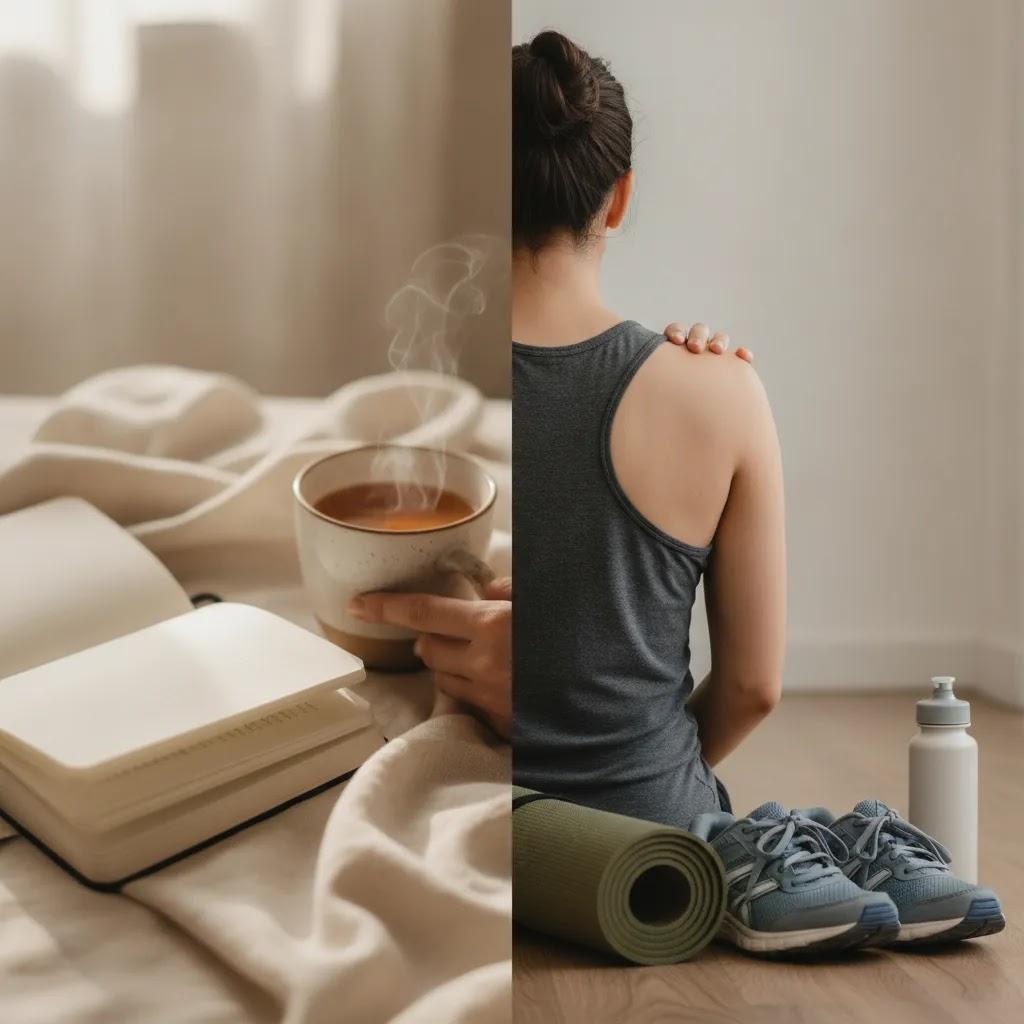
People often talk as if emotional stress lives in the mind and physical stress lives in the body. Real life is messier than that. Emotional stress may begin with heartbreak, fear, or pressure. Then it can show up as headaches, stomach upset, jaw clenching, or fatigue.
Physical stress may begin with pain, illness, injury, sleep loss, or overexertion. Then it can show up as irritability, hopelessness, or tearfulness.
That is why the most useful question is often not “Is this emotional or physical?” but “What is driving it most right now, and how is the other side getting pulled in?”
This overlap also helps explain why some people miss their own stress. They may focus only on body discomfort or only on mood shifts. As a result, they may not realize both are part of the same stress loop.
How emotional stress and physical stress differ
The clearest difference is usually the starting point.
Emotional stress often starts with meaning
Emotional stress tends to grow from events your brain interprets through relationships, expectations, identity, or fear. A breakup, family tension, feeling unsafe at work, or waiting for important news can all trigger it. Even if you are sitting still, your system may act as if a major demand is present.
Physical stress often starts with bodily load
Physical stress more often begins with direct strain on the body. This can include illness, pain, lack of sleep, dehydration, intense exercise, injury, hunger, heat, or recovery from a medical event. The body is carrying demand first, and your emotions may react afterward.
Emotional stress vs physical stress: what you notice first
With emotional stress, you may notice dread, irritability, sadness, or mental looping before you notice body changes. With physical stress, you may notice soreness, shakiness, low energy, or body tension before your mood shifts become obvious.
| Type of stress | Common starting point | What you may notice first | Examples already mentioned in this guide |
|---|---|---|---|
| Emotional stress | Feeling-based demand, relationships, expectations, identity, or fear | Dread, irritability, sadness, or mental looping | Breakup, family tension, feeling unsafe at work, waiting for important news |
| Physical stress | Direct bodily load or strain | Soreness, shakiness, low energy, or body tension | Illness, pain, lack of sleep, dehydration, intense exercise, injury, hunger, heat |
Quick glossary
- Trigger: the event or condition that sets a stress response in motion.
- Nervous system: the body network involved in alertness, protection, calming, and recovery.
- Stress response: the mind-body reaction that prepares you to handle demand.
Where emotional stress and physical stress overlap
This is the part many people feel in daily life. Emotional and physical stress overlap in at least four ways.
1. They use many of the same body pathways
Your body does not create one system for difficult emotions and a totally separate one for overload, pain, or sleep loss. Both can increase tension, change breathing, affect digestion, and drain energy.
2. One can trigger the other
Weeks of emotional strain may leave you sleeping badly and feeling physically worn down. Physical pain or poor sleep may lower your coping capacity and make emotions hit harder.
3. They may create the same outward signs
Restlessness, headaches, fogginess, irritability, stomach discomfort, and fatigue can happen in either type. That is one reason stress symptoms can be hard to interpret without context.
4. Both can become cumulative
A single argument may pass. A single late night may pass. But emotional strain plus physical depletion often stack. The total load matters more than any one event in isolation.
Signs of emotional stress (mental and physical)

Emotional stress can show up as thoughts, mood shifts, and changes in how you move through your day. It can also show up in the body in ways that are easy to dismiss until they accumulate.
Common mental and emotional signs of emotional stress
- Feeling overwhelmed, like small tasks suddenly feel too hard
- Being “on edge,” jumpy, or easily startled
- Irritability, impatience, or a shorter fuse than usual
- Difficulty concentrating, forgetfulness, or feeling mentally foggy
- Racing thoughts, looping worries, or replaying conversations
- Changes in motivation, either pushing relentlessly or feeling unusually stuck
- Feeling emotionally flat, numb, or disconnected from what you usually enjoy
Common physical signs of emotional stress
- Sleep disruption, trouble falling asleep, waking frequently, or waking tired
- Headaches or jaw clenching
- Stomach upset, nausea, bloating, or changes in bowel habits
- Appetite changes, eating much less or much more than usual
- Muscle tension, especially in shoulders, neck, back, or hips
- Fatigue that feels disproportionate to what you did that day
- Chest tightness or a sense of shallow breathing
Overlap is normal. Emotional strain can change sleep and digestion. Physical strain can change mood and patience. Many people have a mix that shifts week to week.
A gentle emotional stress pattern check
If you are trying to understand what is happening, a few simple questions can bring clarity without turning your stress into a puzzle you have to solve perfectly.
- What changed recently, even if it seems “small” on paper?
- How long has this been going on, and is it staying steady or intensifying?
- What situations make it spike: certain people, places, times of day, or types of tasks?
- What helps even slightly: food, movement, quiet, talking to someone, time alone, a shower, a short walk?
If you notice new, severe, or unusual physical symptoms, it is worth ruling out medical causes. Stress can affect the body, but not every physical sign should be self-explained away. For example, the National Institute of Mental Health notes that stress can affect both mind and body.
Why the emotional stress difference matters
Even though the categories overlap, knowing the likely starting point can still help. If emotional stress is leading, you may need support around conflict, grief, fear, boundaries, or uncertainty. If physical stress is leading, you may need rest, food, hydration, sleep, reduced exertion, or medical evaluation depending on the situation.
The distinction also matters because people sometimes blame themselves for “not coping well” when the body is simply overburdened. In other cases, they keep chasing only physical fixes when the deeper load is relational or emotional.
If your stress feels closely tied to worry and dread, our article on how to reduce anxiety may help you sort the overlap between anxious activation and stress.
How to cope with emotional stress
Coping does not have to mean doing everything at once. Emotional stress often eases in small increments, especially when you choose a response that matches what is driving the stress most right now.
Short calming practices for emotional stress
If your system feels activated, the goal is not to force calm. It is to create a little more space.
- Slower breathing: try a slightly longer exhale than inhale for a minute or two
- Grounding: name five things you can see, four you can feel, three you can hear, two you can smell, one you can taste
- Temperature shifts: washing your hands in cool water or holding a warm mug can help some people feel more settled
- Reducing input: lowering noise, dimming lights, stepping away from screens for a few minutes
Movement to help the body discharge load
Emotional stress is embodied. Gentle movement can help when your body feels braced or restless.
- A short walk, stretching, or a few minutes of slow mobility
- Shaking out hands and shoulders if you feel “stuck” in tension
- Light exercise if it feels supportive, not punishing
Sleep support when emotional stress affects recovery
If sleep is disrupted, coping often starts with protecting your recovery window.
- Keep a simple wind-down routine, even if it is only ten minutes
- Reduce late-night stress input, such as heavy conversations or scrolling
- If thoughts race, write a short “parking list” of what your mind is holding
Journaling or creative expression when words are hard
Some stress needs a place to go that is not your body. If writing feels too direct, you can keep it simple and sensory.
- Write three lines: “What happened,” “What I feel,” “What I need”
- Use color, shapes, or quick sketches to show the mood of the day
- Make a two-column list: “What I can control” and “What I cannot”
Social support that fits the moment
Support does not always mean a deep conversation. Sometimes it means not being alone inside the feeling.
- Ask someone to listen without fixing, if that is what you need
- Spend time near safe people, even quietly
- Lower the bar: one honest text can be enough to reduce isolation
Reducing avoidable stressors where you can
You cannot remove every stressor, but you can sometimes reduce friction.
- Pause or limit the inputs that spike you, including certain accounts, news cycles, or group chats
- Clarify one boundary that would make the week more livable
- Break one task into the smallest next step, not the whole plan
Matching coping to the likely driver
If the stress feels emotion-led, such as grief, conflict, shame, or fear, practices that create meaning and support may help most. For example, journaling, talking with someone safe, building boundaries, or getting space from the relational pressure can help. You might also explore emotional healing or emotional regulation techniques when you want gentle structure.
If the stress feels body-led, such as sleep loss, illness recovery, dehydration, pain, or overexertion, body basics may matter first: rest, food, hydration, gentle movement, and medical guidance when appropriate. Emotional coping can still help, but it often lands better after the body is less strained.
If you are overwhelmed, choose the smallest next step
Overwhelm often comes with a sense that you need a total reset. A smaller step is usually more realistic.
- Drink water and eat something simple
- Step outside for two minutes of air
- Set a ten-minute timer and do only the first part of one task
- Send one message that says, “I am having a hard day”
When to consider professional support for emotional stress
Self-help can be useful, but it is not always enough. Consider reaching out to a licensed professional if stress is persistent, worsening, or impairing daily functioning, such as your ability to sleep, work, study, parent, or care for yourself.
If you feel unsafe, out of control, or close to a breaking point, urgent support matters. In the United States, emergency support is typically available through 911, and you can also contact the 988 Suicide & Crisis Lifeline for immediate help. If you live outside the United States, look for an appropriate local crisis line or emergency service.
Where you may notice emotional stress or physical stress

You might encounter emotional stress during a breakup, caregiving strain, social conflict, work pressure, major uncertainty, or after hearing upsetting news. You might encounter physical stress after poor sleep, intense training, illness, pain flare-ups, travel, hunger, or long stretches without recovery.
Some situations carry both from the start. Burnout is one example. So is parenting through a hard season, grieving while not sleeping well, or managing chronic pain while also feeling scared about what it means.
If words feel hard during these moments, some people find creative, structured support easier to approach than talk-heavy methods. That is part of why art-based support can help in some cases, including services related to art therapy singapore and resources within Art Therapy Fundamentals.
For broader background on this mind-body connection, you can also explore Anxiety, Stress & Emotional Wellness or Nervous System & Body Healing.
Pros and Cons
Strengths
- Separating emotional stress from physical stress can make confusing experiences easier to understand.
- The comparison may help you choose a more fitting response instead of using the same coping idea for every kind of overload.
- It can reduce shame by showing that emotional strain is not “just in your head.”
- It highlights the body as part of emotional well-being, not a separate issue.
- It can help caregivers, partners, and clinicians ask better questions about what is driving the stress.
Considerations
- The categories are helpful, but they are not always clean or precise in real life.
- Trying too hard to label your stress may create more mental pressure if you treat the distinction like a test.
- Some body-based signs of stress can overlap with medical concerns that should not be self-explained away.
- Emotional stress may coexist with anxiety, grief, burnout, trauma, or sleep issues, which can make self-sorting harder.
Frequently Asked Questions
Is emotional stress real if the trigger is not physical?
Yes. Emotional stress is a real mind-body response even when the trigger is relational, psychological, or internal. Your body may still shift into alertness, tension, or fatigue. A painful conversation, fear about the future, or ongoing uncertainty can affect sleep, digestion, energy, and concentration just as clearly as many physical demands can.
Can emotional stress cause physical pain?
It may. Emotional stress can contribute to muscle tension, headaches, jaw clenching, stomach discomfort, chest tightness, and general body fatigue. That does not mean every pain is stress-related. New, severe, or persistent physical symptoms deserve proper medical attention, especially if they feel unusual, intense, or hard to explain.
What is the difference between emotional stress and anxiety?
Emotional stress is a broader response to feeling overloaded, pressured, hurt, or overwhelmed. Anxiety usually involves fear, apprehension, or a sense of threat. The two often overlap, but they are not identical. You may feel emotionally stressed without strong fear, or anxious without a clear external problem. The body can react strongly in both.
Can physical stress turn into emotional stress?
Yes, that can happen. Pain, sleep loss, illness, injury, or overexertion can wear down coping capacity and make emotions feel sharper or harder to manage. A body under strain often has less room for patience, clarity, or flexibility, so frustration, sadness, or worry may become more noticeable over time.
How do I know which kind of stress I have?
Start by asking what seemed to come first. Did the strain begin with conflict, grief, fear, pressure, or emotional overload? Or did it begin with pain, exhaustion, hunger, illness, or body strain? You do not need a perfect answer. Sometimes the most accurate response is that both are involved and feeding each other.
Why does emotional stress feel so physical?
Because emotional stress is not only a thought process. Your brain and body work together to respond to demand. Once something feels threatening, painful, or too much, your breathing, muscles, digestion, sleep, and energy may all shift. Emotional stress often feels physical because the stress response is embodied, not abstract.
Is emotional stress always harmful?
Not always. Short-term emotional stress can sometimes signal that something important needs care, change, protection, or attention. Problems usually grow when the stress is intense, prolonged, repeated, or unsupported. The goal is not to never feel stress. It is to notice what the stress may be asking of you and when extra support is needed.
What are emotional stress symptoms?
Emotional stress symptoms can show up in both mood and body. Common emotional signs include feeling overwhelmed, being on edge, irritability, racing thoughts, and difficulty concentrating. Common physical signs include sleep disruption, headaches, stomach upset, appetite changes, muscle tension, fatigue, and chest tightness. Many people experience a mix that changes over time.
What is the definition of emotional stress?
Emotional stress is the mind-body strain that often begins with a feeling-based demand, such as conflict, grief, fear, uncertainty, or pressure. Even though the trigger may be emotional or relational, the stress response can affect sleep, digestion, energy, breathing, and muscle tension because the response is whole-body.
What are three warning signs of emotional stress?
Three common warning signs are feeling persistently overwhelmed, becoming unusually irritable or on edge, and noticing sleep disruption that does not resolve with a normal night or two of rest. Other signs can include racing thoughts, trouble concentrating, stomach discomfort, and tension headaches.
How do I overcome emotional stress?
Overcoming emotional stress is usually less about forcing it away and more about responding to what is driving it. Many people start with small calming practices, gentle movement, better sleep support, journaling or creative expression, and reaching out to someone safe. If stress is persistent, worsening, or affecting your ability to function, professional support from a licensed clinician may help.
When should I get extra help?
If stress is persistent, worsening, disrupting sleep or daily life, affecting your ability to function, or making you feel unsafe, reaching out for support may help. If you have chest pain, trouble breathing, fainting, thoughts of self-harm, or any urgent safety concern, seek emergency help or an appropriate local crisis resource right away.
Key Takeaways
- Emotional stress usually begins with feeling-based or relational strain, but it often shows up physically.
- Physical stress usually begins with bodily load, yet it can quickly affect mood, patience, and emotional resilience.
- The difference between the two is often the starting point, not the full experience.
- They overlap through shared body pathways, similar signs, and cumulative load.
- Recognizing the likely driver may help you respond with more care and less self-blame.
Conclusion
Emotional stress is not less real than physical stress, and physical stress is not separate from your emotional world. Most of the time, they are in conversation with each other.
If you can notice where the strain may be starting and how it is spreading, the picture often becomes gentler and clearer. You do not need to sort it perfectly to begin responding to it. If you want to keep exploring this in a calm, practical way, Daily Lemons offers supportive resources on stress, anxiety, and creative emotional processing that you can explore at your own pace.
Please know that what you're reading here is meant to inform, not to replace real support, nothing in this piece should be taken as medical, mental health, or crisis guidance. Sometimes what feels like stress is tangled up with other things going on in body and mind, and only a qualified professional can really untangle that with you. If what you're experiencing feels heavy, doesn't ease up, keeps getting worse, or ever puts your safety at risk, please reach out to a licensed clinician who can help. And if things feel urgent, chest pain, trouble catching your breath, fainting, or thoughts of hurting yourself, please don't wait. Contact emergency services or a crisis line right away.