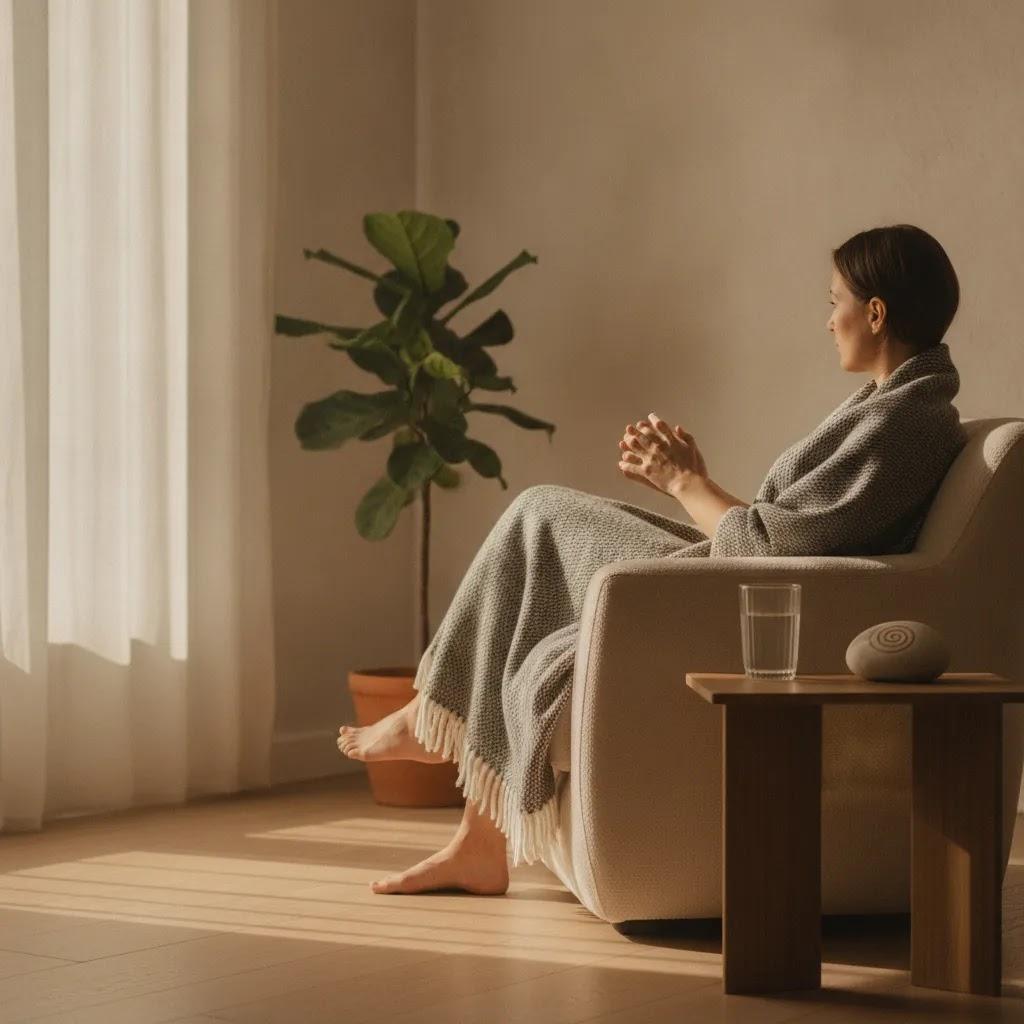
Self-care that helps prevent burnout is usually simple and repeatable. It supports sleep, meals, movement, boundaries, and small moments of recovery, so stress has fewer places to build. This guide shows you how to create a routine you can keep, even on tired and busy days.
What does self-care look like when you are not trying to “treat yourself,” but trying to stay well enough to keep going? That is the question this guide answers. Expect about 20 to 30 minutes to map your routine, and another week or two to test it in real life. Difficulty level: Beginner.
If you are still figuring out the basics of overwhelm, the wider Anxiety Stress & Emotional Wellness hub can help you place this topic in context. This page stays practical. It is less about perfect habits, and more about repeatable supports that still work on busy, tired, emotionally noisy days.
What you'll need
- 10 to 15 quiet minutes
- A notes app, journal, or sheet of paper
- Your calendar or weekly schedule
- A short list of current pressure points
- Willingness to start small rather than perfectly
Why routines help prevent burnout
Burnout usually builds through accumulation. Missed meals, poor sleep, emotional suppression, constant responsiveness, and lack of recovery may each seem manageable on their own. Together, they can leave you feeling flat, irritable, foggy, or strangely detached from things you care about.
A preventive self-care routine gives your day a few reliable points of recovery before your system has to fight for them. If you are still sorting out the basics of stress, it may help to remember that self-care is not only comfort. It is maintenance. It supports food, rest, boundaries, movement, decompression, and emotional processing in ways that are small enough to repeat.
That matters because people under strain often know what would help, but they cannot keep up with high-effort wellness tasks. A good routine lowers friction. It asks less from you in the moment.
For a broader medical overview of burnout at work, the World Health Organization explains how burnout relates to chronic workplace stress. In addition, the National Institute of Mental Health offers simple guidance on stress and daily coping.
Self-care basics checklist (the 4 basics)
If your self-care plan feels confusing, start with the basics. Not as rules or a moral standard, but as a simple baseline that often supports everything else. When burnout risk rises, basics can steady your capacity for boundaries, clearer thinking, and emotional processing.
Here is a quick “4 basics” checklist you can return to when you are not sure what to do next:
- Sleep: enough rest, at predictable times, with a wind-down that reduces late-night stimulation
- Nutrition and hydration: regular food, water, and fewer long gaps that leave you shaky or foggy
- Movement: some gentle physical activity that keeps your body from staying in “stuck” mode all day
- Rest and recovery: short decompression moments, not only collapsing at the end
If you only do one thing for each basic, keep it small:
- Sleep: pick a consistent bedtime window most nights, even if sleep quality is not perfect yet
- Nutrition and hydration: eat one balanced meal and drink a full glass of water before mid-afternoon
- Movement: take a 5-minute walk or do a 2-minute stretch between tasks
- Rest and recovery: schedule a 10-minute decompression block with no input, no scrolling, no multitasking
Some small lifestyle details can quietly influence these basics. Heavy caffeine later in the day can make sleep lighter. Alcohol may change sleep quality even when you fall asleep quickly. Bright screens close to bedtime can keep your system alert. You do not have to fix everything. Usually, one small adjustment is enough to test whether your baseline steadies.
| Self-care basic | What it supports | Small example from this guide |
|---|---|---|
| Sleep | Rest at predictable times with a wind-down | Pick a consistent bedtime window most nights |
| Nutrition and hydration | Regular food and water with fewer long gaps | Eat one balanced meal and drink a full glass of water before mid-afternoon |
| Movement | Gentle physical activity that reduces “stuck” mode | Take a 5-minute walk or do a 2-minute stretch between tasks |
| Rest and recovery | Short decompression moments during the day | Schedule a 10-minute decompression block with no input, no scrolling, no multitasking |
Step 1: Audit your current energy drains

Step 1: Identify where your energy is going
Start with a plain list of what drains you during a typical week. Keep it concrete. Long meetings, school deadlines, caregiving, commuting, doomscrolling at night, conflict, poor sleep, noisy environments, decision fatigue, and skipped breaks all count.
Then mark each item as physical, mental, emotional, social, or practical. This helps you see whether your routine needs more rest, more structure, more emotional space, or fewer demands.
If you are not sure what your triggers are yet, a closer look at stressors can make the picture clearer. You do not need an exhaustive list. You need enough clarity to stop guessing.
Step 2: Choose your non-negotiable supports
Step 2: Pick 3 to 5 self-care actions you can actually repeat
Now choose a small set of supports that match your real pressure points. The best self-care routine is not the most impressive one. It is the one you can still do on a Wednesday when you are tired and short on time.
Your list might include:
- A consistent wake time
- One real meal before mid-afternoon
- A 10-minute walk outside
- A no-work cutoff time
- A screen-down wind-down ritual
- A short drawing, breathing, or reflection practice
- One daily check-in with your body or mood
Self-care works better when it is specific. “Rest more” is vague. “Sit outside for 8 minutes after lunch” is easier to keep. If anxiety is part of your burnout pattern, this is also a good point to review gentle tools for how to reduce anxiety.
Step 3: Match each support to a time and trigger
Step 3: Attach each habit to a real moment in your day
Routines stick better when they are anchored to something that already happens. Instead of writing “journal at night,” tie it to “after I plug in my phone” or “right after I change clothes.”
You can also pair self-care with triggers. If you notice a daily crash at 3 p.m., place a support there. If Sunday night brings dread, add a calming reset before bed. This turns self-care from a vague intention into a response plan.
- After coffee, drink water and stretch for 2 minutes
- After work login, set one boundary for the day
- After dinner, take a short walk or shower
- When your chest feels tight, pause for five slower breaths
The goal is not to manage every feeling. It is to give your day enough support so overload has fewer places to accumulate.
Step 4: Build a weekly burnout-prevention rhythm

Step 4: Spread recovery across the week
Daily self-care matters, but burnout prevention also needs a weekly pattern. Many people unknowingly put all recovery on the weekend, then spend five days overextending. A steadier rhythm works better.
Try building your week around four layers:
- Daily baseline: sleep, meals, hydration, movement, brief decompression
- Midweek reset: one lighter evening, reduced social load, earlier night
- Emotional processing: one or two short check-ins to notice what is building
- Protective boundaries: one choice that reduces input, obligation, or overavailability
This is where gentle creative practices may help, especially if words feel hard to reach. For some people, visual reflection or guided drawing offered through resources related to art therapy singapore can feel more doable than long-form journaling.
If your body has been carrying the strain for a while, you might also find useful support in the broader Nervous System & Body Healing category. Meanwhile, if work is a big part of the pressure, practical ideas for workplace stress may help you protect your time and energy.
Step 5: Create low-energy backup versions
Step 5: Make your routine survivable on hard days
This step is where many routines either become realistic or quietly fail. Create a “minimum version” of each habit for days when your capacity drops.
Examples:
- 10-minute walk becomes 2 minutes on the balcony
- Cooking becomes a ready-to-eat meal plus water
- Journaling becomes three words in your notes app
- Yoga becomes one long stretch before bed
- Deep reflection becomes coloring, doodling, or sitting in silence
Backup versions protect consistency without turning self-care into another standard you fail. They keep the routine alive during the exact periods when burnout risk is highest.
Step 6: Review and adjust without guilt
Step 6: Check what helped, what felt heavy, and what needs to change
After one week, review your routine. Ask simple questions. What helped you feel steadier? What felt forced? Which part was easy to remember? Which support quietly mattered more than expected?
If you are unsure whether what you are feeling is everyday stress or something more layered, a gentle self-check like am i stressed can help you notice patterns without overcomplicating them.
Then remove one thing that felt unrealistic and strengthen one thing that worked. Self-care routines should get kinder and clearer over time. Not bigger.
A gentle note on tools that can support the routine
Some people build self-care best through words. Others need something less verbal, more guided, or easier to finish when they feel worn down. Daily Lemons sits in that second lane. Its approach centers short, structured emotional check-ins and creative reflection that may feel more accessible when meditation or traditional journaling does not.
If you want more context around this topic area, you can explore the Anxiety, Stress & Emotional Wellness category for adjacent guides on stress, anxiety, and emotional regulation. You might also like these gentle emotional regulation techniques if you want more ways to settle your system.
Used gently, tools like these can support maintenance rather than add pressure. The most useful routine support is usually the one that lowers friction, respects privacy, and gives you a small way to reset before overwhelm builds.
Common mistakes to avoid

- Building a routine around your best day. If it only works when you are motivated, rested, and uninterrupted, it may not protect you from burnout.
- Choosing too many habits at once. Five tiny supports usually work better than a 14-step plan.
- Confusing self-care with reward only. Comfort matters, but routines also need basics like food, sleep, and boundaries.
- Leaving out emotional processing. If pressure keeps building internally, surface-level habits may not feel like enough.
- Using guilt as motivation. Harsh self-talk can make supportive routines feel like another burden.
What to do next
Once your routine is in place, keep watching for patterns rather than chasing perfection. If you notice rising tension, irritability, sleep disruption, or shutdown, go back to the smallest supports first. Food, rest, boundaries, sensory quiet, and a brief reset often matter before bigger insight does.
You may also want to read more about what stress is, how anxiety tends to build in the body, or how emotional regulation supports steadier daily functioning. Those connected topics can help you refine your routine as your needs change.
Pros and Cons
Strengths
- Prevention-focused, so it aims to reduce strain before a crash point
- Works for beginners because the steps stay concrete and low-pressure
- Flexible across different lifestyles, including work, school, and caregiving
- Encourages small repeatable supports instead of all-or-nothing wellness goals
- Includes low-energy backup versions, which makes routines more realistic
Considerations
- It may feel too simple if you are hoping for a dramatic overnight change
- Self-guided routines can be hard to maintain without reminders or support
- Burnout linked to unsafe workloads, financial strain, or serious distress may need outside help, not only personal habits
- Some readers may need more emotional or body-based support than written planning alone provides
When to add outside support (and what that can look like)
Self-care can support you, but it cannot always carry the full weight of chronic overload. If you have been trying to reset for a while and things keep worsening, adding outside support can be a practical next step, not a dramatic one.
Signals that self-care alone may not be enough
- Symptoms are persistent, worsening, or not improving even after you reduce strain and return to basics
- You are struggling to function in daily life, for example getting to work or school, keeping basic hygiene, eating enough, or completing essential tasks
- Sleep disruption is severe or ongoing, especially if you are sleeping very little or waking frequently for long stretches
- You feel numb, panicked, or shut down most days, and recovery moments are not touching it
- There are any safety concerns, including thoughts of self-harm or feeling unable to stay safe
What outside support can look like in real life
- Primary care: a clinician can check for physical contributors to fatigue and sleep disruption, and discuss practical next steps
- Licensed mental health professional: a therapist or counselor can help you work with overwhelm, boundaries, and patterns that keep repeating
- Workplace or school adjustments: reduced workload, deadline flexibility, schedule changes, or a temporary accommodation may be more protective than trying to “power through”
- Caregiver support services: respite care, community services, or practical help can reduce load when caregiving is part of the strain
- Trusted support people: one steady person who knows you are struggling can lower isolation and help you make next-step decisions
If you are not sure where to start, national health agencies and local public health services often provide basic guidance on how to find licensed support in your area. If safety is a concern, prioritize urgent help through local emergency services or a crisis resource. You do not have to earn support by getting worse first.
Frequently Asked Questions
What is self-care, really?
Self-care is the set of actions that help you maintain your physical, emotional, mental, and practical well-being. In burnout prevention, it usually means supporting your system before strain piles up too far. That can include sleep routines, food, boundaries, movement, decompression, and simple emotional check-ins. It is not only indulgence, and it does not need to be expensive.
How do I start self-care if I feel too overwhelmed?
Start with one support that reduces immediate friction. Drink water when you wake up. Eat something before noon. Step outside for three minutes. Put your phone down 15 minutes earlier at night. Small acts are easier to repeat, and repetition matters more than intensity when you are trying to prevent burnout.
What are the benefits of a self-care routine?
A realistic routine may help you notice stress earlier, recover a little faster, and reduce the steady buildup that can lead to exhaustion or shutdown. It can also improve consistency around basics such as sleep, meals, and boundaries. The main benefit is not perfection. It is creating a steadier baseline you can return to.
How many self-care habits should I have?
Most people do better with three to five core habits than with a large routine. A smaller list is easier to remember and less likely to turn into pressure. Choose habits that cover your actual weak points, such as sleep, overstimulation, skipped breaks, or emotional bottling, rather than copying someone else’s ideal schedule.
What if my self-care routine keeps failing?
That usually means the routine asks too much, not that you are bad at self-care. Reduce the size of each habit. Attach it to an existing part of your day. Create a backup version for low-energy days. If the routine still feels impossible, look at whether your underlying load is too high for self-management alone.
Is self-care enough to prevent burnout?
Sometimes it helps a lot. Sometimes it helps only partly. If the main problem is chronic overload, unsafe expectations, relationship strain, or lack of recovery time, self-care may support you without solving the full issue. In those cases, boundaries, practical changes, workplace adjustments, or professional support may matter just as much.
Can creative activities count as self-care?
Yes, if they genuinely help you regulate, express, or recover. Drawing, coloring, collage, music, and other nonverbal practices may be especially useful when words feel tiring or unavailable. The key question is whether the activity leaves you feeling more grounded, more spacious, or more connected to yourself, not whether it looks productive.
What does self-care look like for beginners?
For beginners, self-care often looks plain. Regular meals, a stable wake time, less late-night input, short walks, a basic tidy-up, or a 2-minute pause between tasks. Fancy routines are optional. Foundational supports usually matter more at first because they create the conditions for emotional steadiness and better decision-making.
How can I tell if I am moving toward burnout?
Common warning patterns may include irritability, emotional flatness, constant tiredness, dread, forgetfulness, poor sleep, cynicism, or feeling like even small tasks are too much. These signs can overlap with anxiety and other forms of distress, so watch for patterns over time rather than judging one rough day in isolation.
What does self-care mean?
Self-care means caring for your basic needs and your inner life in ways that keep you functioning and supported over time. It can include practical maintenance, like meals and sleep, and emotional maintenance, like decompression, boundaries, and small check-ins that help you notice what is building. In burnout prevention, self-care is less about “fixing yourself” and more about reducing strain and increasing recovery.
What are the 4 basics of self-care?
A simple way to remember the basics is: sleep, nutrition and hydration, movement, and rest and recovery. These are not meant to be perfect. They are a baseline. If you are overwhelmed, returning to these basics often helps you regain enough steadiness to make clearer decisions about boundaries and support.
What are 5 examples of self-care?
Five beginner-friendly examples are: drinking water when you wake up, eating one real meal before mid-afternoon, taking a short walk, setting a no-work cutoff time, and doing a 2-minute decompression pause without screens. The best examples are the ones you can repeat on ordinary days.
What are 10 self-care practices?
Ten practical options you can mix and match include: a consistent wake time, a bedtime wind-down, a balanced meal, a simple snack plan, hydration, a 10-minute walk, a short stretch break, a brief body or mood check-in, one small boundary (such as a message response window), and a low-effort pleasure activity (music, reading, or a warm shower). You do not need to do all ten. Pick a few that match your current weak points.
Key Takeaways
- Burnout prevention works better with small repeatable routines than with ambitious wellness plans.
- Good self-care supports basics first: sleep, meals, boundaries, movement, and decompression.
- Attach each habit to a real time or trigger so it is easier to remember.
- Low-energy backup versions are part of the plan, not a lesser version of it.
- Review and adjust weekly so the routine stays supportive instead of turning into pressure.
Conclusion
A self-care routine that prevents burnout is rarely dramatic. It is usually made of quiet, repeatable choices that help your body and mind stop carrying quite so much at once. If your current idea of self-care feels too big, too polished, or too hard to maintain, that may be a sign to make it smaller, not abandon it.
Start with one or two steady supports, test them in ordinary life, and let the routine earn your trust. If you want a softer, more guided way to build emotional check-ins alongside your routine, you can explore Daily Lemons whenever it feels useful. Gentle structure can go a long way.
This article is for educational purposes only and does not provide medical, psychological, or crisis care advice. Self-care routines may support well-being, but they do not replace care from a qualified professional when distress is severe, persistent, worsening, or affecting safety or daily functioning. If you feel unable to stay safe, are in immediate danger, or have urgent physical or emotional concerns, contact local emergency services or an appropriate crisis resource right away.