Your stress level is a snapshot of how much strain your mind and body are carrying right now. It is usually estimated with self-report scales, body signals, and daily functioning patterns. It is not a diagnosis. Instead, it helps you notice whether pressure is rising, easing, or asking for support.
If you want broader context first, this guide on stress can help frame the bigger picture. Here, the focus is narrower: how stress level is measured, which tools are commonly used, what the scores do and do not mean, and how to read your result without turning one number into a verdict about your whole life.
What stress level means
A stress level is an estimate of how overloaded, tense, or taxed you feel and function at a given time. Some measures ask about thoughts and emotions. Others look at body signals such as heart rate variability, sleep disruption, tension, or energy swings. Many use both.
The key idea is simple: stress level tries to translate a vague feeling of “too much” into something more trackable. That can be useful if you struggle to tell whether you are just having a rough day or whether strain has been building for weeks.
Types of stress and what they mean for your “stress level”
One reason stress scores can feel confusing is that the same number can describe very different situations. Duration and recovery matter as much as intensity. A short-lived spike and an ongoing load can both feel “high,” but they usually call for different interpretations.
Acute stress
Think of the jolt you feel right before a big presentation, an argument with someone you love, or a doctor's visit you've been dreading, that's acute stress. It arrives fast, your body braces for whatever's coming, and once the moment has passed and you've had a little space to breathe, that tension has room to fade.
Practical cue: your body starts to settle after rest. Sleep helps, your appetite and patience begin to come back, and your “background tension” drops when the pressure lifts.
Episodic acute stress
Picture one deadline blurring into the next, or a string of small emergencies that never quite give you room to breathe, that's episodic acute stress. Each spike may pass quickly, but they arrive so often that your body barely finishes recovering before it's pulled into the next one, leaving you stuck in a cycle rather than a single moment of pressure.
Practical cue: you get some relief after each stressful event, but you rarely feel truly reset. Even on quieter days, you may feel braced for the next thing.
Chronic stress
Picture stress that never really leaves, it just settles in, quietly shaping your weeks and months as circumstances stay stuck or unresolved. That's chronic stress. Its intensity can vary, but over time it often stops feeling unusual at all, especially if you're someone who keeps functioning well despite carrying it.
In chronic stress, your stress level may not spike dramatically. Instead, it stays elevated, or it drifts upward slowly until your baseline changes.
Practical cue: stress does not reliably ease on weekends, after a day off, or even after you sleep. You may notice persistent irritability, fogginess, shutdown, or a sense that your body is always on.
Importantly, persistence matters because long stretches without recovery can make it harder to bounce back. If your stress level is repeatedly high over time, that is usually more meaningful than a single high reading on a rough day.
How stress level is measured

Most stress tools fall into three buckets:
- Self-report scales: short questionnaires about overwhelm, irritability, sleep, concentration, and coping.
- Physical indicators: wearable data, pulse trends, muscle tension, breathing patterns, or sleep quality.
- Functional signs: how stress is affecting work, school, relationships, focus, and rest.
Self-report scales are the most common because they are fast and inexpensive. Physical data can add useful clues, but it needs context. For example, a bad night of sleep, intense exercise, illness, caffeine, or hormonal changes can all shift body-based readings.
| Tool type | What it looks at | What to keep in mind |
|---|---|---|
| Self-report scales | Overwhelm, irritability, sleep, concentration, and coping | Fast and inexpensive |
| Physical indicators | Wearable data, pulse trends, muscle tension, breathing patterns, or sleep quality | A bad night of sleep, intense exercise, illness, caffeine, or hormonal changes can shift readings |
| Functional signs | Work, school, relationships, focus, and rest | Helps show how stress affects daily life |
Lab tests and medical checks people confuse with “stress level”
A common question is whether you can get a “stress blood test.” Some biological markers related to the stress response can be measured, but they are not simple meters of how stressed you are. Stress is also not only biological. It is shaped by your thoughts, context, safety, sleep, and recovery.
Cortisol and other biomarkers
Cortisol is often called the “stress hormone,” and clinicians can measure it in blood, saliva, or urine. The tricky part is interpretation. Cortisol changes across the day and is influenced by sleep timing, illness, pain, certain medications, caffeine, recent exercise, and more. A single cortisol reading rarely answers the personal question most people are asking, which is, “How overloaded am I right now?”
Some people also hear about markers like inflammation labs or glucose changes in the context of stress. These can reflect many things, not just stress, and they usually need a clinician’s context to mean anything at all. If you want a neutral overview of cortisol, the MedlinePlus cortisol test guide can help.
What clinicians may check when stress is affecting your health
If stress is showing up physically, a clinician might focus less on “proving stress” and more on ruling out other issues and supporting your overall health. Depending on symptoms, that could include conversations or checks related to sleep patterns, blood pressure, thyroid function, anemia, vitamin deficiencies, heart rhythm concerns, or medication side effects. This is not because your experience is “all in your head.” It is because stress and physical health can overlap, and clarity helps.
When it is reasonable to seek medical input
Tracking at home is often enough for mild or temporary stress. It is reasonable to get medical input if you have chest pain, fainting, severe or persistent insomnia, panic-like episodes that feel unmanageable, unexplained weight changes, ongoing stomach issues, frequent headaches that are new or worsening, or physical symptoms that keep persisting even when life calms down.
Sometimes things escalate quickly, and that's okay to admit, if you're worried about hurting yourself or another person, or things simply feel too big to manage alone, please don't wait to reach out. In the US, calling or texting 988 connects you with the Suicide & Crisis Lifeline, and their official site walks through what kind of support is available. Living outside the US? Your local emergency number or a nearby crisis line can offer that same immediate care.
Common scales and what they assess
You may come across several different approaches to stress scoring.
1. Numeric rating scales
These ask you to rate your stress from 0 to 10. They are simple and helpful for quick check-ins. Their weakness is that they are subjective. Your “7” today may not mean the same thing as your “7” next month.
2. Perceived stress questionnaires
These focus on how unpredictable, overwhelming, or hard to manage life feels. They are often better than a single number because they capture patterns, not just mood in the moment.
One widely used example is the Perceived Stress Scale (often shortened to PSS). It typically asks about the last month and focuses on how often life has felt unpredictable, uncontrollable, or overloaded. Tools like this do not measure how many stressors you have. They measure how your system is experiencing them.
3. Symptom-based checklists
These look at common stress symptoms such as headaches, sleep problems, racing thoughts, snappiness, tight muscles, or stomach changes. They can help if you tend to notice stress in your body before you name it emotionally.
4. Wearable or app-based scores
Fitness watches and health apps may estimate stress from heart rate patterns, sleep, and activity data. These can be helpful for trends over time, but they are not direct mind-readers. They infer strain from body signals, and those signals can be influenced by many non-stress factors.
What a “normal” stress level is (and why there is no universal normal)
People often search for a normal stress level the way they would search for a normal temperature. Stress does not work like that. There is no single universal “healthy range” that applies across every tool, every life season, and every nervous system.
Different tools mean different things by “stress”
A 0 to 10 check-in is your personal rating. A perceived stress questionnaire is a structured snapshot of how manageable life has felt within a specific timeframe. A wearable score is an estimate based on body signals that may shift for many reasons.
These are not interchangeable. A “high” score on one tool cannot be converted into a “high” score on another tool the way you would convert inches to centimeters.
How questionnaires usually define “low, moderate, high”
Many validated questionnaires have guidance for interpreting score ranges. Some group scores into categories like low, moderate, and high, often based on research samples. That can be useful, but it only works if you interpret the score within that specific tool.
By comparison, random online quizzes may use vague labels without explaining the timeframe, the questions, or how scoring was developed. That makes the result easy to misread.
Your baseline and your functioning often matter more
A practical way to think about “normal” is your baseline plus how you are functioning. If your stress level is usually a 6 out of 10, you might treat that as information, not as a failure. The next question is whether you can recover, sleep, feel present with people, and do your daily tasks without constantly pushing through.
If your “normal” is consistently high and it is narrowing your life, that becomes less of a measurement question and more of a support question. It can be a sign to protect recovery time, adjust what is taking from you, or bring in support, especially if you have had very few true low-stress weeks for a long time.
How to interpret your result without spiraling
A score is most useful when you read it as a clue, not a label. One elevated reading may reflect a hard day. Repeated high readings, especially alongside poor sleep, irritability, or concentration problems, usually tell a more meaningful story.
Look for patterns, not drama
Ask:
- Has this score stayed high for days or weeks?
- Does it match how my body feels?
- Is it affecting my daily life?
- Do I feel able to recover after rest?
Use the same tool consistently
Switching between random quizzes makes comparison messy. A simple weekly check-in with the same scale is often more informative than chasing a “best” test.
Pair numbers with context
A high reading during exams, caregiving strain, grief, conflict, or work pressure may make sense. The question is not only “How high is it?” but also “Is it settling afterward?” If not, support may help.
Why measuring stress level matters
Stress often gets normalized until your body or routine starts pushing back. Measuring it can help you catch rising strain earlier, especially if you are used to staying functional while quietly overwhelmed.
Tracking can also make your next step clearer. You may decide to adjust workload, protect sleep, seek support, or try gentler regulation practices. If you want simple next steps, this piece on how to reduce stress can help.
In addition, learning a few emotional regulation skills can make daily check-ins feel more useful. You are not just measuring pressure. You are also learning how to respond to it.
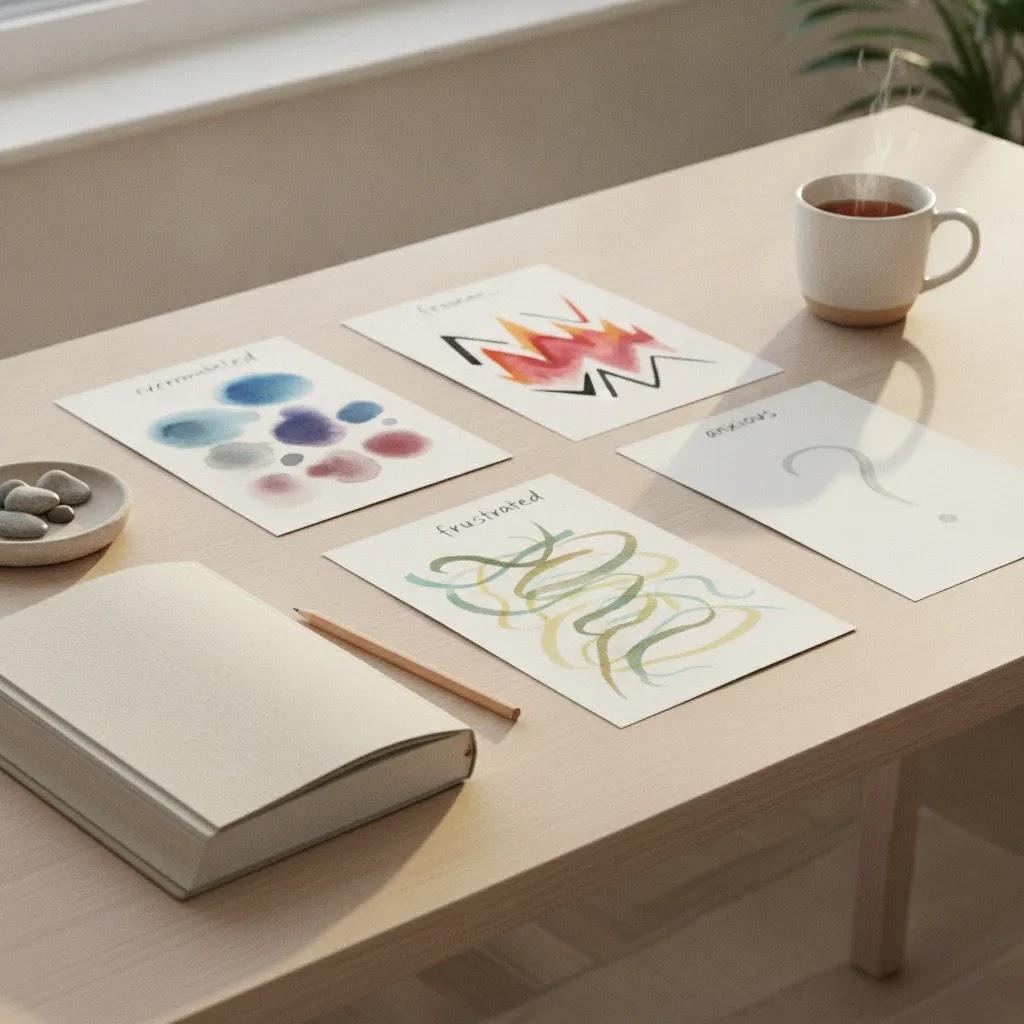
For some people, visual and creative check-ins feel easier than verbal ones. That is one reason people sometimes explore resources connected to art therapy singapore or guided nonverbal reflection, especially when words feel hard to reach.
Stress level vs related ideas

Stress level is often confused with a few nearby terms:
- Stressor: the thing putting pressure on you, such as deadlines, conflict, money worries, or lack of sleep.
- Stress response: how your mind and body react, such as muscle tension, shallow breathing, or racing thoughts.
- Burnout: a longer-term state of depletion, often linked to chronic overload and reduced recovery.
- Nervous system state: how activated, settled, restless, or shut down your body feels. You can explore this topic more in Nervous System & Body Healing.
Stress level sits in the middle of all this. It is the attempt to describe how intense the current load feels and how much it may be affecting you.
If you want a simple body-based explanation, the stress response is often described as your fight-or-flight system turning on. Your brain reads something as demanding or threatening, then your body releases chemicals such as adrenaline and cortisol to help you respond.
That can be protective in the short term. However, it can also make your heart beat faster, tighten your muscles, shift digestion, and make sleep lighter. This is one reason stress symptoms can look physical even when the source is emotional or situational.
Where you are likely to encounter these tools
You may see stress measures in workplace wellness check-ins, primary care forms, therapy intake paperwork, school counseling settings, research studies, and health apps. You may also find educational resources in Anxiety, Stress & Emotional Wellness that help you understand patterns before they become harder to ignore.
In everyday life, the simplest useful version may be a repeating personal check-in: one scale, one short note, and one question like “What seems to be raising this lately?” That is often enough to spot whether pressure is passing through or settling in.
Meanwhile, if you want help naming what is driving the strain, this guide to stressors may give you a clearer starting point.
Pros and Cons
Strengths
- Stress level tools can make an abstract feeling easier to track over time.
- They may help you notice rising strain before it affects sleep, focus, or relationships more severely.
- Simple scales are accessible for beginners and easy to repeat.
- Body-based measures can reveal patterns you might otherwise miss.
- Using one tool consistently can support clearer conversations with a therapist, doctor, or counselor.
Considerations
- No single score can fully capture your emotional reality.
- Wearable stress data may be influenced by illness, exercise, caffeine, or poor sleep.
- Online quizzes vary widely in quality and may overstate what a result means.
- Tracking can become unhelpful if it turns into constant self-surveillance.
Frequently Asked Questions
What is stress level in simple terms?
Stress level is a way of describing how much pressure your mind and body seem to be carrying right now. It is usually measured with a short questionnaire, a rating scale, or body-based data like sleep and heart rate patterns. It helps you track intensity, not define your identity.
Is there one best stress level test?
No single test is best for everyone. A short, repeatable tool is often more useful than a complicated one you only take once. What matters most is consistency, context, and whether the measure helps you notice patterns that are affecting your daily life.
Can a smartwatch measure stress accurately?
A smartwatch may estimate stress through indirect signals such as heart rate variability, sleep, and activity. That can be useful for trends, but it is not a full picture. Wearable data should be read alongside mood, body sensations, and changes in functioning rather than treated as final proof.
What counts as a high stress level?
That depends on the tool being used. Some scales have published score ranges, while others only compare you to your own baseline. A “high” result matters more if it repeats over time, matches your lived experience, and seems to be disrupting sleep, focus, patience, or recovery.
What is a normal stress level?
There is no universal normal stress level because different tools measure different things. A 0 to 10 rating is personal, a perceived stress questionnaire is scored within that specific instrument, and wearable scores are estimates based on body signals. Many people get the most useful information by tracking their own baseline and asking whether stress is easing with recovery and whether daily functioning is staying intact. If your “normal” stays high for weeks and recovery is not working, that is often a sign to seek support rather than hunt for a perfect number.
What are the 5 levels of stress?
You will sometimes see “levels” described in different ways, so it helps to check what the source means. A common everyday version is: very low, low, moderate, high, and very high. These are not official medical categories, but they can be a helpful shorthand. The most meaningful difference is usually between stress that rises and then settles, versus stress that stays elevated and starts affecting sleep, mood, focus, or relationships.
What is your stress level?
If you want a quick way to estimate your stress level, choose one simple method and repeat it consistently. Many beginners start with a 0 to 10 rating, then add one sentence of context. For example: “Today I am a 7 out of 10, sleep was short, shoulders tight, and I feel rushed.” If you want something more structured, a perceived stress questionnaire can capture patterns over a timeframe like the last month. The best method is the one you can stick with without turning it into pressure.
What are the symptoms of stress?
Stress doesn't just live in your head, it can quietly touch nearly every part of you. Your body might carry it as tight shoulders, headaches, an upset stomach, exhaustion, or restless nights. Your mind might feel scattered, foggy, or stuck in overdrive with racing thoughts that won't settle. Emotionally, you may notice yourself snapping more easily, feeling numb, tearing up without warning, or just feeling maxed out. And in day-to-day life, stress can look like pulling away from people, being short-tempered, feeling jittery, eating differently, or leaning a little too hard on coffee or a glass of wine to get through the day. If what you're feeling feels intense, comes on suddenly, or just won't let up, it's okay to reach out to a professional, they can help rule out anything else going on and support you through it.
How often should I check my stress level?
For many people, once a day or a few times a week is enough. More frequent checking can help during a rough stretch, but constant monitoring may make you feel more tense. The goal is awareness, not pressure. A steady routine usually gives the clearest picture.
Is stress level the same as anxiety?
No. Stress level describes how strained or overloaded you feel. Anxiety is more about fear, anticipation, or alarm, though the two often overlap. A person can have high stress without feeling classic anxiety, and anxious feelings can also raise perceived stress.
Can stress level tools help beginners?
Yes. Beginners often benefit from simple check-ins because they create language for something that otherwise feels blurry. A basic 0 to 10 rating, paired with a short note about sleep, tension, and mood, is often enough to start noticing useful patterns.
When should I get extra support instead of just tracking?
If stress feels relentless, keeps worsening, or starts affecting safety, work, school, relationships, sleep, or your ability to function, it may be time to reach out for professional support. Tracking is a helpful tool, but it is not a substitute for personal care when things feel too heavy to hold alone.
Key Takeaways
- A stress level is a snapshot of how much strain you may be carrying, not a diagnosis.
- Common tools include self-report scales, symptom checklists, and wearable body-data estimates.
- The best interpretation comes from patterns over time, not one isolated score.
- Use the same tool consistently and read results alongside sleep, body cues, and daily functioning.
- If stress keeps building or daily life is narrowing around it, extra support may help.
Conclusion
Measuring your stress level can be a gentle reality check. Sometimes it confirms that you are carrying more than you realized. Sometimes it shows that a hard week is easing.
Either way, the number matters less than the pattern behind it. If a tool helps you notice what your body, mood, and routine have been trying to say, it is doing its job. If you want to keep exploring, you might browse DailyLemons’ resources on stress, body-based regulation, and creative emotional check-ins at your own pace.
Please know that everything you're reading here is meant to inform, not to replace guidance from a qualified professional, it isn't medical, mental health, legal, or financial advice. Tools that help you check in on your stress can be gentle companions for building self-awareness, but they aren't designed to diagnose anything or take the place of real support from someone trained to help. If what you're feeling ever becomes heavy, lasting, or starts to affect your safety or ability to get through the day, please reach out to a licensed clinician or your local emergency service, you deserve that care.