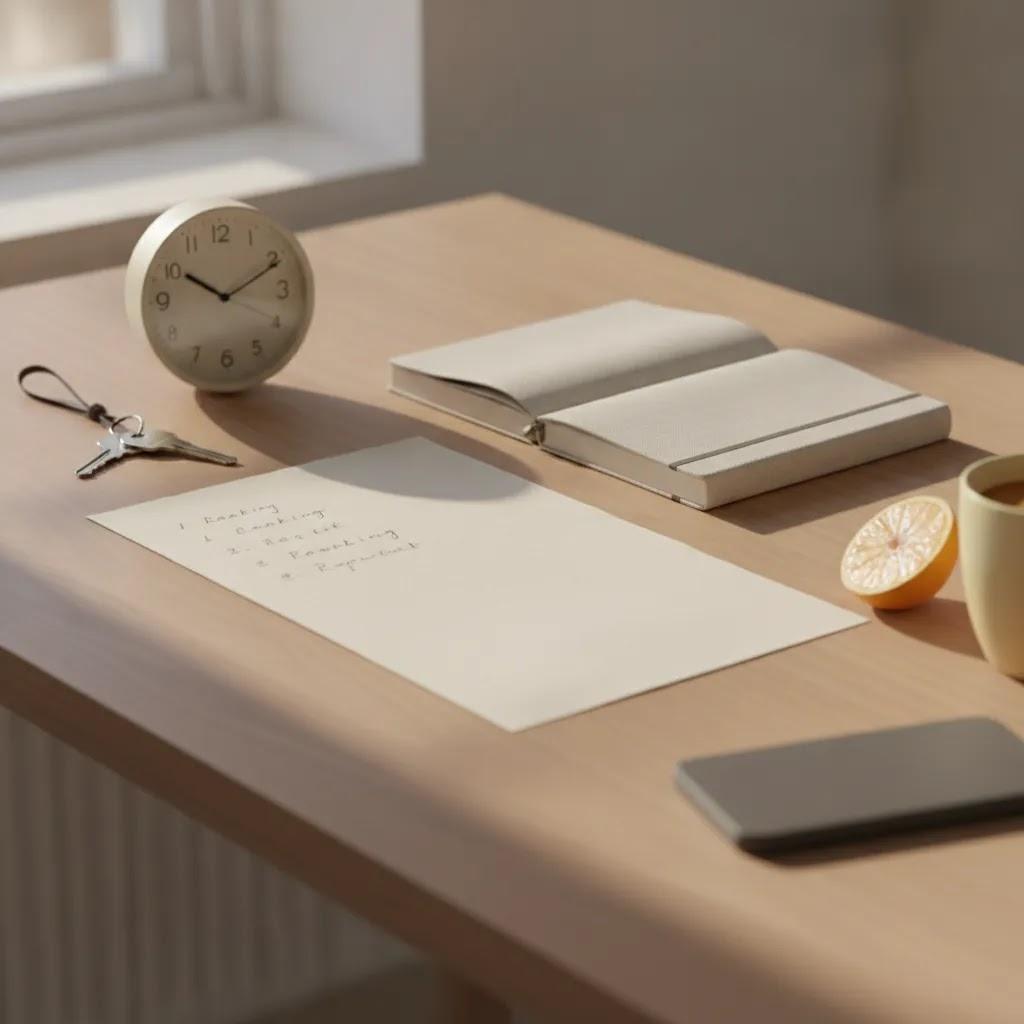
Stressors are the demands, situations, or inner pressures that ask your mind and body to adjust. They can come from conflict, money worries, poor sleep, noise, uncertainty, or self-criticism. When you identify and rank your main stressors, your stress often feels less random and more understandable.
Why can one text message, deadline, bill, or awkward conversation ruin your whole afternoon while something bigger barely touches you? Some triggers are obvious. Others are quieter. This guide looks at a practical next step: how to spot your own patterns and rank them gently. If you want a broader look at coping, that can help once you know what is setting your system off in the first place.
What stressors mean
A stressor is anything that places demand on your body, attention, emotions, time, identity, or sense of safety. It can be a real event, a perceived threat, an ongoing condition, or even a positive change that still requires adaptation.
That means stressors are not limited to “bad” events. Starting a new job, moving house, planning a wedding, parenting a teen, taking exams, or caring for an aging parent may all count. The common thread is not whether the event is good or bad. It is whether your system reads it as something that costs energy to manage.
In plain terms, stressors are the inputs. Stress is the response.
Key attributes of a stressor
- It asks you to adapt, decide, perform, or protect yourself.
- It may be short-term, repeated, or constant.
- It may be external, like workload, or internal, like perfectionism.
- It does not affect everyone the same way.
- Several small stressors can add up to more than one obvious big one.
Quick glossary
- Acute stressor: a short, immediate trigger such as an argument or missed train.
- Chronic stressor: a repeated or ongoing pressure such as debt, caregiving strain, or a hostile workplace.
- Trigger load: the combined weight of several stressors happening close together.
- Perceived threat: something your mind or body interprets as risky, even if others seem fine with it.
The 4 main types of stressors
It can help to group stressors into a few simple buckets before you try to rank them. This is not a strict system. Instead, it is a gentle way to notice what kind of demand is hitting you, so your list feels clearer and less like one long pile of everything.
Many beginner-friendly stress resources use four broad types:
- Physical and environmental stressors: things your body has to tolerate or adjust to, such as poor sleep, pain, illness, heat, noise, crowding, bright lights, long commutes, or constant notifications.
- Psychological and emotional stressors: demands happening inside you, such as worry, rumination, perfectionism, self-criticism, fear of disappointing someone, or carrying uncertainty without closure.
- Social and relational stressors: friction, loneliness, unclear boundaries, family tension, conflict, or feeling watched, judged, or misunderstood.
- Life change and organizational stressors: transitions and systems that require constant adaptation, such as moving, role changes, exams, deadlines, administrative tasks, caregiving logistics, or shifting routines.
One real situation can include multiple types at once. Job insecurity might come with social stress, emotional stress, and physical stress from sleep loss. If you only label it as work stress, you may miss why it keeps spilling into the rest of your day.
This classification supports the ranking method later in the article because it helps you compare like with like. For example, you may notice that your highest scores come from environments such as noise, heat, or poor sleep. On the other hand, you may find that internal patterns multiply the weight of everything else.
A ranked taxonomy of common stressors

This ranking is not a universal law. Instead, it is a practical taxonomy based on how often these categories shape day-to-day strain, how widely they spill into sleep, mood, and functioning, and how likely they are to stack with other triggers.
| Rank | Stressor category | Why it often hits hard |
|---|---|---|
| 1 | Relationship stressors | Relational friction can linger in the body for hours. |
| 2 | Work, school, and performance pressure | These stressors can create a sense that you are never fully off duty. |
| 3 | Financial strain | It can affect housing, food, healthcare, and future planning all at once. |
| 4 | Health and body-related stressors | Persistent body discomfort can lower your ability to handle other demands. |
| 5 | Uncertainty and lack of control | The mind often works overtime when there is no clear answer yet. |
| 6 | Overstimulation and environment | These factors can steadily wear down attention and patience. |
| 7 | Internal stressors | These patterns may turn ordinary demands into much heavier ones. |
| 8 | Life transition stressors | Adjustment itself takes energy. |
1. Relationship stressors
Conflict, rejection, loneliness, unclear boundaries, family tension, breakups, and feeling misunderstood often rank highest because humans are relational. Even brief relational friction can linger in the body for hours.
2. Work, school, and performance pressure
Deadlines, exams, job insecurity, overload, public evaluation, and constant notifications are among the most common modern stressors. As a result, they can create a sense that you are never fully off duty.
3. Financial strain
Debt, rising costs, unstable income, and surprise expenses often act as background pressure. Financial stress may be especially draining because it can affect housing, food, healthcare, and future planning all at once.
4. Health and body-related stressors
Pain, fatigue, poor sleep, illness, hormonal shifts, and fear about physical symptoms can keep your nervous system on alert. Even mild but persistent body discomfort can lower your ability to handle other demands.
5. Uncertainty and lack of control
Waiting for results, unclear expectations, unpredictable schedules, and sudden changes often hit harder than people expect. The mind tends to work overtime when there is no clear answer yet.
6. Overstimulation and environment
Noise, clutter, crowding, traffic, bright lights, heat, digital interruptions, and lack of privacy may not look dramatic from the outside. Still, they can steadily wear down attention and patience, especially for sensitive or neurodivergent people.
7. Internal stressors
Self-criticism, perfectionism, rumination, people-pleasing, and harsh comparison can act like stressors even when nothing urgent is happening around you. In practice, these patterns may turn ordinary demands into much heavier ones.
8. Life transition stressors
Moving, parenting changes, grief, divorce, graduation, retirement, or a new role can be meaningful and stressful at the same time. Adjustment itself takes energy.
How to rank your personal triggers
A useful ranking does not ask, “What is the worst thing that ever happened?” It asks, “What most reliably changes my body, mood, concentration, sleep, or behavior?”
A simple 5-part rating method
- Frequency: How often does this happen?
- Intensity: How strongly does it affect you in the moment?
- Duration: How long does the effect stay with you?
- Spillover: Does it affect sleep, eating, work, or relationships?
- Recoverability: How hard is it to come back from?
For each common stressor category, rate yourself from 1 to 5 on those five dimensions. The highest totals are often your true top triggers. This is more revealing than guessing based on drama alone.
If you are unsure where to start, a self-check like am i stressed can help you notice the body, mood, and habit patterns your stressors may already be affecting.
Why ranking stressors matters
Stress can feel vague when all you know is “I’m overwhelmed.” Ranking brings shape to that feeling. It helps you separate the trigger from the reaction, notice patterns sooner, and choose support that fits the real source of strain.
It also helps reduce self-blame. If your top stressors are stacked, repeated, or built into daily life, your exhaustion may make more sense than you think. Sometimes the problem is not that you are “bad at handling things.” Sometimes your load is simply high.
For some people, visual or nonverbal reflection can make this easier to notice. Resources related to art therapy singapore may feel more approachable if words are hard to find. If you want a broader foundation, this guide on what is art therapy can offer gentle context.
Signs your stressors are accumulating
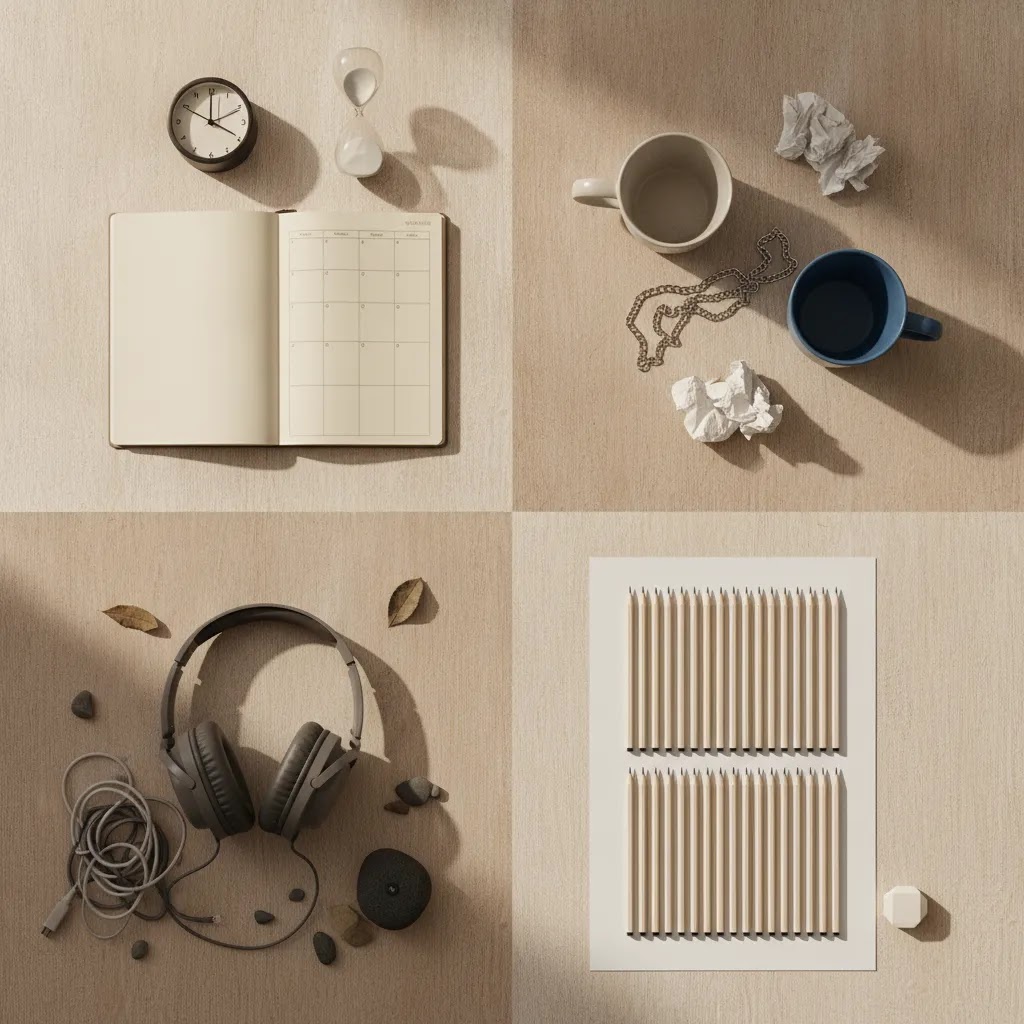
Ranking works best when you catch your load building early, not only when you are already at the edge. Stress does not always announce itself as panic. More often, it shows up as a slow shift in sleep, attention, mood, and how your body feels during ordinary tasks.
Common signals that stressors are stacking include:
- sleep disruption, trouble falling asleep, early waking, or waking up tired
- headaches, jaw clenching, neck and shoulder tightness, or a sense of being physically “wired”
- stomach upset, nausea, appetite changes, or eating that feels more reactive than intentional
- irritability, snappier reactions, or feeling unusually sensitive to small friction
- trouble concentrating, forgetfulness, or making simple decisions feeling harder than usual
- pulling back socially, ignoring messages, or feeling like basic interaction takes too much effort
It can be hard to tell the difference between normal pressure and a system that stays activated. One practical way is to look for patterns you can observe:
- Frequency: Is this happening most days rather than occasionally?
- Persistence: Does it last beyond the situation, such as irritability that carries into the next day?
- Functional impact: Is it affecting work, school, relationships, appetite, or your ability to rest?
- Narrowed tolerance: Do small demands suddenly feel too loud, too fast, or too much?
Another clue is coping drift. Under chronic stress, people often reach for faster relief, sometimes without realizing it. That can look like increasing alcohol, nicotine, cannabis, or caffeine, more late-night scrolling, or more impulsive snacking.
None of this makes you “bad” at coping. Instead, it can be a sign that your body is trying to downshift. If you notice that pattern escalating, it may help to revisit your stressor ranking and look at what has been building underneath.
Stressors vs stress, anxiety, and burnout
These terms overlap, but they are not identical.
- Stressors are the demands or triggers.
- Stress is your body-mind response to those demands.
- Anxiety often includes anticipation, fear, or persistent alarm, sometimes even when no immediate trigger is clear.
- Burnout usually involves depletion, reduced capacity, and a sense of being emotionally worn down over time.
If you want a broader hub for related topics, the Anxiety, Stress & Emotional Wellness category brings these ideas together in one place.
When to get help and where to start
Sometimes the most supportive move is not more self-analysis. It is reaching out. Stress is part of being human, but if it is persistent, worsening, or shrinking your daily life, you deserve more support than “just push through.”
Consider seeking support if:
- your stress feels constant for weeks, or keeps escalating without settling
- sleep is consistently disrupted, or you feel exhausted no matter what you do
- your ability to function is affected, such as work, school, chores, or basic decision-making
- relationships are taking repeated hits, such as frequent conflict, withdrawal, or feeling emotionally flat
- physical symptoms are persistent or concerning, such as headaches, stomach issues, chest tightness, or ongoing pain
- there are any safety concerns, including thoughts of harming yourself or feeling unsafe at home
Low-barrier first steps often look simple, but they matter:
- tell one trusted person what has been feeling heavy, especially if you have been carrying it privately
- use workplace or school support channels if available, such as a manager, HR, or student support services
- if physical symptoms are showing up, a primary care check-in can help rule out medical causes and give you a grounded next step
- for Singapore readers, the Health Promotion Board (HPB) is a reputable source for general, public health guidance and education on stress and well-being
If you do not know where to begin, repeat your stressor ranking once a month for a few months. You are not trying to “pass” anything. You are looking for trendlines. If your top stressors are rising in frequency, lasting longer, or spilling over more, that information can guide your next step and make it easier to explain what is happening to a support person or professional.
For general public guidance, you can also review the CDC’s stress and coping resources or the Health Promotion Board stress page. Both offer practical, non-sales guidance.
Where you usually meet stressors in real life
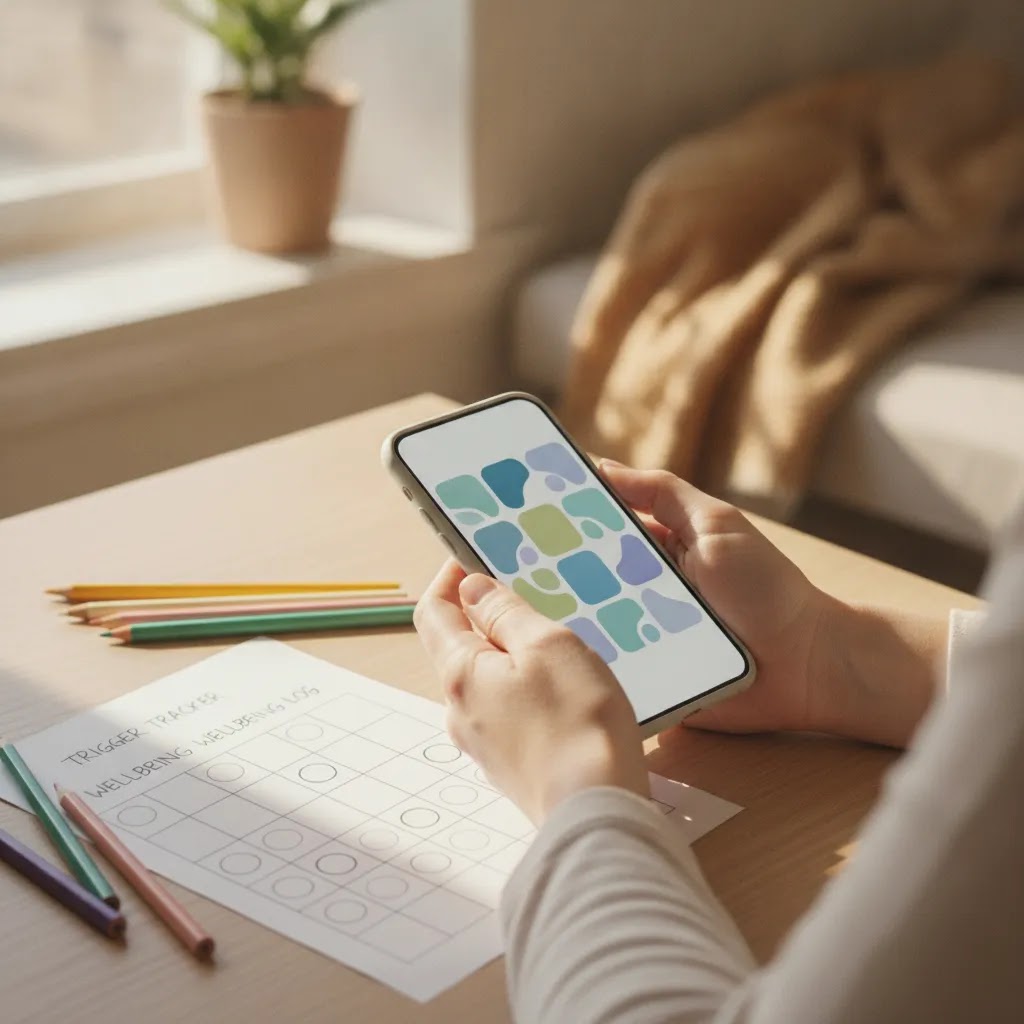
You will usually encounter stressors in clusters rather than one at a time. A hard email lands while you are sleep-deprived. A money worry sits underneath a family conversation. Meanwhile, a noisy environment can make a small task feel impossible.
Common places stressors show up include:
- morning routines and time pressure
- school and workplace expectations
- family roles and caregiving
- social media and constant comparison
- health uncertainty and body discomfort
- sensory overload and lack of downtime
If your triggers feel especially physical, the Nervous System & Body Healing category may offer helpful context on how strain can show up through tension, exhaustion, and overstimulation. You might also like this gentle look at art therapy for anxiety if reflection feels easier through creative methods.
Pros and Cons
Strengths
- Gives a clear definition of stressors instead of treating stress as one vague feeling.
- Helps you sort different trigger types rather than lumping everything together.
- Personal ranking makes patterns easier to spot over time.
- Useful for beginners because it turns abstract overwhelm into observable categories.
- Can guide better conversations with supportive adults, therapists, or care providers.
Considerations
- A ranking is still subjective and may change with life stage, sleep, health, or environment.
- Not every major stressor feels intense right away. Some work more quietly in the background.
- Self-reflection alone may not be enough if distress is severe, persistent, or linked to safety concerns.
Frequently Asked Questions
What is stressors in simple terms?
Stressors are the things that place pressure on you. They can come from outside, like money worries or conflict, or from inside, like perfectionism or constant overthinking. A stressor is not the same as stress itself. It is the trigger or demand that your mind and body respond to.
Are stressors always negative?
No. Some stressors come from positive changes, such as starting a new relationship, moving to a better home, or beginning a new job. Even welcome change can require adjustment, decision-making, and energy. The issue is not whether something is good or bad, but how much adaptation it asks from you.
What are the most common stressors for adults?
Common stressors often include relationship tension, work or school pressure, financial strain, sleep disruption, health worries, uncertainty, and overload from too many demands at once. For some people, internal patterns like self-criticism or people-pleasing are just as powerful as external pressures.
What are examples of stressors?
Examples of stressors include a tight deadline, conflict with a friend or partner, a noisy home, chronic poor sleep, money uncertainty, ongoing health concerns, moving house, caregiving responsibilities, or an internal pattern like rumination or perfectionism. The shared feature is that your mind and body read it as something requiring effort, adjustment, or protection.
What are 15 common stressors?
Fifteen common stressors include: relationship conflict, loneliness, unclear boundaries, deadlines, exams, job insecurity, workload overload, constant notifications, financial strain, surprise expenses, poor sleep, persistent pain or fatigue, uncertainty while waiting for results, noisy or crowded environments, and harsh self-criticism.
What are the 4 main types of stressors?
A simple way to group stressors is into four types: physical and environmental stressors (sleep loss, noise, pain), psychological and emotional stressors (worry, rumination, perfectionism), social and relational stressors (conflict, loneliness, rejection), and life change or organizational stressors (transitions, deadlines, administrative load). Many real-life situations include more than one type at the same time.
What do you mean by stressors?
By stressors, we mean the triggers and demands that ask your system to adapt. They can be external events, ongoing conditions, or internal pressures. Stressors are the inputs that tend to change your mood, body, attention, sleep, or behavior, while stress is the response that follows.
Can small stressors matter more than one big event?
Yes. Repeated minor stressors can build into a heavy overall load. Noise, interruptions, rushing, clutter, and constant decisions may seem small on their own, but together they can reduce patience, focus, and recovery. This is one reason a personal ranking can be more useful than only tracking dramatic events.
How do I know which stressors affect me most?
Look for patterns in your body, emotions, habits, and attention. Ask which triggers most often change your sleep, appetite, mood, irritability, or ability to focus. Rating each category by frequency, intensity, duration, spillover, and recovery difficulty can help you spot the stressors that carry the most weight.
Are stressors the same for everyone?
No. Two people can face the same event and react very differently. Past experiences, personality, support, health, sensory sensitivity, and current life load all shape how strongly a stressor lands. That is why personal ranking matters more than trying to copy someone else’s list of “top stress triggers.”
What is the difference between a trigger and a stressor?
A trigger is often used for something that causes a strong emotional or body reaction quickly. A stressor is a broader term for any demand that creates strain or requires adaptation. Some triggers are stressors, and some stressors are slow and cumulative rather than immediate or dramatic.
What should I do after identifying my top stressors?
Start by noticing whether your top stressors are practical, relational, sensory, or internal. That can shape the next step. Some stressors need problem-solving, some need boundaries, and some need regulation first. If your distress keeps worsening or starts to affect safety or daily functioning, reach out for qualified support.
Key Takeaways
- Stressors are the demands or triggers that your mind and body respond to.
- Common categories include relationships, performance pressure, finances, health, uncertainty, environment, internal patterns, and life transitions.
- Your personal ranking should focus on frequency, intensity, duration, spillover, and recovery difficulty.
- Several small stressors can add up to more than one obvious major event.
- Identifying stressors can make overwhelm feel more understandable and more trackable.
Conclusion
Learning your stressors is less about labeling yourself and more about seeing your patterns clearly. Once you know which triggers show up most often, last the longest, or spill into sleep and relationships, stress tends to feel a little less mysterious.
That clarity may help you respond earlier and with more self-understanding. If you want to keep exploring gently, you might browse more topics in Daily Lemons’ stress and emotional wellness resources whenever it feels useful. Sometimes a small amount of clarity can change how you carry a heavy week.
Please know that what you're reading here is meant to inform and support, not to replace professional guidance, this isn't medical, psychological, or emergency care. Sometimes what feels like stress is tangled up with other things too: anxiety, burnout, grief, unresolved trauma, sleep troubles, or something physical going on in the body. And if what you're carrying feels heavy, unrelenting, or is making it hard to feel safe or simply get through your day, please reach out to a licensed professional or your local emergency services, you deserve real support, right when you need it.