What causes stress is usually a mix of body strain and life pressure. Poor sleep, pain, hormones, uncertainty, conflict, workload, and sensory overload can all trigger it. In most cases, stress builds when demands rise while your capacity, rest, or sense of safety drops.
If you have ever wondered why one small event feels manageable one day and overwhelming the next, the answer often lies in how your body systems and surroundings interact. This article maps the main biological and environmental triggers behind stress responses, explains why they build differently from person to person, and shows where stress fits within the bigger picture of stress itself.
What causes stress in the first place
Stress is not caused by one single thing. It is a response pattern. Your nervous system scans for challenge, threat, unpredictability, overload, or loss of control. Then it prepares your body to respond. That response can help in the short term. However, it can feel draining when triggers stack up or never fully switch off.
A useful way to map causes of stress is to separate them into two layers. First, there are biological triggers, such as poor sleep, blood sugar swings, illness, pain, hormonal shifts, or a body that is already running on high alert. Second, there are environmental triggers, such as deadlines, family conflict, sensory overload, financial pressure, or constant uncertainty. In practice, most stress does not come from only one layer. It usually builds where those two layers meet.
| Trigger layer | Examples already covered in this article | What it tends to affect |
|---|---|---|
| Biological triggers | poor sleep, blood sugar swings, illness, pain, hormonal shifts, caffeine, hunger, dehydration, sensory overload | baseline capacity and physical reactivity |
| Environmental triggers | deadlines, family conflict, financial pressure, uncertainty, noise, crowding, unclear expectations | demand, pressure, and sense of control |
| Combined stress load | outside demands rising while body strain is already present | how intense or manageable stress feels |
- Biological triggers change your baseline capacity
- Environmental triggers increase the demand placed on that capacity
- Repeated exposure can make the body react faster over time
- Support, rest, and safety cues can soften the response
What causes stress in the body
Your body has built-in systems for unconscious survival functions. If you have searched what regulates unconscious functions such as breathing, the short answer is the autonomic nervous system working with brain regions and body signals that help regulate breathing, heart rate, blood pressure, digestion, and alertness. Stress affects that regulation. For a medical overview of the stress response, the National Institute of Mental Health offers a clear fact sheet.
What causes stress signals in the nervous system
The autonomic nervous system helps manage automatic functions without you having to think about them. During stress, the sympathetic branch increases readiness. As a result, heart rate may rise, breathing may become quicker, muscles may tighten, and digestion may slow. This is efficient during a real challenge. Yet it becomes tiring when the body treats everyday life as one long emergency.
What causes stress hormones to rise
Stress responses also involve hormones such as adrenaline and cortisol. These chemicals help mobilize energy and sharpen attention for short periods. However, if activation becomes frequent or prolonged, you may feel wired, irritable, foggy, or unable to settle even after the original trigger passes.
Body-state triggers that lower your margin
Some causes of stress begin inside the body before any obvious external event happens. Common examples include:
- sleep loss or irregular sleep timing
- ongoing pain, illness, or physical discomfort
- hormonal shifts, including menstrual or postpartum changes
- too much caffeine or other stimulating substances
- hunger, dehydration, or long gaps without food
- sensory overload, especially for neurodivergent people
If your body is already strained, even a minor inconvenience may land harder. That does not mean you are overreacting. It may mean your system has less room to absorb one more demand. If you want a broader body-based view, Daily Lemons also covers topics related to Nervous System & Body Healing.
What causes stress in your environment

Environmental causes of stress are outside conditions your brain reads as demanding, unsafe, unstable, or hard to escape. Some are obvious. Others are subtle but constant.
What causes stress at work or school
Deadlines, unclear expectations, heavy workloads, interruptions, and constant evaluation can all increase stress load. Pressure often rises further when effort feels high but control feels low.
What causes stress in relationships
Conflict, criticism, emotional distance, caregiving strain, loneliness, or feeling watched and judged can all activate stress responses. Human beings are social. So threats to belonging can feel physically intense.
What causes stress through uncertainty
Many people tolerate hard things better than unpredictable things. Waiting for news, unstable finances, changing plans, or mixed messages can keep the body braced because it cannot predict what comes next.
Noise, crowding, and sensory strain
Bright lights, clutter, traffic, constant notifications, and crowded spaces can act as background stressors. These are especially relevant if you feel easily overstimulated.
For a wider collection of related topics, you can browse Anxiety, Stress & Emotional Wellness. If you are trying to spot effects rather than causes, it may also help to read about stress symptoms. You can also explore common stressors in more detail.
Warning signs your stress load is high
Stress often shows up before you have a clear story for it. One reason it can feel confusing is that the signs may look physical, mental, emotional, or behavioral at the same time. In addition, they often get louder when triggers stack up and your margin is already low from sleep loss, pain, illness, or ongoing uncertainty.
Here are some common warning signs people notice when stress load is high. Your pattern may be different. Also, some signs can overlap with medical issues, so persistent, severe, or unexplained symptoms deserve evaluation by a qualified clinician. For public guidance on stress warning signs and self-care, see the CDC stress and coping resource.
- Physical: headaches, jaw or neck tension, stomach discomfort, appetite changes, fatigue, trouble sleeping, feeling keyed up, changes in breathing, frequent muscle tightness
- Mental: racing thoughts, difficulty focusing, forgetfulness, decision fatigue, feeling mentally foggy, looping on worst-case scenarios
- Emotional: irritability, feeling easily overwhelmed, tearfulness, emotional numbness, feeling on edge, reduced patience
- Behavioral: pulling away socially, procrastination, snapping at people, increased scrolling or distraction, changes in caffeine or alcohol use, working longer but getting less done
If you recognize several of these at once, it can be a sign that your nervous system is spending more time in readiness mode than recovery mode. Even small adjustments can matter earlier than you think, especially if you catch the pattern before it becomes your new normal.
Why what causes stress feels different for each person
Stress is shaped by context, history, and current capacity. Two people can face the same deadline and have very different reactions because their bodies are not starting from the same place.
Glossary
- Autonomic nervous system: the system that helps regulate automatic functions like breathing, heart rate, and digestion.
- Sympathetic activation: the body’s mobilized state of alertness and readiness.
- Cortisol: a hormone involved in energy use and stress regulation.
- Sensory overload: a state where sounds, lights, textures, or input exceed what feels manageable.
What changes the impact?
- past experiences that taught your body what to expect
- current sleep, health, and energy level
- social support or isolation
- how much choice or control you have
- whether the stressor is short-term or ongoing
This is one reason relief strategies often need to match the type of trigger. A body-based stressor may need rest, food, pacing, or sensory adjustment. A situational stressor may need boundaries, clearer structure, or practical support. If you are looking for ways to respond, our guide on how to reduce stress can help you think through next steps. If you want a broader framework, you can also explore coping by stress type.
What causes stress vs anxiety and other mix-ups
Think of stress as the reaction that shows up when something specific is asking too much of you, a deadline, a hard conversation, a change you didn't choose. Anxiety doesn't always play by that rule. It can linger quietly even after the moment has passed, or show up without a clear reason at all. Because they're so closely tangled, it's completely normal to feel both at once and struggle to tell where one ends and the other begins.
Another common mix-up is assuming all stress is psychological. Some stress begins with sleep deprivation, illness, pain, hormonal change, or sensory overwhelm. Likewise, it is easy to assume all stress is negative. Positive change, such as moving, starting a new role, or planning a wedding, can also trigger stress because adaptation still costs energy.
Types of what causes stress over time

Duration changes how stress impacts you. The same trigger can feel very different depending on whether it is brief, repeating, or constant. This matters because stress that resolves and lets your body return to baseline usually costs less over time than stress that keeps re-triggering without enough recovery.
Acute stress
Think of that racing heart before an exam, the tight chest after a near-miss on the road, or the knot in your stomach before a hard conversation, this is what acute stress feels like. It arrives quickly around one specific moment, your body rising to meet it, and then, when things pass, there's often a clear exhale. It can feel sharp and overwhelming while it lasts, but it's built to move through you rather than settle in for good.
Episodic acute stress
Picture this: you barely finish handling one crisis before the next one lands on your plate. That's episodic acute stress, a string of short-lived stressful moments that, on their own, might seem manageable, but keep showing up so often your body never really gets to exhale. Maybe it's the constant scramble against the clock, the surprise problems that pop up right when you least expect them, or the never-ending cycle of putting out fires at home or at work. Each moment passes, but the next one is already on its way.
Chronic stress
Then there's the kind of stress that just... stays. Weeks turn into months, and the weight doesn't lift, often because the situation underneath it isn't the kind that resolves on its own, think financial pressure that won't ease up, conflict that keeps circling back, an unsafe living situation, caregiving with no real break, discrimination, or a health issue that lingers. What makes chronic stress tricky is that it rarely announces itself. It's not always the dramatic, obvious kind of hard. More often, it's a quiet hum of tension sitting just beneath the surface, one that never quite fades away.
If you are trying to place yourself without over-labeling it, a few gentle prompts can help:
- Does my stress settle when the immediate problem is over, or does it keep humming in the background?
- Do I get real recovery time between stress waves, or do new demands arrive before I reset?
- Has my baseline shifted, meaning I feel reactive sooner than I used to?
- Do I feel like my body is bracing even during ordinary tasks?
These questions are not a diagnosis. They are simply a way to notice whether your system is getting time to recover, or whether it is being asked to stay activated for too long.
Where you usually encounter what causes stress
You may encounter biological and environmental stress triggers in ordinary places:
- at work, when demand, interruption, and uncertainty pile up
- at home, when caregiving, conflict, or financial pressure stay unresolved
- in school, where performance pressure and social comparison can build quickly
- in your body, during illness, exhaustion, pain, or hormonal change
- in recovery practices that do not fit, if stillness or heavy verbal reflection feels too hard
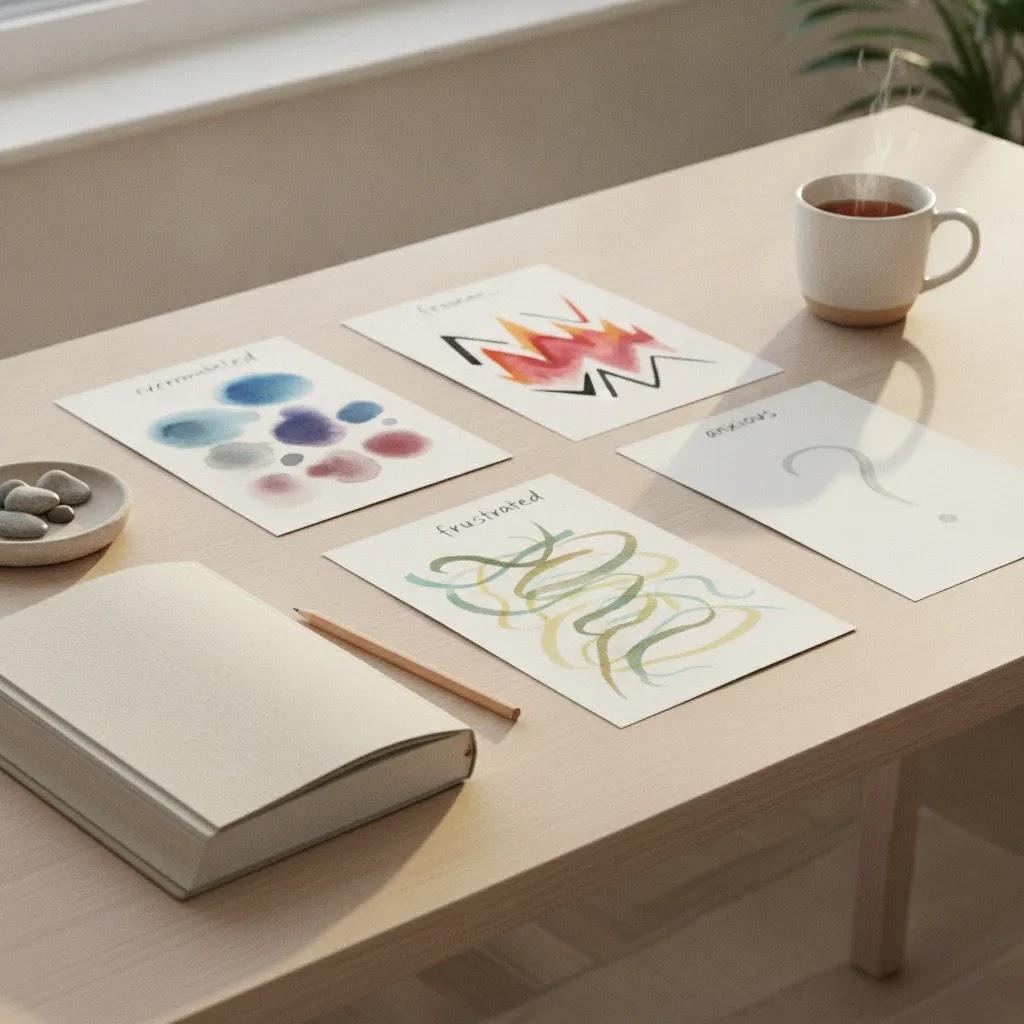
Some people find it easier to process stress through guided, nonverbal practices rather than trying to explain everything at once. That is part of why interest in approaches such as art therapy singapore and other creative supports continues to grow. If you want practical ideas, a short list of stress buster options may feel easier to start with.
Common examples of what causes stress by life area
If you are trying to identify what causes stress examples in your own life, it can help to sort triggers by where they tend to live. Stressors often feel more workable when they stop being abstract and start becoming specific.
Work and workplace conditions
- unclear expectations, shifting priorities, or a role that keeps expanding
- long hours, constant interruptions, or too little time for deep work
- low control, such as being evaluated without having the tools or authority to succeed
- job insecurity, sudden organizational changes, or unpredictable scheduling
- poor management, conflict at work, or a culture of constant urgency
- harassment, discrimination, or feeling unsafe or disrespected at work
Home life, relationships, and caregiving
- ongoing conflict, criticism, or walking on eggshells
- caregiving responsibilities, especially when support is limited
- household workload that never fully ends, including invisible planning labor
- lack of privacy, noise, or an environment that does not feel restorative
Money and practical stability
- debt, overdue bills, or rising costs that shrink your margin
- inconsistent income, underemployment, or fear of job loss
- unexpected expenses, medical costs, or repair emergencies
- pressure to support others financially
Major life events and transitions
- bereavement, loss, or caring for someone who is ill
- separation, divorce, or shifting family roles
- moving, immigration changes, or leaving a familiar community
- pregnancy, postpartum changes, or a new baby in the home
- graduation, starting a new job, or stepping into a new responsibility
Some of these changes can be positive, wanted, or meaningful. They can still be stressful because the brain and body have to adapt, and adaptation takes energy.
Stress in students
- exams, constant evaluation, and fear of falling behind
- social dynamics, comparison, and pressure to fit in
- unclear expectations from teachers or family
- irregular sleep, heavy screen time, and limited recovery between demands
Pros and Cons

Strengths
- Separating biological and environmental triggers makes stress easier to understand.
- This approach explains why stress can feel physical, emotional, and mental at the same time.
- It helps reduce self-blame by showing that low capacity can be body-based, not personal failure.
- It supports more practical coping because different triggers often need different responses.
- It is useful for beginners and still detailed enough to feel meaningful.
Considerations
- Stress triggers are often layered, so simple categories may not capture every situation.
- Body-based causes can overlap with medical concerns that need professional evaluation.
- Environmental stress may not be easy to change quickly, even after you identify it.
- Reading about stress causes may build insight, but insight alone does not always bring relief.
Frequently Asked Questions
What causes stress most often?
Stress can creep in from all sorts of places, a heavy workload, tension with someone close to you, money worries, uncertainty about what's next, not enough sleep, physical pain or illness, too much noise and stimulation, or a big life change all at once. Often, it's not really about one single trigger. More commonly, it's what happens when life keeps asking for more just as your body and mind have less left to give.
What are the main causes of stress?
The main causes of stress typically include high demand with low control, uncertainty, relationship tension, financial strain, and body-based load such as sleep loss, pain, illness, or hormonal change. Stress often increases when multiple areas hit at once, for example work pressure plus poor sleep plus ongoing conflict at home.
What are 5 warning signs of stress?
Five common warning signs of stress are trouble sleeping, muscle tension, irritability, difficulty focusing, and pulling away from people or usual routines. Signs vary by person and can overlap with medical concerns, so severe, persistent, or unexplained symptoms should be evaluated by a qualified clinician.
What are 10 causes of stress?
Picture juggling a deadline, a pile of unread bills, and a phone that won't stop buzzing, all while running on too little sleep. That's what stress often looks like in real life. It tends to show up through things like an overwhelming workload, murky expectations at work, worries about job stability, tension with the people close to you, the quiet exhaustion of caregiving, money troubles, big life transitions, poor rest, ongoing pain or illness, and the constant ping of notifications pulling at your attention. Rarely does it come from just one source, usually it's several of these pressing in together.
How to overcome stress?
Overcoming stress usually starts with identifying what is driving it, then choosing responses that match the trigger. Body-based stress may respond to sleep, nourishment, pacing, movement, and sensory support. Environmental stress may respond to boundaries, clearer plans, asking for help, and reducing avoidable demands. If stress feels persistent or unmanageable, support from a qualified health or mental health professional can be an important part of care.
Can stress come from the body and not just from life events?
Yes. Sleep loss, hunger, hormonal shifts, illness, chronic pain, and overstimulation can all make your system more reactive. You may notice that small problems feel much bigger when your body is already strained. That does not make the stress less real. It shows how closely physical state and emotional capacity are linked.
What regulates unconscious functions such as breathing?
Automatic functions such as breathing, heart rate, and digestion are regulated by the autonomic nervous system along with brain and body signaling systems. Under stress, this regulation can shift toward alertness and survival readiness. That is why breathing may feel shallow or fast when you are overwhelmed, even if you are not choosing it consciously.
Why do some people get stressed more easily than others?
People differ in baseline capacity, past experiences, health, sleep, support, sensory sensitivity, and current demands. A trigger that feels manageable to one person may feel intense to another. Stress response is not a simple measure of toughness. It is shaped by the interaction between the situation and the state of the person facing it.
Is all stress bad?
Not always. Short-term stress can help with focus, reaction time, and motivation when the demand is brief and recovery follows. Problems usually grow when stress is frequent, prolonged, or stacked without enough rest and support. Positive changes can also create stress because the brain and body still need to adapt to something new.
How do I know if my stress is mostly biological or environmental?
It may help to ask two questions: what changed around me, and what changed in my body? If lack of sleep, pain, caffeine, illness, or hormonal shifts appeared first, biology may be playing a larger role. If deadlines, conflict, uncertainty, or overload appeared first, environment may be more central. Often, both are active together.
Can creative practices help with stress triggers?
They may. Some people find that drawing, color, rhythm, or other nonverbal practices help settle the body before words are available. This can be especially useful when stress feels physical or when journaling and meditation feel hard to access. Gentle creative tools can support awareness, pacing, and emotional expression without requiring long explanations.
When should stress be taken more seriously?
Some signs are worth paying closer attention to, stress that lingers, keeps building, or starts creeping into your sleep, your work, or your sense of safety. It's the kind of thing worth talking through with a doctor or mental health professional, especially if physical symptoms show up out of nowhere, stick around, or keep coming back. And if safety ever feels uncertain in the moment, that's not something to sit with alone, it calls for immediate support.
Key Takeaways
- What causes stress is usually a mix of biological strain and environmental demand.
- The body’s automatic regulation systems play a major role in how stress feels.
- Sleep, pain, hormones, illness, and sensory overload can lower your margin quickly.
- Uncertainty, workload, relationship tension, and low control are common outside triggers.
- Mapping the trigger type can help you choose a gentler, better-matched response.
Conclusion
Stress rarely appears out of nowhere. More often, it grows where body state and life pressure cross paths. If you can start noticing whether your stress is being driven more by biology, environment, or both, the picture often becomes a little clearer and a little kinder. You do not need to explain everything perfectly to begin understanding it. If you want to keep exploring this gently, Daily Lemons offers related resources on stress, body-based healing, and creative emotional support that you can browse at your own pace.
Please know that what you're reading here is meant to inform, not to replace care from a licensed professional, it isn't medical, psychiatric, or crisis guidance. Sometimes what feels like everyday stress is actually tangled up with something deeper, physically or emotionally, and that's worth having looked at by someone qualified to help. If things feel urgent right now, if you're struggling to stay safe, dealing with chest pain or breathing trouble, or having thoughts of harming yourself, please reach out for emergency support immediately or connect with a crisis line near you.