Art therapy uses drawing, painting, collage, clay, and other visual methods to help you explore feelings, stress, memories, and inner conflict. The goal is not to make polished art. Instead, art therapy gives your inner world a visible shape, often with guided reflection and support.
You may have seen the phrase Art Therapy Fundamentals and wondered what it means in real life. Does it mean drawing your feelings? Does it mean therapy that includes art? Or does it offer something more structured than a relaxing craft session?
This guide is for beginners, curious adults, caregivers, and anyone who wants a clear place to start. You will learn what art therapy is, how it often works, which methods people commonly use, and how it can fit different ages and emotional needs. The goal is not to push you anywhere. Instead, it helps you understand the practice well enough to decide what feels useful, what may not, and what questions to ask next.
Who this art therapy guide is for
This guide supports readers at several stages. If you are new to art therapy, it can help you sort out basic definitions and expectations. If you already know the term but want a cleaner explanation of principles and methods, this will give you a stronger foundation.
If you are a parent, partner, educator, or clinician-adjacent reader, it can also help you understand why image-making may open a different kind of emotional access than words alone.
It is also useful if talk-heavy tools feel tiring, abstract, or hard to begin. Some people process best through language. Others do not. Art therapy exists partly because inner experience does not always arrive in neat sentences.
What you will learn
- What art therapy is and what it is not
- How visual expression can support emotional processing
- The main principles that shape art therapy practice
- Common methods, materials, and session styles
- How art therapy may differ from casual art-making or coloring
- Where it may be used across ages, needs, and settings
- What related Daily Lemons articles cover in this topic hub
- What questions to ask before trying art-based support
What art therapy means in practice
Picture sitting with a page and letting color or a rough shape carry what words won't quite hold. That's the heart of art therapy, using creative gestures like line, texture, and symbol to gently work through feelings and give shape to what's tangled or hard to voice. There's no pressure to make something beautiful. It's simply a soft, guided way to notice, sit with, and slowly untangle what's going on inside.
In formal settings, a trained art therapist usually guides art therapy within a defined therapeutic relationship. In broader wellness settings, art-therapy-informed exercises may borrow some of the same principles without claiming to replace professional care. That distinction matters. A structured creative exercise can still be meaningful, but it is not the same as working with a qualified clinician.
One reason this approach can feel accessible is that the page gives form to an internal state. Instead of only saying “I feel off,” you might draw pressure as tight corners, grief as emptiness, or relief as more open space. As a result, that external object can make experience easier to notice and talk about.
The core principles behind art therapy

Externalizing inner experience
A major principle is externalization. You put feelings, memories, or tensions onto a surface outside the body. That can create a little breathing room. You are no longer only inside the feeling. You are also observing it.
Working through the senses in art therapy
Art-making is physical. Your hand moves. Pressure changes. Color choices shift. Repetition can slow the pace of attention. This sensory element is one reason art therapy may feel easier to enter than purely verbal reflection, especially when you feel overwhelmed or shut down.
Using symbols rather than direct explanation
Not every feeling needs a literal description. Symbolic language can offer distance and safety. For example, a storm, a wall, a small figure, a split page, or a crowded tangle can communicate a lot without forcing immediate explanation.
Meaning emerges with support
Art therapy should not work like a personality quiz where someone tells you what your drawing “means.” Ethical practice usually avoids fixed interpretation. Instead, the image becomes a starting point for curiosity, not a verdict.
Art therapy vs. other approaches (and what “counts”)
A lot of confusion comes from the fact that many things use art, but they are not all art therapy. Some can still help. They simply belong to different categories, with different levels of training, structure, and responsibility.
Art therapy vs. art as self-care
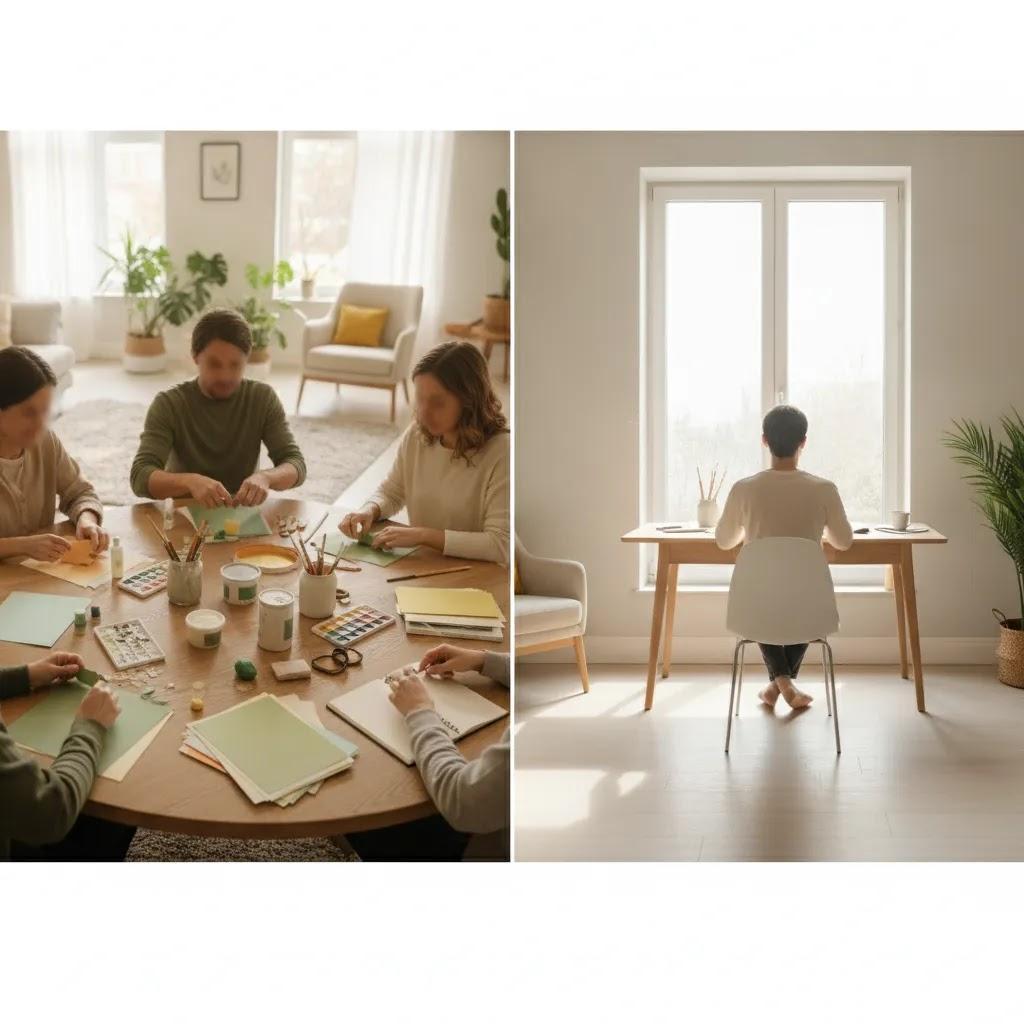
Art as self-care is what many people already do instinctively: sketching in a notebook, coloring, crafting, or painting to settle the mind or express a mood. It can feel calming and emotionally useful. The main difference is this: you direct self-care yourself. You choose the pace, the topic, and the depth. There is typically no clinical assessment, no therapeutic treatment plan, and no formal duty of care.
Art therapy vs. an art class
An art class is usually skill-based. The goal tends to be technique, practice, or creative output, and the teacher is there to coach the craft. That can still support confidence and enjoyment, and it may help you feel more resourced.
Picture sitting across from someone who invites you to pick up a pencil, not to draw well, but to let something unspoken take shape on paper. That's the heart of art therapy, a gentle, supported process where the art itself becomes a kind of language, one that can hold feelings words sometimes can't reach. A trained guide walks alongside you, helping you move at a pace that feels safe, so what surfaces can be noticed, felt, and understood rather than rushed past.
Art therapy vs. “expressive arts” style activities
You may see the phrase “expressive arts” used as an umbrella for creative approaches, such as movement, music, drama, writing, and visual art. Some programs are clinician-led. Some are educational or community-based. Others are wellness workshops.
The overlap is real, but training and scope can vary a lot. If your priority is formal therapy, the practical question is simple: is this being provided as psychotherapy or counseling by a licensed or credentialed professional, and what are their ethical and legal obligations in your location? If you want a closer comparison, you can also read expressive arts therapy vs art therapy.
EMDR vs. art therapy (a beginner-friendly comparison)
Art therapy and EMDR sometimes get mentioned in the same breath, since both can offer a way through trauma-related stress when talking about it feels too hard. But they work quite differently under the hood. EMDR follows a specific, clinician-guided protocol built around bilateral stimulation, think guided eye movements or tapping, while you hold a particular memory, belief, or bodily sensation in mind. It tends to feel more procedural, with a defined structure session to session.
Picture a therapy room where nothing needs to be pinned down right away, where an image can sit with all its contradictions, its half-formed memories, its emotions that don't quite match, and nobody rushes to explain it neatly. That's often what art therapy allows. For some, this open quality feels like relief. For others, it feels shaky, and what they actually want is something more defined, more step-by-step. Neither preference is wrong. Some practitioners blend approaches, weaving in more than one method, though this always comes down to their training, their license, and what genuinely fits your needs.
“Which is better?” is usually the wrong question. Better depends on your goals, your nervous system, your history, and what kind of support you have around the work. If you like talking things through in detail, you might prefer verbal therapies or structured approaches. On the other hand, if you get overwhelmed by direct recounting, or you shut down when asked to explain, nonverbal or mixed approaches may feel more workable. A licensed professional can help you evaluate fit and pacing, especially if you have complex or persistent distress.
Quick comparison table
| Approach | Main focus | Who guides it | What the article says it typically includes |
|---|---|---|---|
| Art therapy | Expression, reflection, and inner experience through image-making | Usually a trained art therapist or credentialed professional in formal settings | A therapeutic relationship, pacing, reflection, and ethical boundaries |
| Art as self-care | Calming yourself, expressing a mood, or settling the mind | You guide it yourself | Self-directed pace, topic, and depth, with no formal duty of care |
| Art class | Technique, practice, or creative output | An art teacher or instructor | Craft coaching and skill-building rather than therapeutic reflection |
| EMDR | Working with memories, beliefs, or body sensations through a structured protocol | A clinician-led psychotherapy provider | Bilateral stimulation and a clear procedural structure |
Art therapy methods and materials often used
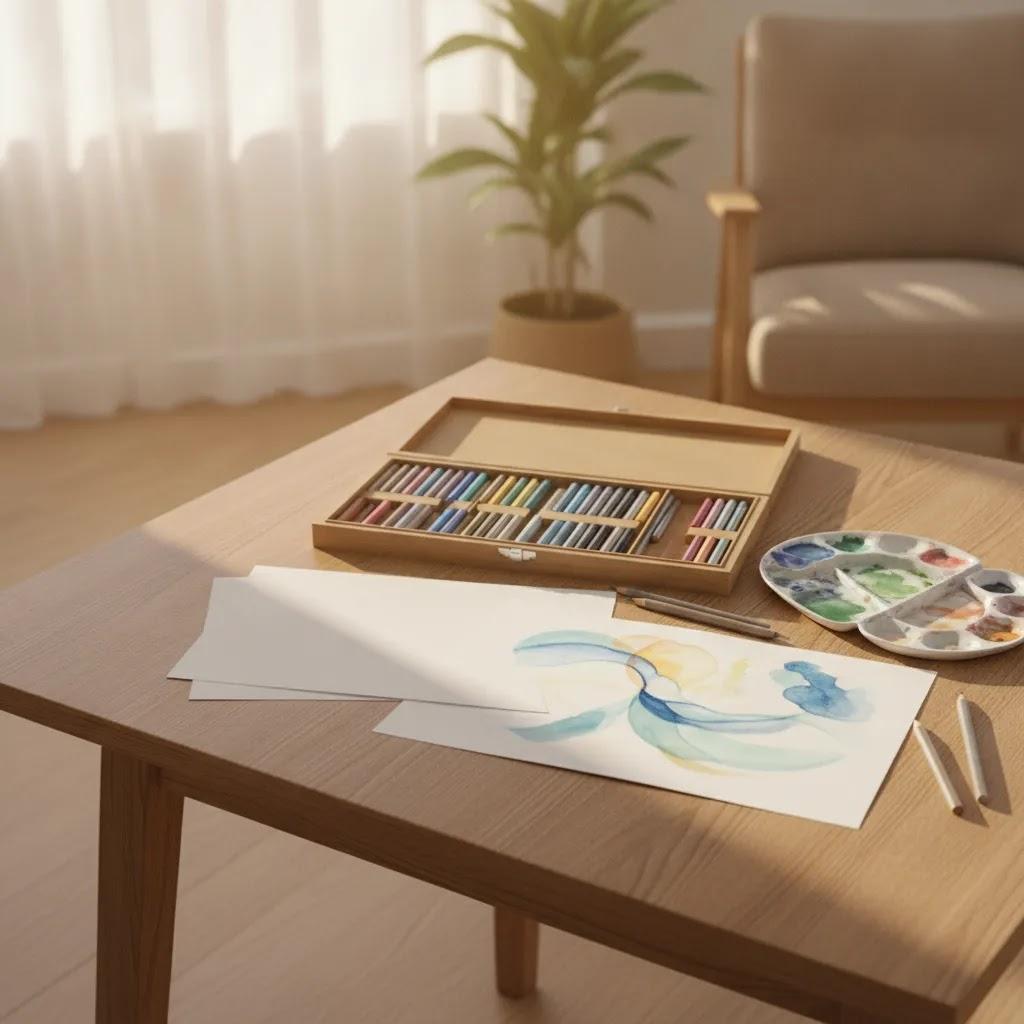
Art therapy can involve drawing, painting, collage, clay, mixed media, guided imagery, or simple mark-making. The choice of medium may depend on the person, the goal, and the setting. Some materials feel containing and structured. Others feel freer, more sensory, or more expressive.
Methods also vary. A session may begin with grounding, then move into a prompt such as drawing a safe place, mapping stress in the body, showing 2 conflicting feelings on one page, or creating an image of what support looks like. Some approaches are more reflective and symbolic. Others focus more on calming the body through rhythm, repetition, and sensory attention. If you want more support around emotional regulation, that can help this section make even more sense.
If you want more condition-specific examples, our article on art therapy for anxiety looks at how visual methods may help when the nervous system feels crowded. If your interest is adult use more broadly, benefits of art therapy for adults explores where this approach may fit across stress, grief, burnout, and life transitions.
A starter menu of art-therapy-informed activities (by age and goal)
These are art-therapy-informed prompts, not a replacement for clinician-led therapy. They are meant to be low-pressure ways to explore emotion through image, especially if you want a gentler entry point than talking.
Keep the pacing kind. If an exercise increases distress, confusion, or a sense of being flooded, it is okay to stop. Step back into grounding, get support from someone you trust, or reach out to a licensed professional if you need more containment than you can create alone.
For emotional regulation (grounding and settling)
Adults, teens: Draw a “temperature map” of your day using only colors and shapes. No labels. When you finish, circle the one area that feels most intense and add one small change that would make it 5 percent softer.
Kids: Make a “breathing line.” As you inhale, draw a line that rises. As you exhale, draw a line that falls. Repeat for a few breaths. Then choose one color that feels like “calmer” and trace over your favorite section.
All ages: Create a “safe texture page.” Fill a page with repeating marks that feel soothing, such as dots, gentle waves, soft shading, or small boxes. The goal is rhythm, not meaning.
For expression (naming without forcing words)
Adults, teens: Pick one feeling you keep circling. Give it a color, a shape, and a location on the page. Then add a second color or shape for what the feeling is protecting, asking for, or trying to prevent.
Kids: Draw “the worry creature” or “the angry cloud” with a body and a home. Then draw what helps it shrink or soften. If your child wants to rip up the page or cover it up, that can also be information about what the feeling needs.
For insight (parts, conflicts, and mixed feelings)
Adults: Split the page into two or three spaces: “the part that pushes,” “the part that hides,” and “the part that is tired.” Draw each part as a symbol, not a portrait. Afterward, write one sentence under each: “I show up when…”
Teens, adults: Draw two conflicting wants on one page, such as “stay” and “leave,” “speak” and “keep the peace,” or “rest” and “prove.” Use different materials or different hands if it helps you feel the contrast. Then add a small bridge between them: a shared need, a boundary, or a tiny next step.
For connection (family or group prompts)
Families, pairs: Create a “support map.” Each person draws themselves as a simple shape. Add lines, colors, or symbols for what helps each person feel supported, and what drains them. Keep it descriptive rather than blaming. The goal is visibility, not a verdict.
Gentle safety guidance for self-led work
Art can open memory and emotion, sometimes more quickly than expected. If you notice shaking, numbness, panic, a sense of unreality, or a feeling you cannot come back down after the exercise, treat that as a signal to slow down.
Try simpler grounding, such as repeating marks, holding a warm mug, naming 5 objects you see, or stepping outside for fresh air. If certain themes repeatedly flood you, that is often a good reason to do this work with a trained professional who can help with pacing and stabilization. You may also find our guide to emotional regulation skills helpful between sessions.
Settings and situations where art therapy can help

Art therapy may be used in private practice, schools, hospitals, community programs, elder care, trauma-informed settings, and digital wellness tools. It may support people dealing with anxiety, loss, identity questions, burnout, life changes, relationship strain, or moments when words feel unavailable.
It also spans age groups. Children may respond to image-making because it matches how they naturally communicate. Teens may find it less exposing than direct questioning. Adults sometimes discover that visual expression helps them notice patterns they had circled verbally for years. Older adults may benefit from both the expressive and relational sides of the process.
Location and access matter too. If you are exploring services in a specific region, art therapy singapore may help you understand local context and options. For broader topic browsing, the Art Therapy Singapore and Art Therapy Fundamentals sections can help you continue at your own pace.
What to look for in a qualified art therapist (credentials and regulation)
If you are seeking formal art therapy, it helps to know what “qualified” typically looks like and where the boundaries are. This matters for safety, ethics, and expectations. A wonderful art teacher or community facilitator may be supportive, but that role is not the same as a therapist’s role.
What training often includes
Training varies by country and by the legal status of the profession, but credentialed art therapists commonly complete graduate-level preparation, often a master’s degree, supervised clinical practice, and ongoing professional development. Many also train in counseling skills, ethics, and working with risk, not only in art techniques. Depending on where you live, an art therapist may also hold a separate license as a counselor, psychotherapist, psychologist, social worker, or similar regulated profession.
Because regulation differs across regions, “art therapist” can mean different things in different places. If you want clinician-led therapy, look for clear information about the provider’s training, credentials, and whether they practice within a regulated scope. For a deeper breakdown, see Art Therapists: Training Paths, Scope and Selection Criteria.
A practical checklist for choosing a provider
Ask about credentials and scope: What is their highest relevant qualification? Are they credentialed as an art therapist, licensed in a mental health profession, or both? What services are they legally allowed to provide where you live?
Ask how sessions are structured: Do they offer assessment, goal-setting, and ongoing review, or is it more open studio style? Both can be valid, but you should know what you are consenting to.
Ask about confidentiality and limits: Any ethical provider should explain privacy practices and the situations where they may need to break confidentiality (for example, imminent risk of harm, abuse reporting requirements, or legal orders). The details depend on local law.
Ask about informed consent: You should be told what the approach is, what a session may involve, potential risks (such as unexpected emotional activation), fees, cancellation policies, and how records are handled.
Ask how they handle intense distress: What happens if you feel overwhelmed in session? Do they teach grounding skills, adjust pacing, or coordinate with other supports if needed?
Notice how interpretation is handled: Ethical practice tends to be collaborative. Be cautious if someone claims they can decode your drawings with certainty or makes big conclusions without your input.
How to verify credentials (and why it varies)
Oversight depends on where you are. In some countries, art therapy has a clear credentialing pathway and professional register. In others, the title may not be legally protected, and providers may be regulated under a different profession, or not regulated at all.
If you are unsure where to start, look for national or regional professional associations for art therapy, and check whether they list credential requirements, ethical codes, or directories. In the United States, professional information may be reviewed through organizations such as the American Art Therapy Association. You can also review general mental health provider information through the National Institute of Mental Health.
This is also where the earlier distinction matters: an art-therapy-informed coach, facilitator, or digital tool may still offer meaningful support, but it should not present itself as a regulated mental health service if it is not one. Clear naming is part of ethical care.
Art Therapy Benefits
5 Art Therapy Benefits for Seniors: Cognition and Social Life looks at how art therapy may support older adults in ways that go beyond simple pastime value. The piece explores emotional expression, memory stimulation, social connection, and the gentle structure that creative routines can offer later in life. It is especially useful if you are thinking about aging, caregiving, or group-based support where conversation alone may not reach everyone equally. It also helps clarify that benefits may include mood, engagement, and relationship quality, not only creativity.
How Does Art Therapy Help With ADHD Focus and Regulation? focuses on attention, sensory needs, and regulation. It explains why art-based work may be helpful for people who struggle with restlessness, emotional intensity, or rigid expectations around sitting still and explaining themselves. The value here is not that art “fixes” attention. It is that structured visual activity may offer another route into focus, pacing, and self-observation. If ADHD is part of the picture for you or someone you support, this article gives that topic room to breathe.
What Is Art Therapy
Art Therapy Defined: Origins, Practice and Core Differences is the best next read if you want more historical and professional context. It explains where the field came from, how practice developed, and what separates art therapy from general art classes, recreational creativity, or self-guided emotional doodling. This article complements the present guide by adding origin stories, practice boundaries, and clearer distinctions between formal therapy and art-inspired wellness activities.
Is Art Therapy Worth the Cost? A Practical Breakdown takes a more decision-focused angle. After learning what art therapy is, many readers naturally ask whether the time, money, and emotional effort make sense. This piece breaks that question into practical considerations such as goals, access, level of support needed, and what kind of value a person may be looking for. It is useful if your curiosity is turning into comparison and you want a more grounded way to weigh options.
Common misunderstandings and mistakes

Assuming you need artistic skill
You do not need to be “good at art” for art therapy to be relevant. In fact, strong performance pressure can sometimes get in the way of honest expression.
Treating every image like a code to crack
Not every drawing carries a hidden message that must be decoded. Sometimes the value is in the process itself: slowing down, noticing, choosing, repeating, containing.
Confusing relaxation with therapy
Coloring apps, sketching, and crafts may feel soothing, and that can be valuable. Still, soothing activity is not always the same as therapeutic work with intention, pacing, and reflection.
Using art-making as the only support in high distress
Art therapy may help many people, but it is not always enough on its own. If distress is intense, persistent, or connected to safety concerns, human support matters.
Where to go from here
If you want a broader view of the cluster, start with a definition-focused follow-up article, then continue to a practical cost-and-fit guide if you are weighing effort, fit, or cost. If your interest is age-specific, art therapy benefits for seniors and art therapy benefits for adhd offer more focused use cases.
If you're looking for a quiet next step, DailyLemons offers a soft landing point, art-therapy-informed without feeling like a textbook. You might wander through related guides, weigh which emotional needs feel most familiar, or sit with the question of when creative outlets are enough and when it's time to reach for something more, like professional support.
Frequently Asked Questions
What is art therapy in simple terms?
Picture someone sitting with a blank page, a few crayons, and no pressure to create anything gallery-worthy, that's often where art therapy begins. It's less about the finished piece and more about giving your inner world a shape you can actually look at, hold, and maybe talk through with someone who's there to help. What feels tangled or wordless inside sometimes softens into something you can start to understand, carry, or share.
Do you need to be good at art for art therapy?
No. Artistic skill is not the main requirement. Many people who feel unsure about art still find the process approachable once they realize the page is not being graded. Simple shapes, colors, lines, and symbols are often enough. In many cases, less polished work can feel more direct and honest.
How is art therapy different from doing art at home?
Doing art at home can be calming, expressive, and meaningful. Art therapy usually adds intention, structure, pacing, and guided reflection. In professional settings, it also includes a therapeutic relationship and ethical boundaries. Home art-making may still help, but it does not automatically function the same way as formal therapy.
What kinds of issues may art therapy help with?
There's no single profile for who benefits from art therapy, it might show up for someone navigating grief, another person untangling questions about who they are, or someone simply worn down by burnout, anxiety, or too much emotional weight to carry alone. For many, it becomes a way in when speaking feels like too much effort or the right words just won't come. How much it helps isn't fixed either; that depends on the individual, the environment they're in, and the level of guidance they have along the way.
Is art therapy only for children?
No. Children often respond well to it, but art therapy is used with teens, adults, older adults, and families too. Adults may use it for emotional processing, nervous system regulation, self-reflection, or life transitions. The materials and prompts may change by age, but the basic idea can remain relevant across the lifespan.
What happens in a typical art therapy session?
A session may include a check-in, a prompt or theme, time to create, and gentle reflection afterward. Some sessions are more structured. Others are more open. A therapist may help you notice patterns, feelings, and meanings without imposing a fixed interpretation. The pace usually depends on your goals and comfort level.
Can art therapy be done digitally?
Yes, art-therapy-informed support can be offered through digital tools, guided drawing experiences, and telehealth formats. Digital formats may lower barriers for some people, especially if privacy, travel, or time is an issue. Still, digital support is not always a substitute for in-person or clinician-led care when needs are more complex.
Is art therapy evidence-based?
Research suggests art-based therapeutic approaches may support a range of emotional and health-related outcomes, but results can vary across populations, methods, and study quality. That is why careful language matters. It may be helpful, but it should not be framed as a guaranteed answer for every person or every situation.
How to be a certified art therapist in Singapore?
Certification and regulation depend on local professional standards, and these can change over time. A common pathway in many regions includes graduate-level training, often a master’s degree, in art therapy or a closely related field, supervised clinical practice, and meeting requirements set by professional bodies. In Singapore specifically, it is worth checking current requirements with local professional associations and training programs, and also clarifying whether your intended work requires registration under a regulated mental health profession. If you are choosing a provider rather than becoming one, you can still ask the same practical questions: what training they have, what ethical code they follow, and what scope they practice under.
What’s the difference between EMDR and art therapy?
Think of EMDR as a step-by-step process, your therapist guides you through eye movements or gentle tapping while your attention rests on a specific memory, belief, or feeling in the body. Art therapy moves differently, letting a paintbrush, clay, or collage become the language when words feel too hard to find, with meaning surfacing gradually through color, shape, and touch. Neither approach is "better", some people find comfort in EMDR's clear structure, while others feel more at ease letting images speak first. A licensed therapist can walk through both options with you, helping you choose a path that matches your needs and lets you move at a pace that feels safe.
How do you decompress after therapy?
People decompress differently, but many benefit from a small transition ritual after a session. You might take a quiet walk, drink water or tea, eat something steadying, or do a few minutes of simple sensory grounding like noticing 5 things you see and 4 things you feel. If you did art-based work, it can help to store the image somewhere safe and decide whether you want to look at it again soon or give it space. If you feel emotionally activated for hours afterward, it is reasonable to tell your therapist so you can adjust pacing, add more grounding, or plan stronger support between sessions.
What is the core principle of art therapy?
A core principle is externalization: putting inner experience into an image so you can observe it with a bit more space. The artwork becomes a container for feelings, memories, and conflicts. From there, meaning is explored collaboratively through gentle reflection rather than fixed interpretation.
Glossary
Externalization
Putting an inner feeling or experience into an outside form, such as an image, so it can be observed more clearly.
Symbolic expression
Using images, shapes, colors, or metaphors to communicate something indirectly rather than stating it literally.
Art-therapy-informed
A phrase often used for tools or exercises influenced by art therapy principles but not identical to formal clinician-led therapy.
Containment
A sense of boundary or safety that helps a difficult feeling feel more manageable during expression or reflection.
Guided reflection
Supportive questions or observations that help a person notice meaning in their work without forcing a single interpretation.
Pros and Cons
Strengths
- May offer a useful entry point when feelings are hard to explain verbally.
- Can combine sensory regulation with later reflection and meaning-making.
- Works across many ages and settings, including schools, groups, and adult support.
- Does not require artistic training to begin.
- Can create a visible record of change, patterns, or emotional themes over time.
Considerations
- Not every person connects with visual expression, even if they like art in general.
- Casual art-making and formal art therapy are not the same, which can cause confusion.
- May not be enough by itself in severe distress or urgent situations.
- Access to qualified professionals may vary by location and cost.
Key Takeaways
- Art therapy uses creative process to support emotional expression, reflection, and regulation.
- The goal is usually honest expression, not artistic quality.
- Its principles often include externalization, sensory engagement, symbolism, and guided meaning-making.
- It may help across ages and situations, but fit and outcomes vary.
- Art-based wellness tools may be helpful, though they are not always a replacement for qualified care.
Conclusion
Art therapy sits at an interesting meeting point between expression, reflection, and care. It gives form to feelings that may be blurry, intense, or hard to name, and that alone can change how a moment feels. For some people, it becomes a doorway into deeper therapeutic work. For others, it may simply be a gentler way to begin noticing what is there.
If you want to keep exploring, the DailyLemons art therapy hub offers a calm path forward through definitions, age-specific applications, and practical questions about fit. You do not need to have all your words ready first. Sometimes a small shape, a line, or a page of color is enough to begin.
We're sharing this simply to inform, not to offer clinical, psychiatric, legal, or emergency guidance. While creative practices like art therapy can gently support how people process and express their feelings, no two experiences are alike, what helps one person may look different for another, depending on the practitioner, the setting, and individual needs. If you're considering working with an art therapist, it's worth taking a moment to look into their credentials, what their practice actually covers, and the standards required in your area. Folks in the U.S. can start by checking resources through groups like the American Art Therapy Association. And if you or someone you care about is struggling, feeling unsafe, or facing something that feels too heavy to carry alone, please reach out to a licensed professional, emergency services, or a crisis line without delay, you don't have to navigate that alone.