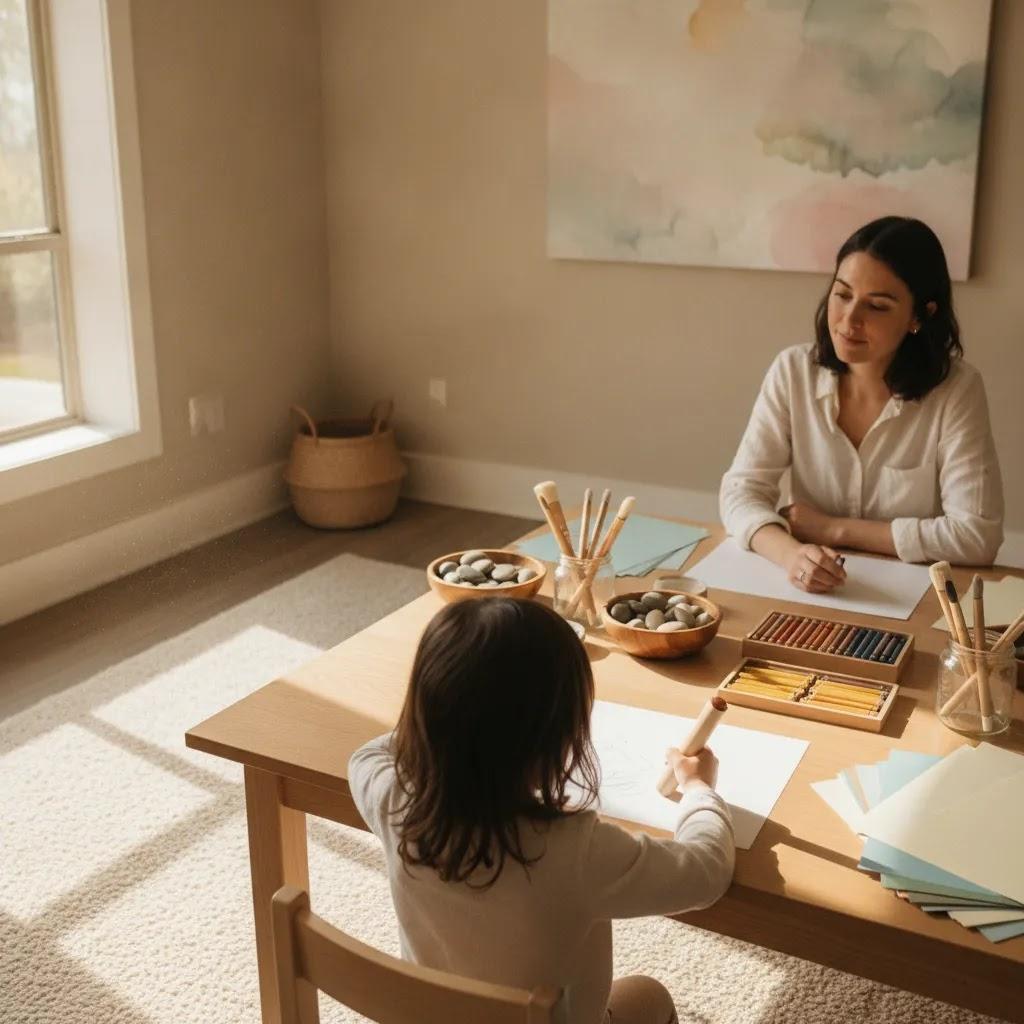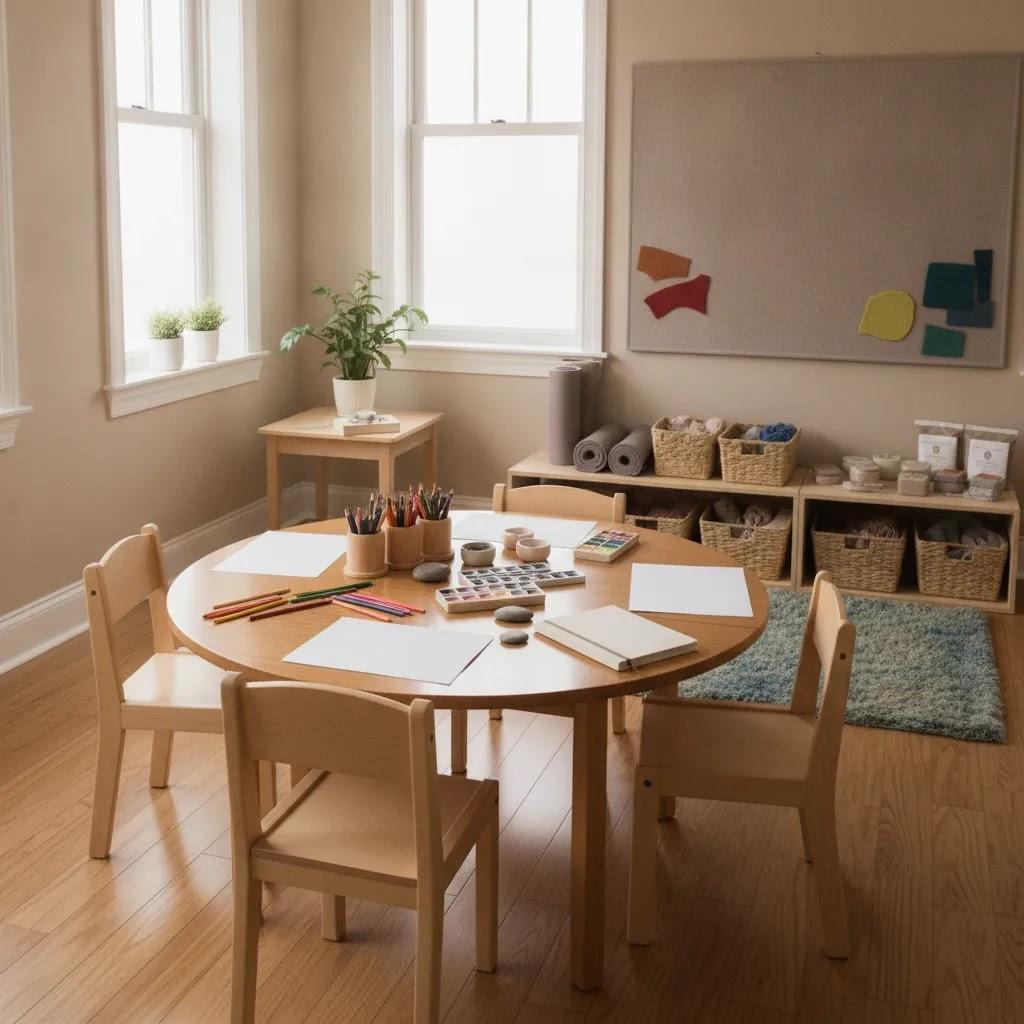
What makes one art therapy article worth your time while another leaves you with vague promises? Usually, it comes down to whether it points back to published research and explains the limits honestly. This piece does exactly that. Instead of offering a broad summary of art therapy, it gathers eight specific findings from published research that help clarify what art therapy may do well, where the evidence is strongest, and where caution still matters. You will see patterns around emotional expression, stress regulation, digital delivery, and study quality, all in plain language. If you want broader context first, you can read the benefits of art therapy for adults. For a wider topic hub, the Art Therapy Fundamentals section brings related guides together in one place.
How this research shortlist was built
This article is centered on published findings, not opinion pieces. The goal is simple: identify research points that keep showing up in serious discussions of art therapy benefits, then explain what each one actually means for a general reader. That includes the upside and the uncertainty.
The findings below draw from systematic reviews, integrative reviews, scoping work, and mechanism-focused studies referenced in Daily Lemons educational materials. You will notice that many findings use careful language such as “may,” “suggests,” or “is associated with.” That is intentional. Art therapy research is promising, but it is not the kind of field where one dramatic headline should settle the question.
What art therapy is, and what it is not
Before weighing benefits, it helps to define the term clearly. Art therapy usually refers to a structured therapeutic process that uses image making, materials, and reflection with a qualified professional. The point is not to produce impressive artwork. It is to use the creative process as a way of exploring emotion, experience, patterns, and meaning.
That is different from a self-guided art activity, a general expressive arts practice, or a digital wellness tool that borrows ideas from art therapy. Those formats may still be supportive. They may help with grounding, expression, or self-observation. They are not automatically the same as formal art therapy delivered by a trained clinician or credentialed art therapist.
A worry that comes up often is whether you need any artistic talent for this to be worthwhile, and the honest answer is no. So many people hold back, assuming they have to be naturally creative or trained before their efforts can mean anything. But that's not how it tends to work. What actually holds meaning in art therapy is usually found in the act itself: the choices you make, the sensations that surface, the symbols that emerge along the way. The finished piece rarely carries the weight; the experience of creating it does.
Published findings at a glance
| Finding | Research type | What it suggests | Main caution |
|---|---|---|---|
| Overall health-related benefits appear across studies | Systematic review and meta-analysis | Art therapy may help across several outcomes and populations | Studies vary a lot in design and quality |
| Evidence quality is uneven | Review-level observation | Positive trends exist, but certainty differs by outcome | Not every claim has the same level of support |
| Expression may become easier through images and symbols | Cross-study and practice-based finding | People may communicate hard feelings nonverbally first | Expression is not always the same as relief |
| Art therapy may bridge body-based calming and meaning-making | Theory-informed and applied research | It can start with sensory action, then move toward reflection | Not every person needs or likes both parts |
| Mindfulness-based art approaches may work through distinct mechanisms | Mechanism study | Drawing and visual focus may regulate attention differently | Mechanisms are still being mapped |
| Telehealth delivery can be feasible | Scoping review | Remote arts therapies may expand access | Suitability varies by age, condition, and support needs |
| Digital art therapy is growing, but evidence is still developing | Integrative review | Digital tools may lower barriers and support continuity | Digital access is not the same as clinical equivalence |
| Emotion processing may be one active ingredient | Mixed methods and intervention research | Change may come from working through emotion, not only soothing it | Mechanisms differ across users and settings |
1. A 2024 meta-analysis found overall health-related benefits
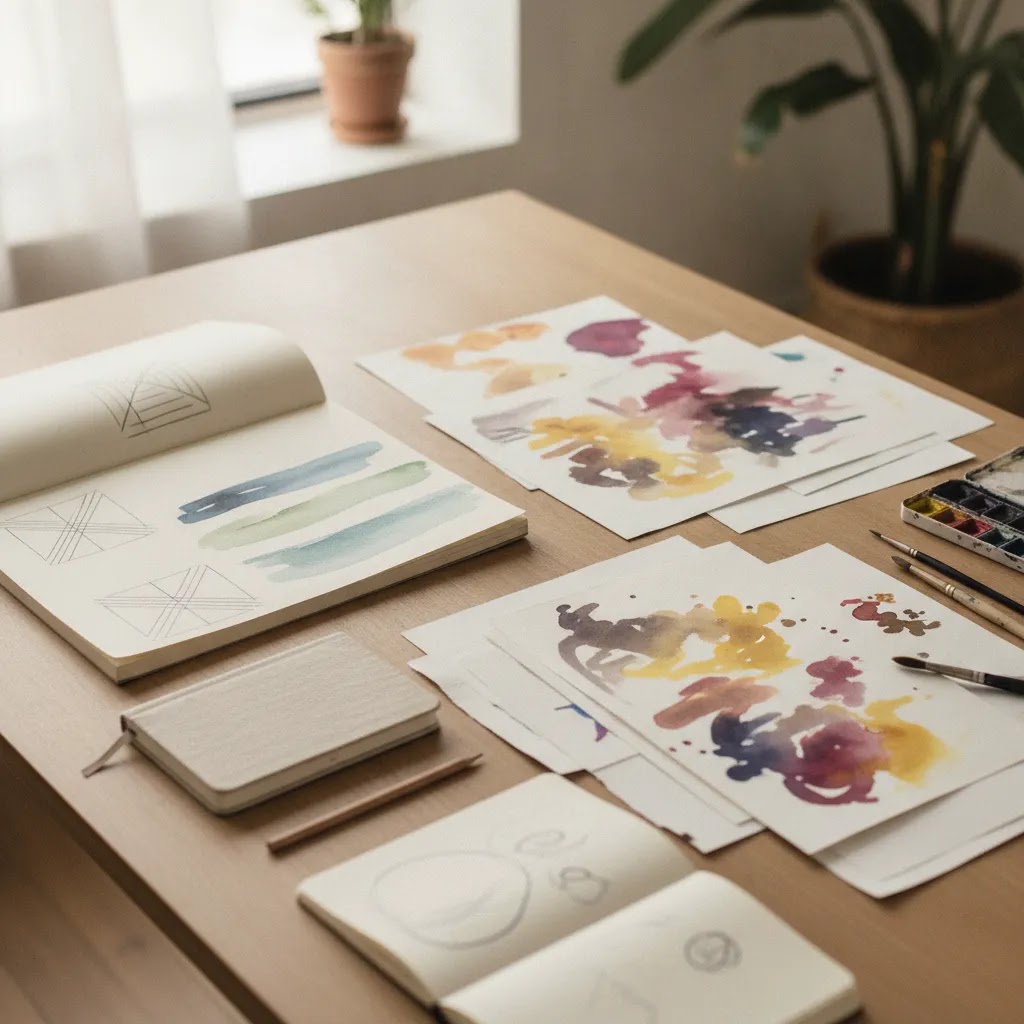
A major published review in JAMA Network Open examined active visual art therapy and found beneficial associations with health-related outcomes across a range of studies. That matters because meta-analyses do not rely on one small trial. They look across many papers to see whether a broader pattern exists.
The practical meaning is encouraging but not magical. The finding supports the idea that art therapy may be helpful in real ways, not only as a pleasant hobby. It also gives readers a stronger starting point than blog claims built on anecdotes alone.
The caveat is built into the same paper: the included studies were heterogeneous. Different populations, different settings, and different intervention styles were grouped together. So the safest takeaway is that the field looks promising overall, not that every art therapy format works equally well for every person.
2. Study quality is mixed, so broad claims need restraint
One of the most useful research findings is also the least dramatic: the evidence base is uneven. Some studies are carefully designed. Others are smaller, harder to compare, or focused on very specific groups. That does not erase positive results. It changes how confidently we should talk about them.
If you read art therapy benefits articles closely, this point becomes a filter. Articles that promise guaranteed transformation usually skip it. Better ones acknowledge that art therapy may help through several pathways, while also admitting that stronger, more standardized research is still needed.
This is especially relevant for beginners who are trying to sort useful information from soothing language. Honest articles leave room for complexity. They make it easier to tell the difference between “there is support for this approach” and “this will definitely work for you.”
Who art therapy may be suitable for, and where fit can vary
Published research and professional organizations often discuss art therapy across a wide range of ages and circumstances. That can include children, teens, adults, caregivers, and people moving through stress, grief, illness, burnout, or major life disruption. The broad spread is one reason the field attracts so much interest. It appears adaptable across settings rather than limited to one narrow use case.
Even so, “may help” is not the same as “fits everyone.” Suitability can depend on what you want from the experience, how much support you need, how comfortable you are with image-based work, and whether indirect expression feels easier or harder than talking. Some people find visual making freeing. Others feel exposed by it, or simply prefer more direct conversation.
A little extra caution matters if distress feels intense, if trauma history is active, or if support needs are complex. Self-guided art activities may still be useful, but they may not be enough on their own. In those cases, guidance from a qualified professional may be a safer starting point than open-ended exploration without support.
3. Art making may help expression when words feel blocked
Published writing across the field consistently points to nonverbal expression as one of art therapy’s core strengths. A person may be able to draw tension, fear, grief, or confusion before they can name it neatly. In practice, that can matter for children, trauma-impacted people, and anyone who shuts down under direct verbal pressure.
This finding helps explain why some people respond to art therapy after struggling with more language-heavy tools. The page can hold a symbol, color field, or repeated mark without demanding a polished explanation first. For some readers, that makes art therapy feel more reachable than traditional journaling.
If you are curious about how this shows up earlier in life, the Daily Lemons piece on benefits of art therapy for children explores why image-based expression may matter so much for younger users. The limit here is simple: expression may open the door, but it does not automatically resolve what was expressed.
4. The process may support both body-level calming and later reflection

Art therapy is often described as bridging two routes into change. One begins with the senses and body: rhythm, breath-linked lines, pressure, motion, and visual focus. The other comes later through reflection: noticing patterns, naming symbols, and making meaning from what was created.
That dual action matters because many wellness tools lean mostly one way or the other. Some ask you to think hard. Some only aim to calm. Art therapy may offer both in sequence, which is one reason it appears in discussions across emotional wellness and nervous system support. You can explore related context in Anxiety, Stress & Emotional Wellness.
The caution is that sequencing matters. A person in acute distress may only benefit from the regulating part at first. Pushing interpretation too quickly could feel overwhelming rather than supportive.
5. Mindfulness-based art work may affect attention and emotional regulation differently than meditation alone
Mechanism-focused research on mindfulness-based art therapy suggests the visual and tactile act of making may engage attention in a distinct way. Instead of only watching thoughts, a person is also tracking color, shape, movement, and contact with the page. That may make self-awareness more tolerable for some people.
This finding is useful for readers who have tried meditation and felt more agitated, spaced out, or self-conscious. Guided art practices may offer a gentler attentional anchor because the focus is external as well as internal. Your hands have something to do.
The evidence here is still more about mechanisms than blanket outcomes. In other words, research is helping explain why art-based mindfulness may feel different, but it does not prove that it will outperform other supports in every setting. A narrower example appears in discussions of mandala art therapy benefits, where repetition and visual containment are often central.
6. Telehealth arts therapies appear possible, but fit depends on the population
Consider a 2024 scoping review that turned its attention to arts therapies delivered over telehealth for those with neurodevelopmental and neurological conditions. What emerges is quietly encouraging, remote sessions appear genuinely workable for a good number of people. That matters, because for anyone dealing with limited mobility, living far from providers, or simply trying to squeeze care into an already full life, this kind of flexibility could make a real difference.
That matters because art therapy is sometimes assumed to require a shared physical studio to be meaningful. Research suggests the picture is more flexible than that. Some benefits may translate through telehealth, particularly when structure, pacing, and guidance are thoughtfully adapted.
Still, feasibility is not the same as equal suitability for all groups. Some people need in-person containment, closer relational attunement, or sensory materials that do not translate well onscreen. This is one place where articles comparing formats, such as expressive arts therapy vs art therapy, can help clarify what kind of experience is actually being offered.
7. Digital art therapy research suggests careful promise, not proof of equivalence
An integrative review on art therapy in the digital world suggests that digital practice is a meaningful area of growth, not a fringe idea. That is important for readers who prefer privacy, need brief support between appointments, or find it easier to begin with a phone or tablet than a formal session.
The promise here is practical. Digital formats may lower start-up friction, support repetition, and make guided nonverbal exercises easier to access in everyday life. For people who freeze when asked to write or talk, that lower barrier can matter a lot.
The research limit is equally important. Digital art therapy should not be treated as automatically equivalent to face-to-face work with a qualified clinician. It may complement care, offer practice between sessions, or provide an entry point. It may not meet the needs of someone in severe distress or someone seeking formal psychotherapy. Daily Lemons’ Digital Art Therapy & Apps resources are most useful when read with that distinction in mind.
What to expect before starting, especially in telehealth or digital formats
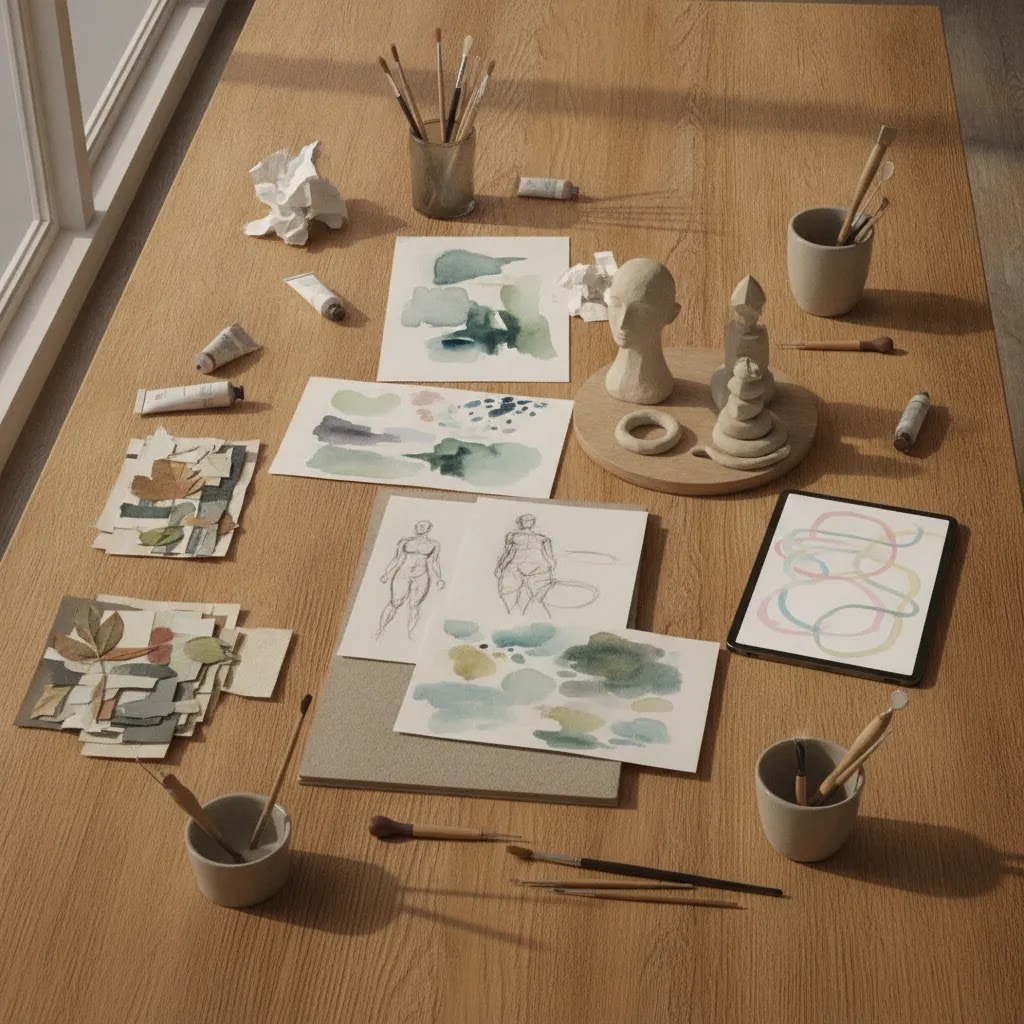
Starting can be simpler than many people expect. In telehealth or digital settings, the basics often matter most: a quiet enough space, a little privacy, and a few low-pressure materials such as paper and one or two familiar tools. A full art kit is usually not required. What matters more is knowing whether the experience is guided support with a therapist, a structured prompt, or open-ended art making on your own.
That difference affects expectations. Guided support may include pacing, check-ins, and reflection around what comes up. Open-ended art making may feel freer, but it can also leave you doing more emotional interpretation by yourself. Remote and digital formats often work best when the goal is clear enough to hold lightly, such as grounding, expression, or reflection, rather than trying to force a major emotional breakthrough.
If you begin and notice rising overwhelm, numbness, or a sense that the process is becoming too intense, pausing is reasonable. Simple materials and shorter sessions can help keep the experience more manageable. If difficult memories or strong distress keep surfacing, that may be a sign to seek support from a qualified professional rather than continuing alone.
8. Mechanism studies suggest change may happen through emotion processing, not just distraction
Some of the more interesting published work in recent years looks past the question of whether art therapy helps and asks how it may help. Mixed methods research and intervention protocols suggest that emotion processing may be a real mechanism of change. That means the benefit may come from giving difficult material form, staying with it safely, and gradually integrating it, rather than simply being distracted by a creative task.
This matters because it separates art therapy from the idea of “anything relaxing with markers.” Enjoyment can help, of course. But the research direction points toward structured emotional work, not just pleasant occupation.
Even here, restraint matters. Mechanisms are still being mapped, and different people may benefit through different routes such as containment, mastery, symbolism, or relational safety. The best articles make room for that variety.
Pros and Cons
Strengths
- Centers the article on eight concrete published findings rather than generic claims.
- Helps beginners understand what research-backed language actually means in plain English.
- Shows where art therapy may be useful across expression, regulation, and access.
- Explains limits openly, including heterogeneity and uneven study quality.
- Includes both in-person and digital implications, which reflects how people seek support now.
Considerations
- Research findings do not tell you whether one specific exercise or app will work for you personally.
- Several important studies focus on mechanisms or feasibility rather than long-term outcomes.
- Evidence varies by population, setting, and delivery format, so generalization has limits.
How to read art therapy articles more carefully
If you are collecting art therapy benefits articles for personal use, school, or clinical background reading, a few filters can save you time.
First, check whether the article cites a published review, meta-analysis, or named study. A clear source is more useful than a string of feel-good assertions. Second, look for population details. An article about older adults in medical settings is not automatically telling you what to expect for teens, grief, burnout, or neurodivergent users. Third, notice whether the writer explains the mechanism. Does the article suggest art helps through expression, sensory regulation, symbolism, mindfulness, or relational support? That usually tells you more than generic “stress relief” language.
It also helps to separate three questions that often get blurred together. What is art therapy? What benefits are being studied? What format is being discussed: in-person therapy, telehealth, or digital self-guided practice? Blending those categories can make an article sound stronger than it is.
If you want a gentle brand example of how these distinctions can be handled carefully, Daily Lemons presents digital art-therapy-informed exercises as supportive tools rather than replacements for professional care. That kind of boundary-setting is a good sign in any article or service description. You can browse the broader art therapy fundamentals material for more context, then return to individual studies with a clearer lens.
Frequently Asked Questions
Are these the eight most important art therapy studies ever published?
No. They are eight findings worth reading because together they give you a balanced picture of the field: overall benefit signals, study limits, possible mechanisms, and digital delivery questions. Another article could reasonably choose different papers. The value here is the mix, not a claim that this is the one definitive canon.
What does “published finding” mean in this article?
It refers to conclusions or recurring observations drawn from published research, such as meta-analyses, reviews, scoping reviews, and mechanism studies. In a few cases, the finding is broader than one sentence from one paper because that reflects how readers actually encounter evidence in serious educational writing.
Do these findings prove that art therapy works?
They support the idea that art therapy may be beneficial, but they do not prove identical effects for every person or every format. Research in this area is promising and increasingly sophisticated, yet still varied. The safest reading is that art therapy has meaningful support, with some questions still open.
Are art therapy benefits articles useful for beginners?
Yes, if the article explains terms clearly and avoids overselling. Beginners usually benefit most from articles that define the setting, the population, and the type of support being discussed. Pieces that mix formal therapy, art activities, and app-based wellness tools without distinction can be confusing rather than helpful.
How can I tell whether an article is overstating the evidence?
Watch for absolute promises, no mention of limitations, or vague references to “science says” without naming any source. Stronger articles usually mention variation in study quality, explain who was studied, and use careful language. They help you understand what the evidence may suggest rather than insisting on certainty.
Does digital art therapy have the same evidence as in-person art therapy?
Not at this point. Digital research is developing and suggests useful potential, especially for access and continuity. That is different from proving full equivalence with in-person work led by a qualified professional. The setting, guidance level, and user needs all affect what kind of benefit is realistic to expect.
Why do so many art therapy articles mention nonverbal expression?
Because that is one of the field’s most consistent themes. Images, marks, color, and symbols can help people approach feelings that are hard to describe directly. For some, that lowers pressure enough to begin. It does not remove the need for reflection or support, but it may make the first step more accessible.
Is art therapy only about calming down?
No. Calming or grounding may be one part of the process, especially early on. Research and theory also point toward emotional processing, meaning-making, identity work, and communication. Some approaches start with sensory regulation and later move toward insight. Others focus more on expression, relationship, or symbolic exploration.
Do you need to be good at art to benefit from art therapy?
No. Formal art skill is not a requirement. Most art therapy approaches focus on the process of making, what feels noticeable, and what the image may help you express or understand. Technical ability usually matters far less than willingness, curiosity, and having a level of support that fits what you are bringing into the session or exercise.
Who is art therapy suitable for?
Picture a caregiver who's exhausted, or a teenager who freezes up when asked to explain their feelings out loud, these are the kinds of people art therapy tends to reach. Research points to its potential across a wide range of life stages and struggles, from childhood through the later years, and through moments of stress or upheaval. That said, no single approach fits everyone the same way. What someone hopes to gain, how at ease they feel expressing themselves visually, the way they naturally communicate, and the kind of support they need can all shape whether this path feels right. And when emotional pain runs deep or feels tangled and hard to name, leaning on a trained professional is often gentler and safer than navigating it alone.
What should I expect when starting art therapy?
You can usually expect a focus on process rather than artistic quality. In formal therapy, that may include guided prompts, discussion, and reflection with a qualified professional. In telehealth or digital settings, it may also help to prepare a calm space, simple materials, and a clear idea of whether the goal is grounding, expression, or reflection. If the process becomes overwhelming, pausing and seeking support is reasonable.
How can I access art therapy services?
Access depends on location, provider availability, and the kind of support you are looking for. Some people look for in-person services through local clinics, private practices, hospitals, schools, or community organizations. Others may use telehealth where available. In the United States, professional directories and guidance from the American Art Therapy Association, along with any applicable state licensing or regulatory bodies, can help you verify credentials and understand what services are being offered.
Key Takeaways
- The strongest high-level finding is that active visual art therapy shows beneficial associations across studies.
- The evidence base is promising but mixed, so careful language matters.
- Nonverbal expression is one of the most consistent reasons art therapy may help.
- Art therapy may bridge sensory regulation and reflective meaning-making in a way some people find easier to access.
- Digital and telehealth delivery are credible areas of growth, but they should not be treated as automatic substitutes for formal care.
Quick recap
If you only want the shortest version, these are the eight research points worth holding onto: overall benefit signals exist, the evidence is uneven, nonverbal expression matters, body-based and reflective processes can work together, mindfulness-based art may operate differently from meditation alone, telehealth is feasible in some contexts, digital formats are promising but not equivalent by default, and emotion processing may be one real mechanism of change.
| Rank | Finding | Best for understanding | Bottom line |
|---|---|---|---|
| 1 | 2024 meta-analysis | Overall field direction | Promising across studies |
| 2 | Mixed study quality | Reading claims critically | Support exists, certainty varies |
| 3 | Nonverbal expression | Why art can help | Images may open emotion safely |
| 4 | Body plus reflection | How sessions may work | Regulation and meaning can connect |
| 5 | Mindfulness-based art mechanisms | Attention and regulation | Making may anchor awareness differently |
| 6 | Telehealth feasibility | Remote access questions | Possible, but not ideal for everyone |
| 7 | Digital practice growth | App and online context | Useful promise, still developing |
| 8 | Emotion processing mechanism | What may drive change | More than simple distraction |
Conclusion
The most useful art therapy benefits articles do not only say that art helps. They show how, for whom, and with what level of confidence. These eight findings are worth reading because they give you that fuller picture. You can see the promise of art therapy without flattening it into hype, and you can see the limits without dismissing the field entirely. If you want to keep going, read across adjacent topics such as children’s use cases, adult-focused benefits, or differences in expressive arts formats. If a digital, guided, nonverbal approach feels easier than starting with words, Daily Lemons may also be a gentle place to continue exploring at your own pace.
Please note that everything shared here is meant to inform, not to replace guidance from a doctor, therapist, or crisis professional. The studies we reference reflect broader patterns seen in research, so they won't necessarily mirror what any one person experiences. Every approach mentioned, whether that's art therapy, telehealth, or a digital wellness tool, can look different depending on who's offering it and what someone actually needs. If things feel heavy, ongoing, or unsafe in any way, please reach out to a licensed professional, your local emergency line, or a trusted crisis service without delay. Anyone wanting to learn more about art therapy as a profession in the U.S. can look to the American Art Therapy Association or their state's relevant licensing board for guidance.