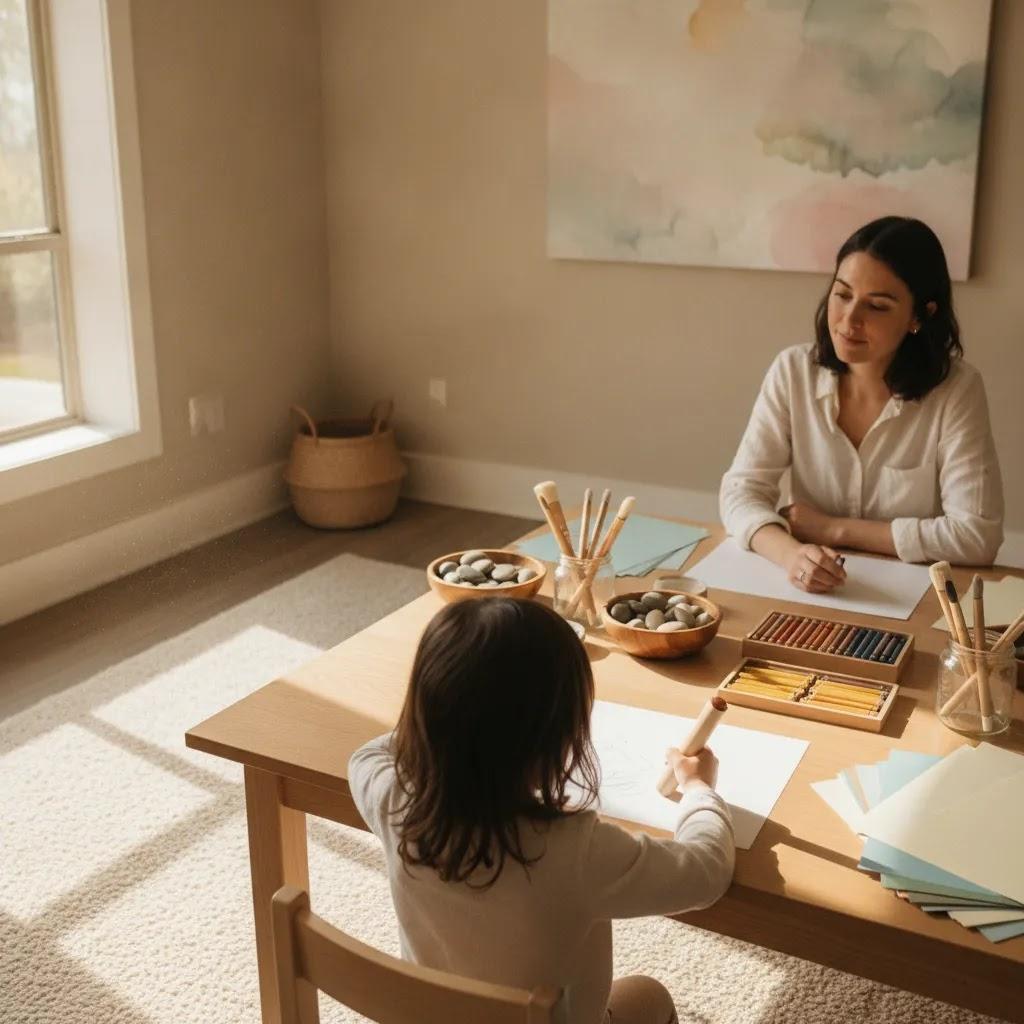
Not every art-based activity helps autistic children in the same way. Art therapy seems most useful when therapists structure it, adapt it to sensory needs, link it to clear goals, and match it to a child’s communication style. It helps less when people offer it as a vague “creative outlet.” That difference matters if you are trying to understand the real benefits of art therapy for children with autism, not just the hopeful version.
If you are new to the broader topic of art therapy for children, it may help to start there first. Here, the focus stays narrower. We look at which interventions seem to produce measurable results, what those results usually look like, and where expectations should stay modest. Some children may become more expressive, more regulated, or easier to engage. However, others may show little change unless the format, therapist, and goals fit well.
Benefits of art therapy for children with autism: the short answer
Research on art therapy and closely related creative interventions in autistic children looks promising, but the picture is mixed. The strongest pattern is not “art therapy works for all autistic children.” Instead, specific interventions tend to support specific goals. Visual storytelling, sensory-contained mark-making, turn-taking art tasks, and therapist-guided symbolic play may help with communication, emotional expression, attention, and social participation. Free-form art without clear adaptation may feel enjoyable, but it is less likely to produce measurable change.
So the more useful question is not whether art therapy is good in general. Ask whether the intervention fits the child’s needs, whether you can observe progress in a concrete way, and whether the setting supports sensory safety and communication differences.
What counts as benefits of art therapy for children with autism
In studies and in practice, measurable results usually do not mean a dramatic personality shift. They usually mean smaller, observable changes over time. A child may initiate more eye contact during shared tasks, tolerate transitions better, show more flexible play, use more symbols in drawings, or need less prompting to express a feeling.
Researchers may track social interaction, emotional expression, attention, participation, anxiety-related behaviors, or caregiver and clinician ratings. Some outcomes are easier to measure than others. For example, social engagement during a session is easier to see than inner emotional processing, so studies often capture the first more reliably.
This is one reason broad claims can sound bigger than the evidence really is. A child may improve in one setting and still need help carrying that change into home, school, or peer relationships.
Benefits of art therapy for children with autism at a glance
| Intervention pattern already described in this article | What it may support | Limits or cautions already noted |
|---|---|---|
| Structured visual expression | Communication and emotional expression | Works best with visual prompts, predictable choices, and concrete themes |
| Sensory-contained art processes | Regulation and participation | Some materials or settings may overstimulate instead of soothe |
| Joint art-making | Shared attention, turn-taking, and social engagement | Needs manageable social demand and clear structure |
| Repetition and predictability | Task tolerance, longer engagement, and more consistent participation | One format may feel grounding for some children and restrictive for others |
| Integration with other supports | Transfer into daily life | Art therapy rarely works best as a stand-alone answer |
1. Benefits of art therapy for children with autism can include better communication
Many autistic children communicate more comfortably through images, symbols, sequence, or object-based representation than through open verbal questions. Art therapy can create a shared external focus. As a result, communication may feel less direct and less pressured.
For example, instead of asking a child to explain a hard day, a therapist might invite them to draw “what school felt like” with color, shape, and space. The image can then become a bridge. A cramped corner, a repeated dark mark, or a carefully separated set of figures may help the child show pattern and meaning without producing a polished verbal answer first.
This is part of why articles on the broader benefits of art therapy for children often mention expression as a core strength. In autistic children, that benefit looks most credible when the therapist uses visual prompts, predictable choices, and concrete themes rather than abstract emotional language alone.
2. Sensory-based art processes may support regulation
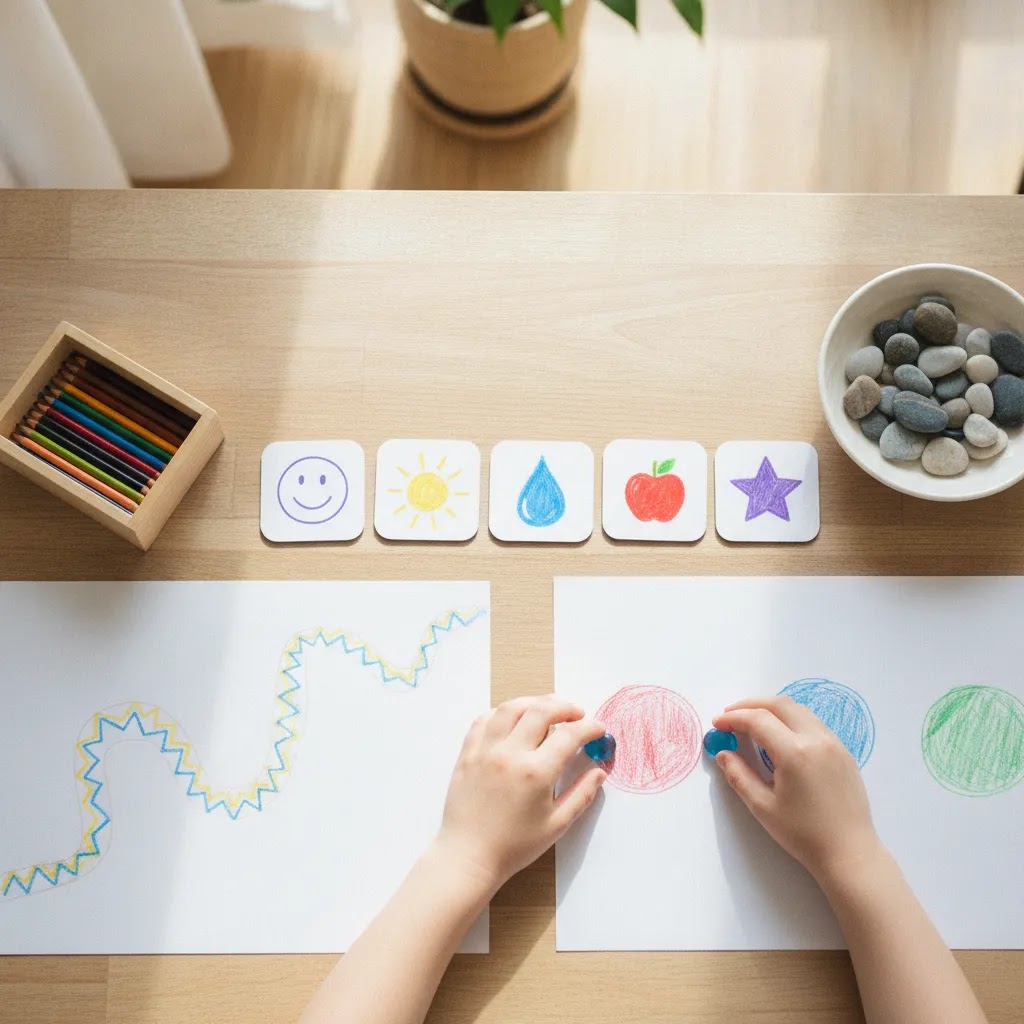
Some autistic children respond less to talk-heavy support and more to rhythm, texture, pressure, and repeated movement. Art processes can offer those elements in a contained way. Slow shading, repetitive patterning, pressing clay, or drawing inside a boundary may help a child settle enough to participate.
The mechanism here is practical. Art-making gives the hands something to do and gives the eyes a focal task. It can also turn an overwhelming internal state into a visible, bounded object. For a child who feels flooded by direct discussion, that shift may create enough distance to stay engaged.
Still, sensory benefit is not automatic. Some materials may overstimulate. Wet paint, sticky glue, strong smells, or noisy group settings could increase distress instead of easing it. The intervention works best when therapists respect sensory preferences first and do not treat them as a side issue.
3. Joint art-making can strengthen social engagement
One of the more useful areas of evidence involves shared creative tasks. In these activities, the child and therapist, or the child and peers, make something together with turn-taking, imitation, mutual attention, or collaborative planning built in.
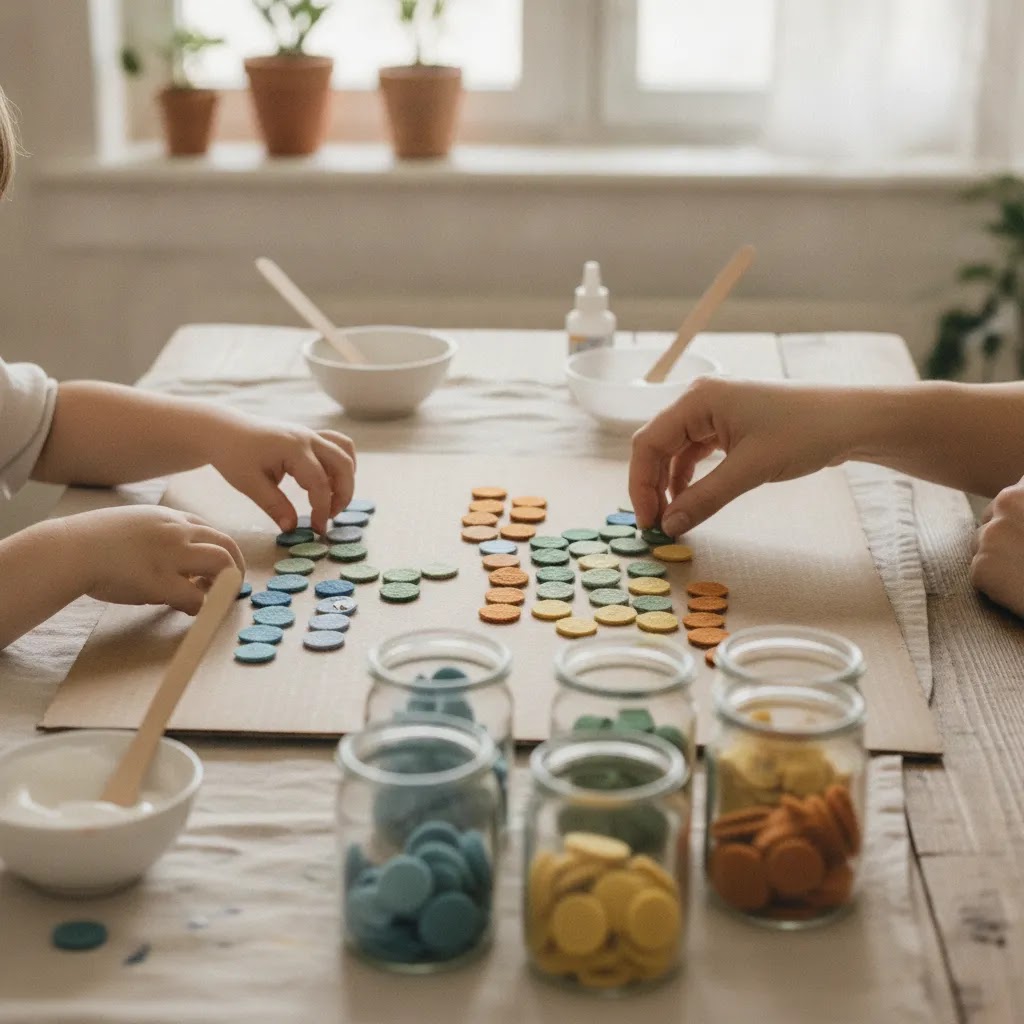
A joint mural, a back-and-forth drawing game, or a shared collage may create brief moments of reciprocity that feel easier than unstructured conversation. The task gives both people a common reference point. Instead of “talk to me,” the invitation becomes “add to this,” “show me your part,” or “choose the next color.”
That difference may sound small, but it changes the social demand. The child does not have to perform neurotypical social behavior on command. Instead, the therapist invites them into a manageable shared activity. In some cases, that can support turn-taking, shared attention, and tolerance for another person’s input.
4. Repetition and predictability may increase participation
Interventions tend to show better results when sessions have a repeatable shape. Predictability can lower uncertainty, which may improve willingness to begin, return, and stay with the task. A child who knows the sequence, materials, and expectations may spend less energy bracing for surprise.
This is where highly structured formats, including simple pattern-based work, can be especially useful for some children. If you are curious about one focused format, mandala art therapy benefits often come up in discussions of containment, repetition, and visual order. That does not make mandalas the best option for every autistic child, but it does show why form matters. Repeated circular structure can feel grounding for some children and restrictive for others.
The measurable outcome here is often not dramatic emotional change at first. It may simply mean increased task tolerance, longer engagement, reduced avoidance, or more consistent participation across sessions.
How the benefits of art therapy for children with autism depend on session structure
A lot of the “does this help?” question comes down to session design. Autism-adapted art therapy usually has more structure than many people expect. This is not about control. Instead, predictable structure can reduce overload and make engagement easier to track over time.
Common session flow
A common session flow looks something like this:
- A brief arrival routine to settle in, sometimes with a consistent greeting and a simple choice such as “sit here” or “pick a color to start.”
- A visual schedule for the session, often 2 to 4 steps, so the child can see what is coming next.
- A warm-up activity that is low-demand and sensory-contained, such as making marks inside a boundary, repeating a pattern, or choosing from a small set of shapes.
- A main art task linked to one goal, such as turn-taking, tolerating a transition, or using symbols to represent an internal state.
- A closing ritual, such as naming the artwork, putting materials away in a consistent order, or choosing whether the piece stays in the therapy space or goes home.
Many therapists also limit the number of materials available at one time. Too many options can create stress rather than creativity. A smaller set of choices can make it easier to start, stay regulated, and finish.
Supports that make sessions easier to follow
Communication supports often show up quietly inside the art-making. That might include choice boards, pointing options, “first-then” prompts, or allowing the child to participate without speaking at all. Parallel art-making is also common, where the therapist creates alongside the child rather than watching from a distance. For some children, that shared rhythm supports attention and trust more effectively than direct questioning.
Transitions are another place where structure matters. Timers, transition cues, or clear “one more minute” warnings can reduce sudden shifts that trigger distress. Over time, consistent routines can also make progress easier to measure. If the session stays similar, a therapist can more confidently track changes such as longer engagement, fewer avoidance behaviors, more flexibility with materials, or more spontaneous social initiation.
5. Benefits of art therapy for children with autism are often stronger with other supports

Art therapy is rarely strongest as a stand-alone answer. The evidence tends to look more convincing when art-based work connects with speech and language goals, occupational support, classroom strategies, family guidance, or a broader plan. That is also why people often ask what art therapy is typically integrated with for the purpose of healing. In practice, it often pairs with relational, behavioral, sensory, developmental, or psychotherapy-informed support.
The reason is simple. A child may learn to express frustration in the therapy room through image and symbol, but they still need help carrying that skill into daily life. Parents, teachers, and other clinicians often become part of that bridge.
When you're weighing which route might feel right, the expressive arts therapy vs art therapy question often comes up naturally. Expressive arts tends to widen the lens, folding in movement, drama, music, or mixed media alongside visual work, whereas art therapy generally stays anchored to the visual piece itself as the main point of focus. For some autistic children, this difference isn't just semantic; it can shape whether a session feels calming or overstimulating, depending on how their sensory and communication needs line up with the format. If you'd like a gentler walkthrough of how these approaches actually play out in practice, our deeper look at art therapy methods is worth exploring too.
What about the downsides?
There are real limits, and they matter.
First, the research base is still uneven. Studies often use small samples, different intervention styles, and different outcome measures. That makes it hard to say exactly which protocol works best across the board.
Second, “art therapy” can mean very different things in different settings. One program may involve a trained art therapist using relational and sensory attunement. Another may be a general creative activity group with minimal therapeutic structure. Those are not interchangeable.
Third, some children may dislike certain materials, resist symbolic work, or find visual tasks frustrating. If the child feels controlled, misunderstood, or overloaded, the intervention may backfire.
Fourth, visible engagement does not always equal meaningful benefit. A child can enjoy drawing without gaining measurable communication or regulation skills. Enjoyment still matters, but it is not the same as evidence of change.
Art therapy vs art class: what’s different, and why it matters for autism
The line between “art as a helpful activity” and “art therapy” gets blurry quickly, especially for autistic kids, because both can look calm on the surface. The difference is not the materials. It is the intention, training, and how progress is defined.
How therapy differs from a class
Art classes and arts-and-crafts groups are usually skill- or product-focused. The goal might be learning techniques, following steps, completing a project, or participating socially. Those can be excellent goals, and they may support confidence and routine. They just are not the same as therapeutic goals.
Art therapy is usually goal-linked and therapist-led. The artwork is not judged for quality. The therapist observes the process. They may track how a child starts tasks, tolerates change, responds to sensory input, uses symbols, engages with another person, or recovers after frustration. Sessions are often adapted for communication differences and sensory needs, and the therapist uses what happens during art-making as information, not just entertainment.
Practical signs you are in a therapy setting
Practical markers that usually signal you are in a therapy context include:
- Goals are written down and revisited, even if they are simple and gentle, such as “increase joint attention during shared tasks” or “build tolerance for transitions.”
- The therapist can describe a session structure and why it is designed that way for the child.
- There is a plan for how the therapist will reflect on sessions, document observations, and communicate with caregivers in a clear, respectful way.
- Adaptations are treated as central, not optional, including sensory adjustments, communication supports, pacing changes, and predictable routines.
A common misfit happens when a well-meaning art group is treated as therapy by default. Parents may expect regulation or communication gains, the group may focus on completing projects, and nobody may track outcomes. That does not mean the group is bad. It just means expectations can drift, and the child may not get the kind of support that produces measurable change.
Some programs also sit in between, where art-making supports calming and self-expression without going deep into talk-based processing. Others use artwork to support more traditional psychotherapy goals. That difference can matter. “Art as therapy” may focus more on process and regulation. “Art psychotherapy” may use images as a bridge into deeper emotional work, which may not fit every autistic child, especially if the approach becomes language-heavy or too interpretive.
When does this not apply?
These benefits may not show up clearly when the intervention is too abstract, too language-heavy, or too insensitive to sensory needs. They may also stay limited when goals are vague, nobody tracks progress, or the setting creates more stress than safety.
Art therapy may be a poor fit as the primary approach when a child needs intensive behavioral support, urgent psychiatric care, or a more specialized communication intervention first. It can still play a supporting role, but it should not do every job at once.
It also may not generalize on its own. A child who does well in one-to-one sessions may not automatically use those gains in school, with siblings, or in unfamiliar environments unless adults around them help with transfer.
Practical implications for parents and professionals
If you are trying to judge whether an intervention is working, look for specific changes rather than broad impressions. Ask questions like: Is the child initiating more? Staying longer? Showing more flexibility? Using art to communicate something they usually avoid? Recovering faster after frustration?
It can help to define one or two goals before sessions begin. For one child, success may mean tolerating shared attention for five minutes. For another, it may mean representing a feeling visually instead of shutting down. Smaller goals often produce clearer evidence.
Choose a provider or format that adapts materials, pace, and prompting style. A good fit usually looks calm, respectful, and observant. The adult does not force interpretation from the artwork. Instead, they watch how the child engages, what supports participation, and what patterns emerge over time.
If you are exploring digital or guided creative options between sessions, the resources in Digital Art Therapy & Apps and Art Therapy Fundamentals may offer helpful context. You might also find art therapy for anxiety useful if regulation is part of the goal. Daily Lemons can be one gentle educational resource for understanding structured, art-therapy-informed practices, especially if you want a low-pressure way to learn how visual expression, rhythm, and guided prompts may support emotional reflection. It is best viewed as supportive education and between-session inspiration, not as a substitute for individualized care for autistic children.
What to look for in an art therapist (credentials, scope, and “near me” fit)
If your goal is therapeutic change rather than enrichment, credentials and scope matter. An art therapist is usually trained at the graduate level to use art-making within a therapeutic relationship, set goals, observe process, and document progress. Many also learn how to collaborate with other care providers and work within ethical and regulatory standards. That is different from a talented art teacher, even a very kind one.
Questions that help you assess fit
For autism support, fit is often more important than a general promise that “art therapy helps.” Questions that can clarify fit include:
- What experience do you have working with autistic children across different communication styles, including nonverbal communication?
- How do you adapt sessions for sensory needs, and how do you learn what a child finds regulating versus overwhelming?
- How do you set goals, and what does progress tracking look like in your practice?
- How do you communicate with caregivers, and how often?
- If the child has a school plan or other supports, how do you collaborate with educators or clinicians such as occupational therapy or speech and language providers when appropriate and with consent?
Clarity on outcomes does not have to mean pressure. It can stay gentle and still be concrete. “We will look for longer engagement with fewer shutdowns” is a measurable goal. “We will help them express feelings” can be meaningful, but it may stay vague unless the therapist explains what they will observe and how they will know if it is changing.
Setting, collaboration, and practical logistics
The “near me” part is not only about distance. It is also about setting. Some children do better in a quiet clinic room with consistent materials. Others may benefit from school-based delivery where goals are coordinated with special education supports, especially if the barrier is generalizing skills into the classroom. Group settings can work for some kids if the group is structured and sensory-aware, but they can also add noise and social load that reduce the therapy value.
Telehealth is sometimes an option for caregiver coaching or older children who can engage through a screen, but it may be harder for younger children or those who need hands-on material support. If telehealth is offered, ask what the therapist expects a caregiver to do during sessions and how materials will be handled, so the plan stays realistic. If you want a broader overview, you can also read how to choose an art therapist.
Pros and Cons
Strengths
- Can create a nonverbal route into communication for children who struggle with direct questions.
- May support emotional regulation through rhythm, repetition, visual structure, and sensory engagement.
- Shared art tasks can encourage joint attention, reciprocity, and manageable social interaction.
- Flexible enough to adapt to different communication styles, developmental levels, and interests.
- Can be integrated with family, school, occupational, or speech-related goals.
Considerations
- Research quality is mixed, with small studies and inconsistent methods.
- Not every enjoyable art activity qualifies as therapy or produces measurable change.
- Sensory sensitivities may make some materials or settings unsuitable.
- Benefits in session may not transfer automatically into daily life.
Frequently Asked Questions
Can art therapy help with anxiety in autistic children?
It may help some autistic children, especially when anxiety shows up as overwhelm, shutdown, restlessness, or difficulty expressing what feels wrong. Structured drawing, repetitive mark-making, and predictable session flow can support regulation. Still, anxiety is not one thing, and art therapy may work best as one part of broader support rather than the only approach.
What can art therapy help with for autistic children?
It may help with emotional expression, frustration tolerance, shared attention, communication, symbolic play, and participation in relational tasks. Some children also seem to benefit through calmer transitions or better tolerance for feelings during structured activities. The clearest gains usually depend on a well-matched goal, adapted materials, and a therapist who works in a sensory-aware way.
Is there strong evidence that art therapy works for all autistic children?
No. The evidence is encouraging in places, but it is not strong enough to support universal claims. Results vary by child, therapist, intervention style, setting, and what outcome is being measured. It is more accurate to say that certain art-based interventions may help certain autistic children under the right conditions.
What kind of art therapy intervention tends to work best?
Interventions tend to look more promising when they are structured, predictable, and tied to a specific goal such as communication, regulation, or social engagement. Joint art-making, visual storytelling, and sensory-contained tasks often make more sense than completely unstructured art time. The best format still depends on the child’s preferences, sensory profile, and developmental needs.
How long does it take to see results?
That varies. Some children show early gains in participation or comfort within a few sessions, while deeper communication or social changes may take longer. It helps to watch for small observable shifts rather than waiting for a dramatic breakthrough. Consistency, therapist fit, and support across home or school often shape how visible progress becomes.
Does the child need to be good at art?
No. Art skill is usually not the point. The value tends to come from expression, sensory experience, shared attention, and the ability to externalize an internal state. In fact, low-pressure materials and simple prompts are often more useful than any task that feels like a performance or school assignment.
How is art therapy different from regular arts and crafts?
Picture two children coloring at a table, for one, it's simply a fun way to pass the afternoon, while for the other, every mark, color choice, and pause is being gently noticed by someone trained to understand what it might mean. That's the quiet difference between crafting for fun and art therapy. The latter isn't about producing a finished piece; it's shaped around emotional connection, communication, and a person's specific needs, with real attention paid to pacing and relational support. For autism support in particular, this distinction matters, thoughtful, individualized adaptation tends to bring far more meaningful progress than open-ended creative time alone.
Should art therapy be combined with other supports?
Often, yes. Art therapy may be most useful when it connects with family routines, school understanding, communication goals, or other therapeutic supports. That helps any gains transfer beyond the session itself. A child who learns to show frustration through drawing may still need adults around them to recognize and respond to that form of expression in daily life.
How does art therapy help children with autism?
It may help by giving a child a structured, lower-pressure way to communicate and regulate, especially if words are hard in the moment. The most believable benefits tend to come from predictable, sensory-aware sessions where the therapist uses art-making to support specific goals such as shared attention, flexibility, or emotional expression through symbols and visual choices.
What is one benefit of participating in the arts for autistic children?
One common benefit is engagement without heavy verbal demand. A child may be able to show preferences, build routine, or share attention with another person through images, color, and making choices, even if direct conversation feels difficult.
What are the advantages of art therapy?
Advantages can include a nonverbal pathway into expression, a contained sensory experience that may support regulation, and a shared activity that can make social connection more manageable. In therapy specifically, those advantages are stronger when goals are clear and the therapist tracks progress rather than treating the session as open-ended art time.
Is art therapy good for CPTSD?
For those carrying complex trauma, picking up a paintbrush or working with color can sometimes offer a gentler way through, a chance to let feelings surface at their own pace, without needing to find the right words. Even so, this kind of work can touch something raw, and what feels healing for one person may not feel right for another. When CPTSD is part of the picture, it's usually wisest to lean on a licensed mental health professional, ideally someone trained in trauma-informed care who can help guide the process safely. Art-making can be a meaningful companion along the way, but it isn't meant to carry the full weight of healing on its own, especially when symptoms run deep or safety is a concern.
Key Takeaways
- Art therapy for autistic children appears most helpful when it is structured, adapted, and goal-specific.
- Measurable benefits may include communication, regulation, participation, and shared social engagement.
- Sensory fit matters as much as creative opportunity.
- Enjoyment alone is not the same as evidence, though it can support participation.
- Integrated support across therapy, home, and school often gives the benefits a better chance to last.
Conclusion
If you are asking whether art therapy works for autistic children, the clearest answer is yes, sometimes. It looks most convincing in structured forms that match the child in front of you. The gains are usually practical rather than magical: better communication through images, calmer engagement through sensory-aware art processes, and more shared connection through joint creative tasks. That may be enough to matter a great deal.
If you want to keep reading, the next useful step may be comparing broader benefits of art therapy for children with autism-specific adaptation needs with the wider benefits of art therapy for children. You can also explore Daily Lemons resources whenever it feels helpful, especially if you want a gentler way to understand how guided visual practices may support emotional expression without adding pressure.
We share this simply to inform, not to stand in for medical, psychiatric, legal, or diagnostic guidance. Every child is different, so how art therapy unfolds can shift depending on the setting, the practitioner, and what that particular child needs. Before pursuing formal care, it's worth taking a moment to confirm a provider's credentials, scope of practice, and any local regulatory requirements. Here in the U.S., you can look into professional standards through groups like the American Art Therapy Association or your state's licensing board, and for broader guidance on autism and support options, the Centers for Disease Control and Prevention is a solid resource. And if there's ever a moment where a child seems at risk, is struggling deeply, or needs help right away, please don't wait, reach out to a licensed professional, emergency services, or a crisis line as soon as possible.