Expressive arts therapy in schools is a structured way to help students express feelings, build self-awareness, and practice regulation through creative activities. In most school settings, expressive arts therapy in schools works best as gentle, well-bounded support rather than open-ended clinical treatment.
This guide shows you how to implement expressive arts therapy in schools with care. It covers planning, staff roles, student safety, session structure, and referrals. Expect about 25 to 40 minutes to read. The level is Beginner to Intermediate.
You do not need to be an art therapist to understand the process. However, you do need clear boundaries around what schools can offer, what belongs with a credentialed provider, and how creative activities can support regulation, reflection, and emotional expression in age-appropriate ways.
What you'll need for expressive arts therapy in schools
Before you begin, gather the practical pieces that help expressive arts therapy in schools stay safe, manageable, and useful.
- A clear goal such as emotional regulation, transition support, grief support, or stress relief
- Administrative approval and alignment with school counseling policies
- A designated facilitator such as a counselor, school psychologist, social worker, or trained educator
- Referral criteria for students who may benefit
- Parent or caregiver communication plan if your setting requires it
- Basic art materials like paper, markers, crayons, pencils, glue sticks, and collage supplies
- A calm, private-enough space with predictable routines
- A referral pathway for students who need more support than a school-based program can provide
Where expressive arts therapy in schools fits
Expressive arts therapy in schools usually works best as a structured support layer, not as a catch-all response to every emotional need. In plain language, expressive arts therapy in schools uses creative processes such as drawing, collage, movement, storytelling, or music-based reflection to help students express and organize inner experiences.
In a school setting, that can mean a short small-group program for anxious students, a lunch-period regulation group, transition support for students returning after loss or crisis, or guided creative reflection within broader student wellness work. It may overlap with wider art therapy approaches, but the school context changes the goals, staffing, consent, and safeguarding expectations.
If your team is still sorting out definitions, it also helps to understand how expressive art therapy can extend beyond visual art alone. In schools, though, simpler visual formats are often easiest to implement first because they are quiet, accessible, and easier to supervise.
For a broader foundation, you can also review art therapy fundamentals. That can help teams place expressive arts therapy in schools within a wider support framework.
Expressive arts therapy in schools vs art therapy vs expressive arts activities
Schools often use similar words for very different things. Getting the labels right matters because it affects staffing, consent, documentation, confidentiality, and what outcomes are realistic.
Expressive arts therapy in schools (often intermodal)
Expressive arts therapy typically uses more than one art form and may move between them in a single session. A student might begin with color, shift into movement, add a few lines of writing, then make a simple image to hold the “shape” of what they noticed. The goal is usually emotional processing and integration through creative experience, not artistic skill.
In schools, this is most appropriate when delivered by a credentialed provider operating within a clearly defined therapeutic scope, with parent or caregiver consent as required and with clear agreements about documentation and confidentiality.
Art therapy (often centered on a primary art form)
Art therapy is generally anchored more directly in visual art making, such as drawing, painting, sculpture, or collage, and it is delivered by an art therapist who is trained to work clinically with art processes. In practice, art therapy can still include story, metaphor, and gentle body-based regulation, but the art making is usually the central channel.
In a school, art therapy may show up as an on-site related service, a contracted therapeutic provider, or a community referral. The more it resembles clinical therapy, the more it needs clear consent pathways and coordination with school safeguarding policies.
Expressive arts activities (SEL or counseling support, not therapy)
Many school programs are best described as expressive arts activities rather than therapy. These are structured creative exercises used to support social-emotional learning, regulation skills, communication, and classroom readiness. The aim is often educational and supportive, not clinical treatment.
These activities may be led by school counselors, school psychologists, social workers, trained educators, or student support staff. Documentation is usually lighter, and confidentiality is shaped by school policy, mandated reporting rules, and the reality that educators cannot promise the same privacy as a clinical setting.
Who delivers expressive arts therapy in schools, and what changes
- Expressive arts therapy: typically delivered by a trained, credentialed therapist, with formal consent, clearer clinical documentation expectations, and defined limits for confidentiality within a school environment.
- Art therapy: typically delivered by an art therapist as a therapeutic service, with attention to scope of practice, confidentiality, and coordination with student support teams as appropriate.
- Expressive arts activities: typically delivered by school staff as structured support, with goals like regulation and communication, and with school-based privacy limits and safeguarding responsibilities.
Scope boundaries schools can use
School-based programs can do a lot without trying to do everything. A simple boundary list can keep staff and students safer.
- Reasonable for school-based programs: emotional vocabulary building, stress regulation routines, coping skill practice, peer connection, transitions support, and communication tools.
- Typically refer out or escalate: active safety concerns, persistent severe impairment, suspected abuse, severe and ongoing dissociation, complex grief with major deterioration in functioning, or situations where deeper trauma processing is likely to surface and cannot be safely held in a school program.
If you are unsure where your plan belongs, treat that uncertainty as a signal to tighten scope, consult credentialed professionals, and confirm what your district expects around consent, documentation, and crisis escalation.
| Approach | Main focus | Who usually leads it | School notes |
|---|---|---|---|
| Expressive arts therapy | Multiple modalities for emotional processing and integration | Trained, credentialed therapist | Needs clear scope, consent, documentation, and confidentiality limits |
| Art therapy | Visual art making such as drawing, painting, sculpture, or collage | Art therapist | May appear as an on-site service, contracted provider, or community referral |
| Expressive arts activities | Support for SEL, regulation, communication, and classroom readiness | School counselors, school psychologists, social workers, trained educators, or student support staff | Usually educational and supportive rather than clinical treatment |
Step 1: Define the purpose of expressive arts therapy in schools

Step 1: Clarify what expressive arts therapy in schools is for
Start by naming one concrete outcome. A school program usually works better when it is focused. You might support emotional identification in primary grades, stress regulation for test-anxious students, or grief-sensitive expression after a school loss.
Keep the language simple. Students do not need a heavy explanation. Staff do. Decide whether your program is preventive, supportive, or part of a short-term intervention plan.
- Preventive: classroom or group activities that build emotional literacy
- Supportive: counseling-linked sessions for students under stress
- Responsive: temporary support after a disruptive event or transition
Then set limits. School-based creative support is not the same as open-ended trauma processing. If a student shows signs of severe distress, safety risk, or functional impairment, the school should move toward licensed clinical care rather than asking art activities to hold too much.
Step 2: Choose the right group for expressive arts therapy in schools
Step 2: Match the expressive arts therapy in schools format to student needs
Not every student needs the same structure. For primary school students, expressive arts often matters because it gives shape to feelings before language is fully developed. That is part of the answer to the question, “what is the importance of teaching expressive arts in primary schools?” It can support self-awareness, imaginative thinking, sensory regulation, and communication in developmentally accessible ways.
For older students, small groups often work well when words feel tiring, embarrassing, or too exposed. Neurodivergent students may especially prefer visual structure and guided prompts over abstract discussion. If you are planning by age, reading about art therapy for children can offer extra context.
- Primary school: use short, concrete prompts and predictable materials
- Middle school: add metaphor, comic panels, color maps, or identity collage
- High school: include choice, privacy, and optional reflection rather than forced sharing
Selection should be collaborative. Ask teachers what they observe, ask students what feels manageable, and review whether a student can participate safely in a group environment.
Step 3: Build a simple expressive arts therapy in schools model
Step 3: Choose a schedule staff can actually sustain
Most school programs fail from overreach, not lack of good intentions. Start with a small pilot. A six-week group with one consistent facilitator is often easier to run well than a school-wide launch with uneven follow-through.
Useful formats include:
- Weekly small groups of 30 to 45 minutes
- Short counseling add-ons before or after individual check-ins
- Calm corner or advisory-based creative regulation activities
- Tiered student support for attendance stress, peer conflict, grief, or transition
Keep the session flow predictable. Arrival, grounding, creating, optional reflection, and closing is enough. That steady sequence can lower anxiety and reduce the pressure to “perform” feelings.
If your team is comparing models, reading about expressive arts therapy vs art therapy may help clarify when a broad school-based expressive format is appropriate and when a more formal therapeutic service is the better fit.
What to look for in a qualified expressive arts provider for schools
If you plan to bring in an outside provider, selection is not just about a warm personality and a good activity list. In a school, you are hiring into a safeguarding environment with legal and ethical requirements. You also want a provider who is clear about what they can and cannot hold.
A practical vetting checklist for schools
- Training background and credentials: clear description of formal training in expressive arts therapy or art therapy, and whether the work is therapy or a school-based program.
- Supervision and consultation: evidence they receive ongoing supervision or consultation, especially if they work with children and adolescents.
- Child safeguarding experience: familiarity with mandated reporting, boundaries, and school-based risk protocols.
- Trauma-informed practice: ability to keep work paced, choice-based, and grounded, with an emphasis on stabilization rather than pushing disclosure.
- School experience: understanding of bell schedules, group management, IEP and 504 coordination when relevant, and how confidentiality works inside student support teams.
- Clarity on scope and language: they should be able to explain the program to families in plain terms without overpromising outcomes.
How communication and referrals tend to work best
Schools usually do better with a defined workflow than with informal check-ins. Decide in advance who can refer, who can consent, and how concerns move from an activity session to a higher-support response.
- Permissions and parent communication: clarify how consent is obtained and what information families will receive about goals, structure, and privacy limits.
- Staff coordination: decide whether updates go to a counselor, a student support lead, or a designated administrator, and what stays confidential unless safety concerns arise.
- Crisis escalation: confirm exactly what the provider will do if a student discloses harm, shows signs of risk, or raises safeguarding concerns, and align it with school protocol.
Contracting details schools often miss
- Group size caps: smaller groups are usually safer for emotional work, especially with younger students or mixed needs.
- Confidentiality limits in schools: define what confidentiality means in your setting, including mandated reporting, duty of care, and information sharing within a student support framework.
- Documentation expectations: specify whether the provider produces session notes, attendance logs, general themes, or only program-level feedback, and where records are stored.
- Coordination with student support plans: clarify how the work interacts with existing supports, including special education services, counseling plans, or behavioral supports where applicable.
A good provider usually welcomes these questions. Clear boundaries protect students, protect staff, and keep the work honest about what it can realistically support in a school day.
For ethical and professional background, schools can review the American Art Therapy Association. In addition, public schools in the United States can reference student privacy guidance from the U.S. Department of Education Student Privacy Policy Office.
Step 4: Prepare materials and space for expressive arts therapy in schools

Step 4: Set up a room that feels contained
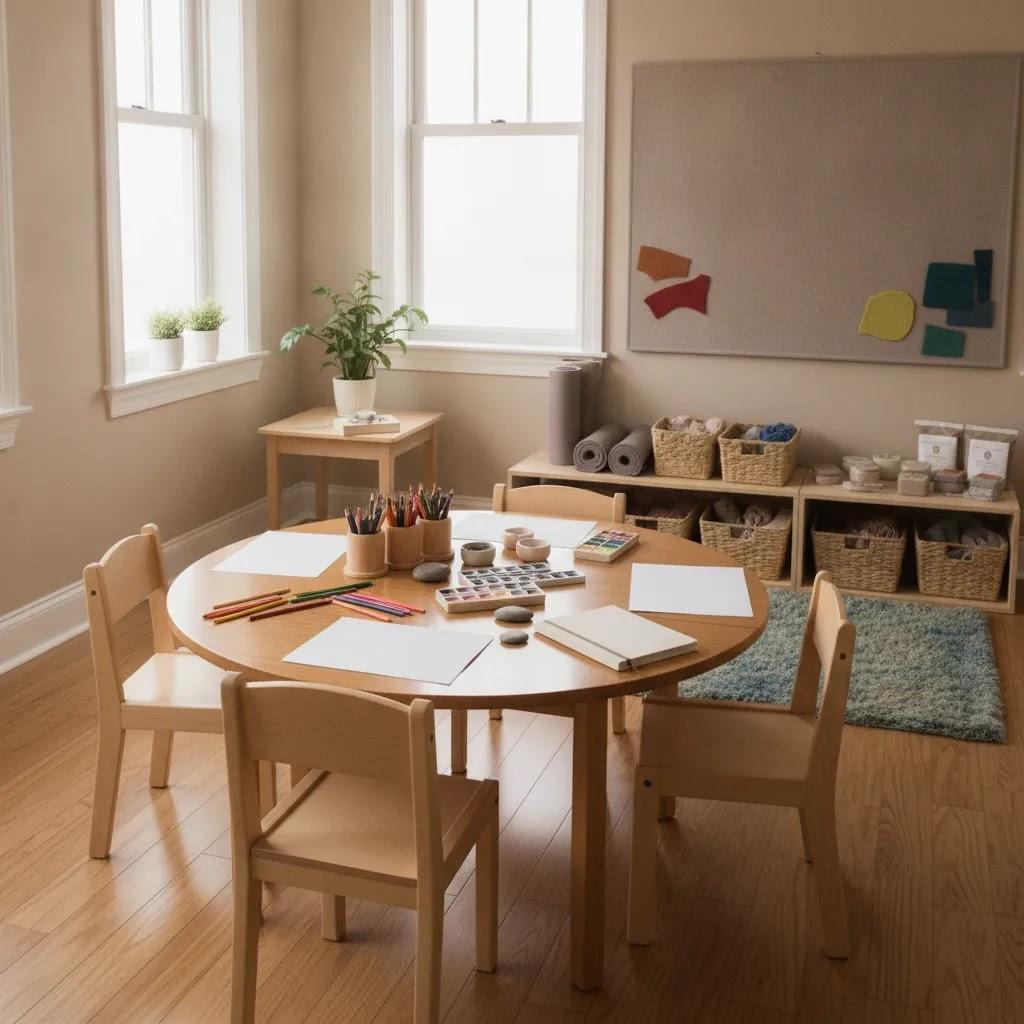
The room does not need to be fancy. It does need to feel calm, consistent, and non-evaluative. Students tend to engage more when the space signals that there is no “right” artistic outcome.
Choose low-mess, flexible materials first. Paper, colored pencils, markers, oil pastels, magazines for collage, scissors if age-appropriate, and glue sticks cover a lot. Save more complex materials for later if you have time, training, and cleanup support.
- Use individual supply kits when possible
- Offer 2 to 3 choices, not a wall of options
- Post simple group agreements around privacy, respect, and choice
- Make cleanup part of the closing routine
For broader background on school-friendly creative support, the Art Therapy Fundamentals category can help teams orient themselves before building a program.
Step 5: Run a low-pressure expressive arts therapy in schools session
Step 5: Introduce the practice without overexplaining it
Your first session sets the emotional temperature. Keep it gentle. A good opening script might sound like this: “You do not need to be good at art. This is a way to notice what is going on inside and put some of it on paper.”
Then use a short activity that is easy to enter. Try one of these:
- Draw your energy as lines, shapes, or weather
- Create a color map of your day
- Make a shield with “what helps me feel steady” symbols
- Use collage to show one thing that feels loud and one thing that feels quiet
Avoid interpreting student art for them. Ask open questions instead.
- What stands out to you?
- Which part feels most important today?
- Was any part calming, annoying, surprising, or easier than expected?
This “no forced meaning” stance is especially helpful for students who are stressed, guarded, or unsure how much they want to share.
Expressive arts therapy in schools techniques beyond visual art
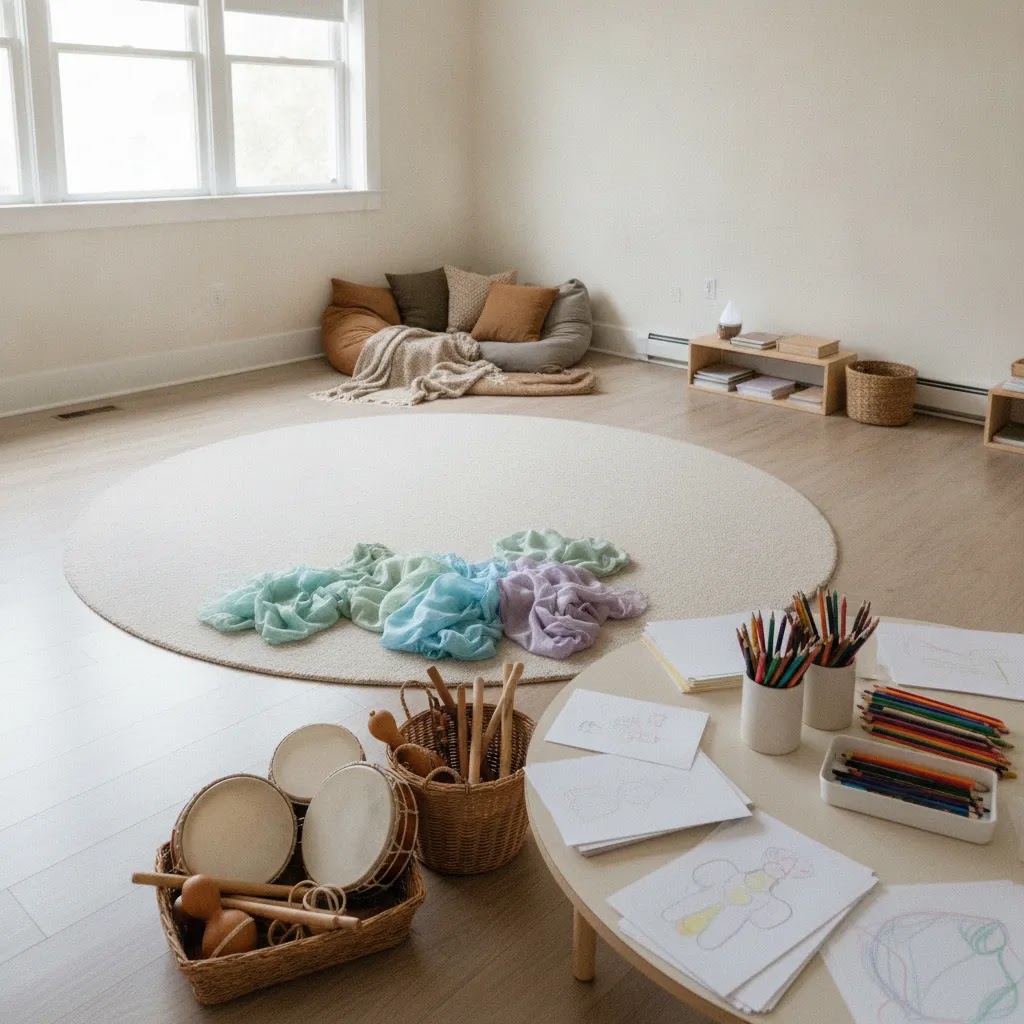
Many students engage more easily through the body, rhythm, or story than through drawing. Schools can still keep these options simple, low-setup, and contained. The aim is not performance. It is gentle noticing, choice, and a way to shift state safely.
Movement (gentle, contained, and opt-in)
Movement can help students discharge stress and return attention to the present. Keep it small and predictable.
- 10 to 15 minutes: chair stretch sequence with choices, such as shoulders, hands, neck, and feet. Students can skip any part.
- Calm corner option: “cross-body taps” or slow alternating hand squeezes while naming a neutral category, such as colors or animals, to anchor attention.
- Older students: a “walk and notice” loop around a room or hallway with a simple prompt, such as “notice three textures” or “notice what your jaw is doing.”
Sound and rhythm (humming, tapping, listening prompts)
Sound can be regulating for some students and overstimulating for others. Offer it as an option, keep volume low, and make quiet participation acceptable.
- 10 minutes: group rhythm echo using desk taps or soft percussion, where students can pass at any time.
- Humming or toning: one steady note for a few breaths, then silence. Students who do not want to vocalize can listen.
- Music listening prompt: play a short instrumental clip and ask students to draw the “shape” of the sound with a line, not a picture.
Story and writing (poetry, journaling, comic strips)
Story formats help students organize experience without direct disclosure. They also offer privacy because students can write in metaphor.
- Primary school: “finish the sentence” cards, such as “Today my feelings were like…” followed by drawing or one word.
- Middle school: a three-panel comic of “stress before, stress during, stress after,” with stick figures allowed.
- High school: short poem prompts, such as “If my week were a room, it would have…” with optional sharing or a private fold-and-keep format.
Drama and role-play (with easy opt-out)
Drama can support perspective-taking and social problem-solving, but it can also feel exposing. Offer roles that do not require acting, such as narrator, observer, or prop designer.
- 10 minutes: role cards for common school moments, such as conflict at lunch or anxiety before a presentation, with an observer prompt: “What helped the situation cool down?”
- Improv with guardrails: “freeze and choose” where students can pause a scene and suggest a different next line, without needing to perform it themselves.
Quiet options (witnessing, noticing, and structured silence)
Some students need less doing and more settling. Quiet practices can be the most accessible option when a group is activated.
- Two-minute “witnessing”: eyes open, notice five things you see, four things you feel physically, three things you hear, then return to the table.
- Mindful mark-making: one page of slow lines or repeating shapes while noticing breath, with no discussion required.
- Reflection without speaking: students point to a feelings chart, write one word, or place a colored sticky note to show how they are leaving.
Safety and accessibility notes for group settings
- Sensory sensitivities: offer ear protection, quiet alternatives, and the option to participate through observation.
- Physical boundaries: never require touch, partner movement, or closing eyes. Offer seated versions of movement.
- Opt-in participation: build “pass” into the instructions so students do not need to ask permission to opt out.
- Non-performative tone: keep activities framed as private exploration. Avoid spotlighting work or requiring group sharing.
Step 6: Reflect on expressive arts therapy in schools and refer when needed
Step 6: Close each cycle with observation, not overreach
School teams often ask how to show value without turning a gentle support practice into a data burden. Keep documentation light but useful. Track attendance, participation, student self-report, and observed regulation or engagement patterns.
You can ask students to rate before and after states with a simple visual scale. You can also invite one word for how they feel leaving, or one coping idea they want to keep. For schools focused on student wellness, this can sit naturally alongside broader Anxiety, Stress & Emotional Wellness efforts.
Know your referral thresholds. If artwork or discussion suggests risk of harm, abuse concerns, intense grief, suicidal thinking, severe withdrawal, or major deterioration in functioning, follow school safeguarding and crisis protocols immediately. Creative work can reveal distress. It should not be expected to contain it alone.
Pros and Cons of expressive arts therapy in schools
Strengths
- Can give students a nonverbal outlet when direct discussion feels too hard
- Often easier to introduce in school than long talk-based emotional support programs
- Works well with short, repeatable routines that fit school schedules
- May support emotional literacy, self-regulation, and classroom readiness
- Can be adapted for different ages, sensory profiles, and communication styles
- Helps counselors and educators notice patterns without pressuring disclosure
Considerations
- Schools need clear scope boundaries so staff do not drift into work that requires clinical training
- Not all students feel safe with creative expression, especially in groups or after recent distress
- Programs can become inconsistent if materials, staffing, or scheduling are unreliable
- Art activities alone do not replace safeguarding, family communication, or outside referrals when needed
Common expressive arts therapy in schools mistakes to avoid
- Using art as a diagnostic shortcut. A drawing is not a simple code to crack. Meaning should stay collaborative and student-led.
- Offering too many materials too soon. Too much choice can dysregulate younger students or overwhelmed students. Start small.
- Forcing sharing. Reflection works better when students can pass, write, point, or stay quiet.
- Skipping staff preparation. Even a gentle school-based program needs role clarity, referral procedures, and predictable routines.
- Confusing creativity with containment. A fun art task is not automatically a safe emotional support activity unless structure and closure are built in.
Next steps for expressive arts therapy in schools
If you are planning a pilot, begin with one age group, one facilitator, and one short sequence of sessions. Review what students respond to, where staff feel stretched, and which referral patterns emerge. That will tell you more than trying to perfect the whole program on paper.
It may also help to sketch a simple decision tree: who gets universal classroom creative support, who joins a small group, who needs one-to-one school counseling, and who should be referred outward. If your team wants a broader understanding of expressive methods before implementation, reading more about expressive art therapy and related school wellness models can help you refine the fit.
Frequently Asked Questions
What is expressive arts therapy in schools?
Expressive arts therapy in schools usually refers to structured creative activities that help students express emotions, build self-awareness, and practice regulation through art, movement, storytelling, music, or similar forms. The exact model depends on staffing and setting. In many schools, expressive arts therapy in schools is supportive and educational rather than open-ended clinical therapy.
What is expressive arts in therapy?
Expressive arts in therapy means using creative forms as part of emotional exploration and support. Instead of relying only on talking, a person might draw, move, build, or use metaphor to show what feels hard to say. In a school setting, that can make emotional work feel more approachable for students who are still developing language or prefer nonverbal expression.
Why is teaching expressive arts important in primary schools?
In primary schools, expressive arts can support development in several ways at once. Children often understand and communicate through sensory experience, play, image, and story before they can fully explain inner states. Teaching expressive arts may strengthen imagination, emotional identification, focus, and confidence, while also giving teachers and counselors a gentler window into student experience.
Do schools need a licensed therapist to offer this?
Schools do not always need a licensed therapist for every creative emotional support activity, but they do need role clarity. General classroom and counseling-based expressive practices can be appropriate for trained staff. More intensive therapeutic work, trauma processing, or high-risk student needs should be handled by credentialed professionals within proper clinical and safeguarding boundaries.
How long should a school-based expressive arts group run?
A short cycle is often easiest to manage. Many schools begin with 6 to 8 sessions of 30 to 45 minutes. That is long enough to establish routine and observe patterns without creating a heavy operational burden. The best length depends on student age, school schedule, staffing consistency, and whether the group is preventive, supportive, or part of a wider intervention plan.
What materials work best for beginners?
Simple, low-mess materials usually work best at the start. Paper, pencils, crayons, markers, and basic collage supplies are enough for many useful activities. These tools are familiar, affordable, and flexible. More complex media can wait until students understand the routine and facilitators know how the group responds to choice, cleanup, and sensory stimulation.
Can expressive arts therapy help anxious students?
It may help some anxious students by offering a bounded, nonverbal way to slow down, externalize feelings, and focus attention through structured making. Results vary by student, setting, and facilitation. It is usually most helpful as one support option among others, especially when the school also has clear referral paths for students whose distress becomes more intense or persistent.
How do you measure whether it is helping?
Schools often use simple indicators rather than heavy formal assessment. You might track attendance, willingness to engage, self-reported stress before and after sessions, observed regulation, and whether students can identify coping tools more easily over time. Qualitative feedback from students and teachers can also be useful, as long as privacy and school counseling ethics are respected.
What is the difference between expressive arts therapy and art therapy?
Expressive arts therapy typically uses multiple creative modalities and may shift between them, such as visual art, movement, sound, and writing, depending on what helps a student express and regulate. Art therapy is usually centered more directly on visual art processes and is delivered by an art therapist trained to work clinically through art making. In schools, both require careful attention to scope, consent, confidentiality limits, and safeguarding responsibilities, especially if the service is positioned as therapy rather than general student support.
What happens in an expressive arts therapy session (especially for students)?
A student session is often structured and predictable. It may start with a brief grounding activity, then a simple prompt, then time to create in a chosen modality, and finally a closing routine. Students are typically not required to share personal details or explain their work. A well-run session emphasizes choice, privacy, and pacing so students can participate without feeling put on the spot.
What should I look for in an expressive arts therapist for my child or school?
Look for clear training and credentials, experience working with children and adolescents, and comfort with school safeguarding requirements. A good provider can explain their scope in plain language, describe how they handle consent and confidentiality in a school setting, and outline what happens if safety concerns arise. It also helps if they have experience coordinating with school support teams and can keep sessions choice-based and developmentally appropriate.
What are the main types of expressive arts used in therapy?
Common modalities include visual art (drawing, painting, collage), movement, music and rhythm, storytelling and writing (journaling, poetry), and drama or role-play. Some approaches also include quiet noticing practices that support settling and self-awareness. In schools, the best mix is usually the one students can access easily, with clear opt-in participation and low pressure to perform or disclose.
Key Takeaways
- Expressive arts therapy in schools works best when the purpose is narrow, clear, and age-appropriate.
- Primary schools often benefit because creative expression can support communication before feelings are easy to explain in words.
- School programs need boundaries, predictable structure, and referral pathways for students who need more support.
- Simple materials and short session cycles are usually enough for a strong pilot.
- Student-led meaning matters more than adult interpretation.
Conclusion
Implementing expressive arts therapy in schools does not have to start with a large, complicated rollout. A modest pilot, clear boundaries, and a calm routine can go a long way. For many students, creative structure offers something ordinary conversation cannot: a quieter way to show what is happening inside.
If you are shaping a school plan, it may help to begin with one group, one intention, and one reflective process your staff can sustain with care. If you want more background before building your program, you can explore Daily Lemons resources on art therapy fundamentals and related expressive practices at your own pace.
This article is for educational purposes only and does not provide medical, psychological, legal, or crisis advice. School-based expressive arts activities are not a replacement for licensed mental health care, risk assessment, or safeguarding procedures. If a student may be at risk of harm, abuse, self-harm, or severe distress, follow your school’s emergency and child protection protocols immediately and contact appropriate local services or a qualified licensed professional. For formal art therapy services, review current credentials, scope of practice, and applicable local regulatory standards. In the United States, professional information may be available through the American Art Therapy Association and relevant state licensing or education bodies.