
Expressive art therapy is a therapeutic use of creative expression, often through image-making and related art processes, to help you explore emotions, regulate inner intensity, and make meaning without relying on words alone. Its core practice is not about making polished art. Instead, it uses the creative process itself to help you notice, externalize, and work with inner experience.
You might come across the term while looking for something gentler than a talk-heavy approach. Or you may wonder why drawing, color, shape, or rhythm can feel calming when language does not. That question matters. Many people can describe what happened to them, but not what it feels like inside.
Others cannot get even that far when stress is high. Expressive art therapy exists partly for those moments. It offers a structured way to put experience somewhere visible, workable, and a little more contained. This article focuses on the core principles of expressive art as a standalone modality, what defines it, how its practice tends to work, and why that distinction matters if you are trying to understand the field clearly.
A clear definition
Expressive art therapy refers to a therapeutic practice that uses creative expression as the primary mode of communication and exploration. In this article, the emphasis is on expressive art as a standalone modality. That means the art process itself stays central, not a side activity added onto another method.
The defining idea is simple. You create first, then notice what the creation reveals. A line, shape, color field, torn collage, or repeated mark can hold emotion in a form you can observe. As a result, inner experience often becomes easier to approach once it sits outside of you.
This overlaps with broader art therapy approaches, but the emphasis here is on the principles that make expressive art work in its own right. It is less about technique and more about process, pacing, sensory contact, symbol, and reflection.
The core principles that shape practice
A few core principles guide this modality and keep the work emotionally meaningful rather than purely recreational.
1. Process matters more than product
No one grades the finished image for beauty, realism, or originality. The important questions are usually: What did it feel like to make this? What changed while you were making it? What do you notice now?
This can be a relief if perfectionism tends to take over. However, it can feel challenging at first, especially if you quickly judge your work.
2. Externalization creates breathing room
One of the core functions of expressive art therapy is externalization. A feeling that is vague, flooded, or stuck inside becomes a visible object on paper or in another material. Once outside the body, it can feel a little less fused with your identity.
You are no longer only inside the feeling. You are also in relationship to it.
3. Sensory and embodied action are part of the work
Expressive art therapy is not only reflective. It is physical. Pressure, repetition, movement, texture, and rhythm can all shape how the experience unfolds. Slow shading may settle you. Fast, forceful strokes may show urgency before you have language for it.
This is one reason the approach may feel more reachable than writing for some people. The hand can start before the mind fully explains.
4. Symbolic language protects and reveals
Images can hold meaning indirectly. You might draw a storm, a locked room, a cracked cup, or a tiny bright window. Symbol lets you approach something difficult without naming every detail directly. For some people, that creates enough safety to stay engaged.
5. Meaning is led by the maker
Expressive art therapy should not turn into a guessing game where someone else tells you what your drawing means. Ethical practice usually avoids fixed interpretation. Instead, the therapist or facilitator may ask questions, reflect observations, and help you stay curious. Most importantly, the meaning should stay connected to your own experience.
- Creative process is primary
- Art skill is not required
- Embodiment and sensory feedback matter
- Metaphor and symbol are welcome
- User-led meaning is central
What happens in practice

A session does not need to look dramatic to be meaningful. In many cases, the structure is quiet and simple.
Beginning with a prompt, material, or felt sense
You may start with an invitation such as “show what today feels like in color and shape,” “draw a container for what feels too big,” or “follow your breathing with a line.” Sometimes the starting point is even simpler: choose a material and notice what your hand wants to do.
Creating before analyzing
This sequence is important. In expressive art therapy, too much explanation at the start can pull you away from direct contact with the experience. The making comes first. Then the image can emerge before logic or self-critique edits it.
Pausing to witness what appeared
After creating, you may look at the piece and notice patterns. Where is the pressure? Where is the empty space? What seems hidden? What feels unfinished? Reflection can be verbal, written, or silent.
Closing with grounding or integration
Because creative work can stir emotion, sessions often end with a settling step. That may be as simple as titling the piece, adding one supportive color, or naming one thing you want to carry forward.
If you are comparing structured modalities, our piece on expressive arts therapy vs art therapy can help clarify where this approach sits in relation to adjacent terms.
What expressive art therapy can include (beyond drawing)
This article uses “expressive art therapy” mainly to describe image-making as a primary language, because that is how many people first encounter the term. In real-world settings, expressive work can be broader. Some providers use multiple forms of expression to help you find the channel that feels most accessible on a given day.
Common expressive art therapy formats
Depending on the setting and the facilitator’s training, expressive sessions may include options like:
- Clay or simple sculpting, especially if you want something you can hold, press, smooth, or reshape
- Collage, where choosing and arranging images can feel safer than making marks from scratch
- Sandtray or small-object scenes, where meaning can emerge through placement, distance, and relationship between items
- Photography, including noticing themes in what you naturally capture and what you avoid
- Storytelling, journaling, or poetry, where metaphor carries what feels too direct
- Drama-based expression such as role-play or improvisation, often focused on exploring parts of self or relationship dynamics
- Simple movement or gesture, which can be as small as shifting posture, tracing a shape in the air, or walking a rhythm
- Sound, voice, or rhythm, including humming, drumming, or repeating a steady pattern to support regulation
Choosing materials and pacing expressive art therapy
If you are deciding what to try, it can help to choose based on what feels safest, not what seems most impressive. Some materials offer more control. For example, pencil, fine markers, and structured collage may feel more contained if you are easily flooded. Others are more sensory. Clay, paint, and movement can be grounding, but they can also bring up strong material quickly because they bypass overthinking.
If a modality regularly leaves you activated afterward, or if you notice flashback-like intensity, dissociation, or lingering distress, that is a sign to slow down and consider professional support. The goal is not to force expression. Instead, try to stay in a window where you can feel what is present without feeling swept away by it. If you want a broader foundation first, you can also read our guide to art therapy fundamentals.
Helpful terms to know
If some of this language feels new, this short glossary can help.
- Externalization: placing an inner feeling, memory, or tension into an image or object so it becomes more observable.
- Embodiment: the role of physical sensation, movement, rhythm, breath, and touch in the creative process.
- Symbolic expression: using metaphor, image, or visual shorthand rather than literal explanation.
- Containment: creating enough structure or boundary so difficult material feels more manageable.
- Witnessing: noticing the artwork and your response to it without rushing to fix or judge it.
Why this modality matters
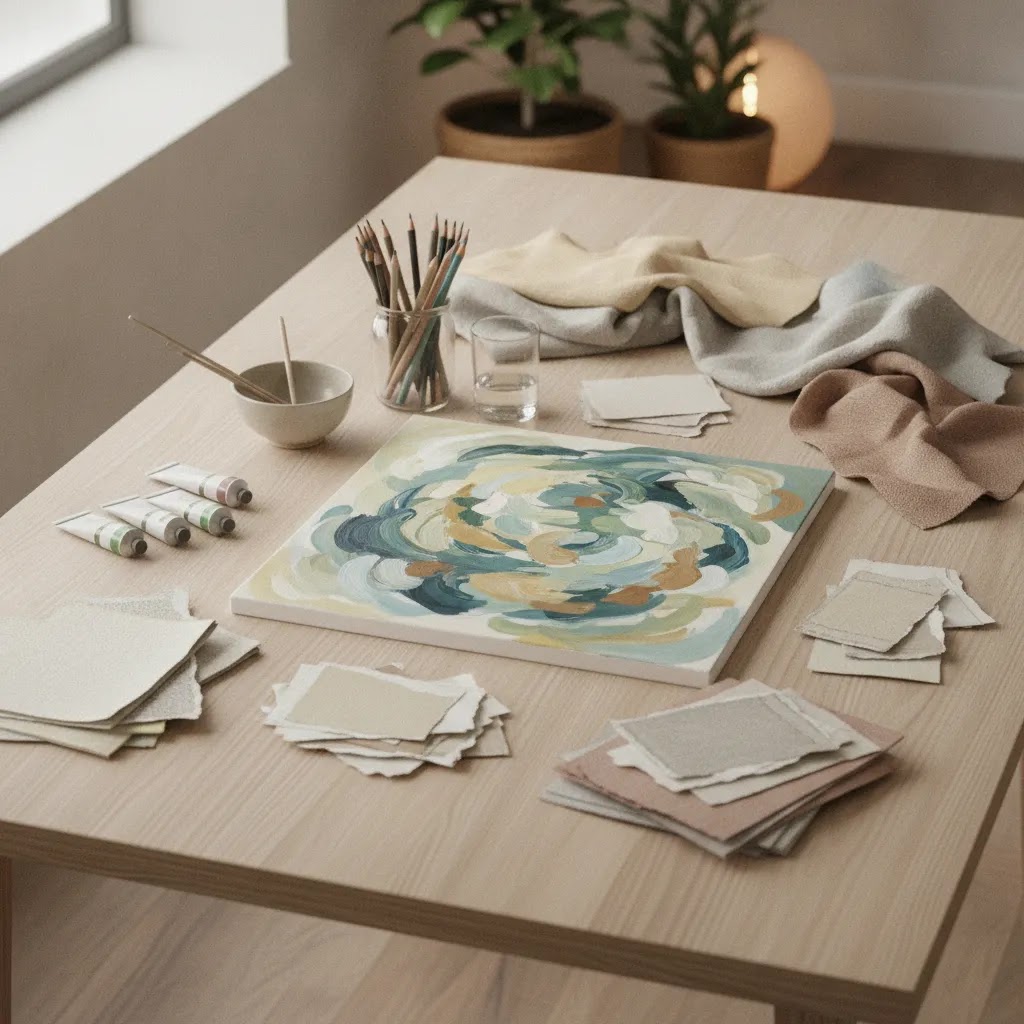
The importance of expressive art therapy becomes clearer when words are not the best tool in the moment. If you feel overloaded, emotionally flat, restless, or unable to explain what is wrong, creative expression may offer a lower barrier to entry.
It can also support a different kind of honesty. A person might say “I’m fine” and still draw something constricted, fragmented, or heavy. The point is not to catch them in a contradiction. Instead, the image may reveal layers the speaking mind has not caught up with yet.
This is also why expressive art is often discussed alongside art as therapy, though the two are not identical. Casual art-making can soothe or restore. Expressive art therapy adds deliberate therapeutic attention to process, pacing, reflection, and emotional meaning.
DailyLemons builds on this broader idea in a digital format by offering therapist-informed, nonverbal drawing experiences that can support reflection without requiring polished art or long written entries. If you want wider context, the Art Therapy Fundamentals hub is one useful place to keep reading.
Who it is for (common use cases, settings, and boundaries)
Expressive art therapy can be used with many ages and in many settings, because the core skill is not artistic ability. It is the ability to notice experience and give it form at a pace that feels manageable.
People may look for expressive art therapy when they are dealing with experiences like:
- Chronic stress, burnout, or a body that feels stuck in “on” mode
- Grief, loss, and the strange numbness or intensity that can follow
- Low self-esteem, self-criticism, or a sense of disconnection from your own needs
- Relationship strain, including difficulty expressing anger, longing, or boundaries
- Major life transitions, such as a move, a breakup, parenting shifts, career change, or identity changes
- General overwhelm, especially when you can describe facts but cannot access feelings
It is also used across different populations and formats:
- Children, who often communicate through play and image before abstract language
- Teens, who may prefer indirect expression over direct questioning
- Adults, including people who feel “talked out” or over-analyzed
- Group settings, where shared creative work can support connection and reduce isolation
Where you do it can change how it feels. A school-based group may be more structured and time-limited. A hospital program may focus more on coping and stabilization. Private practice may offer more individualized pacing and deeper long-term exploration. Community workshops may be supportive, but they typically do not replace the role of licensed care when risk is higher.
Some areas require clearer boundaries. Trauma-related material, active self-harm urges, severe dissociation, or situations involving immediate safety are usually better held with a licensed mental health professional who has specific training and a clear crisis plan. Expressive methods can be part of that support, but self-guided exploration or lightly facilitated groups may not provide enough containment if intense material comes up quickly.
Common mix-ups and boundary lines
Expressive art therapy vs expressive arts therapy
These terms are often used loosely, but they may point to different scopes. Expressive arts therapy often suggests a multi-modal approach that moves between art forms such as drawing, movement, writing, sound, or drama. Expressive art therapy, as framed here, keeps the focus on expressive art as its own therapeutic language.
Expressive art therapy vs an art class
An art class usually teaches skill, style, or technique. Expressive art therapy focuses on what the process evokes, regulates, and reveals. Learning can still happen, but emotional exploration is central.
Expressive art therapy vs self-guided creative wellness
Self-guided creative practices can be meaningful and accessible. They may help with reflection, grounding, and emotional expression. Formal therapy adds a therapeutic relationship, ethical boundaries, and professional judgment. If you are trying to understand that role more clearly, reading about what an art therapist does can help.
Where you might encounter expressive art therapy

You may find expressive art therapy in private practice, school settings, community wellness spaces, hospitals, grief support settings, trauma-informed programs, or digital mental wellness tools. The format may vary, but the core principles tend to remain recognizable.
In digital settings, the safest versions usually keep claims modest and structure clear. DailyLemons, for example, describes its work as art-therapy-informed support rather than a replacement for individualized care. That distinction helps protect trust. The broader Digital Art Therapy & Apps category can give you a feel for how this area is evolving.
If you are a beginner, you do not need special talent to start exploring expressive art. A pen, a few colors, and enough privacy to notice what shows up are often enough. If the process brings up more than feels manageable, a qualified professional may be the better next step.
What to look for in a qualified expressive arts provider (and what credentials can mean)
If you are seeking formal support, the provider matters as much as the modality. Expressive work can feel gentle, but it can still touch vulnerable material. You want someone who can pace the process, protect your agency, and keep boundaries clear.
Credentials and titles can be confusing because they are jurisdiction-dependent. In some locations, “art therapist” is tied to specific education and licensure pathways. In other places, similar-sounding titles may not be uniformly regulated. If you are unsure, check what professional bodies, licensing boards, or registration requirements apply in your country, state, or province, then ask the provider how they fit within those standards.
How to screen an expressive art therapy provider
Questions that can help you screen a provider without turning it into an interrogation:
- What training do you have in art therapy or expressive arts work, and what populations have you worked with most?
- Do you receive supervision or consultation, especially for complex cases?
- How do you handle confidentiality, record-keeping, and privacy in this setting?
- How do you pace sessions if strong emotion shows up, and what grounding practices do you use?
- If I become overwhelmed, what is your plan, and what level of support can you offer?
- How do you work with interpretation? Do you ask what images mean to me, rather than assigning fixed meanings?
- What is your scope of practice, and how do you decide when to refer out or coordinate with other care?
Green flags and red flags in expressive art therapy
Green flags are usually subtle. The provider explains their training clearly, stays modest about what they can offer, and emphasizes collaboration. They make room for your “no,” including the choice to stop, switch materials, or keep an image private. They do not rush to get a big emotional moment on day one.
Red flags also tend to be simple. Overpromising outcomes, claiming they can decode your symbols with certainty, pushing you to disclose faster than feels safe, or staying vague about boundaries and confidentiality are all reasons to pause. If something feels off, you are allowed to ask for clarification or look for someone else. A good therapeutic fit usually feels respectful and steady, not intense or performative. If you are searching locally, our guide on how to find a qualified art therapist in Singapore may help.
Expressive art therapy at a glance
If you want a quick summary, this table gathers key distinctions already covered above.
| Area | What the article says |
|---|---|
| Main focus | The creative process is primary, not polished results. |
| Skill level | You do not need artistic skill. |
| Core mechanisms | Externalization, embodiment, symbolic expression, reflection, and user-led meaning. |
| Common session structure | A prompt, time to create, reflection, and grounding or integration. |
| Possible modalities | Image-making, collage, clay, sandtray, photography, writing, movement, sound, or rhythm. |
| Useful for | Stress, burnout, grief, low self-esteem, relationship strain, life transitions, and overwhelm. |
| Important boundary | Severe distress, self-harm urges, dissociation, or immediate safety concerns call for qualified professional support. |
Frequently Asked Questions
What is expressive art therapy in simple terms?
Expressive art therapy is a way of using art-making to explore feelings, inner tension, or personal meaning. You do not need to be good at art. The point is not to create something impressive. Instead, you use color, shape, movement, and image to express something that may be hard to say directly. In a formal setting, the creative process is held with therapeutic structure and reflection, so the art becomes more than a relaxing activity.
Do you need art skills for expressive art therapy?
No. In fact, lack of formal training can sometimes make the process easier because there is less pressure to perform well. Expressive art therapy is interested in honest marks, not polished results. A scribble, a color block, a rough collage, or a shaky line can all be meaningful. If you notice a strong inner critic, that can become part of the reflection too. The process works best when you allow the image to be true rather than impressive.
How is expressive art therapy different from regular drawing for relaxation?
Relaxing drawing can still be valuable, but expressive art therapy has a more intentional focus. It pays attention to what the process stirs, contains, or reveals. There is often a prompt, a therapeutic frame, and some form of reflection afterward. The goal is not just to feel occupied or soothed, though that may happen. The goal is to support emotional contact, regulation, and meaning-making through the act of creating.
What is the difference between expressive arts therapy and art therapy?
Art therapy typically refers to a therapeutic discipline centered on visual art processes, supported by specific training standards that can vary by location. Expressive arts therapy is often used to describe a multi-modal approach that may include visual art, movement, writing, sound, drama, or play. In practice, the terms are sometimes used interchangeably in casual conversation, so it helps to ask a provider what modalities they use, what their training is, and what they mean by the title they use.
What are the benefits of expressive arts therapy?
Possible benefits include improved emotional expression, more capacity to notice and tolerate feelings, stress relief through sensory regulation, and greater self-understanding through metaphor and image. Some people also find it supports self-compassion because the artwork makes inner experience visible without requiring a “perfect” explanation. Benefits vary by person, context, and provider, and it should not be treated as a guaranteed outcome.
What should I expect in an expressive arts therapy session?
You can typically expect a prompt or gentle starting point, time to create, and time to reflect. The session may include image-making alone, or it may move between modalities such as collage, clay, writing, rhythm, or simple movement, depending on the provider’s approach. Many sessions end with grounding or containment, so you leave feeling steady enough to return to daily life. You should not be pressured to share more than feels safe, and meaning should be explored with you rather than assigned to you.
What kinds of materials are used in expressive art therapy?
Materials can be very simple. Paper, pencils, markers, crayons, chalk, watercolor, collage materials, or clay are common. Different materials create different experiences. A pencil may feel controlled and precise, while chalk may feel more loose and sensory. The choice of material can affect how safe, free, or intense the process feels. In professional settings, materials are often chosen with care because they influence pacing, control, and emotional activation.
Can expressive art therapy help if talking feels too hard?
It may. That is one reason many people are drawn to it. Creative work can offer a way in when direct conversation feels blocked, tiring, or too exposing. A visual metaphor can sometimes hold more truth than a full explanation. Still, this does not mean silence is always better or that art should replace needed support. If distress is severe, persistent, or tied to safety concerns, human professional care is important.
Is expressive art therapy only for children?
No. Children may respond well to it because image-making can feel more natural than abstract verbal discussion, but adults use expressive art therapy too. It may be especially appealing during grief, burnout, identity shifts, overwhelm, or periods where language feels flat or overworked. Adults often benefit from having a form of reflection that is less analytical and less performance-driven than many self-help tools.
What happens in a first expressive art therapy session?
A first session is often gentle and structured. You may talk briefly about what brought you there, then be invited into a simple art prompt. The therapist or facilitator may focus on helping you feel safe enough to begin rather than aiming for deep disclosure right away. After creating, there is usually time to notice what stands out and how the process felt. The session may end with grounding so you leave feeling settled enough to continue your day.
Is expressive art therapy evidence-based?
Research on visual art therapy and related arts-based practices suggests possible benefits for emotional expression, stress reduction, and broader well-being outcomes in some groups. At the same time, study quality, methods, and populations vary. That means the evidence should be read with care, not as a promise. It can be a meaningful modality, but it is not a universal answer, and outcomes may differ depending on the person, context, and provider. For broader public information on mental health and creative wellness, you can also review resources from the National Institute of Mental Health and the World Health Organization.
Can you try expressive art therapy on your own?
Yes, many people begin with self-guided expressive exercises at home. A simple prompt like drawing your mood as weather, tracing tension in color, or making a container image for heavy feelings can be a gentle starting point. Self-guided work may support awareness and regulation. Still, if you find yourself becoming overwhelmed, stuck in intense material, or unsure how to contain what comes up, professional support may be more appropriate.
What should I look for in an expressive arts therapist?
Look for clear training and scope, steady pacing, and respect for your agency. A qualified provider should be able to explain how they handle confidentiality, what happens if you become overwhelmed, and how they avoid rigid interpretations of symbols. Because credentials differ by location, it is reasonable to ask what professional standards or licensing requirements they follow, and whether they receive supervision. Modest claims, clear boundaries, and collaboration are usually better signs than certainty and strong promises.
How do you know if a provider is qualified?
Qualifications vary by country and setting, so it helps to check current training, scope of practice, and professional registration where applicable. Titles are not regulated the same way everywhere. You can ask what training they have in art therapy or expressive arts work, how they handle emotional safety, and what they do if someone needs a higher level of support. Clear answers, appropriate boundaries, and modest claims are usually good signs.
Key Takeaways
- Expressive art therapy uses the creative process as the main way to explore and work with inner experience.
- The core principles are process over product, externalization, embodiment, symbolic expression, and user-led meaning.
- You do not need artistic skill, because the goal is honest expression, not technical quality.
- This modality may be especially helpful when feelings are hard to verbalize or when reflection through words feels inaccessible.
- Self-guided practice can be useful, but strong distress, safety concerns, or persistent overwhelm call for qualified human support.
Conclusion
Expressive art therapy is best understood not as “art with feelings added,” but as a distinct way of working with emotion through image, movement of the hand, sensory contact, symbol, and reflection. Its core practice asks you to make something first, then notice what the process and the image are showing. That order is part of what gives the modality its value.
For some people, that structure opens a door that words have been blocking for a long time. For others, it becomes a steady companion to existing support. If you want to keep learning, you might explore DailyLemons as one art-therapy-informed digital resource, or read further through our foundational articles on adjacent methods and roles. There is no need to force the process. A single line, shape, or page may be enough to begin noticing what your inner world has been trying to say.
This article is for educational purposes only and does not provide medical, psychiatric, legal, or crisis advice. Creative wellness practices, including expressive art therapy, may support reflection and emotional regulation, but they do not replace individualized care from a qualified professional. If distress feels severe, persistent, or related to safety, contact local emergency services, a crisis resource, or a licensed professional right away. If you are evaluating formal therapeutic support, review the provider’s current credentials, privacy practices, scope of practice, and applicable regulatory standards in your location.