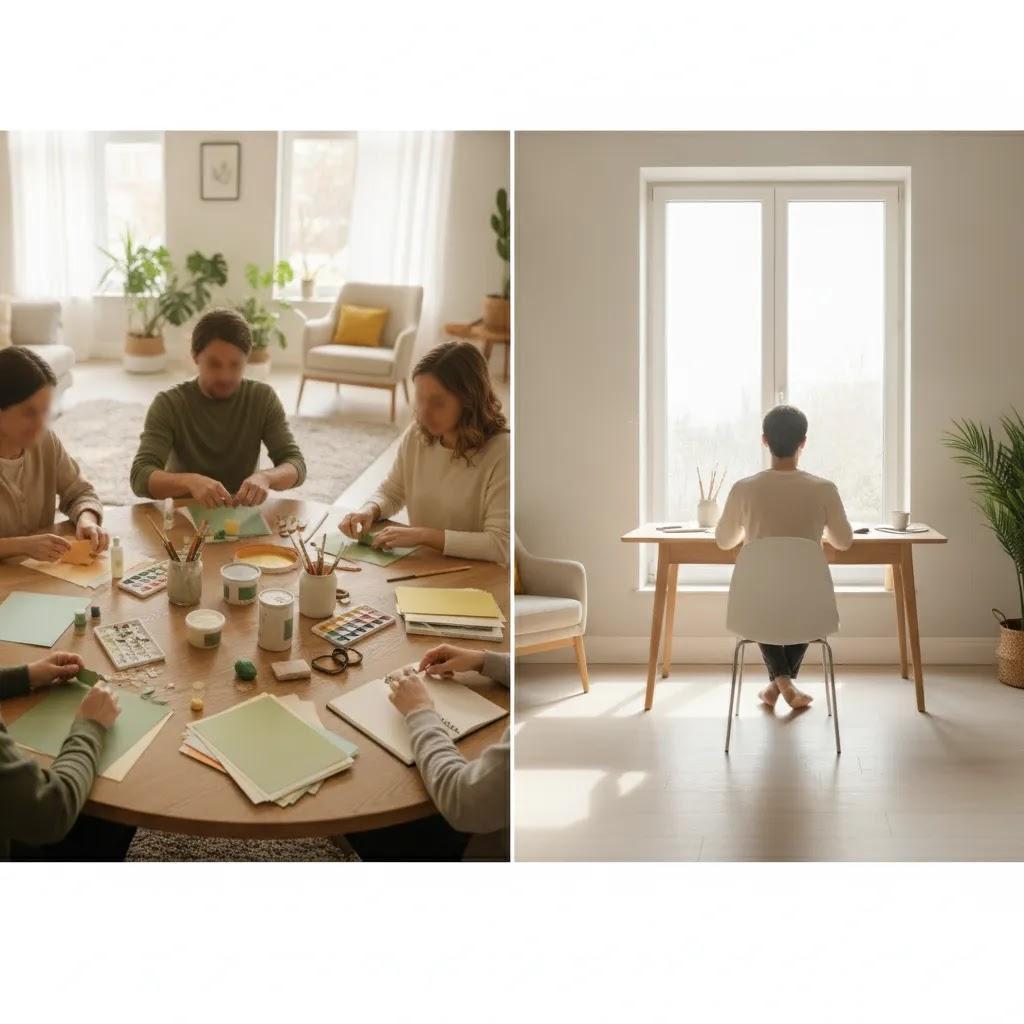
Sometimes the real question is not “does art therapy sound helpful?” but “is it worth paying for compared with other kinds of support?” In many cases, yes, art therapy can be worth the cost if you struggle to put feelings into words, feel overwhelmed by talk-heavy tools, or want support that helps you regulate and reflect at the same time. The value tends to be highest when the format matches how you actually process stress.
The harder part is that “worth it” changes from person to person. A teen who shuts down in conversation, an adult moving through grief, and someone looking for a low-cost self-guided tool may all need something different. If you want broader context first, you can read more about art therapy before deciding what level of support makes sense for you.
The short answer
Art therapy is usually worth the cost when standard self-help tools or talk-based support have felt hard to use, emotionally flat, or too mentally demanding. Its value comes less from making art itself and more from the combination of guided expression, nervous system settling, and later reflection. That combination may help some people access emotions, patterns, and relief faster than they would through writing or verbal processing alone.
Still, it is not automatically the best use of your money. If you mainly want diagnosis-focused care, crisis support, or intensive treatment for severe distress, art therapy may be too limited on its own. The smart question is not whether it is universally worth it. The better question is whether its benefits match your needs, budget, and style of processing.
How to judge whether the cost is worth it
A useful cost-benefit analysis looks at more than the session fee. You are really weighing five things: access, fit, results, repeatability, and what you might spend instead.
- Access: Can you realistically attend sessions or use the tool consistently?
- Fit: Do you process visually, physically, or nonverbally more easily than through talking?
- Results: Are you getting more emotional clarity, calm, or usable coping skills?
- Repeatability: Can you return to the practice outside sessions?
- Alternative cost: What happens if you keep paying for supports you avoid using?
If you are still sorting out basics, our guide on what is art therapy may help clarify what you are actually paying for. You are not just paying for art materials. You are usually paying for structure, pacing, emotional containment, and a different route into self-understanding.
| Factor | What to ask | Why it affects value |
|---|---|---|
| Access | Can you realistically attend sessions or use the tool consistently? | If you cannot use it regularly, even a good option may not feel worth the cost. |
| Fit | Do you process visually, physically, or nonverbally more easily than through talking? | Art therapy tends to be worth more when the format matches how you naturally process stress. |
| Results | Are you getting more emotional clarity, calm, or usable coping skills? | Small but repeatable gains can matter more than a low fee with no real change. |
| Repeatability | Can you return to the practice outside sessions? | Skills that carry into daily life often increase long-term value. |
| Alternative cost | What happens if you keep paying for supports you avoid using? | A more usable method may be the better investment, even if it costs more upfront. |
What art therapy is (and is not): credentials, regulation, and what you’re paying for
Cost is hard to judge if “art therapy” is being used to describe three very different things: art therapy provided by a trained art therapist, art-making as self-care, and creative coaching or classes that can be supportive but are not therapy. All three can have value, but they are not interchangeable, and the pricing is not measuring the same thing.
Three options that can look similar but are not the same
In general, professional art therapy is therapy that uses art-making as part of a structured therapeutic relationship. “Art as self-care” is what you do on your own or with a guided tool to regulate, reflect, or express. Creative coaching or workshops may help with motivation, confidence, or community, but they usually do not offer the same scope, ethical obligations, or clinical containment as therapy.
Credentials and regulation can shape the price
A quick credentials and regulation snapshot can help you reality-check what you are paying for.
- United States: Training pathways and titles can vary. The American Art Therapy Association is a major professional body, and credentialing and licensure can differ by state. Some providers may hold an art therapy credential plus a separate mental health license, while others may be practicing under different professional scopes. It is normal to ask what licenses and credentials they hold and what that means where you live.
- United Kingdom: “Art therapist” is commonly treated as a protected professional title, and the Health and Care Professions Council regulates arts therapists. If you are hiring someone in the UK, checking registration status is a practical step.
- Other regions: Rules can vary widely. Some places have formal registers and protected titles, others do not. If regulation is unclear locally, you can still ask for training background, supervision practices, and how confidentiality and consent are handled.
If you want to verify professional standards, the American Art Therapy Association and the Health and Care Professions Council are useful starting points.
What you are usually paying for in art therapy
Once you are clear on the type of service, the price often makes more sense. Professional fees are usually driven less by the cost of paper and paint and more by what sits behind the session: graduate-level training, structured assessment and pacing, ethical standards, confidentiality practices, ongoing supervision, and the responsibility of holding intense emotional material safely. Those pieces are not always visible, but they are a big part of what you are purchasing when you pay for therapy rather than an art class.
1. It may work when words feel like too much
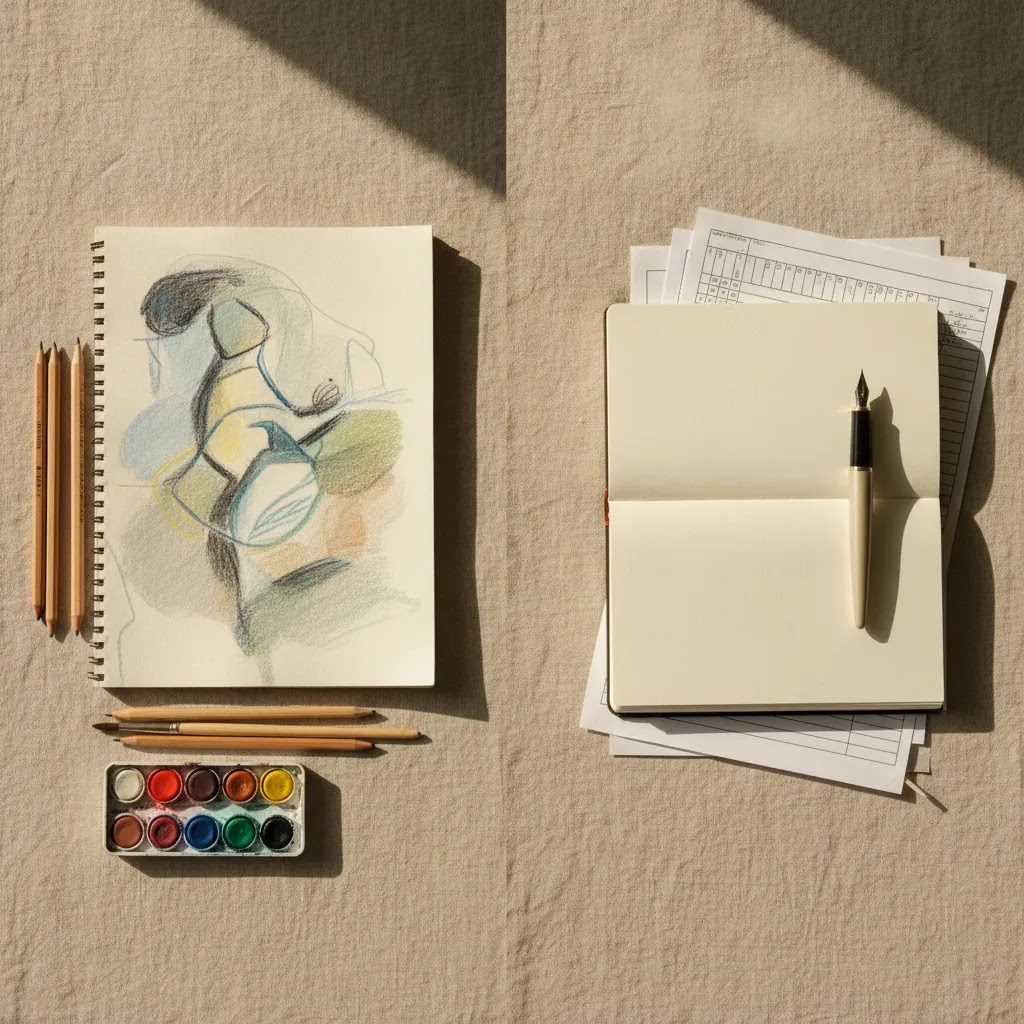
This is the strongest reason art therapy can be worth the cost. Some people do not need more insight in theory. They need a format they can actually use while distressed. Writing can feel like school. Talking can feel exposing. Meditation can make a racing mind feel even louder.
Art-based work may reduce that barrier because it gives emotion a shape before it demands an explanation. A breathing line, a color field, or a simple collage can externalize what feels tangled inside. Research reviews on active visual art therapy have found beneficial associations with health-related outcomes across varied settings, though study quality and methods differ. That means the evidence is promising but should be read carefully, not as a guarantee.
For a person who repeatedly avoids other tools, the financial value can be surprisingly practical. A support method that gets used may be more cost-effective than a cheaper method that sits untouched.
2. You may get two benefits at once
Many supports lean heavily in one direction. Some are mostly calming. Others are mostly reflective. Art therapy often sits in the middle. It can start with movement, color, rhythm, and sensation, then shift toward meaning once you feel steadier.
That matters because emotional strain does not always begin in neat thoughts. Sometimes it shows up as tight shoulders, numbness, restlessness, or the feeling that your mind has gone blank. Art-making may help with immediate settling through repetitive, sensory action. The finished image can then support later conversation or private reflection. In cost terms, that means one session or practice may do the work of both regulation and insight-building.
This blended value is one reason people exploring Digital Art Therapy & Apps often compare guided creative tools with standard journaling apps. The question is not which format sounds more impressive. It is which one helps you move from overwhelm to awareness with the least friction.
3. It can lower dropout risk for the right person
Support only has value if you stay with it long enough to benefit. For people who feel judged by blank pages, over-analyze their words, or shut down during conversation, art therapy may feel gentler to return to. That can improve consistency, which changes the value calculation.
A lower-pressure format may be especially helpful for teens, neurodivergent users, and adults carrying burnout or grief. If the process feels manageable, you are more likely to build a habit of checking in before stress becomes unmanageable. The benefit is not only emotional. It can reduce the hidden cost of cycling through tools, subscriptions, or appointments you stop using after a week or two.
For example, if you are thinking about younger age groups, you might compare art therapy for teens or explore how art therapy benefits for adhd can shape fit and consistency. For readers comparing local support options, service format matters too. If you are evaluating providers in a specific region, this overview of art therapy singapore may help you think about delivery style, credentials, and setting alongside cost.
What to expect in a first art therapy session (so you can assess fit fast)
The first session is often less about making “good art” and more about learning how the space works. If you know what typically happens, it is easier to tell whether the experience is worth repeating and whether the provider’s style feels safe enough for you.
What usually happens in a first session
Many first sessions include some version of the following.
- Intake and goals: You may be asked what brings you in, what you hope will feel different, and what support has or has not worked before. Goals are often gentle and functional, like feeling steadier during conflict, sleeping a bit better, or having a safer way to express grief.
- Materials and choice: The therapist may offer a few options and watch how you respond. Some people feel calmer with simple tools like pencils and markers, others prefer collage or clay. The choice can be part of the information.
- Making art: This might be structured by a prompt, or more open-ended. Some sessions are quiet. Some include light conversation while you work. You can usually ask for more structure if you feel stuck.
- Gentle reflection: Instead of analyzing the image like a test, many art therapists invite you to describe what you notice, what it felt like to make, and what the image seems to hold. The goal is often self-understanding and emotional regulation, not interpretation that is imposed on you.
- Ending and grounding: Sessions often end with a short check-in about how you are feeling now, what you want to carry into the week, and a plan for aftercare if anything was stirred up. Some therapists will close with grounding so you do not leave feeling raw.
Questions that help you assess fit quickly
If you want to assess value quickly, a few first-session questions can help clarify fit without forcing you to share more than you want.
- What is your approach in art therapy sessions? Some providers are more directive and structured, others are more open and client-led.
- Have you worked with concerns like mine (stress, grief, burnout, trauma)? You can ask this without disclosing details.
- How do you handle intense emotions if they come up? You are looking for answers about pacing, grounding, and consent.
- How do you track progress without pressuring results? Good tracking can be simple, like noticing frequency and intensity of overwhelm, ability to name feelings, or how quickly you can recover after a hard day.
- What should I do between sessions if I feel activated? This can reveal how thoughtful their aftercare planning is.
Signs of fit and signs to slow down
Signs it may be a good fit include feeling respected and unhurried, clear boundaries, consent around prompts and materials, and a sense that your nervous system can settle in the room. On the other hand, signs it may not be a fit yet include feeling pushed into content you are not ready for, feeling judged about the art, vague answers about privacy and training, or leaving consistently dysregulated without a plan for grounding.
One risk to keep in mind is that creative work can bring up emotion faster than expected. That is not automatically a bad sign. However, pacing matters. If difficult feelings surface strongly after a first session, it can be a cue to slow down, add more stabilization, or ask for clearer containment and aftercare before going deeper.
4. The value rises when insight turns into repeatable coping

Art therapy becomes more worth it when what happens in a session does not stay in the session. The best return often comes when you leave with a repeatable way to ground yourself, notice patterns sooner, or express emotion without waiting until things spill over.
That could be as simple as knowing that slow shading helps settle panic, collage helps you hold mixed feelings, or a visual boundary map helps with relationship clarity. Once you know which creative action helps, the cost of learning that skill may keep paying off. You are no longer starting from zero every time stress rises.
Think of Daily Lemons as an easy, no-pressure companion to whatever else you're already trying. If something in this space has caught your interest, you might wander through the Art Therapy Fundamentals resources, or peek at Digital Art Therapy & Apps to weigh self-guided tools against options with live support. Often, the real benefit isn't picking a single path. It's leaning on guided digital practice in between sessions, so the skills you're building stay close at hand and easier to carry into everyday moments.
What about the downsides?
Art therapy is not a magical shortcut, and cost concerns are reasonable. There are real limitations.
- Professional sessions may feel expensive, especially if insurance coverage is limited or unclear.
- The benefit depends a lot on fit. If you dislike visual expression, it may not feel natural enough to justify the price.
- Results are often gradual. You may notice small shifts in clarity or calm before any bigger change.
- Not every provider or app offers the same level of therapeutic structure.
- Self-guided tools may help with reflection and regulation, but they may not replace human support for deeper or more painful material.
There is also a risk of overspending on the wrong level of care. If what you need is immediate safety support, medication management, or a licensed clinician for severe distress, a creative wellness tool alone may not be enough.
Downsides people ask about: limits, risks, and what could go wrong
Beyond cost and fit, most “is it worth it?” concerns are really about risk. People want to know what could feel worse, what could backfire, and how to avoid paying for something that leaves them more overwhelmed.
Common risks and friction points
Some common limitations and pain points include the following.
- Emotional activation after sessions: Making images can surface grief, anger, shame, or fear quickly. You might leave feeling tender, tired, or more emotionally open than expected. That can be workable when there is good pacing and aftercare, but it can feel destabilizing if the session ends abruptly.
- Frustration or self-judgment about making art: Even though art skill is not the goal, some people still feel performance pressure. If you are already self-critical, the “I cannot do this right” voice can show up. A therapist’s style can either soften that quickly or accidentally reinforce it.
- Mismatch with therapist style: Some providers are directive, some are quiet, some focus on reflection, and others emphasize process and sensation. A mismatch can make the experience feel unhelpful even if art therapy is a good modality for you in general.
- Privacy concerns with digital tools: Apps and online platforms can be convenient, but privacy and data handling vary. If confidentiality is central for you, it is reasonable to ask what is stored, what is shared, and what controls you have.
- Accessibility constraints: Cost, transportation, session timing, sensory sensitivities, disability access, and language can all affect whether you can realistically use the support consistently.
When extra caution makes sense
Extra caution may be warranted if you are in severe distress, have active safety concerns, or notice that trauma-related material is easily triggered. In those cases, a higher level of care or additional clinical support may be more appropriate than relying on creative work alone. Art therapy can still be part of support, but it may need more stabilization and coordination around it.
Simple ways to reduce risk and wasted spend
There are a few practical ways to reduce risk and reduce wasted spend.
- Start with a defined trial period: For example, commit to a small number of sessions, then reassess fit, pacing, and whether you are actually using what you learn.
- Agree on boundaries early: You can ask how sessions will handle overwhelming material, what you can pause or refuse, and how the therapist approaches consent around prompts.
- Ask about crisis planning and referrals: A responsible provider should be clear about what they can and cannot offer, and what happens if you need a different level of support.
- Confirm confidentiality practices: Ask how notes and images are stored, whether you keep the artwork, and what exceptions exist to confidentiality under local laws and professional rules.
When this may not be worth it
Art therapy may not be the best investment if your main goal is formal diagnosis, crisis stabilization, or highly structured clinical treatment. It may also be poor value if you strongly prefer direct verbal analysis and feel no comfort with visual or sensory work.
It may be less worth it if the provider is vague about training, scope, privacy, or session goals. In the United States, you can review professional information through organizations such as the American Art Therapy Association, and local rules may vary by state or region. If you are outside the United States, check the standards that apply where you live.
Another caution: if money is tight and you are unsure about fit, beginning with a lower-cost, guided option may make more sense than committing to a long series of expensive sessions right away.
Practical implications before you spend

If you are trying to decide whether art therapy is worth it for you, a small decision process can help.
1. Start with your barrier, not the marketing
Ask what keeps other supports from working. Is it too much talking, too much writing, or too little emotional connection? The answer points to whether art therapy solves a real problem for you.
2. Compare levels of investment
Your options may include live sessions, lower-cost digital guidance, or a blended approach. The right choice often depends on how much support and human attunement you want.
3. Look for transfer value
The best investment teaches you something reusable. If the process helps you develop a grounding ritual or a reliable way to express emotion, the value usually extends beyond the paid hour.
4. Test consistency honestly
A method is only affordable if you can keep using it. If a format feels intimidating, even a modest fee may be wasted. If it feels reachable, a higher price may still be justified.
5. Match the tool to the moment
Some people need everyday support for stress, burnout, or sleeplessness. Others need a qualified therapist because deeper grief, trauma, or relational pain is surfacing. If you are weighing emotional wellness tools more broadly, the Anxiety, Stress & Emotional Wellness category may help you compare where art-based support fits among other options.
Pros and Cons
Strengths
- May be especially worthwhile for people who struggle with talking, journaling, or identifying feelings clearly.
- Can combine immediate calming with later reflection, which improves the value of each session or exercise.
- Often feels more approachable for teens, overwhelmed adults, and some neurodivergent users.
- May build repeatable coping skills that continue to help outside paid sessions.
- Can support emotional expression without requiring art skill or polished results.
Considerations
- Professional care can be costly, and coverage or reimbursement may vary.
- Benefits are not guaranteed and may depend heavily on provider quality and personal fit.
- Self-guided options may be useful but are not always enough for more serious or complex needs.
- Some people simply prefer direct verbal work and may get better value elsewhere.
Frequently Asked Questions
Is art therapy worth it for beginners?
Often, yes, especially if you feel intimidated by traditional wellness practices. Beginners do not need art skills. In many cases, being new to creative expression helps because there is less pressure to “do it right.” The key question is whether visual, sensory, or guided expression feels more reachable to you than writing or talking.
How does art therapy compare with journaling for value?
Journaling may be cheaper, but cheaper is not always better value. If journaling helps you reflect consistently, it may be enough. If it leaves you stuck, blank, or self-critical, art therapy may provide more usable benefit because it lowers the pressure to explain yourself first. The more usable tool is usually the better investment.
Is art therapy worth it for anxiety or stress?
It may be, particularly if stress shows up in your body before you can put it into words. Repetitive mark-making, color choices, and guided creative structure may help some people settle enough to reflect. Still, outcomes vary. If anxiety feels severe, persistent, or linked to safety concerns, professional evaluation is more important than self-guided experimentation alone.
Does research support art therapy enough to justify the cost?
Take, for example, someone weighing whether art therapy sessions are worth the investment, a 2024 meta-analysis found encouraging links between active visual art therapy and positive health outcomes, though the studies varied in how they were designed and who took part. So the takeaway isn't a guarantee, but it's not nothing either. Whether the cost feels justified often comes down to fit: if this approach genuinely resonates with you and makes it easier to stay consistent with support, that's where the real value shows up.
Is art therapy actually effective?
It may be effective for some people and goals, especially when it helps you express what is hard to say, regulate emotion, and build repeatable coping. The research base includes promising findings across different populations and settings, but study designs and outcomes vary, so it is hard to generalize one simple answer. A useful way to judge effectiveness for you is whether you feel safer expressing emotion, recover faster after stress, or gain clarity you can use outside sessions.
What are the negatives of art therapy?
Common negatives include cost, slow or subtle progress, and the possibility that difficult emotions surface more quickly than you expected. Some people also feel frustrated or self-judgmental about making art, or find that a provider’s style is not a match. If you are using a digital tool, privacy and data practices can be another concern to evaluate.
What is the success rate of art therapy?
There isn't a tidy percentage that sums up how well art therapy works, and that's by design rather than a gap in the research. Success looks different depending on why someone walks in the door, easing anxiety, processing grief, working through trauma, or simply finding a way to express what words can't quite hold. Because each of those goals gets measured on its own terms, in different settings, with different people, a single number would flatten something that's genuinely individual. It's more useful to name what progress would look like for you specifically, then check in with yourself after a handful of sessions to see if anything is actually shifting.
Which is better, EMDR or art therapy?
It's not really a question of which one wins, they're simply built for different moments and different people. EMDR follows a structured, protocol-based path guided by trained clinicians, and tends to shine when trauma processing is the clear focus and you want something more directive. Art therapy, on the other hand, can feel gentler and more accessible when language falls short, offering room for expression and emotional grounding without needing to put everything into words. If trauma shows up in your history, it's worth checking in with a licensed professional about which path, or what order of approaches, makes sense given where you are right now.
Who tends to get the most value from art therapy?
People who often benefit most include those who feel shut down in conversation, find journaling stressful, process visually, or need a gentler way to approach grief, burnout, heartbreak, or overwhelm. It may also suit teens and some neurodivergent users who prefer structure, sensory cues, or nonverbal expression over heavy discussion.
Is a digital art therapy app worth it compared with live sessions?
A digital option may be worth it if you want lower-cost practice, privacy, and easier day-to-day access. Live sessions may offer deeper support, pacing, and relational safety. Many people find the best value in combining both. A guided app can support regular practice between appointments rather than trying to replace professional care outright.
How many sessions before art therapy feels worth it?
That varies. Some people notice value quickly because the format feels easier to use than other supports. Others need time before patterns or benefits become clear. A fair checkpoint is whether, after a few sessions, you feel more able to express, regulate, or understand what is happening inside. Small movement still counts.
Is art therapy worth it if I am not “good at art”?
Yes, it may be more relevant than you think. The goal is not artistic quality. The process is about expression, externalizing experience, and noticing what the image helps you see or feel. In fact, people who are less focused on performance sometimes find it easier to use the process honestly and with less self-judgment.
Key Takeaways
- Art therapy is most worth the cost when words, journaling, or standard self-help feel hard to use.
- The value often comes from combining emotional regulation with reflection in one practice.
- Cost should be judged against fit, consistency, and reusable coping skills, not price alone.
- Beginners, teens, and visually oriented or neurodivergent users may benefit especially strongly.
- Lower-cost digital support may be a practical first step if you are unsure about committing to live care.
Conclusion
Art therapy can be worth it, but not because it is trendy or creative on the surface. It tends to earn its cost when it helps you do something other tools have not: express what is hard to say, settle your body enough to think clearly, and return to that process again later. If that sounds close to your experience, the investment may carry more value than a cheaper option you keep avoiding.
If you want a gentle next step, you might explore DailyLemons as one part of your decision process. Its art-therapy-informed approach is designed for people who want guided, low-pressure emotional support without needing perfect words. You can start small, compare formats, and see what feels usable in real life.
A gentle note before we go further: what follows is meant to inform, not to stand in for medical, psychiatric, legal, or financial guidance. Everyone's experience with art therapy and creative wellness practices is different, what feels grounding for one person may land differently for another, depending on the individual, the practitioner, and the circumstances involved. And while digital tools can be a comforting companion, they're not built to handle emergencies or moments of real crisis. If you're worried about your safety or someone else's, or if things feel like too much to carry alone, please reach out right away to emergency services, a crisis line, or a licensed professional near you. And if you're considering working with an art therapist, take a little time first to check their credentials, how they handle your privacy, what falls within their scope of practice, and what your local regulations require.