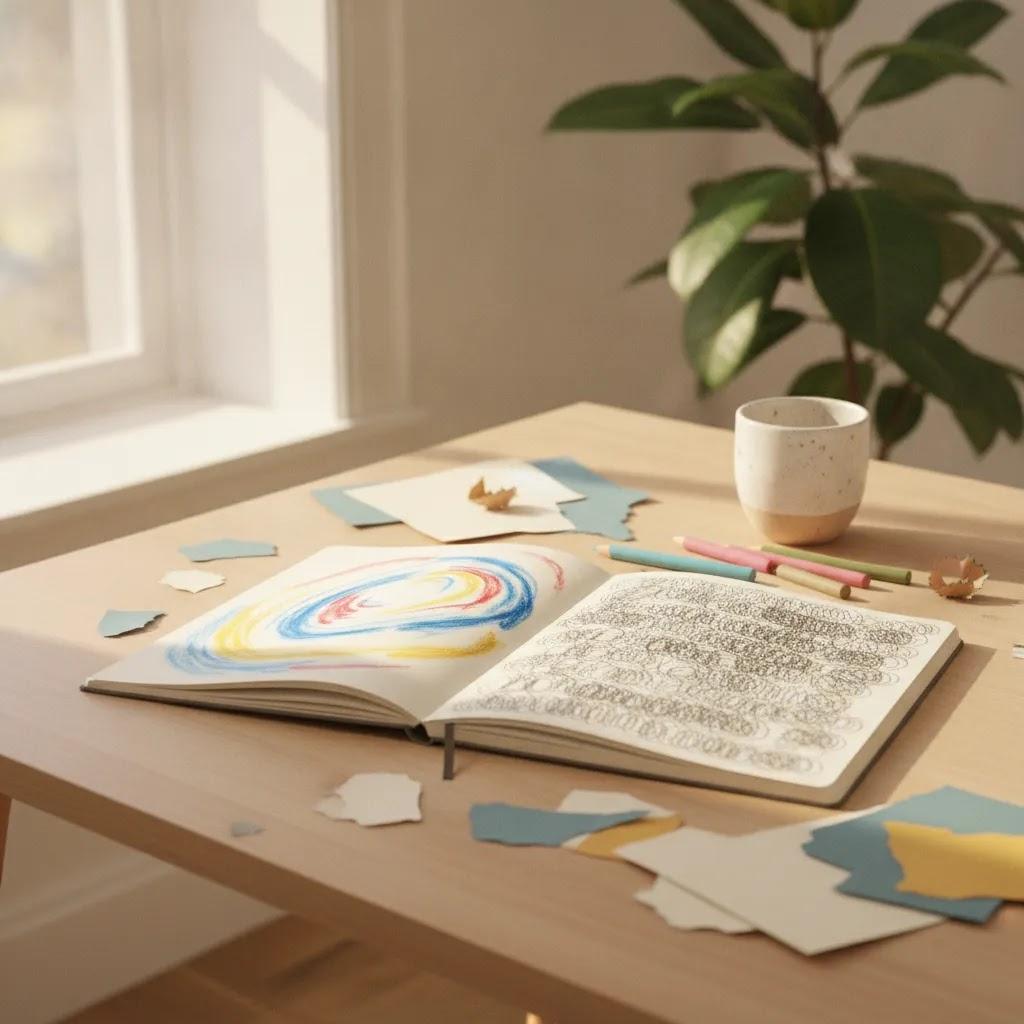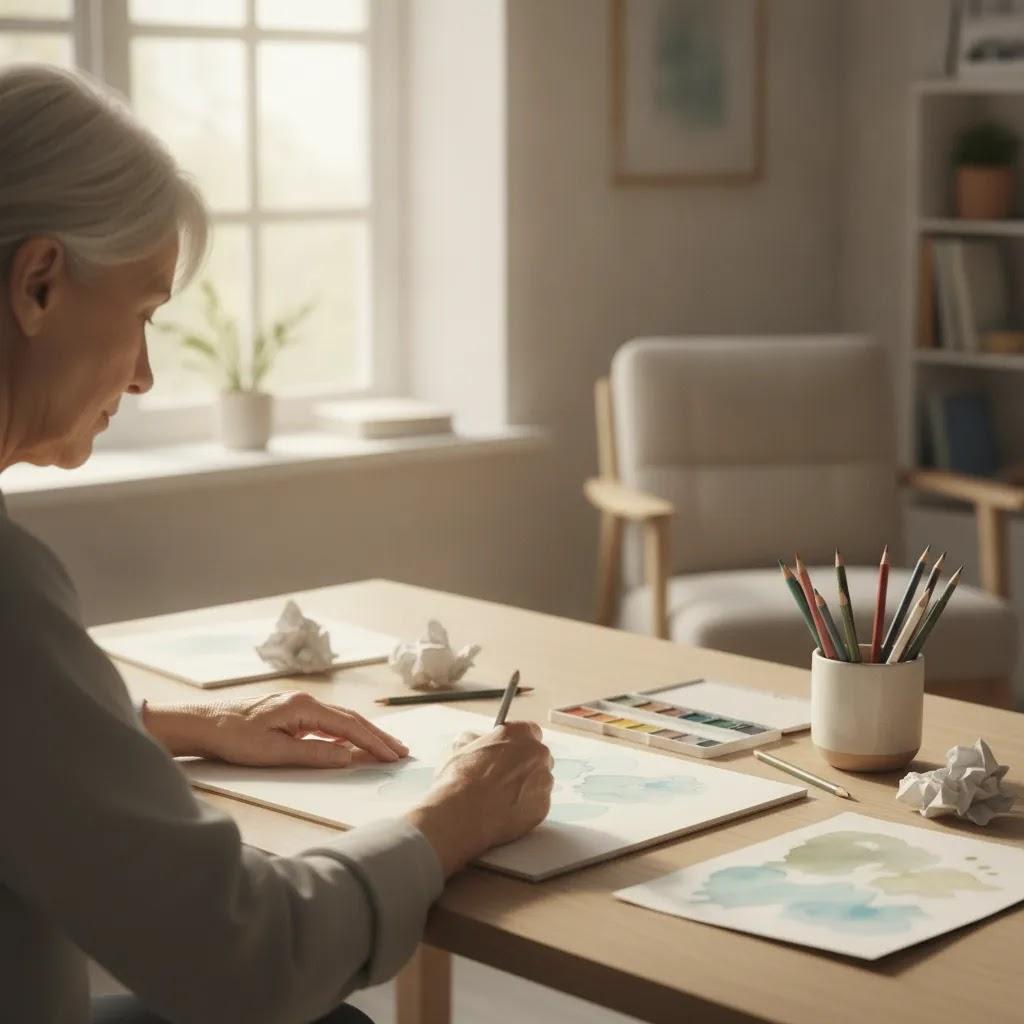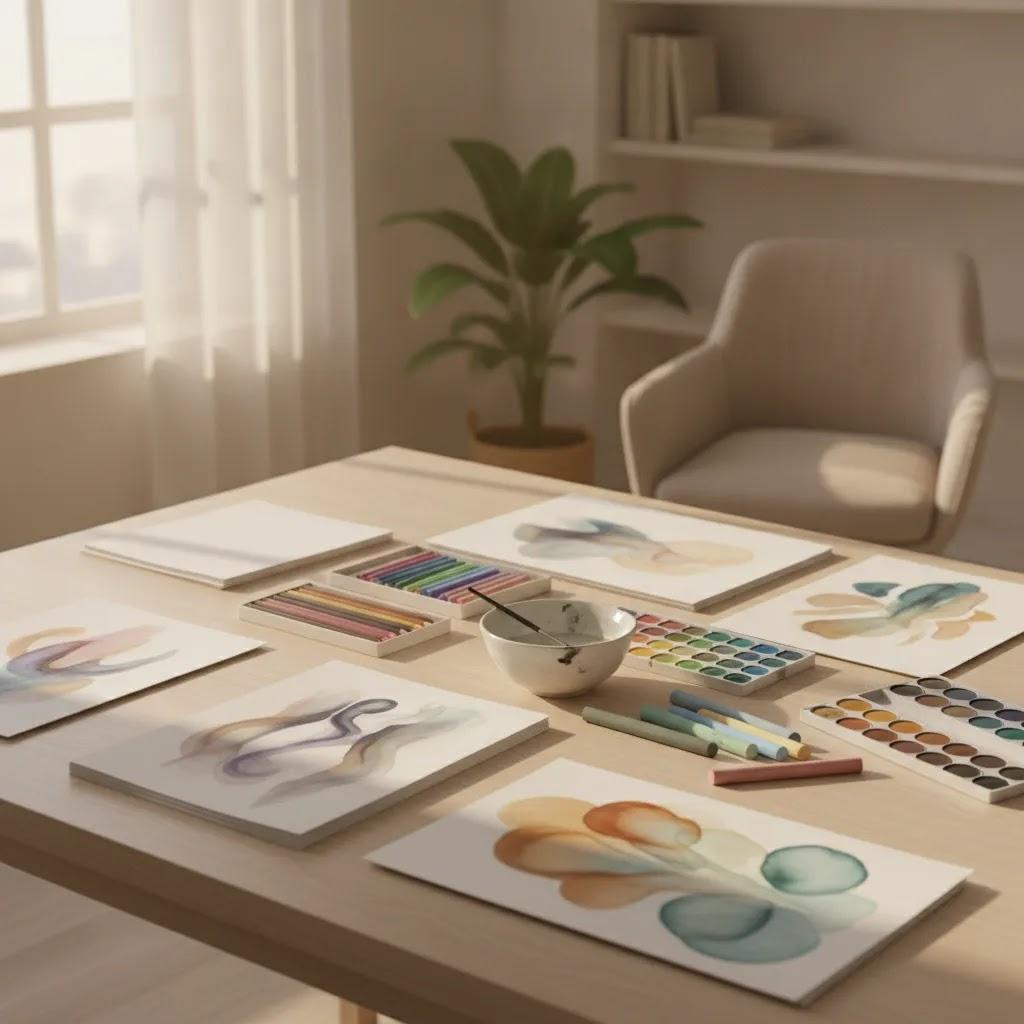
Picture sitting with a lump of clay or a blank page, letting your hands do what your words can't quite manage yet. That's the heart of art therapy, a gentle, guided practice that uses painting, drawing, collage, or clay to help you notice what you're feeling and give it some shape. Nobody's grading the artwork here. What matters is the quiet act of exploring, feeling safe, and finding meaning in whatever emerges.
It is not the same as taking an art class, making decorative crafts, or being “good at art.” The goal is not to produce something impressive. Instead, you use images, color, shape, and process to explore inner experience in an intentional way.
That can matter when stress sits heavily in the body or talking directly feels like too much. If you want a broader overview of the field, this article focuses on the core definition, where it came from, and the differences people most often misunderstand.
What is art therapy? The core definition
In plain language, it is a guided therapeutic use of drawing, painting, collage, clay, or other visual media to help a person express, process, and better understand thoughts and feelings.
Professional bodies generally describe it as a form of psychotherapy or therapeutic support delivered by a trained art therapist. That professional context matters. The materials may look familiar, but the purpose differs from ordinary art-making. Instead of technique or performance, the work centers on emotional safety, meaning, and reflection.
- It uses creative process as part of emotional exploration
- It does not require artistic skill
- It often helps when direct verbal expression feels difficult
- It may include reflection on images, symbols, and patterns
- Therapists usually pace it carefully to support safety and choice
If you are also wondering whether it is a good fit in practical terms, the guide on whether the cost feels worth it covers the value side of the question.
Who this approach may be for
People often connect this approach with children, but it is not limited to one age group. Therapists use it with teens, adults, older adults, families, and groups across different settings. Although the structure can shift, the central idea stays the same: creative work supports expression, reflection, and communication.
People may look into it for many reasons. Sometimes stress feels hard to name. Sometimes grief, burnout, relationship strain, or a major life transition sits in the background. In other cases, you may sense that something is happening inside, yet long verbal explanations feel like too much.
That does not mean it fits everyone equally well. Some people connect quickly with images and materials. Others prefer speaking, movement, or another form of support. If you are exploring emotional support more broadly, you may also find these emotional regulation skills helpful.
Importantly, severe distress, safety concerns, or urgent situations may call for more immediate licensed care. In those cases, checking a provider’s credentials and local regulatory standards matters even more.
| Area | What the article says |
|---|---|
| Age groups | Children, teens, adults, older adults, families, and groups |
| Common reasons people explore it | Stress, grief, burnout, relationship strain, major life transitions, or feeling emotionally blocked |
| When extra caution matters | Severe distress, safety concerns, or situations that feel urgent |
Origins of art therapy
Art therapy grew from a mix of psychology, psychiatry, education, studio art, and rehabilitation work. The field became more formal in the mid-20th century. At that point, clinicians and artists increasingly recognized that image-making could reveal feelings, conflicts, memories, and strengths that were hard to explain out loud.
Over time, it developed into a distinct profession with training standards, ethics, and clinical methods. Different regions regulate it differently, so titles and credentialing may vary. In some places, the profession connects closely to psychotherapy. In others, registration and practice rules depend on local systems.
Curious how these standards look outside your own backyard? The American Art Therapy Association lays out a broad, general picture, while the British Association of Art Therapists shares how the profession takes shape across the UK. And if you're hoping to understand what this might look like closer to home in Singapore, art therapy singapore is a gentle place to start exploring that regional path.
Its roots are broad, but one idea has stayed constant: an image can carry meaning before a person is ready to explain that meaning fully.
How art therapy works in practice

Sessions usually combine making and reflecting. A session might include a prompt, a period of drawing or building, and then a gentle discussion about what showed up. The therapist does not simply tell you what your drawing “means.” Instead, ethical practice stays collaborative.
1. Externalizing inner experience in art therapy
Feelings can become easier to notice when they move outside the body and onto paper or into an object. For example, a storm, wall, maze, or color field may express something that has not found words yet.
2. Engaging the body and senses
Mark-making is physical. Pressure, rhythm, movement, texture, and repetition may help some people settle enough to reflect. As a result, this approach can feel more reachable than purely talk-based exercises for certain people.
3. Using symbols instead of direct explanation
Symbolic language can create a little distance from overwhelming material. A person may be able to draw a cracked bridge or an empty room before describing grief, fear, or conflict directly.
4. Reflecting without forced interpretation
A therapist may ask open questions such as what stands out, what feels most intense, or what the image seems to need next. The aim is to support your own meaning-making rather than impose a fixed answer.
Common materials in art therapy and why they matter
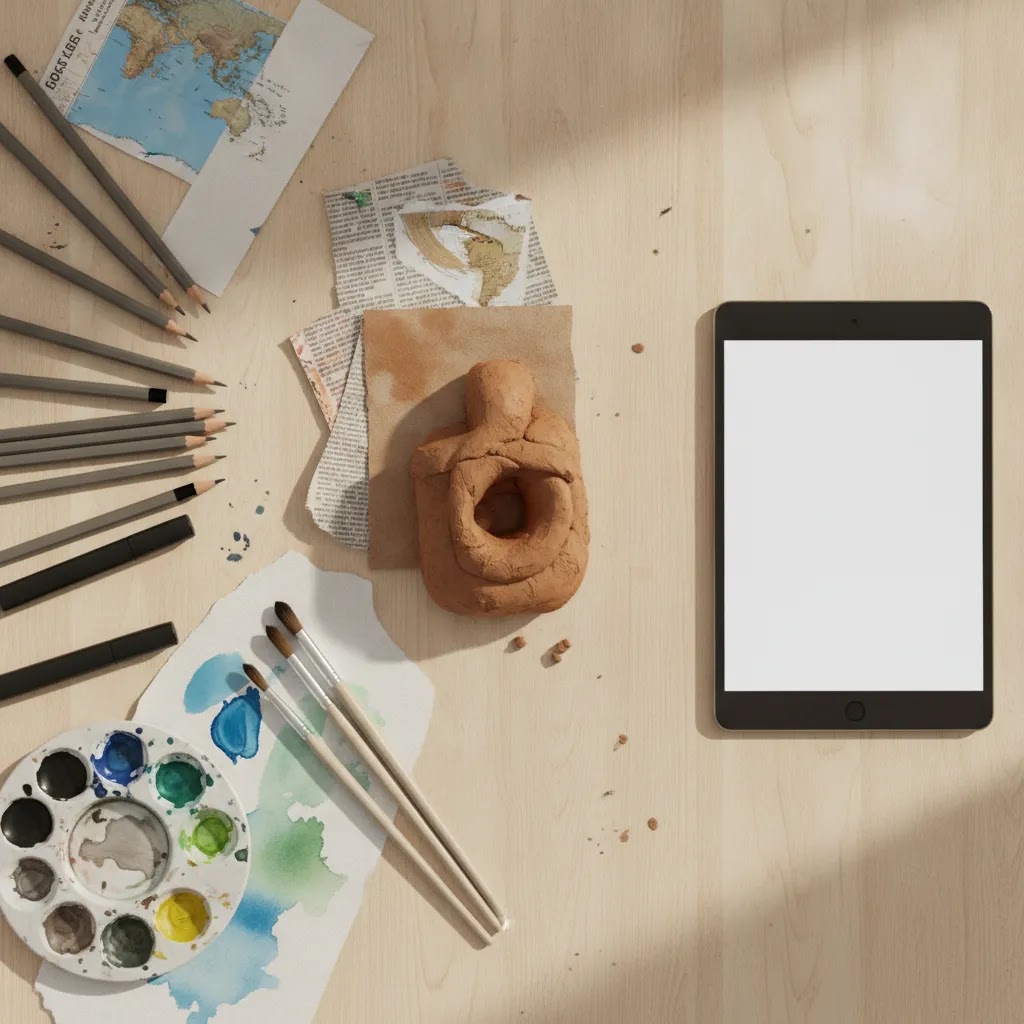
Many sessions use the same materials people use in everyday creative work, but each medium can shape the experience differently. Drawing tools such as pencils, pens, or pastels can feel more structured and easier to control. Paint may feel looser, more fluid, or more emotionally open.
Collage can help when starting from a blank page feels too hard. Selecting and arranging existing images may create enough distance to reflect. Clay adds touch, pressure, and form in a very direct way. Some people find that grounding. Others find it intense.
There is no universal best material. Instead, the choice often depends on comfort, pace, and what kind of expression feels possible that day. Some approaches use familiar, contained tools to reduce pressure. Others invite more sensory or spontaneous materials when that feels appropriate and safe.
The point is not artistic quality. Materials are usually chosen for emotional fit, accessibility, and process. Similarly, the same person may respond differently to paper, paint, or clay, and a trained therapist may pay attention to that difference as part of the work.
Why art therapy is not the same as an art class
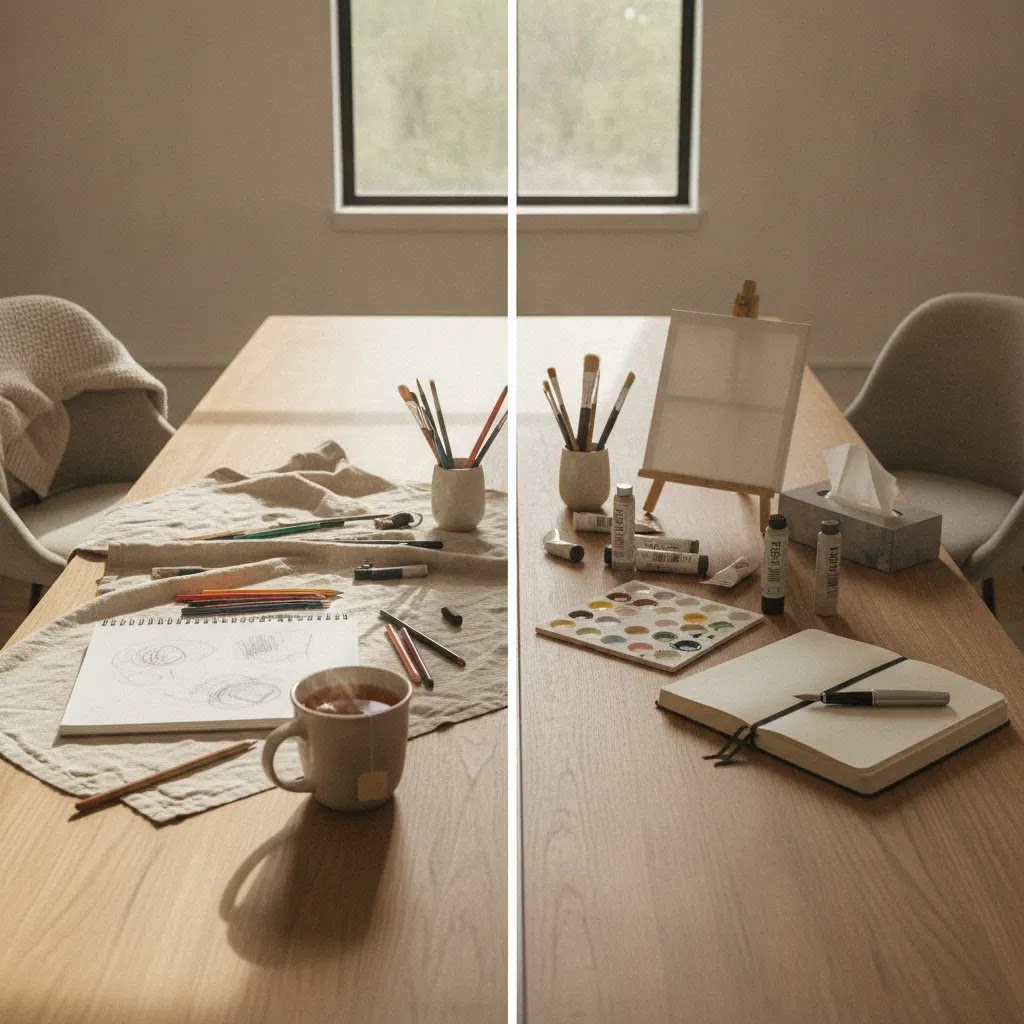
This is the confusion that comes up most often. Art classes teach artistic skills, methods, materials, observation, and technique. By contrast, therapy uses materials in service of emotional exploration.
In an art class, you may be evaluated on composition, accuracy, creativity, or craft. In therapy, the central questions differ. What did the process feel like? What showed up? What changed while you were making it? What does the image help you notice now?
That means a person who feels “bad at art” can still be well suited to this kind of support. In fact, less training sometimes means less pressure to perform. If you are comparing related fields, expressive arts therapy vs art therapy explains another distinction people often mix up.
- Art class: skill-building, instruction, technique, finished result
- Art therapy: emotional process, reflection, symbolism, therapeutic relationship
- Casual art activity: self-directed creativity, relaxation, hobby value
Art as therapy vs professional art therapy
Creative activity can absolutely support emotional well-being without becoming formal therapy. Sketching after a long day, painting for calm, or making a collage to sort through a transition may all be meaningful forms of self-support. People sometimes describe that as art being therapeutic, and that can be true.
Professional practice is more specific. It involves a trained therapist, a therapeutic relationship, emotional boundaries, and guided reflection within a setting designed to hold difficult material carefully. The materials might be identical in both cases, but the difference lies in therapeutic intention, containment, and the way the process is supported over time.
This distinction helps avoid two common mistakes. One is dismissing hobby art because it is “not real therapy,” even though it may still be valuable. The other is calling any relaxing creative activity art therapy, which can blur what professional training and ethical responsibility actually add. Both can matter, but they are not the same kind of support.
Why this difference matters
If you mistake therapy for a regular art lesson, you may expect the wrong thing and miss what makes it useful. The value is not usually in producing “better art.” Instead, it may lie in making emotion feel more observable, more containable, or more shareable.
This distinction also helps parents, caregivers, and professionals choose support more carefully. A creative workshop, coloring app, studio lesson, and therapy session can all be meaningful, but they serve different purposes. A broader look at the Art Therapy Fundamentals category can help place this topic in context.
For people who shut down under pressure, struggle with journaling, or feel flooded by direct conversation, this approach may offer another doorway. It is not magic, and it is not the right fit for every situation. Still, the process can feel especially relevant when inner experience shows up more easily as image, sensation, or metaphor than as tidy explanation.
Meanwhile, if you are weighing it against another talk-based option, art therapy vs counselling may help you compare the two more clearly.
Helpful terms to know
Art therapist: A trained professional who uses art media within a therapeutic relationship. Titles and regulation vary by location.
Externalization: Putting feelings or experiences outside yourself in visual form so they can be observed more safely.
Symbolic expression: Communicating through images, metaphors, and visual forms rather than only direct language.
Creative process: The act of making, choosing, shaping, and responding to materials. In this work, the process often matters as much as the final image.
If you are exploring local services and training pathways, the Art Therapy Singapore category may be useful too.
Pros and Cons
Strengths
- May help people express feelings that are hard to say directly
- Does not depend on artistic talent or polished technique
- Can combine sensory regulation with reflection
- Often gives concrete form to abstract emotions and memories
- Can feel gentler than purely verbal exploration for some people
Considerations
- The term is often misunderstood and confused with classes or crafts
- Training, licensing, and regulation vary by country and region
- Not every person feels comfortable using visual expression
- Severe distress may require more intensive or immediate professional support
Frequently Asked Questions
Do you need to be good at art for art therapy?
Not really, and that's actually kind of the whole point. What matters in art therapy isn't a steady hand or an eye for proportion, it's the act of getting something out of your head and onto paper, then sitting with what you notice. Plenty of people who'd never call themselves "artistic" still find real comfort here, because a scribble, a smudge of color, or a rough shape can hold just as much meaning as a careful drawing. You don't need talent for this to work.
Is art therapy the same as coloring or crafting?
Not quite, actually. There's real value in picking up a coloring book or trying a craft project just for the calm it brings, but that's different from art therapy, which involves a clear therapeutic purpose, a guiding hand for reflection, and typically a trained professional walking alongside you. The supplies might look the same, but what they're used for isn't. One is simply about making something. The other uses the making as a doorway into feeling and understanding your emotions.
What happens in a typical art therapy session?
Picture a typical hour: you settle in, maybe explore a small theme together, then spend time actually making something before talking through what surfaced. The shape shifts depending on where you are and who's guiding you, some sessions lean structured, others stay loose and open. Throughout, your therapist gently points toward feelings or patterns you might've missed, never pushing an interpretation on you. What stays constant is the underlying rhythm: room to choose, room to feel safe, room to stay curious.
How is art therapy different from an art teacher's role?
A painting class might teach you how to blend colors or hold a brush with more control. Sitting with an art therapist looks different, the focus shifts to what's stirring underneath as you create, and what the marks on the page might be quietly telling you. Nobody's grading your technique here. What matters instead is how honestly you're able to express something, how much space you have to reflect, and whether the process itself feels like it's holding you with care.
Can art therapy help if talking feels difficult?
It may. One reason people seek art therapy is that images can sometimes hold what speech cannot yet carry. For people who freeze, overthink, or struggle to identify feelings, visual expression may offer a gentler starting point. That does not guarantee fit, but it can reduce pressure around verbal explanation.
Is art therapy only for children?
No. It is used with children, teens, adults, older adults, families, and groups. The materials and prompts may change across age groups, but the basic idea remains the same: use visual expression and therapeutic reflection to support understanding, communication, and emotional processing.
What is the difference between art therapy and EMDR?
Sitting down with paint or clay to quietly process your feelings is a very different experience than sitting with a trained clinician who guides you through structured recall and bilateral stimulation to work through a painful memory. That second path is EMDR, a distinct method with its own training and framework, while art therapy leans on creative expression as a gentle route to reflection. Some therapists happen to be trained in both, but that doesn't make them interchangeable, each has its own purpose. What matters most is finding the approach that fits your needs, your comfort, and whatever your licensed provider feels will genuinely help you.
Who might benefit from art therapy?
It may be helpful for children, teens, adults, older adults, families, or groups, especially when feelings are difficult to explain directly. People sometimes explore it during stress, grief, major transitions, emotional numbness, or periods when talking feels too exposing. That said, fit varies. If someone feels unsafe, overwhelmed, or in acute distress, more immediate licensed support may be the better first step.
Is art therapy the same as art psychotherapy?
Sometimes the terms overlap, but usage depends on region and professional system. In some places, art therapy is understood as a form of psychotherapy using art media. In others, “art psychotherapy” is the more formal title. The safest approach is to check how the provider is trained, what their scope of practice is, and which regulatory or credentialing body applies in that location.
Why do art therapists use different materials?
Different materials may invite different kinds of experience. Pencil and pen can feel more controlled, paint may feel freer, collage can make starting easier, and clay brings in touch and pressure. A therapist may choose materials based on comfort, pacing, sensory tolerance, and what seems emotionally workable, not because one medium is automatically better than another.
Is art therapy a regulated profession?
Rules around this can shift quite a bit depending on where you live, some places treat "art therapist" as a protected, registered title, while elsewhere the guidelines are much looser. If you're considering working with someone, it's worth taking a gentle, curious approach: ask about their training, check whether there's a local body they're credentialed through, and get a sense of what falls within their scope of practice. A little groundwork upfront can help you feel more at ease moving forward.
Where would you usually encounter art therapy?
Picture a hospital room, a school counselor's office, a community center, or even an app on someone's phone, art therapy shows up in all sorts of places, adapting to fit each one. What stays constant, no matter the setting, is the intention behind it: the art-making itself is being used with care, as a form of healing, not simply taught as a skill or technique.
Key Takeaways
- Art therapy uses art-making to support emotional expression and reflection.
- Its roots lie in both creative practice and therapeutic care.
- It differs from art classes because the aim is not artistic performance.
- People do not need art skills to take part meaningfully.
- Local credentials and regulation may vary, so provider background matters.
Conclusion
Art therapy is easiest to understand when you separate the materials from the purpose. Yes, it may involve paper, paint, collage, or clay. But the defining feature is not the medium. It is the therapeutic use of that medium to help a person express, observe, and work with inner experience. That is why it is not just an art class with feelings added on top. If you want to keep exploring gently, the broader Art Therapy Fundamentals resources can help you place this definition in context and decide which questions you want to follow next.
A quick, gentle note before you read on: nothing here is meant to stand in for medical, mental health, or legal guidance, think of it as a companion to your own journey, not a professional opinion. Creative and art-based practices can be genuinely comforting and supportive, but they work differently for everyone, and they're never a stand-in for urgent or emergency care. Titles, training, and licensing for practitioners differ from place to place, so it's worth double-checking credentials with your local regulatory bodies before diving in. And if things ever feel heavy, unsafe, or like more than you can hold alone, please reach out right away, to emergency services, a crisis line, or a licensed professional who can offer real-time support.