Stress management means noticing where pressure is coming from, how it affects your body and mind, and choosing small responses that actually fit the situation. It works best when you sort stress by life area instead of treating it like one blurry feeling.
Maybe your stress is spread across work, sleep, relationships, money, health, and the quiet expectations you carry every day. This guide shows you how to sort that load in a practical, beginner-friendly way. You will learn what stress management really means, why it helps, and how to build a steadier response instead of relying on random coping in the moment. If you want a broader starting point, the Anxiety Stress & Emotional Wellness hub can help you explore related topics at your own pace.
What stress management actually means
Stress management is the process of noticing what is straining you, understanding how it affects your body and mind, and responding in ways that lower overload or improve your ability to cope. It is not about feeling peaceful all the time. Instead, it is about reducing unnecessary pressure, recovering more reliably, and responding with more intention.
For beginners, this matters because stress can feel vague. You may just know that you are more irritable, more tired, less patient, or less able to focus. In many cases, the first useful step is not a fancy technique. It is naming where the pressure is coming from.
If you want more background on what stress can look like in daily life, it helps to look at both mental and physical patterns together. For example, tight shoulders, racing thoughts, forgetfulness, avoidance, conflict at home, and poor sleep may all belong to the same picture.
The stress response in your body (and why it can feel “out of nowhere”)
Stress can feel sudden, even when nothing “big” just happened. Part of the reason is that your body is built to respond fast to perceived pressure. When something feels demanding, uncertain, or unsafe, your system may shift into a protective mode often described as fight, flight, or freeze. You might feel keyed up and restless, ready to argue, ready to escape, or suddenly blank and shut down.
How stress management explained through the body can help
This response is not only mental. It can show up as physical signals that are easy to misread as random: headaches, jaw clenching, tight shoulders, stomach discomfort, appetite changes, sleep disruption, a racing heartbeat, or trouble concentrating. Some people notice more irritation and impatience. Meanwhile, others notice numbness, procrastination, or a strong urge to scroll and disappear for a while. None of these automatically mean something is “wrong” with you. They may be your body trying to manage load.
Short-term stress is often your system doing its job. It helps you meet a deadline, drive carefully in bad weather, or respond to an urgent problem. Prolonged stress is different. If the pressure keeps coming and recovery keeps getting delayed, “pushing through” may start to backfire. Over time, you might feel more tired but also more wired, more reactive over small things, or more easily overwhelmed by tasks that used to feel basic. Even enjoyable activities can start to feel like effort.
Early signs to notice for stress management
If you want to catch stress earlier, this quick checklist can help. You can scan it once a day for a week and see which signals show up first for you.
- Physical: tight neck or shoulders, headaches, stomach discomfort, clenched jaw, shallow breathing, restless energy, fatigue that does not match your day
- Emotional: irritability, feeling teary or fragile, numbness, dread, feeling “on edge,” low patience
- Cognitive: racing thoughts, scattered focus, forgetfulness, looping worries, difficulty making simple decisions
- Behavior: avoidance, procrastination, overworking, withdrawing from people, doomscrolling, snapping at others, skipping meals, staying up later than you meant to
Noticing early signs does not solve the source of stress by itself. However, it gives you a better chance to respond before your body has to escalate to get your attention.
For a medical overview of how stress affects the body, you can also review the National Institute of Mental Health stress fact sheet.
Why a life-area approach helps

Many people try to manage stress with isolated tips. They take a walk, breathe deeply, or promise themselves a better routine next week. Those tools can help. But if your stress is being fed by five different areas at once, one small action may not be enough.
A systematic approach helps you separate your stress load into categories. That makes it easier to see what needs fast relief, what needs boundaries, what needs problem-solving, and what may need support from someone else.
This is also where stress and anxiety can overlap. If your mind keeps scanning for what might go wrong, or your body feels constantly on edge, you may also want to read about how to reduce anxiety. Stress management and anxiety support often work best together, but they are not always the same task.
Stress vs burnout: how to tell when it’s more than a busy week
Stress is common, and a busy week can make anyone feel stretched. Burnout tends to feel different. It is often less like “I have too much to do” and more like “I do not have enough left.” People often describe emotional exhaustion, lower motivation, feeling detached or cynical, and a drop in performance or confidence even when they are still trying.
When stress management needs more than quick relief
Stress can come and go with circumstances. Burnout is more likely when high demands keep stacking while recovery stays missing. Common drivers include workload overload, unclear expectations, not enough control over your time, and little space to rest without consequences. If your system only gets to recover after you “earn it,” recovery can get postponed for weeks or months. That delay can make even small stressors feel heavy.
If you suspect burnout, decision support matters more than perfect coping tips. These steps can help you choose a safer next move:
- Scale back where you can: reduce nonessential commitments, lower your standards on low-stakes tasks, and protect basic needs like sleep and meals. If you keep adding relief tools without reducing load, the plan may not hold.
- Clarify expectations: if work or school is a driver, it may help to ask what is truly urgent, what can be delayed, and what “good enough” looks like right now. Unclear expectations can be a hidden stress multiplier.
- Talk to a manager or instructor if relevant: this might look like discussing workload, deadlines, role priorities, or a temporary adjustment. If a request feels hard, you can keep it specific: what is currently unsustainable, what change would help, and what you can still commit to.
- Seek professional support if functioning is impacted: if stress or exhaustion is persistent, worsening, or affecting your ability to work, study, care for yourself, or stay safe, it is reasonable to talk with a licensed healthcare or mental health professional. If you have urgent symptoms such as chest pain, trouble breathing, or thoughts of self-harm, seek emergency help immediately.
Stress management benefits when you catch burnout early
Burnout is not a personal weakness. Instead, it is often a signal that the inputs and outputs in your life are out of balance for too long, and your body is asking for a different plan.
For workplace patterns, the World Health Organization mental health at work guidance offers a helpful overview.
How to assess stress across major life areas
Instead of asking, “Am I stressed?” try asking, “Where is stress taking up the most space right now?” That question is usually easier to answer honestly.
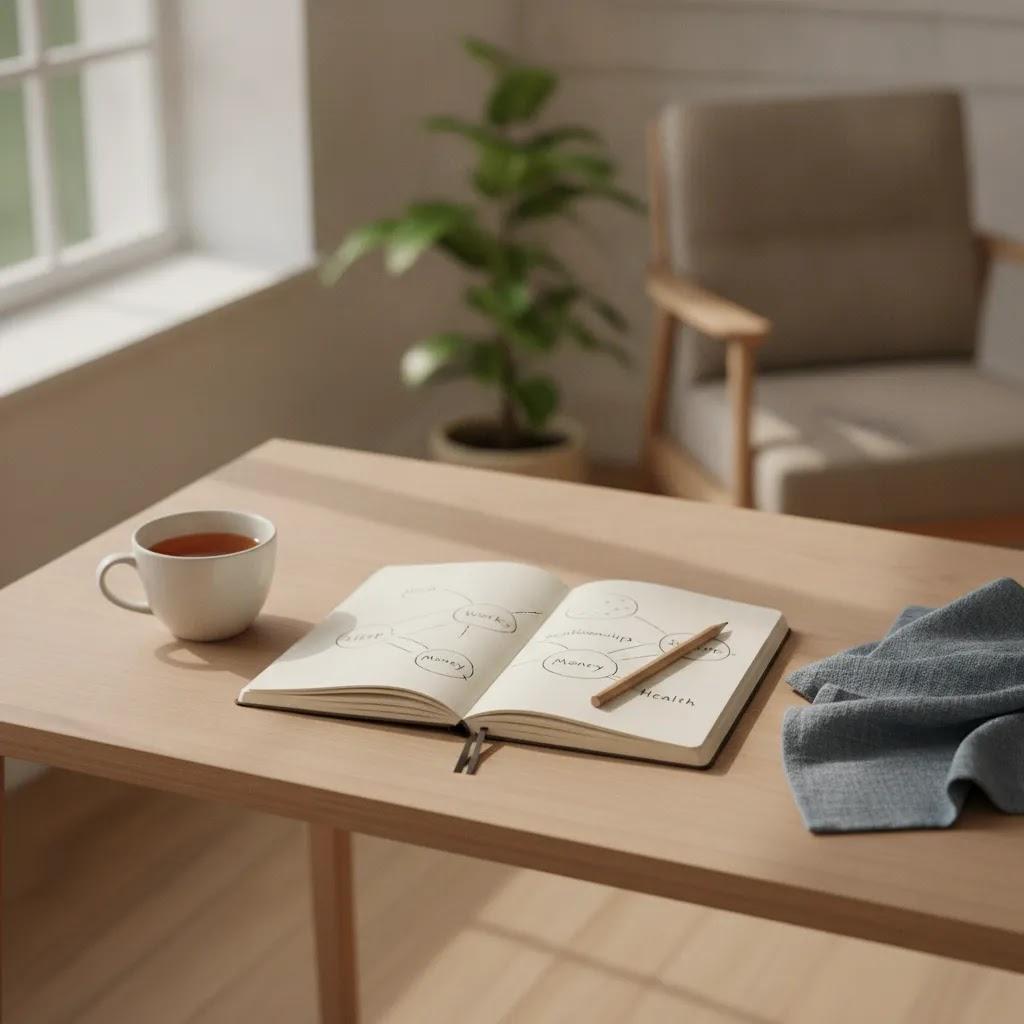
You can review six common life areas:
- Work or school: workload, deadlines, unclear expectations, performance pressure, long hours
- Health and body: sleep, pain, illness, energy, movement, overstimulation
- Relationships: conflict, loneliness, caregiving strain, family tension, emotional labor
- Money and logistics: bills, debt, commuting, housing, scheduling, admin overload
- Home and environment: noise, clutter, lack of privacy, unsafe or tense surroundings
- Inner pressure: perfectionism, self-criticism, guilt, overthinking, fear of disappointing others
Give each area a simple rating from 0 to 10 for current pressure. Then ask two follow-up questions:
- Is this a short-term spike or an ongoing drain?
- Can I soothe it, solve part of it, or do I need support with it?
This kind of sorting turns a foggy stress state into something more manageable. You stop treating every problem like the same problem.
| Life area | Examples named in this guide | Questions to ask |
|---|---|---|
| Work or school | workload, deadlines, unclear expectations, performance pressure, long hours | Is this a short-term spike or an ongoing drain? |
| Health and body | sleep, pain, illness, energy, movement, overstimulation | Can I soothe it, solve part of it, or do I need support with it? |
| Relationships | conflict, loneliness, caregiving strain, family tension, emotional labor | Is this a short-term spike or an ongoing drain? |
| Money and logistics | bills, debt, commuting, housing, scheduling, admin overload | Can I soothe it, solve part of it, or do I need support with it? |
| Home and environment | noise, clutter, lack of privacy, unsafe or tense surroundings | Is this a short-term spike or an ongoing drain? |
| Inner pressure | perfectionism, self-criticism, guilt, overthinking, fear of disappointing others | Can I soothe it, solve part of it, or do I need support with it? |
Quick self-check: identify your biggest stress triggers and coping patterns

If you want a faster way to focus your plan, this 3 to 5 minute self-check can help you find the stress loop you are most likely stuck in right now. You do not need perfect answers. You are just trying to notice your most common pattern.
- Your top 3 stressors this week: What situations, tasks, or interactions have created the most pressure?
- Your top 3 stress signals: What shows up first, physically or emotionally? For example: tight chest, headaches, snapping at people, brain fog, feeling frozen.
- Your default coping moves: What do you typically do next? This can include helpful patterns like walking, talking to a friend, or going to bed earlier. It can also include less helpful patterns like avoidance, overworking, scrolling, picking fights, skipping meals, or using alcohol or substances to shut feelings down.
Next, map one common loop using this simple line:
Trigger → body signal → default reaction → alternative response
Example: “Unclear email from my boss → tight stomach and racing thoughts → overworking late and checking email nonstop → write down the actual question, ask for clarification, and set one check-in time for email.” The alternative response should be realistic. It does not need to be perfect. It just needs to interrupt the spiral a little.
If you notice red flags, it may be a sign to bring in extra support sooner rather than later. Red flags can include stress that is persistent or worsening, sleep disruption that does not improve, coping that relies on alcohol or substances, panic-like symptoms, or stress that is affecting your ability to function day to day. Support might look like talking to a licensed clinician, asking for accommodations, or involving trusted people who can help you reduce load.
How to build a workable stress plan
A realistic stress plan usually includes three layers: immediate relief, load reduction, and ongoing maintenance.
Immediate relief is for moments when your system is already overloaded. This may include slow breathing, a short walk, stretching, music, a sensory reset, or stepping away from stimulation for ten minutes. If you need ideas that work quickly, the guide to stress relief can help you choose a starting point. You can also compare stress management techniques if you want a more structured overview.
Load reduction is where real change often happens. This can mean cutting one commitment, asking for a deadline change, simplifying meals, reducing news intake, muting one draining group chat, or making one overdue appointment. These actions may look small, but they reduce the number of demands your body has to keep tracking.
Ongoing maintenance helps you recover before stress piles too high again. That may include a steadier sleep window, regular meals, movement you can sustain, short emotional check-ins, or a quiet practice that helps you process feelings without needing perfect words.
For some people, creative regulation can be part of that maintenance layer. If verbal tools feel tiring or inaccessible, you may be curious about options discussed in art therapy singapore, especially if drawing, color, or sensory structure feels easier than long reflection. If you want a broader foundation, what is art therapy can offer more context.
If you want a more detailed walk-through, how to manage stress goes deeper into turning this kind of thinking into a personal action plan. You may also find help in this guide to coping if you want to match tools to your stress pattern.
A gentle way to keep stress management practical

Stress management often breaks down when the tool asks too much from you during a hard moment. Long journaling, heavy analysis, or perfect routines can feel out of reach when you are already overloaded. DailyLemons is designed around a softer, lower-pressure approach to emotional exploration, especially for people who connect better with guided creativity, sensory structure, or nonverbal reflection.
If words feel far away, you might explore the broader Anxiety, Stress & Emotional Wellness category or related support in Nervous System & Body Healing. You can start small and keep only what feels useful.
Pros and Cons
Strengths
- A life-area approach helps you identify where stress is actually coming from instead of treating it as one vague feeling.
- It supports better decisions because each stressor may need a different kind of response.
- It works for beginners because the first step is simple observation, not complicated analysis.
- It can reduce shame by showing that overload is often linked to accumulated demands, not personal failure.
- It creates a more realistic plan by balancing relief tools with practical changes and recovery habits.
Considerations
- It takes honesty to notice that some stressors come from patterns you may need to change, not just endure.
- Some sources of stress, such as financial strain or caregiving demands, may not be quickly fixable.
- A self-guided approach may not be enough if stress is severe, persistent, or affecting daily functioning in major ways.
- People in acute overwhelm may need immediate grounding before they can sort stress by category.
Frequently Asked Questions
What is stress management in simple terms?
Stress management is the practice of recognizing pressure, understanding how it affects you, and responding in ways that reduce overload or improve coping. That can include quick calming tools, better routines, practical problem-solving, boundaries, and support from others. The goal is not constant calm. It is more steadiness and less strain.
Why should I manage stress by life area?
Because stress rarely comes from only one place. Work pressure, sleep loss, money worries, conflict, and inner criticism can stack together. Sorting stress by life area helps you see what is urgent, what is chronic, and what kind of response fits each source. That usually makes your plan more realistic and less overwhelming.
What are examples of stress management methods?
Examples include breathing exercises, walking, better sleep habits, reducing commitments, time boundaries, asking for help, limiting overstimulation, meal planning, emotional check-ins, and creative expression. Different methods help in different ways. Some calm your body quickly, while others reduce the conditions that keep stress repeating.
What are the benefits of stress management?
Good stress management may help you think more clearly, sleep more consistently, react less impulsively, and recover faster after hard moments. It may also improve relationships, focus, and your sense of control. Benefits often build gradually, especially when you use small supports consistently instead of waiting for a breaking point.
Is stress management the same as anxiety treatment?
No. Stress management is broader and often self-directed. It focuses on reducing load and improving coping. Anxiety may overlap with stress, but it can involve persistent worry, fear, or body tension that may need more targeted support. The tools can overlap, though the underlying pattern is not always identical.
What is the best stress management technique?
There is no single best technique for everyone. The right option depends on whether your stress is acute or ongoing, mental or physical, and linked to workload, conflict, uncertainty, overstimulation, or another source. A short calming tool may help in the moment, but chronic stress often also needs practical changes.
How do beginners start stress management?
Start by noticing patterns, not by trying to fix everything at once. Rate stress across major life areas, choose one area causing the most strain, and add one support for this week only. That could be a ten-minute walk after work, a bedtime boundary, or asking for help with one recurring task.
Can stress management help if I do not like meditation or journaling?
Yes. Stress management is much broader than meditation or writing. Some people do better with movement, sensory grounding, structured routines, visual planning, music, or guided creative practices. If words are tiring, choosing a more body-based or nonverbal option may feel easier and more sustainable.
What are 7 ways to manage stress?
Seven practical ways to manage stress include: identifying your top stressors by life area, using a quick body-calming tool (like slower breathing or a short walk), reducing one avoidable demand, setting one boundary around time or communication, protecting basic recovery (sleep, meals, downtime), talking to someone supportive, and choosing one maintenance habit you can repeat weekly. The best mix depends on whether your stress needs relief, load reduction, or both.
What are coping skills for stress?
Coping skills are the actions you use to respond to stress in the moment or to recover after it. They can be body-based (movement, stretching, sensory breaks), mental (naming what is happening, writing down the next step), practical (breaking a task into smaller parts, asking for help), and relational (connecting with someone safe). Coping skills work best when they match your energy and the type of stress you are dealing with.
What are the 5 C’s of stress management?
Different sources define the “5 C’s” in different ways, so you may see variations. A practical version is: Clarity (name the stressor), Control (identify what you can influence), Calm (use a short regulation tool), Connections (get support instead of carrying it alone), and Consistency (repeat small protective habits). If a method feels like it adds pressure, it may not be the right “C” for this season of your life.
What are the 5 R’s of stress management?
The “5 R’s” also vary by source, but a useful version is: Recognize (notice early signs), Reduce (lower avoidable demands), Recover (protect rest and refueling), Reframe (challenge unhelpful pressure stories like perfectionism), and Reach out (ask for practical or emotional support). If stress is persistent or worsening, reaching out to a licensed professional can be an appropriate step.
Key Takeaways
- Stress management works better when you sort stress by life area instead of treating it as one vague problem.
- A useful plan usually includes immediate relief, load reduction, and ongoing maintenance.
- The best method depends on the source and pattern of stress, not just the intensity of the moment.
- Beginners often benefit most from small, repeatable actions rather than ambitious routines.
- If words feel hard, sensory or creative approaches may be a gentler entry point.
Conclusion
Stress management becomes more workable when you stop asking yourself to solve your whole life in one mood. A calmer, more systematic approach starts with seeing where the pressure lives, then matching each area with the kind of support it actually needs. Some stress asks for quick relief. Some asks for fewer demands. Some asks for rest, repair, or a different way to process what you are carrying.
If you want to keep going, start with one life area, not all of them. Then follow the thread into the related guides above, and keep your next step small enough to do on a real day, not an ideal one.
This article is for educational purposes only and does not provide medical, mental health, legal, or financial advice. Stress management tools may help with self-awareness and day-to-day coping, but they are not a substitute for care from a qualified professional. If distress is severe, persistent, worsening, or affecting your safety or ability to function, seek support from a licensed clinician or appropriate local emergency service right away. If you have urgent symptoms such as chest pain, trouble breathing, or thoughts of self-harm, seek emergency help immediately.