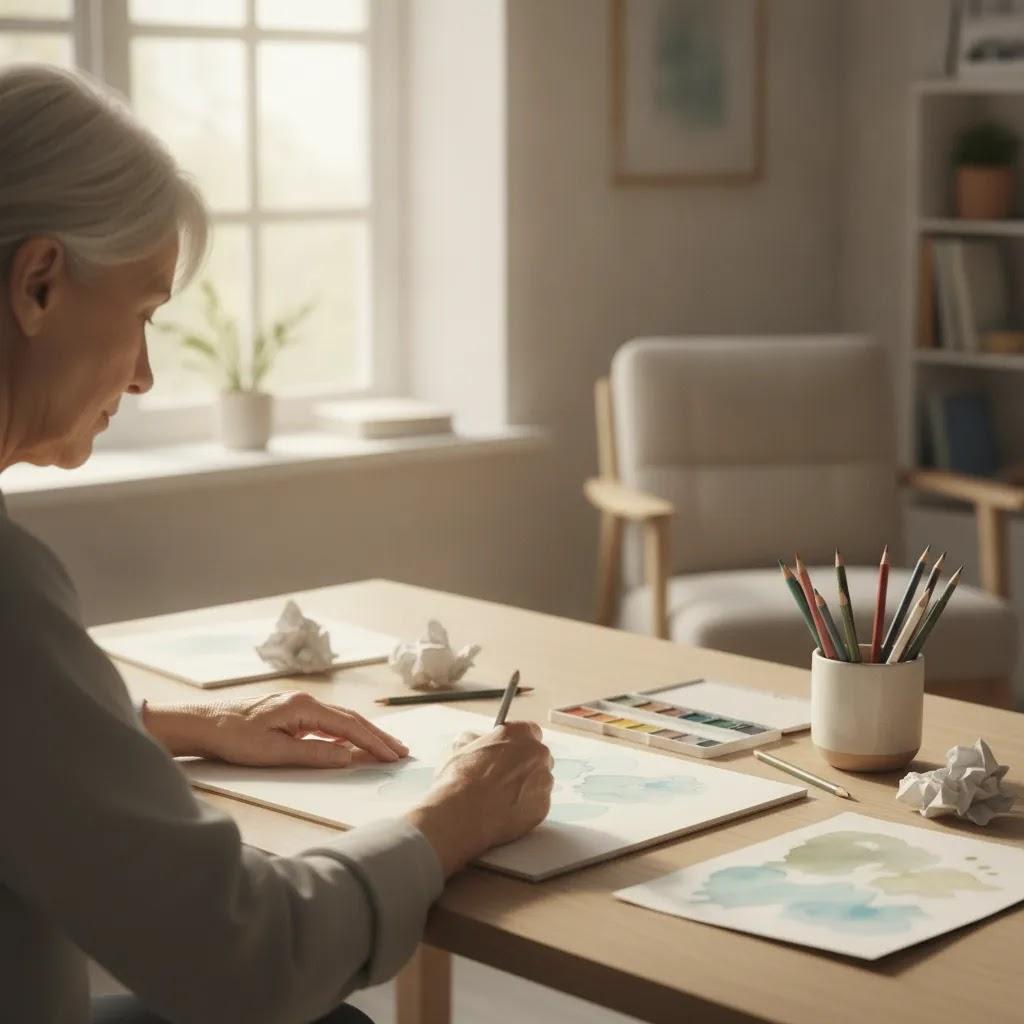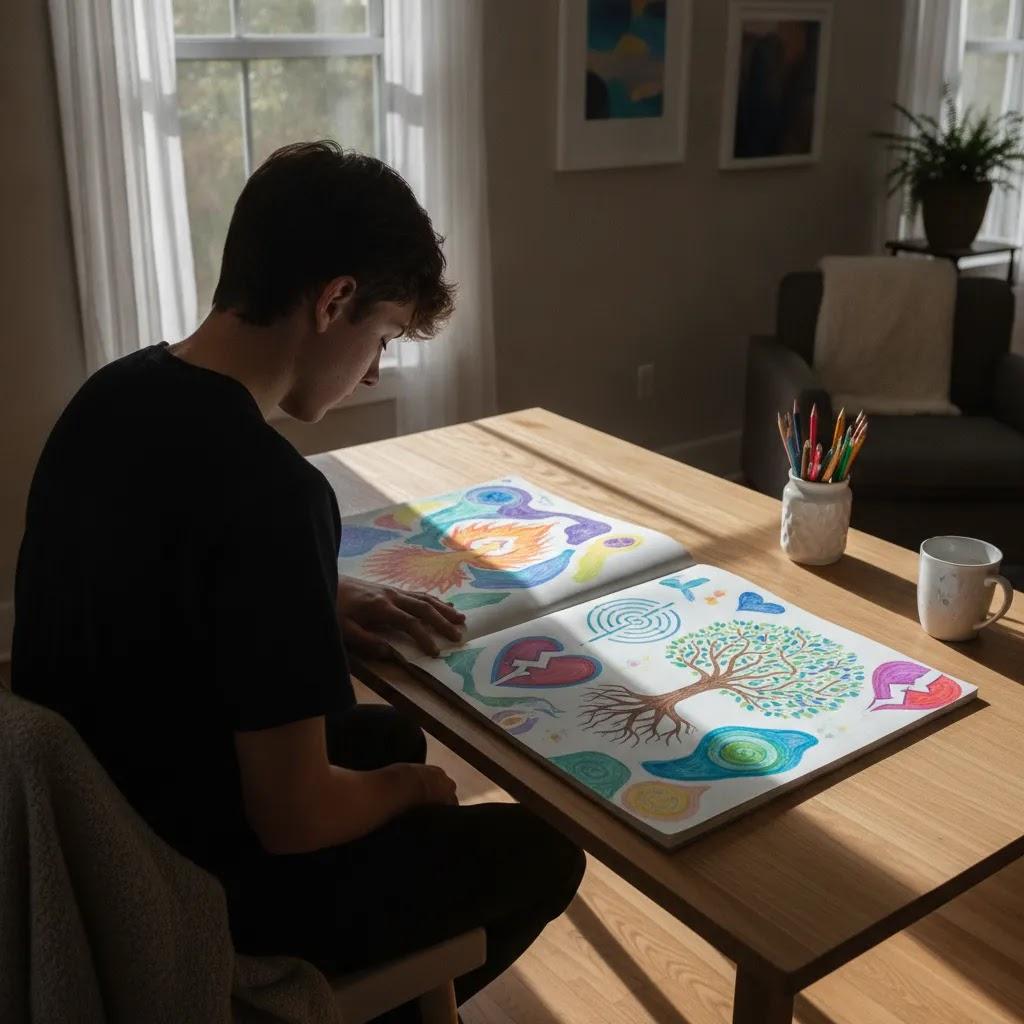
The benefits of art therapy for teens often include stronger self-understanding, steadier emotional expression, and small experiences of control that can support resilience. When words feel hard, creative work can give feelings a shape. That can help a teen feel more clear, more grounded, and a little less alone in what they carry.
Who is a teen when everything around them keeps changing? That question sits underneath a lot of adolescent stress. Sometimes it shows up as silence, irritability, perfectionism, or “I don’t know.” One reason the art therapy for teens conversation matters is that identity and resilience are not separate tasks. They often grow together.
A teen who can safely express what is happening inside may also become better able to recover, adapt, and keep a sense of self under pressure. This article focuses on five ranked benefits of art therapy for teens. Rather than covering every possible use, it stays close to one question: how can creative, nonverbal work help teens know themselves more clearly and handle hard experiences with a little more steadiness?
Benefits of art therapy for teens: comparison at a glance
These five benefits are ranked by how directly they support both identity-building and resilience during adolescence. Identity comes first here because teens often cope better when they have a clearer internal reference point: what they feel, what matters to them, what they need, and how they want to respond. Resilience then grows from that base.
| Rank | Benefit | Best for | How it supports identity | How it supports resilience |
|---|---|---|---|---|
| 1 | Giving identity a visible shape | Teens who struggle to explain themselves | Turns inner experience into images, symbols, and patterns | Creates self-understanding that may help during stress |
| 2 | Holding hard feelings without shutting down | Teens who feel overwhelmed, numb, or reactive | Helps them recognize what is happening inside | Offers a more contained way to stay with emotion |
| 3 | Building agency through small choices | Teens who feel powerless or stuck | Supports a sense of authorship and preference | Strengthens confidence through action and completion |
| 4 | Creating distance from self-criticism | Teens under social, academic, or appearance pressure | Separates identity from performance and comparison | Reduces collapse after mistakes or judgment |
| 5 | Making growth visible over time | Teens in transition, recovery, or ongoing stress | Shows recurring themes, values, and changes in self-story | Reminds them they have adapted before and may adapt again |
What the benefits of art therapy for teens rest on
What art therapy is for teens
For teens, art therapy is usually a structured support process that combines artmaking with reflection alongside a trained professional. It is not art class. It is also not just “doing art to relax,” even though calm can be a welcome side effect. Instead, the creative process becomes a way to notice, express, and explore internal experience, especially when talking feels too exposed, too fast, or too unclear.
What it is not
This is the core principle many people miss: the image is not only a product. The process matters too. Choosing materials, making marks, changing direction, and deciding what to reveal or keep private can all support the benefits of art therapy for teens. A teen does not need art skills for that to be true. In fact, less pressure to “be good” often helps the work feel safer.
Common ways teens use it
It may help to separate three common versions you will see in the real world:
- Formal art therapy with a credentialed provider: This is when the practitioner’s primary training is art therapy, and sessions are designed around therapeutic goals, safety, and reflection. The relationship and the pacing are part of the work, not just the activity.
- Counseling that uses art as an occasional tool: Some counselors incorporate drawing, sand tray, or collage as one technique among many. This can still be helpful, but it is not always the same as working with a specialist whose main clinical lens is art-based.
- At-home or digital creative coping: Journaling, drawing, or guided prompts at home can support self-awareness and emotional regulation. The boundary is that it is not a substitute for professional care when distress is severe, persistent, or safety-related. At-home work is often best treated as a gentle practice, not a self-diagnosis method.
All three can have a place. The right fit depends on the teen’s comfort level, how intense the emotions feel, and whether they need structured support from someone trained to hold difficult material safely. If you want a broader overview, this guide to art therapy fundamentals can help frame the bigger picture.
1. Benefits of art therapy for teens include giving identity a visible shape
Adolescence is full of questions that do not always arrive as words. A teen may know they feel different, split between roles, or unsure where they belong, but still not have the language to explain it. Art therapy can help by turning those internal experiences into something concrete: a collage of selves, a map of pressures, a color field of moods, or a symbol that captures a part of them they are still getting to know.
This matters because identity often becomes clearer when it is externalized. Instead of carrying everything invisibly, the teen can look at it. That shift may reduce confusion and make reflection feel less abstract. In practical terms, a drawing can become a starting point for naming values, boundaries, hopes, and fears without forcing immediate verbal precision.
For some teens, this is also why visual approaches feel easier than talk-heavy ones. The page can hold complexity. It does not ask them to be polished. If you want broader context on developmental needs and format, this is closely related to the larger topic of benefits of art therapy for children, though adolescence brings its own identity tasks.
2. Benefits of art therapy for teens include holding hard feelings

Resilience is not the same as “staying positive.” More often, it is the ability to stay in contact with a hard experience long enough to move through it without becoming completely flooded or cut off. Art therapy may support that by giving emotion a container. A storm can become lines. Anger can become pressure, shape, and space. Grief can become image before it becomes explanation.
The helpful part is not only expression. It is containment. A teen can place a feeling on paper and see that it has edges. That may make intense emotion feel more manageable, especially for young people who freeze, lash out, or go blank when asked direct questions.
Some art-based methods, including structured pattern work, may feel especially steadying for teens who need repetition and visual boundaries. You can see one example in these mandala art therapy benefits, where structure itself can support emotional regulation. That does not mean every teen will respond the same way. However, it helps explain why the benefits of art therapy for teens can include calm without passivity. If anxiety is a big part of the picture, this article on art therapy for anxiety may also be useful.
3. Benefits of art therapy for teens include building agency
A lot of teen distress carries a loss-of-control feeling. School demands, family tension, social dynamics, body changes, and future pressure can leave a young person feeling acted upon. Art therapy introduces a different experience. Even a simple prompt asks the teen to choose: color, scale, pace, pressure, placement, sequence, title, or whether to leave part of the page blank.
Those choices may look small from the outside, but they can matter. Agency grows through repetition. A teen begins to experience, “I can start this. I can change direction. I can decide what stays hidden and what gets shared.” That sense of authorship may carry into daily life.
Resilience often depends on exactly that. Not full control, but some felt influence. A completed piece can also create a small mastery moment, which may be especially useful for teens who are used to feeling behind, misunderstood, or ineffective. The process does not need to produce “good art” to support confidence. It only needs to support genuine participation.
4. Benefits of art therapy for teens include relief from self-criticism
Teens are often watched, rated, and compared. Grades, appearance, popularity, talent, and online visibility can make identity feel like a performance. Art therapy may interrupt that pattern by shifting attention from how a teen appears to what they actually experience. In a well-held process, the image is not graded for talent. It is used as a way of noticing.
That can be quietly powerful. A teen who is harsh with themselves may find it easier to speak about “the picture” than about “me.” This creates a little distance from shame. The artwork becomes a buffer, a mirror, and sometimes a gentler way to approach something painful.
This is also where distinctions between creative modalities can matter. If you are sorting out approaches, expressive arts therapy vs art therapy can help clarify why visual work may fit some teens differently than movement, music, or drama-based formats. The goal is not to force a style. Instead, it is to find a form that reduces pressure enough for honesty to emerge.
5. Benefits of art therapy for teens include making growth visible
Teens often change faster than they can notice. A difficult month can feel permanent while it is happening. Art therapy can help by leaving behind artifacts of thought and feeling. Over time, those images may show themes, shifts, strengths, and repeated survival patterns that a teen might otherwise miss.
This visible record supports identity because it answers a question many teens carry: “Am I still the same person?” Sometimes the answer is yes in some ways and no in others. Looking back at past images can show continuity as well as change. A teen may notice, for example, that they keep returning to the same symbols of safety, independence, belonging, or protection.
It also supports resilience by making adaptation visible. The teen sees evidence that difficult states moved, softened, or changed form. For readers who want to explore adjacent topics, the broader Art Therapy Fundamentals category and Anxiety, Stress & Emotional Wellness resources offer related context on emotional processing and everyday coping.
Pros and Cons

Strengths
- May help teens express experiences that feel too confusing, private, or complex for direct conversation.
- Can support both identity development and emotional regulation at the same time.
- Often works well for visual thinkers, neurodivergent teens, and teens who resist talk-heavy formats.
- Creates a concrete object that can support later reflection, family discussion, or therapy sessions.
- Can reduce pressure to “say it right” and make emotional exploration feel safer.
Considerations
- It is not a quick fix, and not every teen will connect with visual expression right away.
- Benefits may depend a lot on the therapist’s skill, the teen’s readiness, and the sense of safety in the setting.
- Art therapy may need to sit alongside other forms of support when distress is severe, persistent, or safety-related.
- Some teens may become self-conscious if they think the goal is artistic performance rather than honest expression.
Finding a qualified art therapist for teens and understanding credentials
Why credentials matter
The quality of art therapy often comes down to the provider’s training and the safety of the relationship, so credentials are worth taking seriously. At a high level, a qualified art therapist typically has graduate-level preparation in art therapy, supervised clinical practice, and professional credentialing or registration where applicable. Exact titles and rules vary by location, so the most reliable approach is to verify what “art therapist” means where you live, not assume it is regulated the same everywhere.
How rules vary by location
In the United States, professional organizations may provide guidance on standards, and many art therapists also hold a separate state license in a mental health profession. Requirements differ by state. Internationally, regulation can look different. In the United Kingdom, for example, “art therapist” is a protected title regulated by the Health and Care Professions Council (HCPC). That means you can usually check the public register to confirm whether someone is licensed to practice under that title in that jurisdiction.
For general credential guidance, you can review the American Art Therapy Association. If you need to verify a UK title, the HCPC public register is the key place to check.
Questions to ask before you choose
If you are choosing a provider for a teen, a few questions can clarify fit without turning it into an interrogation:
- What training did you complete specifically in art therapy, and what credentials or registrations do you currently hold?
- How much experience do you have working with adolescents, and what ages do you work with most often?
- How do you handle confidentiality for teens, and what information is typically shared with parents or caregivers?
- How do you approach safety concerns, such as self-harm risk, and what is your process for additional support or referrals if distress is high?
- How do you set goals with teens in a way that respects their pace and privacy?
A careful therapist will usually welcome these questions. If answers feel evasive, or if the teen’s safety needs feel beyond the provider’s scope, it may be a sign to look for a different level of support. You can also compare roles in this guide to choosing an art therapist.
How to read these benefits of art therapy for teens
These five points are not promises. They are patterns that may help explain why art therapy can be a good fit for some teens, especially those who feel over-worded by adult questions or under-served by purely verbal tools. The effects are usually strongest when the process feels emotionally safe, developmentally appropriate, and free from performance pressure.
It can also help to remember that formal art therapy and casual creative activities are not identical. Drawing at home may be soothing. Working with a qualified art therapist adds intentional structure, pacing, and reflection. Daily Lemons takes some of that art-therapy-informed structure into a gentler digital format through short guided drawing exercises designed to lower the barrier to starting. If you are curious, you can explore the app as one low-pressure way to practice visual emotional expression between sessions or before deciding whether more support feels useful.
For many families, the practical question is not whether art is “good” in general. It is whether a particular teen opens up more honestly through image, color, rhythm, and symbol than through direct discussion. That is often the real signal of fit.
What to expect in an art therapy session for teens
How a session usually starts
Most teen art therapy sessions have a simple rhythm, even though the content can vary a lot. The session often begins with a short check-in. Some therapists ask about mood, stressors, or what feels most present that day. Others start with a grounding activity so the teen can arrive without having to explain everything right away.
What happens during the artmaking
From there, the therapist may offer an art directive, which is a gentle prompt. Or the teen may have more open studio time to choose what they want to make. The materials might be as simple as pencils and paper. They may also include paint, collage, clay, or mixed media. The focus is usually on what the process feels like, not on getting it “right.” There is no grading, and the goal is not artistic performance.
What reflection and privacy can look like
After creating, there is often an optional reflection phase. This can be quiet and brief. In other cases, it can turn into a longer conversation. Many teens prefer to start by describing what they notice in the image, the choices they made, or what surprised them. A good therapist does not treat the artwork like a fixed code. Instead, they ask permission-based questions, help the teen slow down, and support meaning-making at a pace that feels emotionally safe.
Parents and caregivers often wonder about privacy. In many settings, teen confidentiality has boundaries. Teens usually have space to share what they want to share. However, providers may need to involve caregivers or additional help if there is a safety concern. Consent practices also vary by region and by the teen’s age. If you are starting art therapy, it is reasonable to ask in advance how privacy is handled, what information is shared, and what happens if a session surfaces intense distress.
Goals are usually set in an age-appropriate way. They might sound like “I want to feel less overwhelmed at school,” “I want to stop shutting down in conflicts,” or “I want a way to talk about what I feel without getting stuck.” In teen work, the goal is often not to force disclosure. Instead, it is to build enough safety that the teen can be more honest with themselves, then decide what they want to bring into words.
Frequently Asked Questions
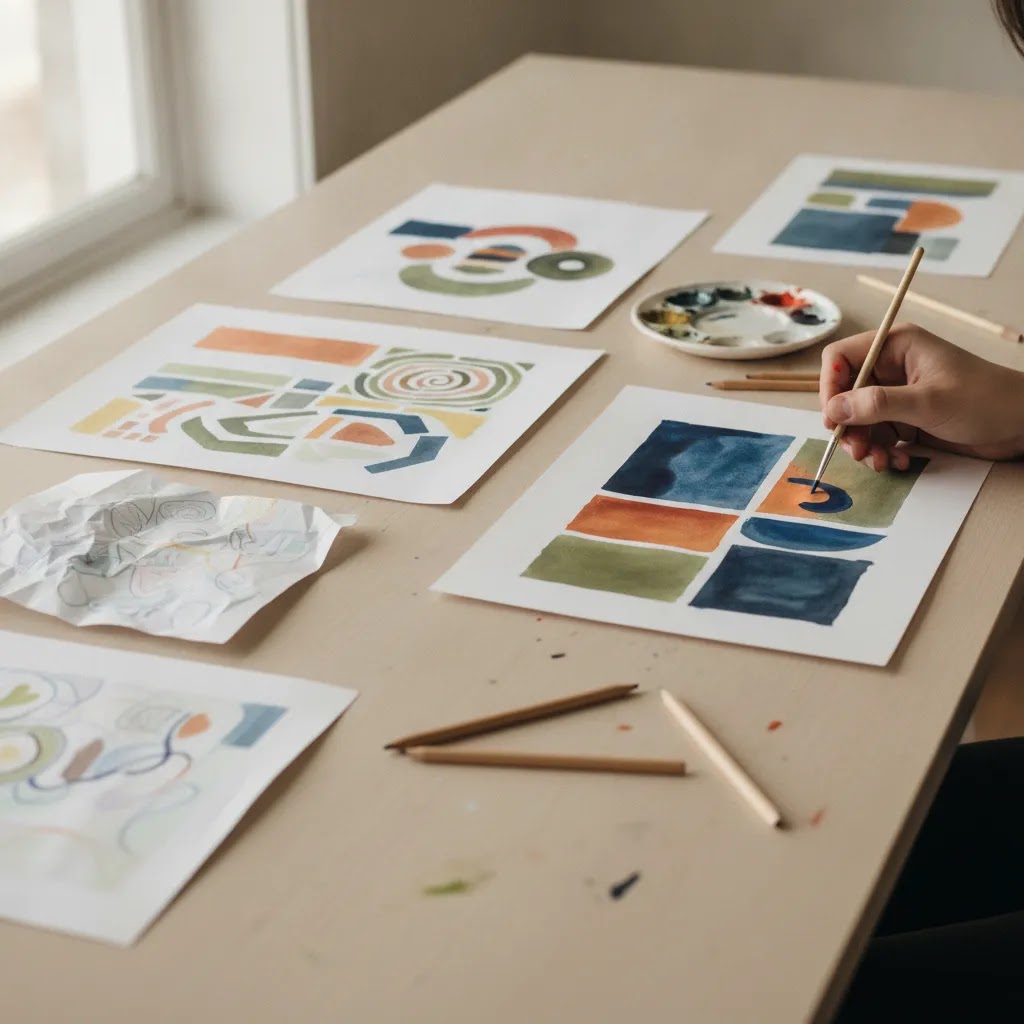
Does a teen need to be good at art for art therapy to help?
No. Art therapy is usually not about talent, technique, or making something impressive. The point is to give inner experience a form outside the body. Many teens who do not see themselves as artistic still respond well because the task is about expression and reflection, not performance. In some cases, having less art training may even reduce self-judgment.
How does art therapy support identity in teenagers?
It may support identity by helping teens externalize roles, conflicts, values, and emotions that feel hard to describe directly. A visual image can hold contradictions without demanding a neat answer. Over time, repeated themes, symbols, and choices may give a teen a clearer sense of who they are, what matters to them, and how they want to respond under stress.
Can art therapy help with resilience, not just expression?
Yes, potentially. Expression is only one part of the process. Art therapy may also help teens regulate big feelings, tolerate discomfort a little longer, experience small moments of agency, and notice that hard states can shift. Those capacities are closely related to resilience. The effect is usually gradual rather than dramatic, and it may vary from one teen to another.
What age range counts as “teens” in art therapy?
Most people use “teens” to mean roughly ages 13 to 19, but developmental differences inside that range are significant. A 13-year-old and an 18-year-old may need very different prompts, privacy boundaries, and reflection styles. What matters most is whether the approach matches the teen’s emotional maturity, communication style, and comfort with symbolic or creative work.
Is art therapy better than regular counseling for teens?
Not automatically. Some teens do very well with traditional counseling, while others find visual expression more approachable. In many cases, the most helpful choice depends on how the teen processes emotion, how safe they feel with direct conversation, and what kind of support they need right now. Sometimes art therapy and counseling are combined rather than treated as opposites.
Can parents use art activities at home to support these benefits?
They can support some of the same themes, such as expression, emotional naming, and reflection. Still, home activities are not the same as formal therapy. The safest approach is often simple and non-intrusive: offer materials, avoid over-interpreting, and let the teen choose what to share. Curiosity usually helps more than analysis or pressure.
Are digital art therapy tools useful for teens?
They may be, especially for teens who want privacy, structure, and a lower-pressure starting point. Digital tools can make creative reflection easier to access in everyday life. They are not always a substitute for live professional support, especially if distress is intense or safety is a concern. Their value often depends on thoughtful design, clear boundaries, and realistic claims.
How long does it take to notice benefits from art therapy?
That varies. Some teens may feel a little more settled or expressive within a single session, while deeper identity and resilience shifts usually take longer. The pace can depend on the teen’s stress level, trust in the process, consistency, and the quality of support around them. Small changes in emotional honesty or recovery time may matter before bigger shifts are obvious.
What is the core principle of art therapy?
The core principle is that the creative process can support emotional processing, not just the final image. For many teens, making something visible can feel safer than explaining everything out loud. The artwork and the act of creating can become a bridge between inner experience and reflection, especially when feelings feel messy or hard to name.
What does an art therapist do?
An art therapist typically provides structure, safety, and pacing while a teen creates, then supports reflection in a way that respects the teen’s boundaries. They may offer prompts, help the teen notice patterns or emotional shifts, and encourage meaning-making without treating the artwork as a fixed “diagnosis.” They also pay attention to wellbeing and safety, including when additional support could be needed.
Is art therapy evidence-based?
There is research suggesting art therapy can be helpful for some people in some contexts, including with stress, anxiety, trauma-related experiences, and emotional expression. The strength of evidence can vary by population and by the specific approach used. For a teen, results also often depend on fit, the quality of the therapeutic relationship, and whether the support matches the level of distress.
How is art therapy regulated (and how can I verify credentials)?
Regulation varies by location. In some places, “art therapist” is a protected title with required registration, while in others it may be less consistently regulated. A practical step is to ask what credentials the provider holds and then verify them through the relevant professional registry or licensing board in your area. In the UK, for example, art therapists are regulated by the Health and Care Professions Council (HCPC), and registration can typically be checked on the public register.
Key Takeaways
- The strongest teen-specific benefit is often identity clarification, because resilience tends to grow more easily from self-understanding.
- Art therapy may help teens stay with difficult feelings in a more contained, less verbal way.
- Small creative choices can build agency, which is a meaningful part of resilience.
- Visual work may reduce self-criticism by shifting attention from performance to honest inner experience.
- A collection of artwork over time can become a record of growth, change, and recurring strengths.
Quick recap of the benefits of art therapy for teens
If you are holding this topic for a teen you care about, the most useful lens may be simple: does image-based expression help them feel more knowable to themselves? These five benefits matter because they connect self-discovery with recovery skills, rather than treating them as separate goals.
| Rank | Benefit | Best for | Why it stands out |
|---|---|---|---|
| 1 | Giving identity a visible shape | Teens unsure how to explain themselves | It helps inner experience become concrete and easier to reflect on |
| 2 | Holding hard feelings without shutting down | Teens who feel flooded or numb | It offers containment, not just expression |
| 3 | Building agency through small choices | Teens who feel powerless | It creates repeated moments of authorship and mastery |
| 4 | Creating distance from self-criticism | Teens under pressure and comparison | It separates worth from performance |
| 5 | Making growth visible over time | Teens in ongoing change | It leaves behind evidence of adaptation and continuity |
Conclusion
The benefits of art therapy for teens can be easier to understand when you notice what the process makes possible. A teen who could not explain themselves may begin to show themselves. Meanwhile, a teen who shut down may stay present a little longer. Another teen who felt defined by pressure may notice a quieter inner voice underneath it.
Those shifts are not flashy, but they matter. They can become the early shape of identity and resilience growing side by side. If you want a gentle next step, Daily Lemons offers art-therapy-informed digital practices that can help some teens explore feelings through guided visual exercises at their own pace. Sometimes a small page is enough to begin.
This article is for educational purposes only and does not provide medical or mental health diagnosis, treatment, or emergency care. Art therapy may support emotional expression and coping, but outcomes differ by person, setting, and level of distress. If a teen may be at risk of harm, feels unable to stay safe, or is in severe distress, contact local emergency services, a crisis resource, or a qualified licensed professional right away. If you are evaluating formal art therapy, review the practitioner’s credentials and applicable regulatory standards in your location. Professional information in the United States may be available through the American Art Therapy Association and relevant state licensing or credentialing bodies.