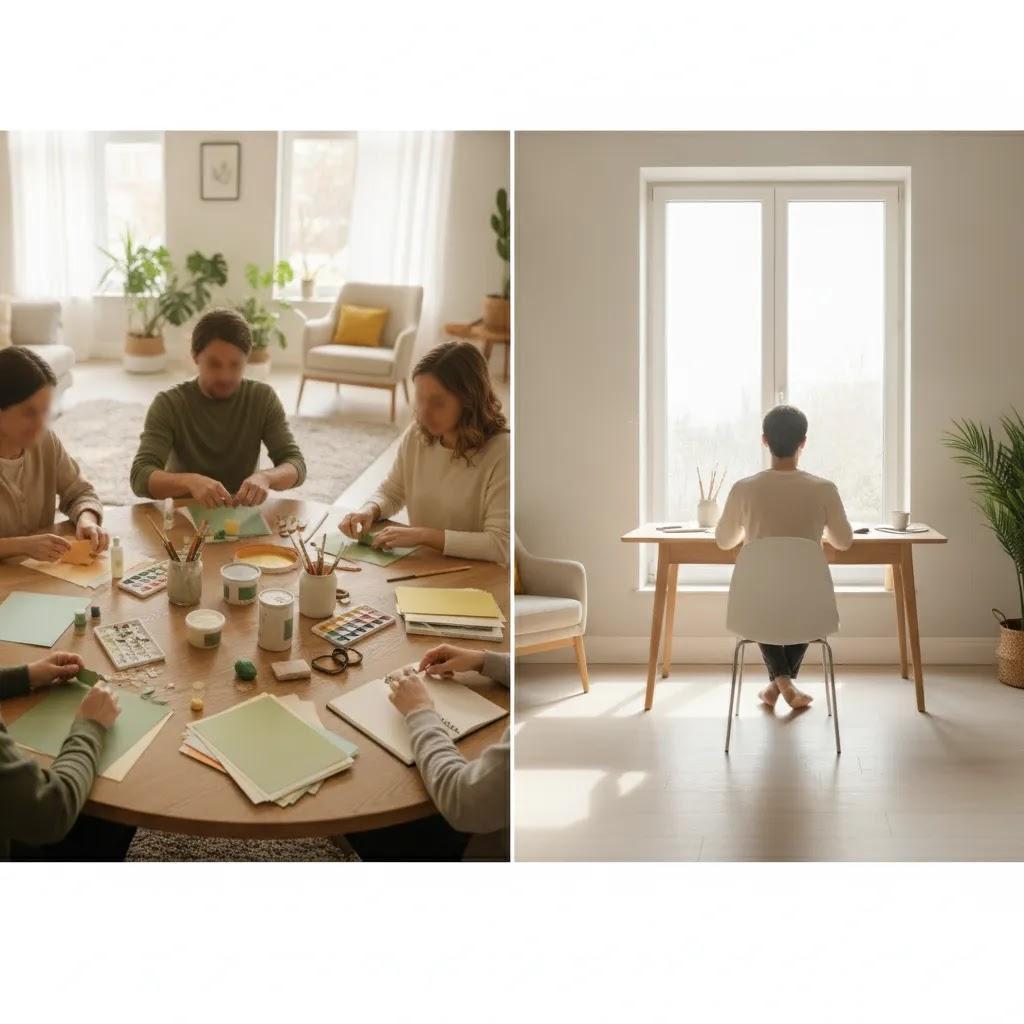
An expressive arts therapy workshop works best when it feels clear, safe, and gently paced. In most cases, the strongest plan includes one simple goal, easy materials, consent-based choices, and a calm closing. This guide shows you how to shape an expressive arts therapy workshop step by step.
What makes an expressive arts therapy workshop feel helpful instead of awkward, rushed, or emotionally muddy? Usually, it is not fancy materials or a perfect lesson plan. Instead, it is thoughtful pacing, clear boundaries, and activities that match the group in front of you.
This guide walks you through the full process, from setting a goal to closing the room well. Expect the planning process to take about 2 to 4 hours for a simple session. Facilitation time often runs 60 to 90 minutes. Difficulty level: Beginner to Intermediate. If you want more background on the profession itself, our guide to the art therapist role can help clarify where workshop facilitation fits and where it does not.
What you'll need for an expressive arts therapy workshop
- A clear workshop goal, such as stress relief, emotional check-in, grief support, or team reflection
- A defined participant group, including age range, context, and group size
- Basic art materials like paper, markers, pencils, oil pastels, glue, magazines, or clay
- A private or semi-private space with tables, chairs, and easy cleanup
- A written agenda with timing for opening, creating, reflecting, and closing
- Optional grounding prompts or visual examples
- Water, tissues, and a quiet plan for participants who need a pause
- A referral plan if strong emotions come up and the workshop is non-clinical
Before you begin: define the expressive arts therapy workshop clearly
An expressive arts therapy workshop can mean many things. Some sessions are mainly creative wellness experiences. Others are facilitated by trained professionals and sit closer to therapeutic practice. That distinction matters.
If you are working in a non-clinical setting, be plain about that. You can still offer a meaningful, calming, reflective session without presenting it as formal therapy. If you want a broader grounding in different art therapy approaches, it helps to review how expressive methods may vary by purpose, structure, and facilitator training.
It also helps to understand the difference between expressive art therapy as a general creative mode and more formal therapeutic practice. For some readers, the comparison between expressive arts therapy vs art therapy will make your planning choices much clearer.
Expressive arts therapy workshop vs expressive arts (and why naming matters)
People often use “expressive arts therapy” as a catch-all phrase, but it can mean very different things depending on setting and credentials. In many places, therapy implies a clinical or mental health context, with a licensed professional, clear privacy practices, and a defined scope of care. An expressive arts workshop is often closer to wellness, education, or community programming, where the goal is support and reflection rather than treatment.
Why naming matters in an expressive arts therapy workshop
Why naming matters: participants make decisions based on what they think they are signing up for. If you call something “therapy” and it is really a general creative wellness session, people may expect confidentiality, individualized care, or clinical containment that the space cannot offer. If you call it a “workshop” and it is actually a clinician-led therapeutic group, people may under-prepare for emotional depth. Clear wording protects your participants and protects you.
How intermodal work can stay simple
Expressive arts is also often described as intermodal, meaning it can move between different forms of expression instead of staying in just one. Intermodal does not need to be complicated. In a 60 to 90 minute session, it might look like:
- 2 minutes of grounding, then 10 minutes of mark-making, then 5 minutes of writing a few lines inspired by the image
- Choosing a collage image, then pairing it with a simple gesture or posture that matches the image’s energy
- Humming or tapping a rhythm, then translating that rhythm into repeated shapes on paper
If your workshop is non-clinical, you can communicate your limits without making it feel alarming. Plain language usually works best. You can say what it includes (guided creative prompts, optional sharing, a gentle closing) and what it does not include (diagnosis, treatment, crisis support, or interpretation of anyone’s artwork). A simple scope statement also helps: “This is a reflective creative workshop, not therapy. You are always welcome to participate quietly, step out, or share only what feels comfortable.”
Step 1: Choose one outcome for the expressive arts therapy workshop
Start smaller than you think. A workshop usually works best when it has one main outcome, not five. “Help participants regulate after a stressful week” is clearer than “support healing, creativity, self-awareness, connection, and transformation.”
Your outcome shapes everything that follows: activity choice, pacing, reflection questions, and how emotionally deep the workshop should go. For a beginner-friendly expressive arts therapy workshop, common outcomes include grounding, emotional expression, self-compassion, group connection, or gentle meaning-making.
- For stress: choose rhythmic, repetitive mark-making or color-based work
- For reflection: use collage, image selection, or symbolic self-portrait prompts
- For connection: include paired or group witnessing with opt-out options
Step 2: Decide who the expressive arts therapy workshop is for

A good plan matches the actual group, not an imagined ideal group. Age, energy level, emotional readiness, and setting all matter. A workshop for teens after school should not feel like one for adults processing burnout at a retreat.
Ask a few practical questions. Are participants strangers or already connected? Are they likely to be tired, activated, shy, or skeptical? Do they need more structure, or more freedom? Neurodivergent participants often benefit from visual instructions, predictable timing, sensory choice, and permission to engage quietly.
If your audience is likely to be stressed or overwhelmed, a lighter starting point may fit better than a prompt that asks them to revisit painful memories. If you are planning for younger groups, this guide to art therapy for children may offer more age-specific ideas.
Who expressive arts therapy workshops are for (and when to refer out)
Expressive arts therapy workshops can fit many real-world contexts because the entry point is simple: making something gives people another way to notice what is going on inside. Depending on your setting and training, you may see workshops used in places like schools, youth groups, caregiving settings, community centers, chronic illness support spaces, grief groups, wellness retreats, and workplace stress programs. The purpose is typically support, reflection, and connection, not a guaranteed outcome.
Who an expressive arts therapy workshop may serve best
It also helps to name who your workshop is for in concrete terms. For example:
- Adults who want a gentle emotional check-in without a lot of talking
- Caregivers who need a contained, restorative pause
- Students who benefit from structured, hands-on reflection
- Teams that want a non-verbal way to reflect on stress and values
- People in grief spaces who want symbolic meaning-making without pressure to share details
When to refer out or use a clinician-led setting
Some situations are not a fit for a non-clinical workshop, especially if the group cannot offer real-time support beyond grounding and referral. Consider referring out, postponing participation, or requiring a clinician-led setting if you notice any of the following:
- Recent trauma disclosure that the session is not equipped to hold
- Active crisis, threats of harm, or inability to stay safe
- Severe destabilization, disorientation, or inability to stay present in a group setting
- Substance intoxication that affects safety, consent, or group containment
- Confidentiality needs that exceed the space, such as a public venue or a group with mixed roles
If you are planning for children or teens, keep the design more concrete and more contained. Attention span is shorter, instructions need to be simple, and sharing should be even more optional. Many youth settings also come with safeguarding expectations, caregiver permissions, and mandatory reporting rules. If you are not sure what applies in your location, check your organization’s policies and local requirements before you run the session.
Step 3: Pick a safe, simple expressive arts therapy workshop structure
The structure should support the goal without creating unnecessary pressure. Simple does not mean shallow. In fact, simple activities often help people settle in faster because there is less fear of “doing it wrong.”
Useful beginner formats include breath-led line drawing, emotion-to-color mapping, collage around a theme, hand-tracing with written or visual symbols, or a two-panel “before and now” page. These formats invite expression without forcing disclosure.
Try to avoid prompts that sound like hidden tests. A workshop is not the place to decode symbols or tell participants what their art means. Your role is to guide process, not assign meaning.
Step 4: Build the expressive arts therapy workshop timeline
Most expressive arts therapy workshops feel steadier when the rhythm is predictable. A simple 75-minute model might look like this:
- 10 minutes: welcome, agreements, and grounding
- 10 minutes: introduce prompt and materials
- 25 minutes: creative process
- 20 minutes: reflection and optional sharing
- 10 minutes: closing practice and transition out
Build in breathing room. People may need a minute to choose materials, switch tasks, or gather themselves before speaking. If the group is new to expressive work, slower transitions usually help more than extra content.
| Workshop element | Typical range or example from this guide | Why it helps |
|---|---|---|
| Planning time | 2 to 4 hours for a simple session | Gives you time to set a goal, choose materials, and prepare pacing |
| Facilitation length | 60 to 90 minutes | Keeps the session contained and beginner-friendly |
| Group size | 6–12 people | Makes reflection and optional sharing easier to hold |
| Beginner materials | Paper, markers, colored pencils, oil pastels, glue, collage images | Reduces setup stress and supports easy entry |
Step 5: Prepare expressive arts therapy workshop materials and room setup

The room affects the nervous system before anyone makes a single mark. Aim for a setup that feels calm, clear, and non-evaluative. Spread materials so people can see options easily without crowding.
Offer enough choice to support autonomy, but not so much that it becomes overwhelming. A small, curated set of supplies often works better than a giant pile of everything. Put wipes or scrap paper nearby. If possible, let participants choose between sitting at a table, standing, or working on the floor.
- Use paper that is large enough to reduce perfection pressure
- Test markers or glue sticks before the session
- Have a backup low-mess option if the room has limits
- Plan a quieter corner for anyone who needs space
For more topic context, readers exploring Art Therapy Fundamentals may find it helpful to place workshop design within the bigger picture of creative emotional support. You can also explore a broader overview in art therapy fundamentals.
Step 6: Open the expressive arts therapy workshop with safety and consent
The opening sets the emotional temperature. A strong opening lowers pressure and helps people understand what they are stepping into. You might begin with a brief grounding exercise, then share the purpose of the session in one or two plain sentences.
Include a few simple agreements:
- You can share only what feels okay
- There is no need to be good at art
- We do not interpret each other’s work
- Taking a pause is allowed
- Confidentiality has limits in public or group settings
If the workshop is not formal therapy, say so gently and clearly. That protects participants and builds trust.
Step 7: Guide the expressive arts therapy workshop process
During the making phase, less talking is often more helpful. Offer enough direction to keep people oriented, then allow silence, music, or soft verbal check-ins. Long explanations can pull people out of the process.
Use prompts that invite noticing rather than performance. For example: “Choose a color that fits your energy right now,” or “Let your hand repeat a shape that feels steady.” This kind of guidance supports expression without pushing for a polished result.
Watch the room. If participants look frozen, offer a gentler entry point such as making one line, one shape, or one patch of color. If someone seems emotionally flooded, encourage grounding first. In non-clinical settings, avoid pressing for disclosure. If distress rises beyond what the workshop can hold, pause and refer out appropriately.
Step 8: Lead expressive arts therapy workshop reflection without over-interpreting
Reflection helps the art become a mirror, not just an activity. The key is to ask questions that return meaning to the participant. You are helping them notice, not telling them what is true.
Helpful reflection questions include:
- What part of your page stands out to you?
- What felt easier than expected?
- Where do you notice tension, softness, space, or movement?
- If your image had a title, what might it be?
- What would you want to carry with you from this page?
This approach often suits groups focused on Anxiety, Stress & Emotional Wellness because it supports gentle awareness without turning the workshop into a heavy analysis session. If stress regulation is your main theme, this article on art therapy for anxiety may also help.
Step 9: Close the expressive arts therapy workshop and follow up well
Closing matters more than many facilitators expect. Do not end right after sharing. Help participants transition out of the inner work and back into the day. A closing might include one word of check-out, a brief breath, a stretch, or an invitation to notice one supportive next step.
For follow-up, you could offer a simple reflection card, a photo reminder of their artwork if appropriate, or a prompt to revisit later. In schools, community programs, and workplaces, it also helps to share where participants can seek more support if the workshop stirred up bigger feelings.
If you are using a digital companion between sessions, Daily Lemons can be one gentle option for short guided creative reflection. The platform is designed around brief, art-therapy-informed exercises that may help people externalize feelings and return to them later with more clarity. If that sounds useful, you can explore the broader Daily Lemons experience through its educational resources and self-guided tools at your own pace.
Common expressive arts therapy workshop mistakes to avoid

- Trying to do too much in one session. A crowded agenda often makes participants feel rushed and disconnected from the process.
- Using emotionally intense prompts too early. Deep material without enough safety or time can leave people raw on the way out.
- Interpreting participant artwork. This can feel intrusive and may overstep your role.
- Overloading the room with materials. Too many choices can increase stress, especially for beginners.
- Skipping the closing. People usually need a bridge back to ordinary life before they leave.
What to do next after an expressive arts therapy workshop
Once you have run one workshop, review what actually happened instead of only what you planned. Which prompt opened people up gently? Where did the timing tighten? Did the room setup support calm or create friction?
Your next version may be stronger if you simplify one part, slow one transition, and improve one reflection question. Over time, that small refinement process tends to produce workshops that feel more grounded and more human.
Expressive arts therapy workshop pros and cons
Strengths
- Expressive arts workshops can give people a non-verbal way to explore feelings when talking feels hard.
- They often work well for beginners because no art skill is required.
- They can be adapted for schools, community groups, wellness settings, and adult support spaces.
- A clear workshop structure may help participants feel safer and more willing to engage.
- Short, guided activities can fit real-life attention and energy limits.
Considerations
- A workshop is not the same as individualized care and may not be enough for people in acute distress.
- Facilitators need to be careful not to present non-clinical sessions as formal therapy.
- Group sharing can feel vulnerable, especially if boundaries are unclear.
- Materials, space, and cleanup logistics can affect the experience more than expected.
Frequently Asked Questions
What is an expressive arts therapy workshop?
An expressive arts therapy workshop is a guided group session that uses creative activities such as drawing, collage, movement, writing, or image-making to support reflection and expression. Some expressive arts therapy workshops are wellness-based and non-clinical. Others may be facilitated by trained professionals in more therapeutic settings. The structure, goal, and facilitator credentials all shape what kind of workshop it really is.
Do participants need to be good at art?
No. Most workshops are designed for people with no formal art background. The focus is usually on process, noticing, and expression rather than technique or appearance. In many groups, removing performance pressure is part of what helps people participate more honestly and with less self-criticism.
How long should an expressive arts workshop be?
For beginners, 60 to 90 minutes is often a practical starting range. That usually gives enough time for arrival, making, reflection, and closure without overwhelming participants. Longer sessions can work well too, but they often need more pacing, more breaks, and a stronger containment plan.
What materials work best for beginners?
Simple, low-pressure materials tend to work well: paper, markers, colored pencils, oil pastels, glue, and collage images. These are easy to use and do not require much setup skill. Very complex or messy materials can be meaningful, but they may add stress if the group is new or the time is short.
How many people should be in the group?
Small groups of 6 to 12 are often easiest to manage, especially for reflective workshops. That size makes it easier to hold the room, notice individual needs, and allow optional sharing without rushing. Larger groups may need co-facilitation, clearer instructions, and less emotionally deep content.
Can a non-therapist facilitate an expressive arts workshop?
A non-therapist may be able to facilitate a creative wellness workshop if the scope is clear, the activities are appropriate, and the session is not presented as formal therapy. What matters is honesty about training, boundaries, and referral limits. If the workshop may surface deeper emotional material, stronger clinical support may be needed.
What should I do if someone becomes very upset during the workshop?
Slow the pace, offer grounding, and avoid pressuring them to share. If possible, provide a quiet pause space and check what support feels workable in the moment. In non-clinical settings, it is wise to have a referral or escalation plan ready before the session begins. Immediate safety concerns should always be treated urgently.
Should everyone share their artwork at the end?
No. Sharing should usually be invitational, not required. Some participants process internally and may feel less safe if they have to explain their page to a group. You can offer multiple ways to close, such as private reflection, paired sharing, or a simple one-word check-out.
What makes a workshop effective?
Clear purpose, gentle pacing, appropriate prompts, and a respectful closing usually matter more than artistic complexity. Workshops often feel more effective when participants know what to expect, have permission to engage at their own level, and are not asked to go deeper than the setting can safely hold.
What is the difference between expressive arts therapy and art therapy?
They overlap, but they are not always the same thing. Art therapy is typically a defined profession that centers visual art making within a therapeutic relationship, often with specific training and professional standards. Expressive arts therapy often emphasizes intermodal work, moving between forms like visual art, movement, sound, drama, and writing. In real life, titles and regulations vary by location, so the most reliable clue is the facilitator’s credentials, scope, and the setting where the work is offered.
What happens in an expressive arts therapy session or workshop?
In an expressive arts therapy workshop, most sessions include a clear opening, a creative prompt, time to make, and a reflection phase. This kind of expressive arts therapy workshop is often designed to be beginner-friendly and contained, with optional sharing and a closing practice to help people transition out. In therapy contexts, the process may be more individualized, paced over time, and held within stronger privacy and clinical boundaries.
What should I look for in an expressive arts therapist or facilitator?
Start with clarity. Look for someone who describes what the session is, who it is for, and what it is not. If you are seeking therapy, ask about current licensure or credentials, training specific to expressive arts modalities, confidentiality practices, and what they do if someone becomes distressed. If you are attending a non-clinical workshop, it is still reasonable to look for safeguarding practices, consent-based facilitation, and a clear referral plan.
Is expressive arts therapy evidence-based or effective?
Research on creative and expressive approaches is growing, but “evidence-based” can mean different things depending on the population, setting, and outcome being measured. Many people find expressive work helpful for reflection, stress regulation, and emotional expression, but results vary, and it is not a substitute for individualized clinical care when that is needed. If you want a stronger evidence fit, ask the provider how they choose methods for your goals and what outcomes they track or prioritize.
Key Takeaways
- An effective expressive arts workshop starts with one clear outcome.
- Good facilitation depends on matching the activity, pacing, and depth to the group.
- Simple materials and structured timing often work better than overcomplicated plans.
- Reflection should invite meaning from participants, not impose interpretation on them.
- Closing and follow-up are essential parts of the workshop, not extras.
Conclusion
Planning an expressive arts therapy workshop is really the art of making enough structure for people to feel free inside it. The strongest expressive arts therapy workshops are rarely the most elaborate. Instead, they feel clear, paced, and respectful of what the group can actually hold that day.
If you are sketching out your first expressive arts therapy workshop, start modestly. One grounded prompt, one well-paced session, and one thoughtful closing can go a long way. If you would like a gentle companion resource for short guided creative reflection between workshops or sessions, you can explore Daily Lemons whenever it feels useful.
This article is for educational purposes only and does not provide medical, mental health, or crisis care advice. An expressive arts workshop may support reflection and emotional wellness, but it is not a replacement for individualized care from a qualified professional. If you are seeking formal art therapy, review the facilitator’s current credentials, scope of practice, privacy approach, and applicable local regulatory standards. In the United States, information on professional art therapy may be available through the American Art Therapy Association and relevant state licensing boards. Ethical guidance for creative arts therapists may also be reviewed through the National Coalition of Creative Arts Therapies Associations. If you or someone else may be at risk of harm or feels unable to stay safe, contact local emergency services or an appropriate crisis resource right away.