Is art therapy effective? Often, yes. Research suggests it may help with emotional expression, stress, coping, and well-being. Still, results vary by person, format, and goal. That is why the strongest answer is encouraging, but careful.
If you are comparing options, this article stays close to published findings rather than broad promises. You will see where research looks encouraging, where it stays mixed, and what that may mean if you are choosing between self-guided support, digital tools, or formal care. For broader context, you can also explore the Art Therapy Fundamentals hub.
Is art therapy effective? The short answer
It would be a stretch to say the evidence proves art therapy works for everyone, in every context, the research simply doesn't support a claim that broad. What it does suggest, more modestly, is that making images can offer a gentler way in when words feel hard to reach, and that this process may ease emotional regulation, expression, stress, and coping in ways that support overall well-being. That nuance showed up clearly in a 2024 systematic review and meta-analysis of active visual art therapy, which found encouraging links to health-related outcomes across the studies examined, while also being honest about how much populations, methods, and study quality varied from one piece of research to the next.
That means the evidence looks promising, measurable, and worth taking seriously. At the same time, you should stay cautious with any source that presents art therapy as a guaranteed answer.
What art therapy is, and what it is not
Before asking whether art therapy is effective, it helps to define the term carefully. Formal art therapy usually means a structured process led by a qualified art therapist or licensed professional working within their scope of practice. The focus is not on making impressive art. Instead, it uses images, materials, and reflection to explore experience in a contained way.
That is different from art-therapy-informed support, which may borrow some of the same ideas without claiming to be formal therapy. A digital guided drawing exercise, reflective creative prompt, or therapist-designed art app may support regulation and self-understanding. Still, it is not automatically the same as individualized clinical care. If you want a simple overview, this guide on what is art therapy can help clarify the basics.
It is also different from general creative activity such as casual doodling, coloring books, or making art for fun. Those activities may still feel soothing or meaningful. Still, people should not treat them as interchangeable with a therapeutic process.
This distinction matters because people sometimes judge effectiveness too broadly. If one study looks at therapist-led sessions and another looks at self-guided coloring, the results are not answering the same question. A fair reading starts by separating formal therapy, structured supportive tools, and everyday creativity.
Let's clear up something that trips a lot of people up when they're just starting out: talent has very little to do with it. You don't need steady hands or an eye for color for this work to matter. What actually counts, in most therapeutic spaces, isn't how the piece turns out, it's what happens while you're making it. The value lives in the noticing, the reflecting, the quiet act of putting something outside yourself so you can look at it. Nobody's grading the art.
How to read art therapy research without getting misled
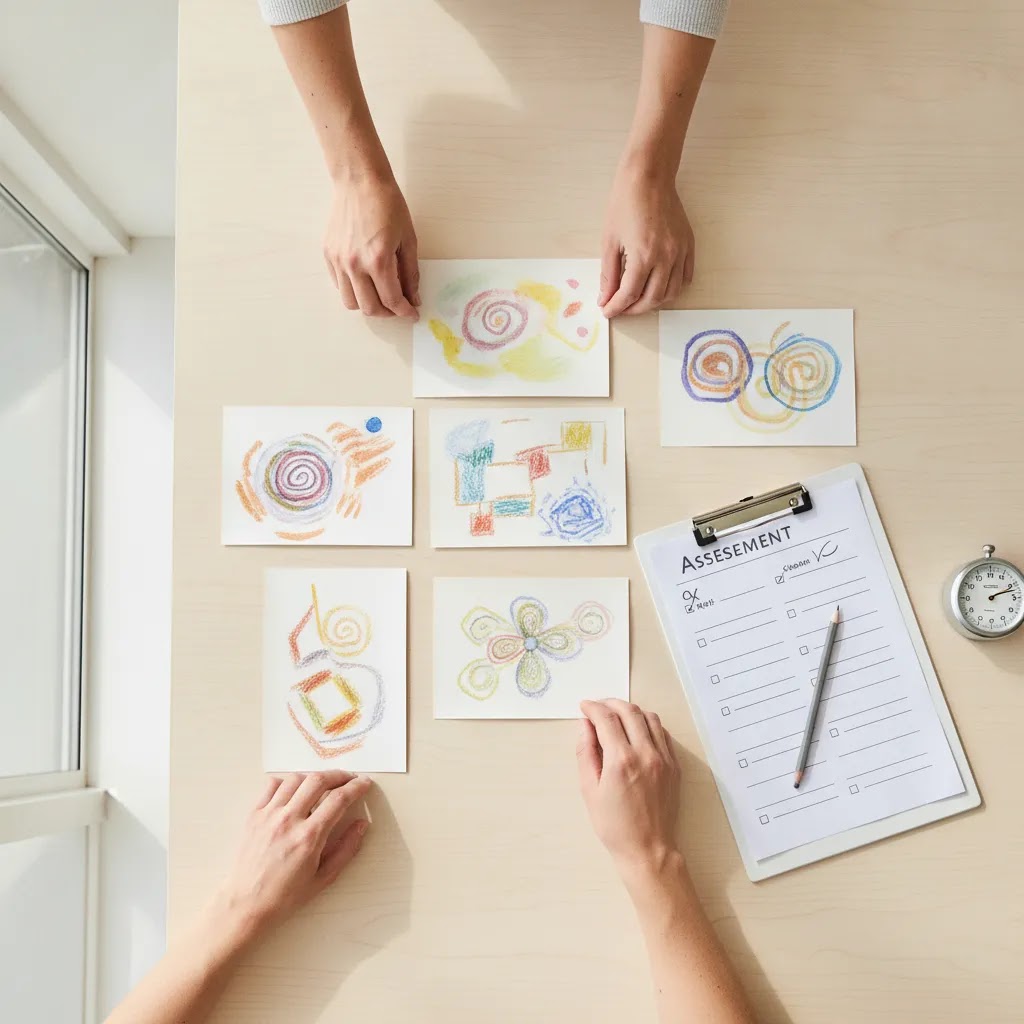
Two studies can both say “art therapy helped” while meaning very different things. One may measure immediate calming after a single session. Another may track mood or functioning over several weeks. One may involve cancer patients in a hospital. Another may involve children, trauma survivors, or people using digitally delivered support.
A useful question is not just “did it work?” but “worked for what, for whom, and compared with what?” That framing helps you avoid overreading a small result.
In practice, art therapy research is easier to trust when it includes a clear intervention, a defined population, a comparison condition, and measurable outcomes such as distress intensity, emotional clarity, coping, or quality of life. If you want a broader companion piece, the benefits of art therapy for adults article looks at practical outcomes beyond study design alone. You can also review broader professional information from the American Art Therapy Association.
1. Studies show benefits across multiple outcomes
The strongest case for art therapy is not that one dramatic result proves everything. Instead, findings appear across several kinds of measurable outcomes. Reviews of active visual art therapy have reported improvements in health-related measures across different study groups. Other published work has also linked arts-based interventions with changes in stress, emotional processing, and perceived well-being.
That pattern matters because it suggests art therapy does more than create a vague “people liked it” effect. Researchers have looked at observable changes such as lower distress, better emotional expression, improved coping, and a greater sense of control. These are modest but meaningful outcomes, especially for people who feel stuck, shut down, or overloaded.
For example, a person who cannot explain a feeling in words may still externalize it through color, shape, rhythm, or symbolism. In research terms, that shift can show up as improved emotional identification or reduced distress scores after sessions.
2. Effects may be stronger when words are hard to access
Clinical rationale and published reviews point to a consistent advantage: art therapy gives people a nonverbal route into reflection. That may matter most for children, teens, neurodivergent users, and adults who feel flooded, numb, or unable to explain themselves clearly.
This does not mean talking is unnecessary. Instead, image-making can lower the barrier to starting. Art therapy often works through externalization. Rather than carrying a feeling only inside the body, you place it on paper and view it with a little more distance. That can make the experience feel more containable.
You can see this logic in populations where verbal processing is not always the easiest starting point. For younger users, that is one reason people often discuss the benefits of art therapy for children in terms of expression, communication, and safe emotional exploration rather than insight alone. Similarly, if attention and regulation are central concerns, these notes on how art therapy helps with ADHD focus and regulation may add useful context.
Who art therapy may help most
The strongest fit is often not about diagnosis labels. Instead, it depends on whether visual expression matches the way someone currently processes experience. Art therapy may be especially worth considering for children and teens, adults under sustained stress, people moving through grief or major life transitions, and anyone who finds direct verbal explanation tiring, flat, or inaccessible.
That can include people who know they are feeling something intense but cannot name it clearly yet. It can also include people who feel overwhelmed in talk-heavy settings and need a slower, more concrete entry point. In those cases, drawing, color, collage, or simple image-making may create enough space to notice what is present without forcing a polished explanation too early.
Fit still matters more than category. Some children love image-based work, while some do not. Some adults feel immediate relief from structured visual exercises, while others find them too open-ended. If your main goal is light reflection, emotional check-ins, or a repeatable grounding habit, a self-guided or digital option may be enough to explore first. If distress feels persistent, highly disruptive, or difficult to contain alone, formal support from a qualified professional may be more appropriate.
In practical terms, the question is less “who is art therapy for?” and more “what kind of support matches the way you can engage right now?” Usually, that leads to a better decision than trying to force a universal answer.
3. Measurable change often comes through specific mechanisms
Research becomes more convincing when it explains how change may happen. In art therapy, three mechanisms show up repeatedly in clinical explanations and intervention design.
- Externalization: a hard feeling becomes visible outside you, which may reduce the sense of being swallowed by it.
- Embodiment: mark-making uses movement, pressure, rhythm, and sensory attention, which may help settle or organize the nervous system.
- Symbolic language: metaphor can create enough distance to approach painful material without rushing straight into raw detail.
These mechanisms also help explain why different art therapy techniques may produce different effects. For instance, repetitive circular designs are often used for structure and containment, which is part of why many people are curious about mandala art therapy benefits specifically rather than art-making in general.
In plain language, art therapy tends to look most effective when the activity is not random. Structure matters. Intention matters. Reflection matters.
4. Delivery format changes what “effective” means
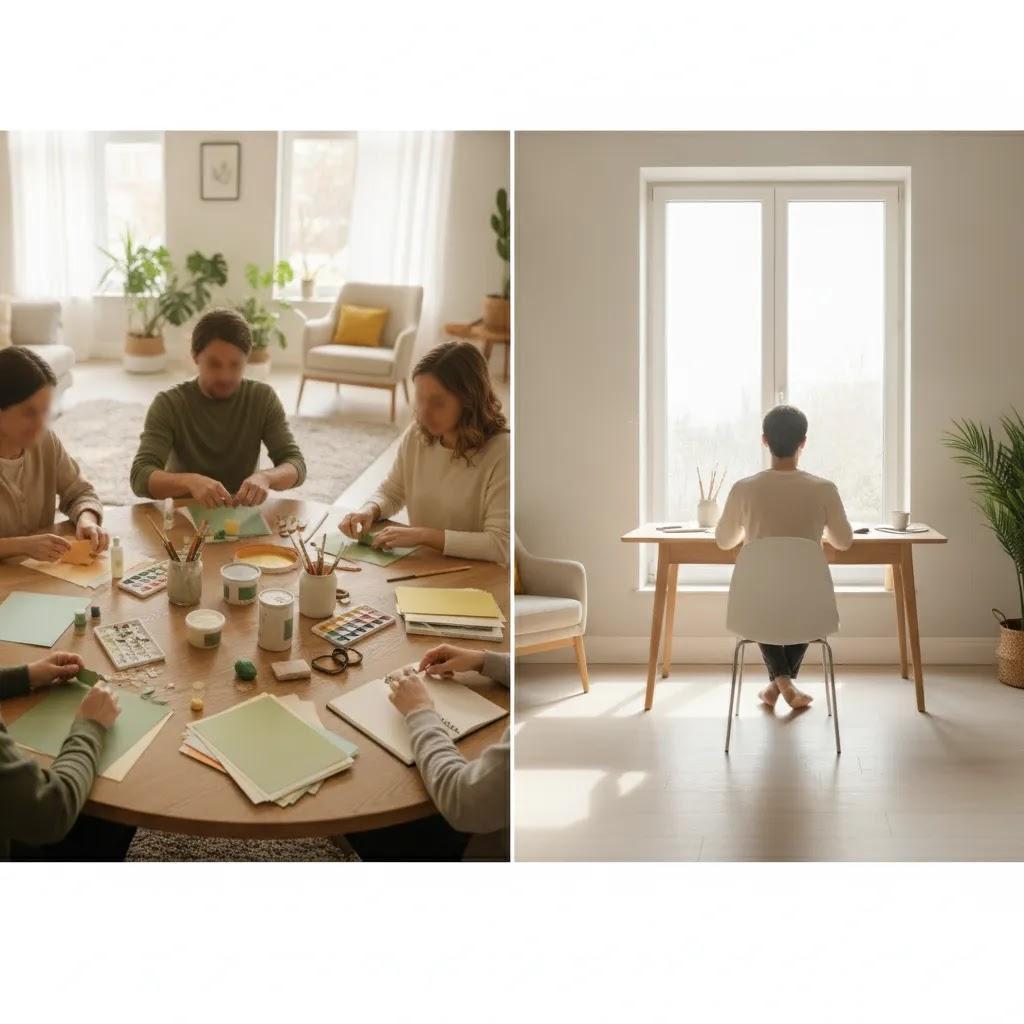
Not all art therapy happens the same way. A credentialed therapist in a live setting can provide attunement, pacing, and individualized support. A digital, art-therapy-informed app may offer something different: lower friction, repeatability, privacy, and quick access during real-life moments of stress.
Research on digital and telehealth arts therapies suggests feasibility and potential benefit, but the evidence base is still less standardized than in some in-person work. That does not make digital support meaningless. Instead, it changes the claim you should expect. A self-guided tool may be effective for grounding, emotional check-ins, between-session care, or building regular coping habits. It may be less appropriate for deeper relational work or severe distress.
If you are comparing formats, it helps to separate “formal therapy” from “art-therapy-informed support.” Readers looking for local professional options may want to review art therapy singapore resources if that location is relevant to them. For broader standards on mental health support, you can also review guidance from the National Institute of Mental Health.
What to expect from a typical art therapy session or guided exercise

Research terms can make art therapy sound abstract, but the actual experience is often fairly simple. A typical session or guided exercise may begin with a prompt, theme, or check-in. That prompt could be specific, such as drawing stress as a shape or color, or more open, such as making an image of how today feels.
How a session usually starts
After that, there is usually a creating phase. You might draw, paint, shade, arrange shapes, or work with another accessible material. No special art experience is usually required. The process often moves at a steady pace so your attention stays on sensation, imagery, and emotional signals rather than performance.
Reflection often comes next. In formal therapy, a therapist may ask what you notice in the image, what stands out, what changed while you made it, or whether any part of it feels important. In a guided self-directed format, that same step may happen through prompts, journaling, or silent observation. The point is not to force a meaning. Instead, it gives the image a little room to speak back.
How a session often closes
Many approaches also include some kind of closing step. That might mean titling the image, taking a breath, naming one feeling, or deciding whether you want to keep, revisit, or set aside what came up. This kind of ending matters because effective support is not only about expression. It is also about containment and knowing how to return to the rest of your day.
For beginners, this is often the most useful expectation to hold: art therapy does not usually ask you to be talented. Instead, it asks you to stay present enough to notice what happens while you create. If a session feels “effective,” that may look like more clarity, a slight drop in tension, a stronger sense of distance from a hard feeling, or an easier starting point for conversation afterward.
Art therapy effectiveness at a glance
| Format or context | What the article says it may help with | Key limitation or caution |
|---|---|---|
| Formal therapist-led art therapy | Emotional regulation, expression, stress, coping, and related well-being outcomes | Results still vary by population, outcome, and study design |
| Self-guided or digital art-therapy-informed support | Grounding, emotional check-ins, between-session care, and regular coping habits | It is not the same as individualized clinical care |
| General creative activity | May feel soothing or meaningful | People should not assume it has the same effect as a therapeutic process |
What about the downsides?
The evidence is not clean enough to justify sweeping claims. Several limitations show up again and again in the literature.
- Study quality varies. Some trials are small, short, or difficult to compare directly.
- Interventions differ a lot. “Art therapy” may refer to very different activities, settings, and therapist styles.
- Outcomes are not always the same. One study may measure anxiety, another quality of life, another communication or self-expression.
- Positive findings do not prove long-term benefit for every group.
- Feeling calmer after one session is useful, but it is not the same as sustained improvement over time.
This is why the fairest conclusion is not “art therapy works” in some absolute sense. Instead, it is “art therapy has a credible and growing evidence base, but claims should stay tied to the outcome and context being studied.”
When does this not apply?
Art therapy may be a weaker fit if you strongly prefer direct verbal analysis, feel frustrated by open-ended symbolism, or need a level of care that self-guided support cannot provide. It may also be less useful if someone presents the activity with no therapeutic structure at all. Relaxing coloring, casual crafting, and professional art therapy are not interchangeable.
Research findings also do not mean that any art app will produce clinical outcomes. The design, pacing, privacy practices, and scope of claims all matter. If distress is intense, persistent, or connected to safety concerns, individual care from a qualified licensed professional is usually the safer route than relying on a wellness tool alone.
A practical option to consider
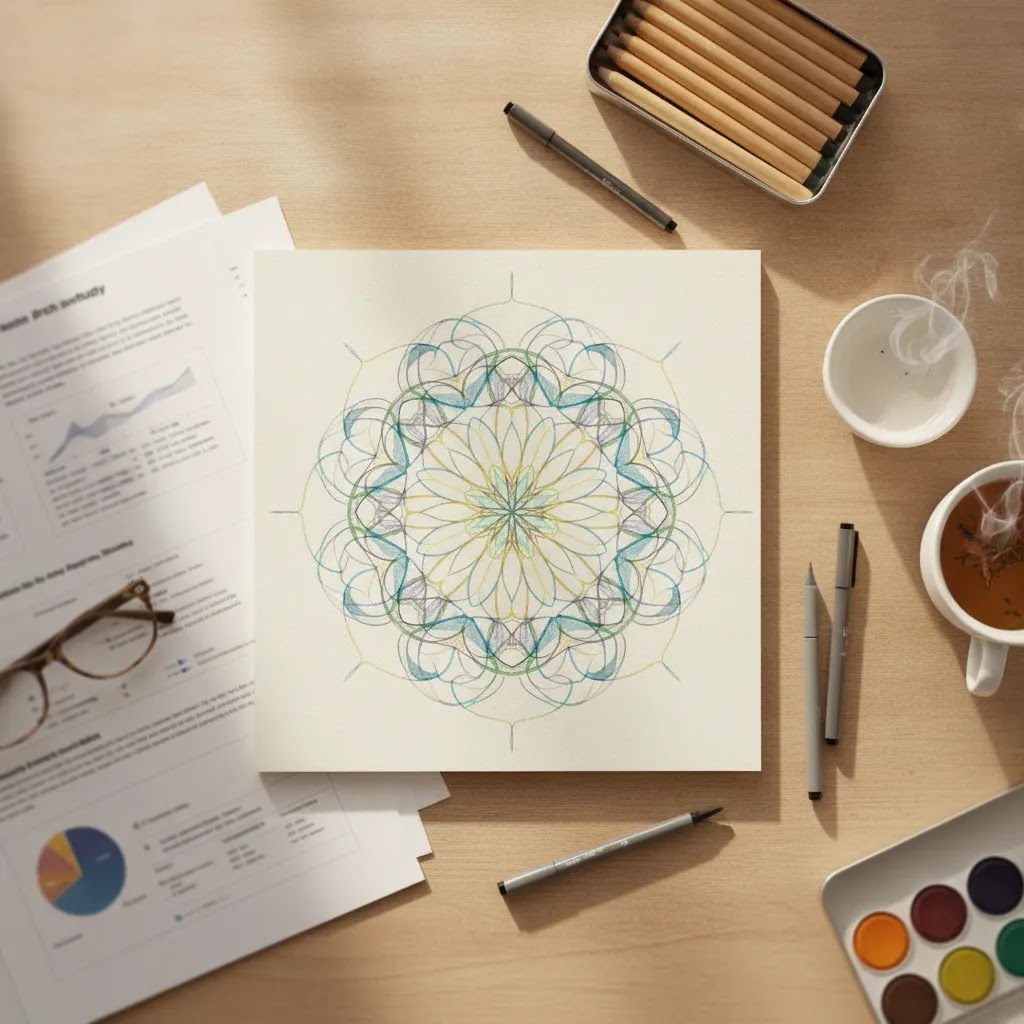
Think of the moment between sessions when feelings surface but the right words don't. That's the gap Daily Lemons tries to fill, sitting somewhere between a simple drawing app and formal therapy with a live provider. It's built as a therapist-designed digital art therapy tool, offering short guided exercises, gentle reflective prompts, and a tone that stays calm rather than analytical. The idea isn't that art automatically heals, it's more measured than that. Rather, structured visual practices may support nervous system regulation, help you notice what you're feeling, and offer some continuity when talking things through isn't quite accessible yet.
That makes it more option-aware than a blank journal and lower pressure than a talk-first format. If you are comparing digital supports, you might explore the Digital Art Therapy & Apps category alongside the broader Art Therapy Fundamentals resources. This can help you separate wellness-oriented support from formal therapy and decide what level of structure feels right.
How to judge whether art therapy is a good fit
If you are trying to decide whether art therapy is worth your time or money, four criteria matter more than broad marketing claims.
1. Match the tool to your real moment of need
If your hardest moments involve racing thoughts, shutdown, overwhelm, or trouble finding words, a visual and sensory approach may be easier to start than a blank-page journal or a long reflective exercise. If you mainly want deep verbal exploration, art therapy may be secondary rather than central.
2. Separate therapeutic structure from simple relaxation
Some creative tools are soothing. That is useful, but it is not the whole point. A stronger option usually has a clear intention, a beginning and end, and some reflective bridge between creating and meaning-making.
3. Look for careful claims
Trust grows when a provider says what the tool may help with and what it does not replace. Be cautious with any app or service that implies guaranteed outcomes, diagnosis, or total replacement of professional care.
4. Check who designed it and how it handles safety
Therapist involvement, trauma-aware pacing, privacy practices, and clear escalation boundaries all matter. In formal care, verify credentials through relevant local regulatory bodies. In the United States, you can review professional information through the American Art Therapy Association and applicable state licensing boards. In other regions, equivalent local bodies may apply.
5. Decide what “effective” would mean for you
For one person, effectiveness means sleeping more steadily. For another, it means pausing a spiral, expressing something hard, or arriving at therapy with more clarity. If you define success narrowly enough to notice, the decision gets easier. If cost is part of the question, this guide on is art therapy worth it may help you think it through.
Pros and Cons
Strengths
- Clinical studies suggest art therapy may improve measurable outcomes such as distress, emotional expression, coping, and overall well-being.
- It can provide a nonverbal path for people who struggle with talk-heavy approaches.
- The mechanism makes intuitive and clinical sense: sensory action plus symbolic reflection.
- It may be useful across age groups and in varied settings, including adjunct use alongside other support.
- Digital art-therapy-informed tools can lower the barrier to regular practice and between-session care.
Considerations
- The research base is promising but uneven, with mixed study quality and varied interventions.
- Not every kind of art-making should be assumed to have the same effect as formal art therapy.
- Self-guided tools may help with regulation and reflection but are not a replacement for individualized care.
- Some people simply prefer direct conversation and may not connect with image-based work.
Frequently Asked Questions
Is art therapy proven to work?
Not in a one-size-fits-all sense. Research supports cautious, condition-specific claims rather than blanket proof. Clinical studies and reviews suggest art therapy may help with areas like emotional expression, distress reduction, coping, and health-related well-being. The strength of evidence depends on the population, intervention, and outcome being measured.
What does research say about art therapy effectiveness?
Research points to positive associations across a range of studies, including a 2024 meta-analysis on active visual art therapy and health outcomes. At the same time, researchers note differences in study methods, participant groups, and intervention types. That means the evidence is encouraging, but broad claims still need restraint.
Is art therapy effective for anxiety and stress?
It may be for some people, especially when stress is felt physically and words are hard to organize. The act of drawing, shading, repeating shapes, or using contained visual structure may support grounding and regulation. Results vary, though, and art therapy should not be framed as a guaranteed answer for severe or urgent distress.
Is art therapy effective for children?
It may be especially useful for children because play, image-making, and symbolism can be more developmentally natural than direct verbal explanation. That does not mean every child will respond the same way. Fit depends on age, setting, goals, and whether the support is casual, school-based, digital, or provided by a qualified therapist.
Can an app offer effective art-therapy-informed support?
Possibly, yes, for the right goals. A digital tool may help with emotional check-ins, grounding, routine, and private reflection. It usually offers a different level of support than live therapy. The best use case is often everyday emotional care or adjunct use, not high-acuity situations or needs that require individualized clinical judgment.
How long does it take to see whether art therapy helps?
Some people notice immediate effects such as feeling calmer, clearer, or more present after a single structured exercise. Broader changes usually take repeated use over time. A fair test is to track a few outcomes that matter to you, such as emotional clarity, stress intensity, sleep routine, or your ability to pause before spiraling.
Do you need to be good at art for art therapy to be effective?
No. In fact, artistic skill is not the goal. Art therapy is usually about expression, containment, and meaning rather than making something impressive. Sometimes people with strong performance expectations need longer to relax into the process because they are used to judging the result rather than noticing what it reveals.
What is the biggest limitation in art therapy research?
Variation. Studies often differ in format, setting, population, duration, and outcome measures, which makes comparison harder. A hospital-based intervention, a trauma-focused group, and a self-guided digital exercise should not be treated as if they are the same thing. That is why the most honest reading of the evidence stays specific.
What are the negatives of art therapy?
The main negatives are usually about fit, expectations, and support level rather than the art materials themselves. Some people feel exposed, frustrated by symbolism, or uncomfortable if a prompt brings up more emotion than expected. In formal care, pacing and containment are part of the therapist’s role. In self-guided formats, it helps to choose structured exercises with clear boundaries and to seek qualified support if difficult material feels too intense to manage alone.
What is the success rate of art therapy?
There is no single success rate that applies across all art therapy research. Studies use different definitions of improvement, different populations, and different intervention lengths, so one percentage would be misleading. A more accurate summary is that research shows promising results across several outcomes, but the effect size and practical value depend on the context and what “success” is being measured against.
Which is better, EMDR or art therapy?
Picking between the two isn't about which one wins, it's about which one meets you where you are. Think of EMDR as a defined clinical path some trained therapists follow, especially when trauma is at the center of the work, while art therapy leans on making and reflecting on creative pieces to help you process feelings, find steadier footing, and uncover meaning along the way. What actually fits comes down to what you're hoping to work through, whether you feel more at ease talking things out or expressing through images, and ultimately the guidance of a licensed professional whenever real clinical support is called for.
What types of art therapy are most commonly used?
Common approaches include drawing, painting, collage, clay or sculptural work, mixed media, and structured image-based prompts such as safe place imagery, feeling maps, or contained repetitive designs. The specific method usually matters less than the therapeutic intention behind it. In practice, many clinicians choose materials and prompts based on accessibility, pacing, and the kind of expression or reflection the session is meant to support.
Key Takeaways
- Art therapy may be effective, but the evidence supports careful, outcome-specific claims rather than guarantees.
- The research looks strongest around expression, coping, distress reduction, and health-related well-being.
- Effectiveness often depends on structure, fit, and whether nonverbal expression suits the person using it.
- Digital art-therapy-informed tools can be useful, but they should be judged differently from formal therapy.
- Look for measured claims, qualified design, privacy clarity, and a support level that matches your actual needs.
Conclusion
If you came here asking a simple yes-or-no question, the most accurate answer is: yes, art therapy can be effective, and clinical studies give that claim real support. They also ask for humility. The benefits appear meaningful, but they are not universal, and the format matters. For some people, the value is immediate regulation. For others, it is a gentler way into expression, reflection, or ongoing support. If you are weighing options, stay close to evidence, stay honest about what you need, and choose tools that make careful claims. If a guided visual approach feels easier than forcing words, you might explore Daily Lemons and related resources whenever that feels useful.
We share these words to inform and comfort, not to substitute for medical, mental health, or legal guidance. Creative practices inspired by art therapy can be a gentle support for how you feel, but they can't promise a particular result, and they're never meant to stand in for the care of a licensed professional who knows your situation. If what you're carrying feels heavy, urgent, or unsafe, please don't wait, reach out to emergency services, a crisis line, or a qualified provider right away. Since credentials, titles, and oversight differ from place to place, take a moment to check a practitioner's qualifications with your local regulatory body before starting any formal treatment.