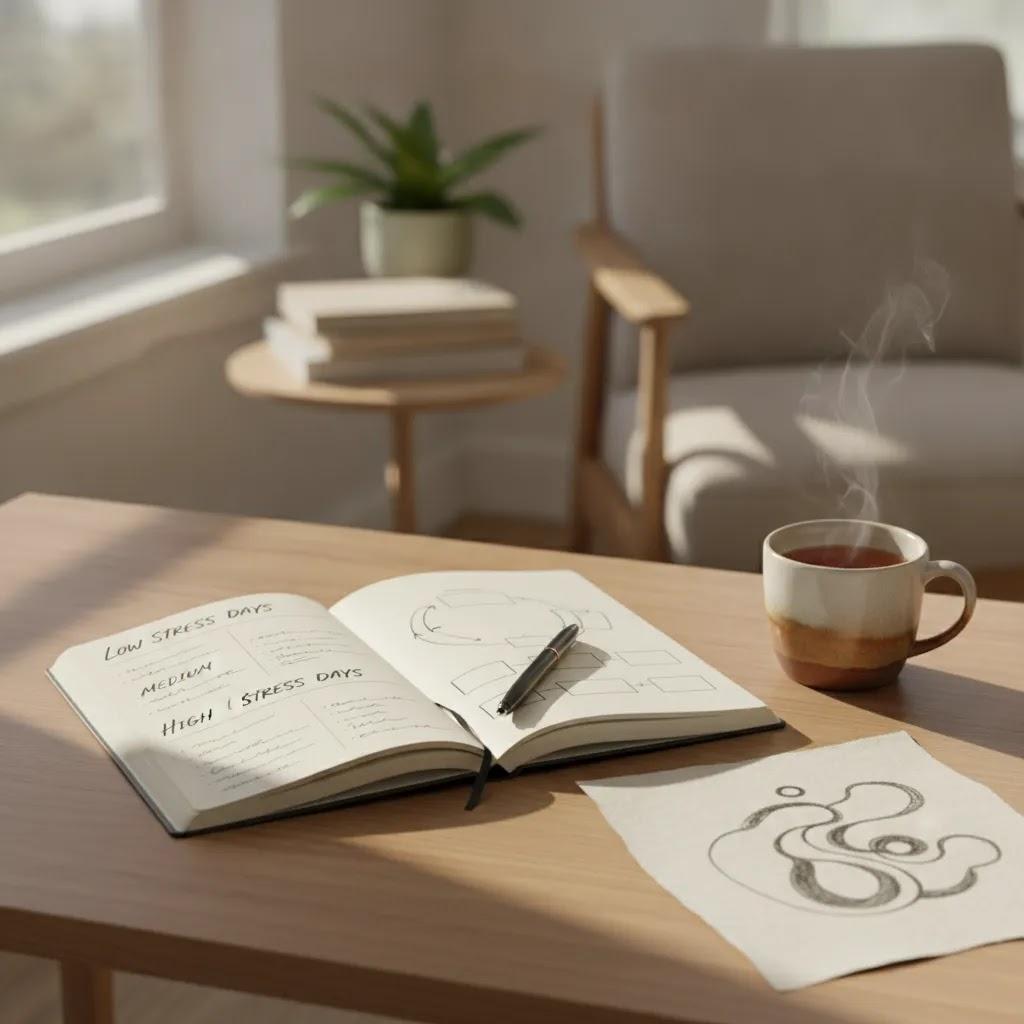
How to manage stress starts with a simple personal plan. Notice your early signs, sort stress into low, medium, and high levels, and choose a few coping tools you can actually use. That way, when stress rises, you already know your next step.
If stress keeps changing shape, a generic tip list may not help much. You may need a plan that fits your life, your energy, and the way stress actually shows up for you.
This guide shows you how to manage stress with a personal action plan you can start today. Expect about 20 minutes for the first setup, and beginner-level difficulty. The goal is not to create a perfect routine. Instead, it is to make your next hard moment easier to handle.
You will map your stress signs, choose a few realistic coping tools, and create a small response plan for low, medium, and high-stress days. If you want a broader foundation first, you can also read our guide to stress management.
What you'll need to manage stress
- 10 to 20 quiet minutes
- A notes app, paper, or journal
- A simple way to track patterns for one week
- Honest examples from your recent stress, not your ideal self
- One or two calming tools you are willing to try
You do not need a complicated system. A short plan you can actually use is more helpful than a long plan you avoid.
Why a personal plan helps you manage stress better
It often gets harder to know how to manage stress when every response starts from scratch. In the moment, your attention may narrow. You may forget what usually helps. Sometimes, you may even know what to do and still feel unable to begin. A personal plan lowers that friction.
It also helps you match the tool to the state. If you are mildly tense, a task reset or short walk might help. If you are flooded, you may need a body-based option first. That is one reason broader lists of stress management techniques can be useful for ideas, but harder to use in real time unless you narrow them into a plan.
DailyLemons evaluates emotional wellness tools through a practical lens: what feels usable when you are tired, overwhelmed, or short on words. That same principle matters here. A good stress plan is not impressive on paper. It is reachable on an ordinary day.
Step 1: Notice how stress shows up for you
Step 1: Identify early signs so you can manage stress sooner
Start with the signals that usually appear before things get bigger. Stress is not only a thought. It may show up in your body, habits, attention, or relationships.
Write down 2 to 4 signs in each area:
- Body: tight jaw, shallow breathing, headaches, stomach tension, poor sleep
- Mind: racing thoughts, irritability, dread, forgetting simple things
- Behavior: doomscrolling, snacking without hunger, procrastinating, withdrawing
- Relationships: snapping, avoiding messages, needing more reassurance, going quiet
Your signs matter more than generic examples. The plan works best when it sounds like your real life.
A quick stress check-in to build your plan faster

If you want your plan to be usable in real time, it helps to have a tiny check-in you can repeat without thinking too hard. Stress can move quickly, and your stress level at 9:00 a.m. may not match your stress level at 3:00 p.m.
Try this 60-second check-in once a day for a week, and also during any moment you notice stress rising:
- Rate the intensity from 0 to 10.
- Name where it shows up in your body, such as chest, throat, jaw, stomach, shoulders.
- Name the main demand, such as time pressure, conflict, uncertainty, sensory overload, too many decisions.
- Ask what you need first, such as less stimulation, one next step, reassurance, food, rest, movement, support.
To spot patterns without building a big tracking system, write down four fields for one week:
- Time
- Trigger
- Stress level (0 to 10)
- What helped, even a little
At the end of the week, use what you learned to tighten your plan. If your stress spikes at the same time each day, Step 5 might need an environment change before that window. If your body signs show up first, Step 3 should lean more toward body-based options. If most “helped” notes involve reducing demands, Step 4 should include more load-reducing actions, not only calming actions.
| Stress level | What it may look like | What may help first |
|---|---|---|
| Low stress | tension, distraction, or feeling rushed but still functional | task reset, short walk, choose one priority, silence notifications |
| Medium stress | spiraling thoughts, conflict, or trouble focusing | breathe for 2 minutes, leave the room, write what is actually urgent, ask for help or more time if needed |
| High stress | shutdown, panic, tears, anger, or complete overwhelm | stop multitasking, sit somewhere quieter, focus on physical grounding first, contact a trusted person, postpone nonessential decisions |
Step 2: Sort your stress by level and pattern
Step 2: Separate low, medium, and high stress so you can manage stress faster
Now create three simple levels. This gives you a quicker decision path later.
Low stress might mean tension, distraction, or feeling rushed but still functional. Medium stress may look like spiraling thoughts, conflict, or trouble focusing. High stress may feel like shutdown, panic, tears, anger, or complete overwhelm.
Then ask what tends to trigger each level. Common patterns include:
- Overload and time pressure
- Conflict or fear of disappointing people
- Lack of sleep
- Noise, clutter, or sensory overload
- Uncertainty, waiting, or bad news
If you want faster tools for active moments, our page on stress relief can help you spot short actions worth adding to your plan. You can also explore common stressors if you want help naming your patterns.
Stress vs. chronic stress vs. burnout (and when to get extra support)
“High stress” is not always the same thing as burnout. Separating these can help you choose a plan that actually matches what you are dealing with.
Everyday stress is usually tied to a specific demand and can rise and fall. You might feel tense, rushed, or reactive, but you still recover when the pressure passes.
Chronic stress is when the pressure does not really turn off. Your body may stay in a more activated state for long stretches, which can make sleep, digestion, focus, and patience feel harder than usual. Even if you use good coping tools, you may keep feeling “on.”
Burnout often includes exhaustion plus a sense of detachment, cynicism, or reduced motivation. It can feel less like panic and more like running out of fuel. Many people describe numbness, dread, or a flat “I cannot do this” feeling. Burnout typically calls for load-reducing changes, not only calming techniques.
Yellow flags that may suggest you need bigger support and bigger demand changes include:
- Ongoing sleep disruption for weeks, especially if you cannot recover even after rest
- Persistent cynicism, low motivation, or feeling unusually detached from work or daily life
- Constant dread, even on days without a clear trigger
- Frequent headaches, stomach issues, or muscle pain that seems stress-linked
- Feeling numb, shut down, or like you are watching your life from the outside
If any of those feel familiar, your plan may need to include more than moment-to-moment tools. You might add earlier boundaries, workload adjustments, a medical checkup for physical symptoms, or support from a licensed professional. If you have urgent symptoms such as chest pain or trouble breathing, seek immediate emergency care.
If you are unsure whether your symptoms are stress or something else, getting evaluated can be a practical step, not a dramatic one. For example, the CDC guide on coping with stress offers simple public-health guidance, and the NIMH stress fact sheet explains common signs and when extra support may help.
Step 3: Choose a small set of coping actions
Step 3: Pick actions you can do on a tired day to manage stress
This is where many plans fail. People choose ideal coping tools, not realistic ones. Choose 5 to 7 actions total, with a mix of body, mind, and environment support.
A simple starter menu could include:
- Drink water and step away from the screen for 3 minutes
- Take 10 slow breaths with a longer exhale
- Walk outside or around the room for 5 minutes
- Write the next one small task only
- Text one safe person: “I’m overloaded and need a small reset”
- Lower stimulation: dim lights, reduce noise, put the phone away
- Use a creative grounding activity such as color, shapes, or guided drawing
For some people, nonverbal tools feel easier than talking or journaling. If that sounds familiar, learning more about art therapy singapore may help you explore gentle creative options without needing the perfect words first. In the same way, a guide to coping can help you match tools to the kind of stress you are feeling.
Step 4: Build your low, medium, and high-stress plan

Step 4: Turn ideas into a simple action card
Now put everything into a short plan you can read quickly. Keep it brief enough to fit on one phone note.
Example personal stress action plan:
- Low stress: stand up, refill water, choose one priority, silence notifications for 20 minutes
- Medium stress: breathe for 2 minutes, leave the room, write what is actually urgent, ask for help or more time if needed
- High stress: stop multitasking, sit somewhere quieter, focus on physical grounding first, contact a trusted person, postpone nonessential decisions
Add one line for each level: “What makes this worse?” and “What helps first?” That makes the plan more personal and easier to trust.
Step 5: Prepare your environment so the plan is easier to use
Step 5: Make your tools visible and friction-light
Stress plans often break down because the actions are buried behind effort. Prepare your space in advance.
- Save your plan as a pinned phone note
- Keep water, headphones, or a sweater nearby if those help
- Create a short playlist for calming or resetting
- Put a sticky note with one grounding prompt where you will see it
- Set app limits or silence nonessential notifications during high-load times
If stress shows up strongly in your body, you may also want to explore the Nervous System & Body Healing category for more body-based support ideas. For broader emotional support topics, the Anxiety, Stress & Emotional Wellness category is a useful next stop.
Step 6: Test and adjust your plan this week
Step 6: Review what worked, not what looked perfect
Use the plan for one week, then review it. Ask:
- Which action helped me begin?
- Which action felt annoying or unrealistic?
- What did I avoid until stress got bigger?
- What support did I need sooner?
Keep what worked. Remove what felt performative. Add one easier version of any useful habit. For example, if a 20-minute walk never happened, replace it with 3 minutes outside. A plan becomes stronger through use, not through complexity.
Common mistakes to avoid when you manage stress
- Making the plan too ambitious: If it only works on your best day, it is not ready for a hard one.
- Using only one kind of coping tool: A body-based option, a thinking tool, and an environment change often cover more situations.
- Waiting until stress is intense: Early action usually costs less energy than recovery after overwhelm.
- Confusing avoidance with rest: Numbing out may bring short relief without reducing the actual load.
- Forgetting practical stressors: Sleep, deadlines, money pressure, and conflict often need concrete changes, not only calming exercises.
Avoid common “quick fix” coping traps when you manage stress

Some coping behaviors reduce discomfort quickly, but they can make it harder to know how to manage stress over time. This is not about judging yourself. Instead, it is about noticing what actually leaves you more resourced later.
Common “quick fix” traps can include alcohol, nicotine, gambling, compulsive scrolling, skipping meals, or repeatedly pushing through exhaustion. They can feel like relief in the moment, but may worsen sleep, mood stability, focus, or stress sensitivity afterward.
If you notice yourself reaching for one of these, try swaps that match the same need:
- If you need a break: take a 2-minute walk, step outside, or change rooms.
- If you need a body reset: drink water, eat something simple, loosen your jaw and shoulders, breathe with a longer exhale for 60 seconds.
- If you need less input: lower the lights, reduce noise, put your phone in another room for 10 minutes.
- If you need connection: message one safe person with a clear, small request.
- If you need grounding: name five things you can see, four you can touch, three you can hear, two you can smell, one you can taste.
Patterns matter more than single moments. If a coping habit feels hard to control, affects your health, relationships, finances, or safety, or leaves you needing more and more of it to feel okay, that is a good reason to seek extra support from a licensed professional.
What to do next if you want to manage stress more consistently
Once your action plan exists, keep it visible for the next seven days. You do not need to wait for a crisis to use it. Try it during a mildly stressful moment first so the actions feel familiar later.
If you notice that stress is frequent, layered, or tied to several parts of life at once, a broader plan may help. You can deepen your approach through stress management, explore more stress management techniques, or use short stress relief methods when you need something immediate. If words feel hard, creative and sensory-based tools may also offer a softer starting point.
If you want a more routine-based approach, you can also read how to reduce stress for daily techniques and habits.
Frequently Asked Questions
What is a personal stress management action plan?
A personal stress management action plan is a short guide you create for yourself based on your signs, triggers, and coping tools. It helps you decide what to do before stress grows. Instead of relying on memory in the moment, you use a simple plan with a few actions matched to different stress levels.
How do I cope with stress if I do not have much time?
Start with actions that take under five minutes. Drink water, step away from stimulation, breathe slowly, loosen muscle tension, or write one next step only. Short actions may not solve the whole problem, but they can lower the first layer of overload and help you think more clearly about what comes next.
How do I handle stress when I cannot focus enough to journal?
You can use lower-demand tools first. Try movement, grounding through touch, breath-paced drawing, or reducing sensory input. Some people find nonverbal activities easier than writing when they feel overloaded. The goal is not deep reflection right away. The first job is to create enough steadiness to choose a next step.
How do I deal with stress that comes back every week?
Repeated stress often points to a pattern, not only a mood. Look at timing, triggers, sleep, workload, and relationship strain. If the same stress returns, your plan may need one practical change, such as earlier preparation, a boundary, a routine shift, or asking for support, not only a calming exercise.
How many coping tools should I include in my plan?
Usually, 5 to 7 tools are enough. That gives you variety without creating decision fatigue. Include at least one fast body-based action, one thinking or planning tool, one environment change, and one support option. Too many choices can make it harder to start, especially during a stressful moment.
Can a stress plan help if I am a beginner?
Yes. Beginners often do better with a plan because it removes guesswork. You do not need special knowledge to begin. A simple version with early signs, three stress levels, and a few coping actions is enough. You can make it more personal over time as you notice what actually helps you.
What if my plan does not work the first time?
That is normal. A stress plan is something you test and adjust. If a tool felt unrealistic, make it smaller or replace it. If you forgot to use the plan, make it easier to see. If stress stayed intense, you may have needed support sooner or a different type of response for that level.
What are 5 ways to manage stress?
When stress starts creeping in, a few small, doable shifts can make a real difference. Try turning down the noise around you, silence notifications, dim the chaos, and give your body a moment to settle with slow breaths or a short walk outside. From there, pick just one small task to focus on next, rather than tackling everything at once. Don't forget the basics, either: water, a decent meal, and enough rest matter more than we often admit. And if the weight of it all feels like too much to carry alone, it's okay to lean on someone you trust or a professional, especially when stress lingers or feels heavier than usual.
What is the 3 3 3 rule for stress?
Picture this: your thoughts are racing, everything feels like too much, and you need a way back to the present. That's where the 3-3-3 rule comes in. Pause for a moment, glance around, and quietly name three things in view. Then tune in and pick out three sounds nearby. Finally, gently move three parts of your body, maybe your fingers, your shoulders, your ankles. It's a small, steady way to guide your mind out of the spiral and back to right here, right now.
How to reduce stress quickly?
For quick stress relief, start with actions that change your state fast: step away from the screen, drink water, take 10 slow breaths with a longer exhale, lower sensory input, or walk for two to five minutes. If your stress is high, grounding and reducing demands first often works better than trying to solve everything immediately.
What are 7 ways to manage stress?
Seven ways to manage stress include: notice early signs, rate your stress level, reduce stimulation, do a short body-based reset, write one next step, adjust the environment to remove friction, and ask for help or more time when the load is too high. A personal plan helps you use these consistently instead of trying to remember them in the moment.
Key Takeaways
- A useful stress plan is personal, short, and easy to use on a tired day.
- Sort stress into low, medium, and high levels so you know what to do faster.
- Choose a few coping tools across body, mind, environment, and support.
- Make your plan visible and reduce friction before you need it.
- Review the plan after one week and keep only what feels workable.
Conclusion
A personal stress management action plan gives you something steadier than motivation. It gives you a small set of actions you can return to when your brain is busy and your energy is low. That matters because stress rarely asks for your best, most organized self. Instead, it usually finds you in the middle of a day that already feels full.
Start small. Build a plan that matches your actual patterns, not an ideal routine. Then test it, trim it, and make it easier to reach. If your stress feels persistent, severe, or closely tied to safety, sleep, or daily functioning, adding professional support may be an important next step alongside self-help tools.
We're sharing this simply to inform and comfort, not to stand in for a doctor, therapist, or emergency responder. What feels like everyday stress can sometimes tangle together with anxiety, exhaustion, grief, past trauma, sleep struggles, or other health issues, and it's not always easy to tell them apart. If what you're feeling is intense, isn't easing up, seems to be getting worse, or is making it hard to stay safe or function day to day, please reach out to a licensed professional or your local emergency services without delay. And if you're experiencing something urgent, like chest pain, difficulty breathing, or thoughts of hurting yourself, don't wait; get emergency help right away. The coping ideas we share here won't land the same way for everyone; some may find them helpful, others less so, and that's okay.