Stress management techniques work best when they match the kind of stress you are carrying. Fast tools can calm a spike. Longer-term tools can lower your baseline. This guide ranks 12 stress management techniques by impact and difficulty, so you can choose a method that feels doable today.
What actually helps when stress is building: the hardest techniques, the easiest ones, or the ones you can repeat even on a tired day? Usually, the most useful answer is a mix.
Some methods calm your system quickly but do not change much long term. Others take more effort. However, they may reshape how your body and mind respond over time. This stress management techniques guide helps you look beyond vague advice and choose something that fits your current energy, not an imaginary best self. If you want a broader definition of stress management, this list works well as a practical next step.
Stress management techniques basics: acute vs chronic stress
Stress is not automatically a sign something is wrong with you. It is a normal body response that prepares you to handle challenge. Usually, the bigger issue is duration and volume, not stress itself.
Think of acute stress as the spike you feel right before a job interview or when a car cuts you off in traffic, your body surges, then eases once the moment has passed. Chronic stress works differently. It builds slowly, from weeks or months of unresolved pressure, and doesn't always come with a clear finish line. That's part of why it can leave you feeling so worn down: without a moment of resolution, your body may never quite get the cue that it's okay to relax again.
A lot of this intensity is chemistry. Under stress, your body may release adrenaline to mobilize energy and cortisol to help you stay alert. In small doses, that can be useful. Too much for too long, though, can make focus narrower, sleep lighter, patience thinner, and the body more reactive. You might notice more tension, more looping thoughts, or less ability to recover after a hard day. For background on how stress affects the body, the National Institute of Mental Health offers a plain-language overview.
Some stress can be motivating, especially when it is temporary and you have enough recovery. Many people experience a sweet spot where a bit of pressure helps performance. Past that point, more stress often means worse decisions, more mistakes, and a stronger urge to shut down or sprint through everything. If your stress feels “too big” for the situation, it may be a sign you have been carrying more than you realize, not that you are failing.
How this stress management techniques ranking works
This is not a list of the “best” techniques in the abstract. Instead, it is a list of stress management techniques that tend to help different parts of stress. Some lower body arousal quickly. Some reduce overload. Others help you process what is happening so stress does not stay trapped inside.
Impact refers to how much a technique may help real-life stress for many people when used consistently and appropriately. Difficulty refers to the effort, skill, time, and follow-through it usually takes. A high-impact method is not always the right place to start. If you are exhausted or overwhelmed, an easier technique you will actually use may be more helpful than an ideal technique you avoid.
If you are still sorting out how to manage stress in a broader sense, keep one idea in mind: a useful technique should fit your state, your environment, and your energy. You can also explore how to manage stress with a more step-by-step action plan.
Recognizing stress signs before using stress management techniques
Stress is easier to work with when you can name how it is arriving. “I am stressed” is real, but it is broad. “My jaw is clenched and I cannot stop scanning my inbox” gives you something you can respond to.
Here is a quick checklist of common stress signals. You do not need all of them for your stress to count.
- Physical: sleep disruption, headaches, tight chest, muscle tension in jaw, shoulders, or stomach, digestive upset, fatigue that does not match your day.
- Emotional: irritability, tearfulness, numbness, feeling “on edge,” sudden waves of overwhelm.
- Mental: racing thoughts, difficulty focusing, repeating the same worry loop, catastrophizing, feeling mentally foggy.
- Behavioral: withdrawing from people, snapping or overexplainin g, doomscrolling, overworking, increased caffeine or alcohol use, skipping meals, procrastination that looks like “I cannot start.”
Noticing your pattern can help you choose a technique that matches the problem. If you want to get clearer on your own pattern, Daily Lemons also has an am I stressed self-check.
- Body tension and restlessness often respond well to progressive muscle relaxation or brisk walking.
- Looping thoughts and “what if” spirals often respond better to time-bound worry planning or cognitive reframing, once you are calm enough to think clearly.
- Feeling detached, unreal, or swept away by the moment often responds well to grounding through sensory orientation.
- Withdrawal and isolation often improve with structured social support, especially when you pick one safe, specific person rather than hoping “someone” notices.
- Stress that keeps returning in the same weekly rhythm often points back to baseline supports like sleep schedule protection, task reduction, boundary setting, and caffeine timing.
If stress is regularly affecting sleep, work performance, relationships, or your ability to handle basic daily tasks, that is a reasonable signal to get extra support. A technique can help, but you do not have to carry persistent strain alone. In addition, the CDC’s stress and coping page offers practical public-health guidance.
Stress management techniques comparison table
| Rank | Technique | Primary use | Impact | Difficulty | Best for |
|---|---|---|---|---|---|
| 1 | Sleep schedule protection | Lowering baseline stress load | Very high | High | Recurring stress, irritability, emotional overload |
| 2 | Task reduction and boundary setting | Reducing incoming stressors | Very high | High | Overcommitment, caregiving strain, work stress |
| 3 | Brisk walking | Body discharge and mood regulation | High | Low | Restlessness, tension, mental fog |
| 4 | Structured social support | Co-regulation and perspective | High | Medium | Isolation, spiraling, burnout |
| 5 | Progressive muscle relaxation | Physical downshifting | High | Low | Body tension, pre-sleep stress |
| 6 | Guided drawing or visual expression | Nonverbal processing and regulation | Moderate to high | Low to medium | Wordlessness, overwhelm, emotional buildup |
| 7 | Tiny routine anchors | Daily stability | Moderate to high | Low | Chaotic days, burnout, low motivation |
| 8 | Cognitive reframing | Thought pattern shift | Moderate to high | Medium to high | Rumination, self-criticism |
| 9 | Grounding through sensory orientation | Returning to the present | Moderate | Low | Acute overwhelm, dissociation, panic-like stress |
| 10 | Time-bound worry planning | Containment of mental looping | Moderate | Medium | Chronic worrying, bedtime overthinking |
| 11 | Caffeine timing changes | Reducing avoidable activation | Moderate | Low | Jitters, poor sleep, afternoon crashes |
| 12 | Physiological sigh breathing | Fast state shift | Moderate | Very low | Short spikes of stress, public moments, transitions |
1. Sleep schedule protection
Why it ranks here: Sleep affects nearly every stress system you rely on, including attention, emotional tolerance, impulse control, and physical recovery. If your sleep rhythm is regularly disrupted, smaller stressors often feel larger.
Why it matters: This technique is high impact because it lowers your baseline, not just your peak stress moments. The difficulty is high because sleep is influenced by work hours, caregiving, screens, worry, pain, and daily habits.
What it looks like: Protecting wake time, building a short wind-down ritual, and keeping stimulation lower late at night. You do not need a perfect routine. You need enough consistency for your body to stop guessing.
Caveat: Sleep problems can overlap with medical, hormonal, trauma-related, or mood concerns. If sleep disruption is severe or persistent, extra support may be needed.
2. Task reduction and boundary setting

Why it ranks here: Many people treat stress only at the level of symptoms while keeping the stress load unchanged. Reducing demands often has more impact than adding one more coping habit.
Why it matters: This helps because stress is not always coming from inside you. Sometimes the issue is too many obligations, unclear expectations, or no real recovery time. The difficulty is high because boundaries can stir guilt, conflict, or fear.
What it looks like: Shorter to-do lists, delayed commitments, clearer work limits, and asking what truly needs to happen this week. If you are seeking practical stress relief, reducing input is often more powerful than adding more output. If work is a major source, this guide on workplace stress may help you think through boundaries more clearly.
Caveat: Not every stressor is movable. Money pressure, caregiving, and workplace realities may limit what can change right away.
3. Brisk walking
Why it ranks here: Walking is one of the most accessible ways to help a stressed body complete some of the activation it is carrying. It can reduce mental congestion while gently shifting mood and energy.
Why it matters: The impact is high because it supports both body and mind. The difficulty is low because it does not require equipment, training, or long sessions. Even 10 to 20 minutes may help.
What it looks like: A slightly faster-than-casual pace, ideally outside if that feels available. Repetition matters more than intensity. The goal is not athletic performance. It is a reliable nervous system nudge.
Caveat: Walking may not be enough on its own for chronic or severe stress, and physical limitations can change what is realistic.
4. Structured social support
Why it ranks here: Stress often narrows your view. A steady, safe person can help your system feel less alone and less trapped inside the problem.
Why it matters: The impact is high because co-regulation is real. Many people calm faster in the presence of a grounded other person. The difficulty is medium because support depends on trust, timing, and who is actually available.
What it looks like: One specific check-in person, one honest text, or one recurring call. “Structured” matters because vague support can disappear when you need it most.
Caveat: Not all support is supportive. Some conversations increase stress through judgment, fixing, or overexposure to other people’s emotions.
5. Progressive muscle relaxation
Why it ranks here: Stress lives in the body as much as the mind. Tensing and releasing muscle groups can help you notice how much strain you are carrying without realizing it.
Why it matters: This ranks high because it is simple, repeatable, and often calming for people who do not respond well to silent meditation. Difficulty is low, though it may take a few tries to feel natural.
What it looks like: Tighten one muscle group for a few seconds, then release slowly. Move through shoulders, hands, jaw, legs, or feet. It often works well before sleep or after long mental effort.
Caveat: If you live with pain, injury, or trauma-related body discomfort, gentler versions may feel better than full tension exercises.
6. Guided drawing or visual expression
Why it ranks here: Stress is not always easy to explain. Visual expression can help when words feel far away, too sharp, or too tiring. This is especially useful for people who shut down with journaling or overthink verbal reflection.
Why it matters: The impact can be moderate to high because it combines sensory focus, movement, and emotional externalization. Difficulty stays relatively low when the exercise is guided and nonjudgmental.
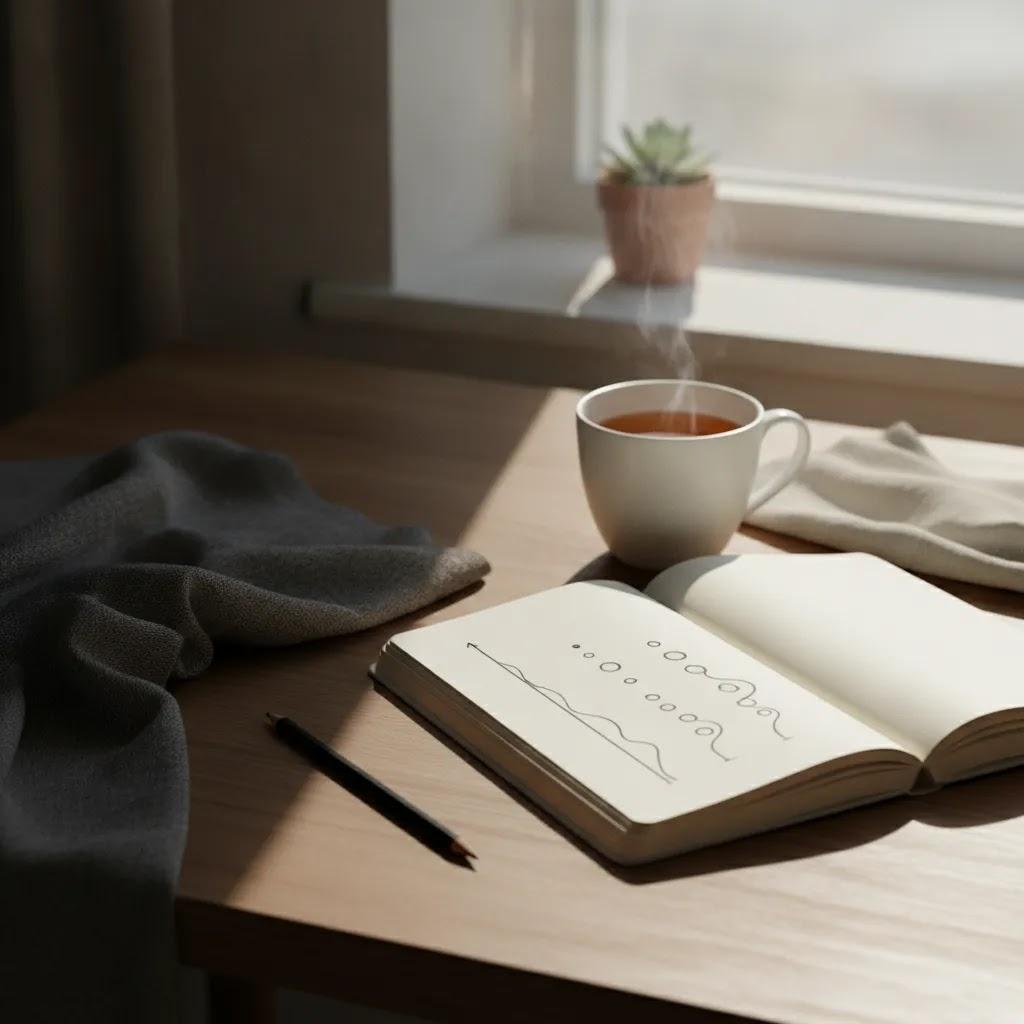
What it looks like: Drawing shapes linked to breath, mapping tension with color, or putting a feeling inside a boundary on the page. If this approach interests you, the broader topic of art therapy singapore can offer more context, and Daily Lemons also explores gentle, guided, nonverbal exercises in this area. You can also read more about art therapy if you want the basics without clinical jargon.
Caveat: Visual expression is not a replacement for live care if distress is intense, persistent, or tied to safety concerns.
7. Tiny routine anchors
Why it ranks here: Stress grows faster when your days lose shape. Small anchors can reduce the constant decision-making that drains already tired brains.
Why it matters: Impact is moderate to high because consistency creates predictability. Difficulty is low because the anchors should be very small: one glass of water after waking, one five-minute reset at lunch, one evening light cue.
What it looks like: Repeatable actions tied to existing moments, not ambitious schedules. This is especially beginner-friendly because it asks for less willpower.
Caveat: Tiny anchors support stability, but they may not address the bigger source if your stress load is structural or relational.
8. Cognitive reframing

Why it ranks here: The stories stress tells can make a hard moment feel permanent, personal, or catastrophic. Reframing helps you question whether your first interpretation is the only one.
Why it matters: Its impact can be strong for rumination and self-criticism. Difficulty is medium to high because reframing takes mental space. If you are highly activated, it may feel impossible at first.
What it looks like: Asking, “What else might be true?” or “What would I say to someone I care about in this situation?” It is not forced positivity. It is a gentler, more accurate lens.
Caveat: Reframing can feel invalidating if used too early, especially when the real issue is exhaustion, grief, or an unsafe situation.
9. Grounding through sensory orientation
Why it ranks here: Some stress states narrow attention until everything feels far away or too intense. Sensory grounding helps you reconnect with what is here, now, and physically real.
Why it matters: The impact is moderate because grounding may not solve the stressor, but it can make the next step possible. Difficulty is low, which makes it useful during acute moments.
What it looks like: Naming a few things you can see, feel, hear, or touch. You can also orient to temperature, pressure under your feet, or the outline of the room. Related body-based practices are often covered under Nervous System & Body Healing.
Caveat: Some grounding methods feel better than others. If one version makes you more agitated, a different sensory cue may fit better.
10. Time-bound worry planning
Why it ranks here: Stress often stretches because the mind keeps reopening the same loop. A scheduled worry window can reduce all-day mental leakage.
Why it matters: Impact is moderate because this technique gives worry a container instead of letting it spread everywhere. Difficulty is medium because your brain may resist postponing concern at first.
What it looks like: Set aside 10 to 15 minutes later in the day for worries you cannot solve right now. Jot them down, then return at the planned time.
Caveat: This works best for repetitive mental looping, not urgent decisions or immediate safety issues.
11. Caffeine timing changes
Why it ranks here: If your system is already revved up, poorly timed caffeine can add another layer of shakiness, restlessness, or late-day sleep disruption.
Why it matters: The impact is moderate because the change is simple and sometimes surprisingly noticeable. Difficulty is low unless caffeine has become a major coping tool for fatigue.
What it looks like: Reducing late-afternoon intake, noticing how caffeine affects your body, or pairing the change with better hydration and food timing.
Caveat: Caffeine is rarely the whole story. If stress remains high, this is usually one support among several, not the main answer.
12. Physiological sigh breathing
Why it ranks here: This technique earns a lower overall rank not because it is weak, but because its main strength is short-term relief. It is a fast tool, not a full stress plan.
Why it matters: Impact is moderate and difficulty is very low. For many people, a double inhale followed by a long exhale may help take the edge off a stress spike in seconds or minutes.
What it looks like: One inhale through the nose, a second small top-up inhale, then a slow extended exhale. Repeat a few times if it feels comfortable.
Caveat: Breathing exercises may feel uncomfortable for some people, especially during panic or respiratory issues. If that happens, switching to walking or visual grounding may feel easier.
Quick stress management techniques for stress spikes
If you are in an acute spike, the goal is not deep insight. It is a small state shift that helps you get through the next minute with a bit more steadiness. These options are designed for tight spaces, public moments, and “I cannot take a long break” situations.
3-3-3 stress management techniques for fast grounding
This is a simple orientation exercise: name 3 things you can see, 3 things you can hear, and move 3 parts of your body. The movements can be small, like rolling your shoulders, wiggling toes, or unclenching your jaw. It pairs well with grounding through sensory orientation because it uses the environment to pull attention back into the present.
Pick a stress management techniques reset by time
30 seconds: Do 1 to 3 physiological sigh breaths, or do the 3-3-3 rule once. If you are in a meeting or on public transit, subtle options often work best: feel your feet in your shoes, relax your tongue, and look for a few neutral objects in the room.
2 minutes: Do a short round of progressive muscle relaxation on one area, like shoulders or hands, or do a slightly longer grounding sequence by naming a few textures and temperatures around you. If you have privacy, add a slow exhale and let your shoulders drop on the out-breath.
10 minutes: Take a brisk walk, ideally with enough pace to feel your legs working. If you cannot leave, do brief movement in place: climb stairs, march, or stretch larger muscle groups. Movement can help if your stress feels like buzzing energy that needs somewhere to go.
Safety and fit notes
If breathwork makes you feel more activated, lightheaded, or trapped, that is not a character flaw. Use a different doorway. Movement, sensory orientation, or visual focus often feels safer for people who do not like breathing exercises. If you have medical or respiratory concerns, keep breathing practices gentle and stop if you feel unwell.
How to choose the right stress management techniques

The most helpful technique depends on what kind of stress you are in. If your body is buzzing, choose bottom-up tools first. Walking, muscle relaxation, grounding, or guided drawing may be easier than trying to reason your way out of overwhelm. On the other hand, if your stress is more about overload and constant pressure, source-level changes like sleep protection and boundary setting often matter more.
It also helps to sort by time horizon. Some techniques are for the next five minutes. Others are for the next five weeks. Physiological sighs, sensory grounding, and brief walks are quick supports. Meanwhile, sleep protection, routine anchors, and task reduction build a steadier baseline over time.
Pay attention to your friction level. The right technique is not always the most impressive one. It is the one you can still reach for when tired, annoyed, or emotionally foggy. Low-friction methods are often underrated for beginners.
You may also need a technique that matches how you process. Some people need movement. Some need structure. Some need another person. Some need privacy and nonverbal expression.
Say you've tried sitting still to meditate or staring at a blank journal page, only to feel more stuck than before, that's exactly where Daily Lemons tries to meet you differently. It offers short, guided, visual exercises instead, the kind that can feel more approachable when your feelings are hard to put into words. Curious to see more? You're welcome to browse related resources under Anxiety, Stress & Emotional Wellness.
If a method consistently makes you feel worse, blank, or more trapped, that matters. A technique can be widely recommended and still be a poor fit for your current state. Adjusting the method is not failure. It is good information.
Pros and Cons of stress management techniques
Strengths
- This ranking helps you compare stress management techniques by both likely benefit and real-world effort.
- It includes both fast relief tools and longer-term baseline supports.
- Several options work well for beginners and for people who do not like traditional meditation or journaling.
- The list accounts for body-based, cognitive, social, and creative approaches rather than treating stress as one-dimensional.
- It encourages matching the technique to your current state instead of chasing a one-size-fits-all answer.
Considerations
- A ranked list can simplify something that is highly personal, so your ideal order may differ.
- Some high-impact techniques, such as sleep repair and boundary setting, are not always fully under your control.
- Short-term calming does not always solve the stress source, especially if the source is ongoing.
- Self-help techniques may be useful supports, but they do not replace professional care for severe or worsening distress.
How these stress management techniques were rated
This list uses two practical criteria: impact and difficulty. Impact reflects how broadly useful a technique tends to be for stress reduction, emotional steadiness, and day-to-day functioning. Difficulty reflects time, energy, learning curve, consistency demands, and whether outside factors can block follow-through.
The ranking favors techniques that are realistic in ordinary life, not just ideal circumstances. It also gives credit to methods that reduce baseline stress rather than only offering momentary relief. That is why sleep protection and boundary setting rank so highly even though they are harder to do.
At the same time, easier techniques still matter. A simple tool used today may help more than a complex tool delayed for weeks. Ultimately, the aim is not perfection. It is fit, repeatability, and gentler decision-making.
Frequently Asked Questions
What is stress management techniques supposed to mean?
The phrase usually refers to practical stress management techniques used to reduce stress, recover from it, or handle it with more steadiness. Some techniques calm the body, some change thought patterns, and some reduce the stressors themselves. A useful stress management techniques guide should help you tell which kind you need, not just hand you a random list.
What are the best stress management techniques for beginners?
The best stress management techniques for beginners are often low-friction methods such as walking, muscle relaxation, grounding, tiny routine anchors, and simple breathing exercises. These stress management techniques are easier to start because they do not require much analysis or preparation. Once those feel more familiar, you may be more ready for harder but higher-impact changes like boundaries or sleep schedule protection.
What are 5 stress management techniques?
Five practical stress management techniques from this list are brisk walking, progressive muscle relaxation, grounding through sensory orientation, time-bound worry planning, and tiny routine anchors. If you want one “set,” many people find it helpful to pick one fast tool, one body tool, and one baseline support.
What are 7 ways to manage stress?
Seven ways that cover different angles are sleep schedule protection, task reduction and boundary setting, brisk walking, structured social support, progressive muscle relaxation, grounding through sensory orientation, and cognitive reframing. The point is range: stress can be physical, mental, and relational, so it often helps to have more than one type of support available.
What is the 3 3 3 rule for stress?
When anxiety suddenly feels like too much, some people reach for something small and doable, the 3-3-3 rule. Spot three things around you, tune into three separate sounds, then gently move three parts of your body. That's really all there is to it. The idea isn't to fix everything at once, just to nudge your mind out of the spiral and back into the room you're actually in. And if naming things out loud feels strange or too visible, you can do it quietly: glance at three objects, notice three sounds, then soften your jaw, drop your shoulders, and let your feet settle into the floor beneath you.
How to destress quickly?
For a fast reset, match the tool to the setting. If you have 30 seconds, try a few physiological sigh breaths or a short grounding sequence. If you have 2 minutes, add muscle release in one area like shoulders or hands. If you have 10 minutes, brisk walking often helps because it gives stress energy somewhere to go. If breathing practices make you feel worse, choose movement or sensory orientation instead.
How do I know whether I need a quick technique or a long-term one?
Ask whether your stress is spiking right now or building across days and weeks. If it is a sharp moment, choose a fast state-shift tool like grounding, walking, or breathing. If stress keeps returning, look at baseline factors such as sleep, workload, caffeine timing, and support. Many people need both kinds, not one or the other.
Do stress management techniques really work?
Stress management techniques may help, but not every technique works for every person or every kind of stress. Results often depend on fit, repetition, and whether the method addresses the actual problem. A calming exercise can lower immediate distress, while source-level changes may help more with chronic stress. If stress is severe or worsening, self-help may not be enough on its own.
Why do some common techniques make me feel worse?
A technique can be mismatched to your state. Silent breathing or meditation may feel hard if your body is highly activated, while reflective thinking may feel impossible when you are exhausted. Sometimes the issue is pacing, not the technique itself. You may need a more active, sensory, or visual approach before a quieter reflective method becomes tolerable.
Is stress relief the same as stress management?
Not quite. Stress relief usually means easing tension in the moment. Stress management is broader. It includes relief, prevention, recovery, and reducing what keeps setting stress off. If you want immediate tools, start there. If you want a wider look at the topic, combining this page with resources on stress management and how to manage stress can be helpful.
Are creative techniques actually useful for stress?
They can be, especially for people who find words tiring or inaccessible under pressure. Guided drawing, color mapping, and other visual exercises may help by giving emotion a shape, creating sensory focus, and reducing cognitive load. The benefit is often less about making something beautiful and more about making inner strain feel more holdable.
How long should I try one technique before deciding it is not for me?
That depends on the method. Fast techniques such as grounding or breathing may show you something in one session. Habit-based methods like sleep protection or routine anchors usually need more repetition. A fair test is often several attempts in realistic conditions. If a technique repeatedly increases distress or feels impossible, it may be the wrong fit right now.
Can I combine several techniques at once?
Yes, and that is often the most realistic approach. Many people use one immediate support, one daily stabilizer, and one source-level change. For example, you might use walking for acute stress, a tiny evening anchor for consistency, and boundary setting to lower weekly overload. Pairing techniques tends to work better than expecting one method to do everything.
Quick recap of stress management techniques
If you want the shortest version, start with the stress management techniques that match both your stress type and your current capacity. High impact matters, but usability matters too.
| Rank | Technique | Best for | Difficulty |
|---|---|---|---|
| 1 | Sleep schedule protection | Lowering overall stress load | High |
| 2 | Task reduction and boundary setting | Ongoing overload | High |
| 3 | Brisk walking | Fast, accessible body regulation | Low |
| 4 | Structured social support | Isolation and spiraling | Medium |
| 5 | Progressive muscle relaxation | Tension and pre-sleep stress | Low |
| 6 | Guided drawing or visual expression | Nonverbal processing | Low to medium |
| 7 | Tiny routine anchors | Daily steadiness | Low |
| 8 | Cognitive reframing | Rumination and self-criticism | Medium to high |
| 9 | Grounding through sensory orientation | Acute overwhelm | Low |
| 10 | Time-bound worry planning | Mental looping | Medium |
| 11 | Caffeine timing changes | Avoidable activation | Low |
| 12 | Physiological sigh breathing | Short stress spikes | Very low |
Key Takeaways
- The strongest stress management techniques are not always the easiest, and the easiest are not always too small to matter.
- Sleep protection and boundary setting often have the biggest long-term impact because they reduce baseline stress.
- Walking, muscle relaxation, grounding, and tiny routine anchors are among the most accessible stress management techniques for beginners.
- Creative, guided visual methods may help when words, journaling, or silent meditation feel too demanding.
- The right technique is the one that fits both your stress type and the energy you actually have today.
Conclusion
A ranked list can be helpful because stress rarely asks for everything at once. It usually asks for the next workable step.
If your stress feels loud and immediate, begin with a low-difficulty technique like walking, grounding, or muscle relaxation. If your stress has been simmering for weeks, the harder work of sleep protection, boundaries, and reducing overload may matter more.
You do not need to use all 12 stress management techniques. You only need a starting point that feels possible. If creative, nonverbal support feels easier than talking or writing, Daily Lemons offers a gentler way to explore that space through guided visual exercises. You can also keep exploring related topics in the stress and emotional wellness resources whenever it feels useful.
This article is for educational purposes only and does not provide medical, psychiatric, crisis, or therapeutic advice. Stress management techniques may help some people more than others, and outcomes can vary based on your health, history, environment, and current stress load. If stress is severe, persistent, worsening, affecting sleep or daily functioning, or linked to thoughts of self-harm, seek support from a qualified licensed professional or appropriate emergency or crisis service right away. Breathing, exercise, and body-based techniques may not be suitable for everyone, especially if you have respiratory, cardiovascular, pain, mobility, or trauma-related concerns.