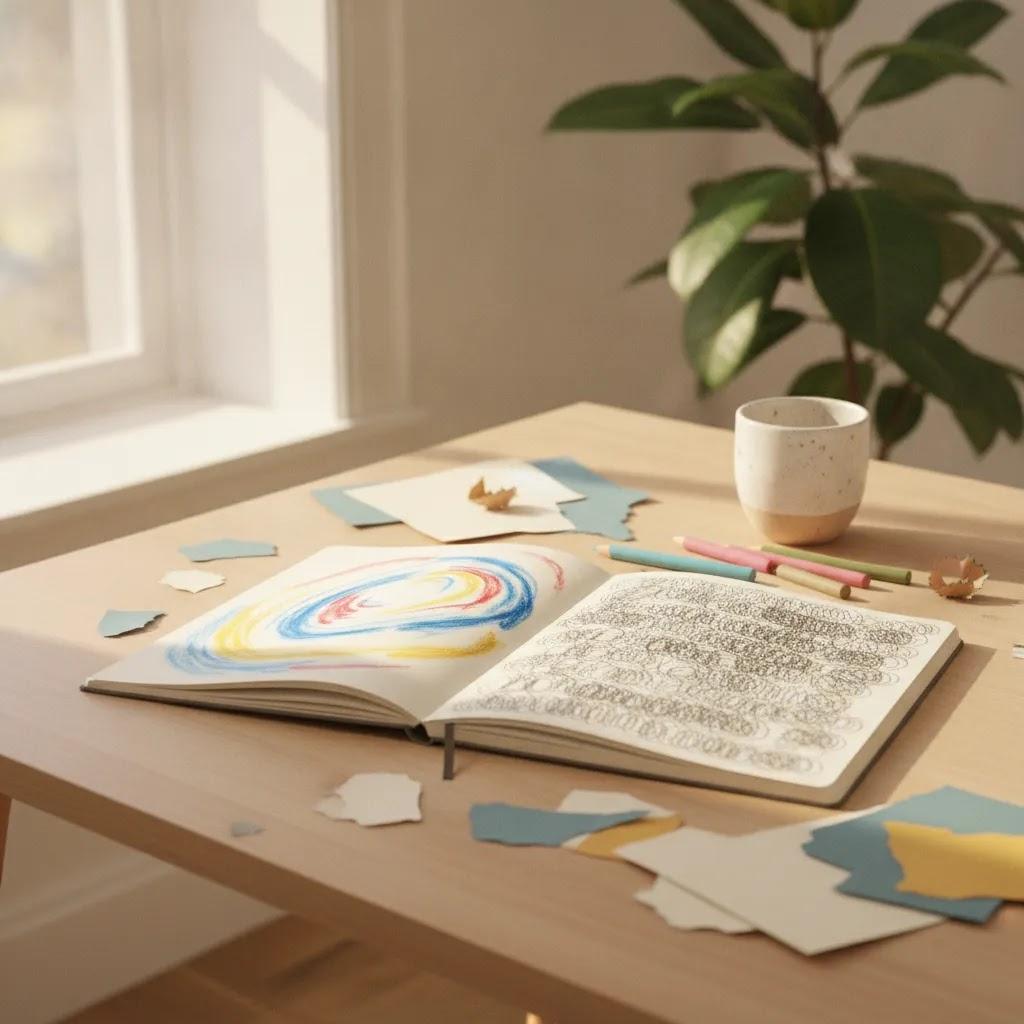
Art therapy benefits for kids can include easier emotional expression, calmer moments during creating, more confidence, gentler parent-child connection, and a clearer way to notice growth over time. For many children, art offers a safer path into feelings when words feel too big, too fast, or simply out of reach.
What helps a child who feels big things but cannot explain them yet? Sometimes it is not another question. Sometimes it is a crayon, a shape, a safe prompt, and enough room to show rather than tell.
That is why many parents want to understand art therapy benefits for kids more clearly. In this article, you will find six age-appropriate benefits that parents often notice, along with what each one may look like in real life. If you want broader background first, you can read more about art therapy for children before coming back to these parent-focused takeaways.
How art therapy benefits for kids compare
Children do not all use art in the same way. A preschooler may use color and movement to settle. A school-age child may begin showing worries, friendships, or family stress through images. Meanwhile, a teen may prefer structured, private, less verbal creative work. The table below is not a scorecard. It is a practical way for parents to notice which benefit may matter most right now.
| Benefit | Best for | What it may look like | Why parents often value it |
|---|---|---|---|
| 1. Another language for feelings | Kids who struggle to explain emotions | Drawing storms, colors, faces, or symbols instead of talking | Reduces pressure to find the “right” words |
| 2. Calming through creating | Kids who get restless, tense, or overwhelmed | Repeating lines, shading, coloring, tearing, pasting, slow mark-making | May support regulation through rhythm and sensory focus |
| 3. Making hard things feel manageable | Kids dealing with change, grief, fear, or shutdown | Showing a memory, worry, or “big feeling” as an image with boundaries | Can create a safer distance from overwhelming material |
| 4. Confidence without performance pressure | Kids who fear getting things wrong | Simple shapes, collage, scribbles, or guided prompts | Helps children experience success without needing perfection |
| 5. Better connection with caregivers | Families who feel stuck in repeated conversations or conflict | Talking about a picture together instead of arguing about behavior | Creates a softer entry point for understanding |
| 6. A record of growth over time | Kids in longer support journeys | Looking back at older drawings and noticing changes | Helps parents and children see patterns and progress |
If you are also comparing formats, the difference between drawing-based support and broader creative modalities can become clearer in this guide to expressive arts therapy vs art therapy. You can also explore broader art therapy fundamentals if you want more context first.
What art therapy is (and what it is not) for kids
A lot of parent confusion comes from the word “therapy.” Some families picture an art class. Others picture a craft hour at home. Both can be wonderful, but they are not the same thing as art therapy.
Art class is usually skill-based. The focus is learning techniques, following steps, and creating a specific outcome. A craft activity at home is often about play, bonding, and enjoyment, sometimes with a side benefit of self-expression.
Art therapy, in its formal sense, is structured emotional support from a trained art therapist. It uses art-making to help a child explore inner experiences safely and at a pace that fits them.
What usually makes something “therapy” is not the paint or the paper. Instead, it is the presence of a trained professional, a clear therapeutic intention, and a process that includes pacing, emotional safety, and reflective support. A session may include art-making plus gentle conversation, observation, and choices that help a child feel in control.
The goal is not to interpret a child’s drawing like a test. It is also not to force disclosure. Rather, it is to create a safe space where expression can happen without pressure. For a simple overview of professional art therapy, the American Art Therapy Association offers a helpful starting point.
Art therapy is often sought for children who have big feelings, stress, transitions, grief, fears, social strain, shutdown, or frequent overwhelm. Teens may use it when talking feels too exposing, or when they want privacy while still being supported. Caregivers may also benefit indirectly because art can give the family a clearer, less confrontational way to notice what the child is carrying.
1. Art therapy benefits for kids include another language for feelings
Many children feel far more than they can say. That gap is one of the clearest reasons art-based support can help. A child may not be able to explain sadness, worry, jealousy, or confusion in a neat sentence. However, they may be able to draw a tiny figure in a huge dark room, or use jagged red lines across a page.
For parents, this matters because the goal is not a perfect drawing. The goal is access. The image gives the child something outside of themselves to point to, change, or talk about if they want to. As a result, pressure often drops, and the child may feel less put on the spot.
This benefit is especially relevant for younger children, children who shut down easily, and children who find direct emotional questions too intense. It may also help neurodivergent children who process experience more visually or sensorily than verbally.
2. Art therapy benefits for kids may include calming through creating

Some children need help settling before they can reflect on anything at all. Art can sometimes support this through movement, repetition, and sensory focus. Slow coloring, tracing circles, pressing clay, layering paper, or following guided lines can give the body a steady task to do.
That does not mean every art activity will feel calming. Some children get energized by paint, mess, or choice. But in a supportive setting, the act of making marks can offer rhythm and containment. In practice, that may help a child move from overload to a more workable state.
Parents often notice this as a small shift rather than a dramatic one. A child’s shoulders drop. Breathing slows. They stop pacing. Then they stay with an activity for a few more minutes. Those small shifts can matter. Daily support resources in Anxiety, Stress & Emotional Wellness and Nervous System & Body Healing can also help parents understand why sensory regulation may come before conversation. If anxiety is a main concern, this guide on art therapy for anxiety may help too.
3. Art therapy benefits for kids can make hard experiences feel more manageable
Children often need distance from difficult experiences before they can approach them safely. Art can provide that distance through symbols, stories, color choices, and metaphors. For example, a child may draw a monster instead of naming fear directly. They may make a “safe island,” a box for worries, or a weather picture that shows how their week felt.
For a parent, this can be one of the most meaningful benefits. The child does not have to relive everything in a blunt, verbal way. Instead, they can approach the feeling sideways, with more control. That sense of control may matter as much as the artwork itself.
It is also why art-based support should be paced carefully. If a child becomes more distressed during or after creative work, more structure or professional support may be needed. This broader topic is explored further in benefits of art therapy for children.
4. Art therapy benefits for kids support confidence without needing “art talent”
Children often live under a lot of evaluation. School, sports, behavior charts, and even casual praise can make them feel watched. Art therapy is different when it is done well. The value is not in making something impressive. It is in making something true, playful, or honest enough for that moment.
This can be a relief for children who freeze when they think they might do something wrong. Structured prompts, simple shapes, and open-ended materials can help them participate without worrying about whether the result is “good.” Over time, that may support confidence, flexibility, and a healthier relationship with mistakes.
Parents sometimes expect obvious self-esteem changes right away. Usually, the shift is quieter. First, a child starts trying. Next, they make choices more freely. They may tolerate mess. They may also return to creative expression on their own. Those are meaningful signs too.
5. Art therapy benefits for kids can improve connection with caregivers
Parents are often looking not only for a child benefit, but for a relationship benefit. Art can help here because it creates a shared object to look at together. Instead of asking, “Why did you do that?” a parent might ask, “Do you want to tell me about this part?” That is a softer doorway.
The artwork can reduce defensiveness because attention is no longer fixed only on behavior or words. Some children talk more easily while drawing. Others may not want to talk, but still appreciate being witnessed without pressure. As a result, this can support trust, curiosity, and co-regulation between parent and child.
For some families, simple structured activities such as circles, patterns, or contained coloring can be especially approachable. You can read more about this style of visual structure in mandala art therapy benefits.
6. Art therapy benefits for kids create a gentle record of growth over time
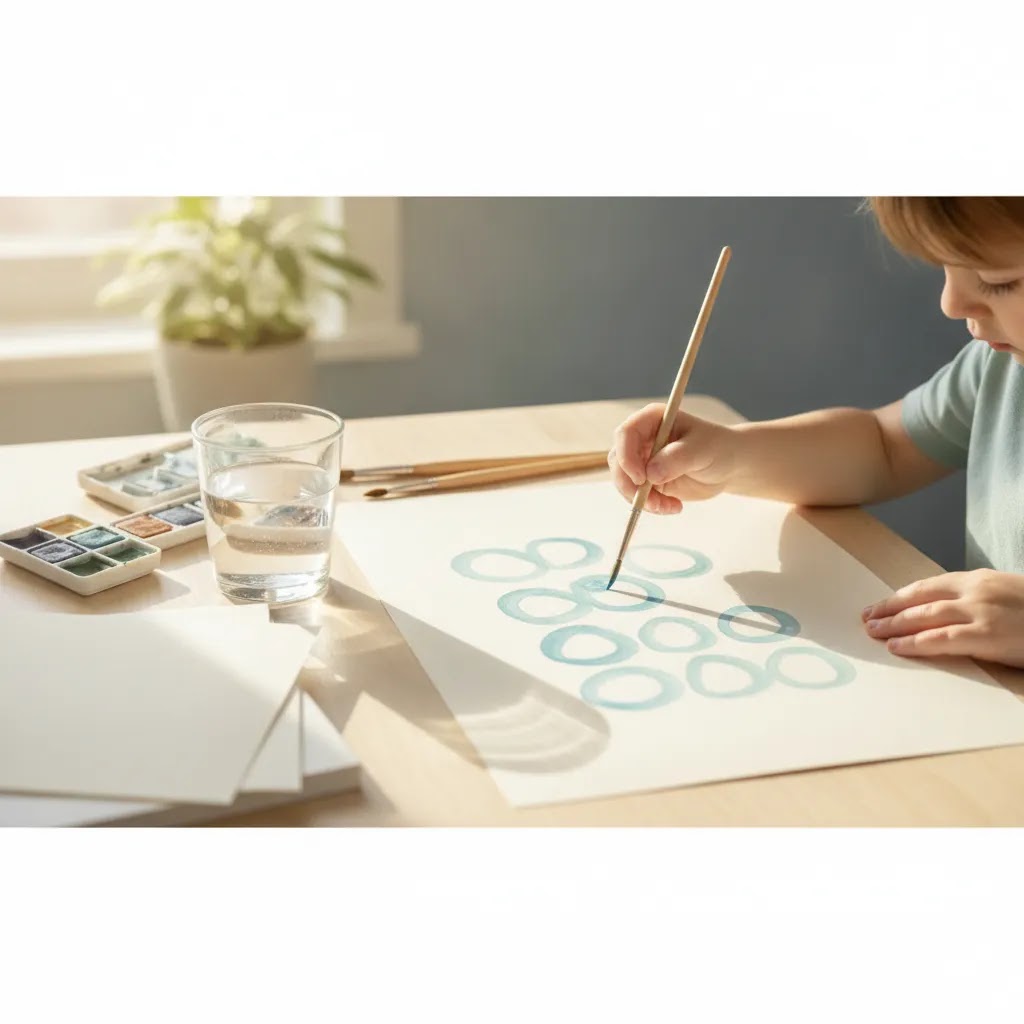
Children change quickly, but progress is not always easy to notice in the middle of daily stress. One overlooked benefit of art-based work is that it leaves something visible behind. Over time, a series of drawings, collages, or guided exercises may show shifts in color use, themes, intensity, confidence, or the child’s ability to reflect.
That visible record can help parents avoid the feeling that “nothing is changing.” Sometimes a child is still having hard days, but they are recovering faster, expressing more clearly, or using more choice and detail in their images. These are not proof of a fixed outcome, but they can be meaningful signs of movement.
This benefit may be especially useful during longer periods of adjustment, such as grief, school transitions, social stress, or burnout-like overwhelm in older children and teens.
What parents can look for before expecting art therapy benefits for kids
Art therapy benefits for kids can be real for many families, but they are not automatic. Fit matters. A child is more likely to engage when the activity matches their age, sensory comfort, and emotional state.
First, look at pressure level. Does the child need lots of freedom, or do they do better with clear prompts and boundaries? Some children relax with blank paper. Others need a guided starting point.
Second, notice sensory fit. Markers, crayons, clay, collage, and digital drawing all feel different. A child who dislikes sticky textures may avoid paint. Meanwhile, a child who loves repetition may prefer patterns, tracing, or structured shape-based work.
Third, consider pacing. Short, contained sessions are often easier than long open-ended ones, especially for children who are anxious, easily frustrated, or new to emotional reflection.
Fourth, watch for after-effects. Supportive creative work may leave a child calmer, clearer, or more connected. If the child regularly leaves more distressed, irritable, or shut down, that is worth pausing on.
Finally, separate support from pressure. A child does not need to produce insight on command. Some days, the benefit is simply that they stayed with the page, made a few marks, and felt a little less alone.
Choosing a qualified art therapist in Singapore for art therapy benefits for kids
If you are considering formal art therapy for kids Singapore options, the practical question becomes: how do you know a provider is properly trained, and how do you know your child will be held safely? A good first step is to ask directly about qualifications and policies. A trustworthy provider should be comfortable answering.
Parents often use professional associations as a starting point for verification. In Singapore, you may see providers affiliated with the Art Therapists’ Association Singapore (ATAS). Some practitioners may also hold membership with international professional bodies such as the Australian, New Zealand and Asian Creative Arts Therapies Association (ANZACATA). Membership does not replace your own judgment about fit, but it can signal adherence to training and ethical standards.
If you want a practical local starting point, this guide on how to find a qualified art therapist in Singapore may help. You can also review general mental health guidance for children through the National Institute of Mental Health.
A parent checklist that usually matters
- Training background: Ask what their art therapy training was, where it was completed, and whether it included child development and trauma-informed practice.
- Supervised practice: Ask whether they completed supervised clinical hours, and whether they still seek supervision or consultation for complex cases.
- Ongoing learning: Ask how they keep skills current, for example continuing education, workshops, and professional supervision.
- Consent and privacy: Ask what confidentiality looks like with children, what information is shared with caregivers, and what exceptions exist (for example, safety concerns).
- Child safeguarding: Ask about safeguarding policies, boundaries, and how they handle concerns about risk or harm.
- Session structure: Ask what a typical session looks like, how materials are chosen, and how the therapist supports a child who freezes, resists, or becomes overwhelmed.
- How progress is discussed: Ask how they reflect progress with caregivers without forcing a child to reveal private content. Many families prefer a balance, enough insight to support home life, without turning sessions into reporting.
Red flags and fit cues
Pay attention to the tone of the first conversation. Over-promising outcomes is a red flag in any child support setting. So is pushing a child too quickly into heavy topics, dismissing sensory discomfort, or acting unclear about boundaries and privacy. On the positive side, a good fit often feels paced and respectful. The therapist notices your child’s cues, offers choices, and does not treat one drawing as a “final answer” about what is happening inside your child.
Pros and Cons
Strengths
- Can help children express feelings without relying only on words.
- May support regulation through movement, rhythm, and sensory focus.
- Offers age-appropriate flexibility for younger kids, school-age children, and teens.
- Can reduce performance pressure because art skill is not the goal.
- May create a safer path into difficult topics through symbols and metaphor.
- Can improve parent-child connection by shifting conversation away from direct confrontation.
- Leaves a visible record that may help families notice patterns over time.
Considerations
- Benefits vary by child, setting, and how the activity is guided.
- Not every child finds art calming. Some may feel overstimulated or frustrated by certain materials.
- Creative activities at home are not the same as working with a qualified art therapist.
- Children facing intense distress may need broader professional support, not only self-guided art activities.
Cost and logistics parents ask about in Singapore
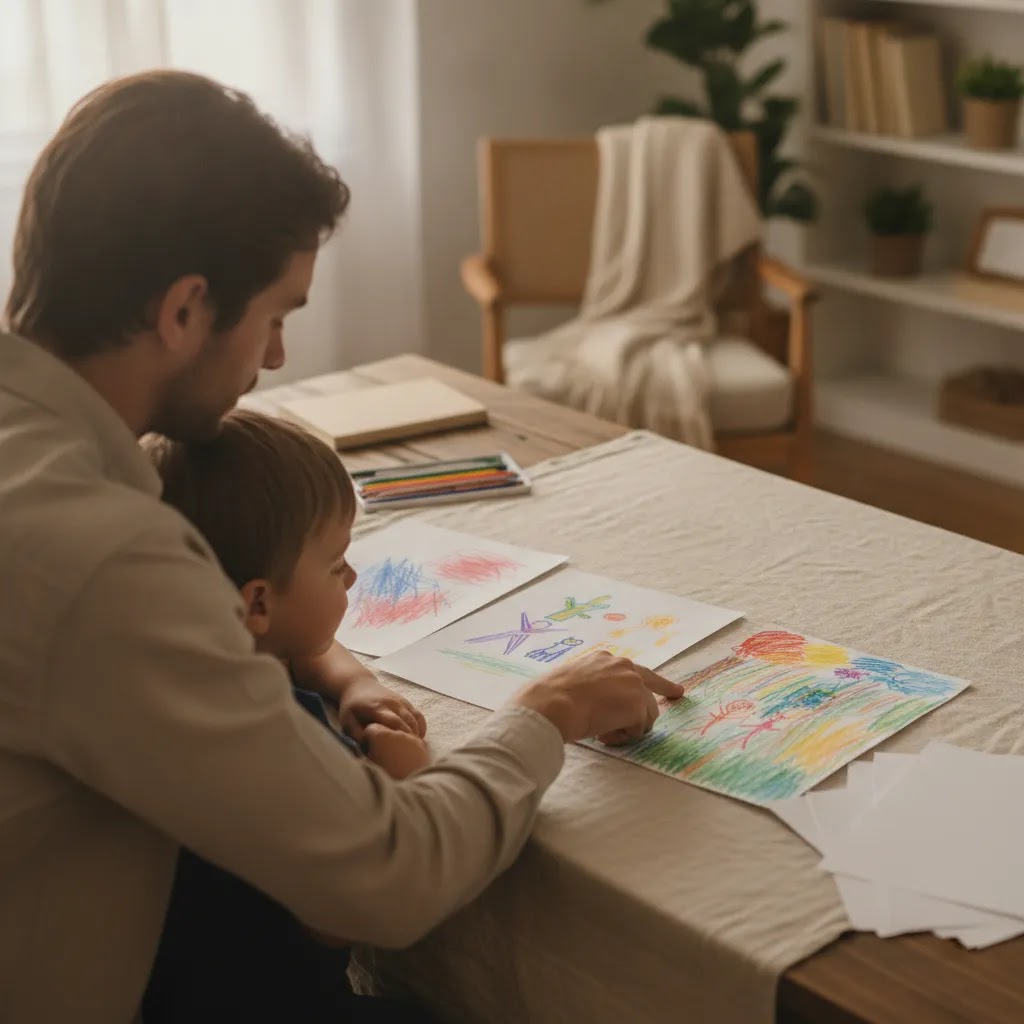
Even when a parent feels confident about the “why,” the real-world questions show up quickly: How much will this cost, how often should we go, and what does the first session look like? Prices vary widely across providers, so it is usually more helpful to understand what drives cost than to search for a single number.
What typically affects pricing
- Therapist qualifications and experience: More training and supervised practice may come with higher fees.
- Session length: Some sessions are shorter for younger children, while others are structured as a standard hour.
- Individual vs group: Group formats may be priced differently and can be a better fit for some children, but not all.
- Location and setting: Clinic-based sessions, school-based sessions, and home-based services may have different pricing due to overhead and travel time.
- Materials: Some providers include materials in the fee, others may charge separately or request that items are brought in.
- Initial consult or intake: Some practices offer a brief call first, while others book a full intake session as the first step.
What the first session often looks like
The first meeting is usually about safety, fit, and pace. A therapist may spend time learning your child’s preferences, sensory comfort, and what support you are hoping for. Some children jump into materials right away. Others need time to watch, test, or simply sit with a few choices. You may be invited into part of the session, or asked to step out for part of it, depending on your child’s age and the therapist’s approach.
If a provider offers a brief initial call, treat it as a two-way check. You are not only sharing your concerns. You are also noticing whether the therapist communicates clearly and respectfully about boundaries, privacy, and expectations.
Questions to ask before booking
- How do you structure sessions for my child’s age?
- How involved are caregivers, and what does “involvement” look like in practice?
- What do you do if a child refuses, gets overstimulated, or becomes tearful?
- How do you handle confidentiality for children, and what is shared with parents?
- How frequently do families typically start, and how do you review whether the frequency still fits?
- Do you coordinate with schools if needed, and what consent is required?
- What are your cancellation policies and fee policies?
Planning without pressure
Many families start with a short run of sessions and then reassess. Budgeting is not only about money, it is also about time, emotional energy, and your child’s capacity for new routines. If your child is already stretched thin by school and activities, fewer sessions with steadier pacing may be more realistic than an intensive schedule that becomes another stressor.
Frequently Asked Questions
What is art therapy in simple terms for parents?
Art therapy uses drawing, painting, collage, clay, or other creative processes to help a child express and work through inner experiences. In formal care, it is provided by a trained professional. More informally, art-based emotional support can also include guided creative activities that help children notice feelings, settle, and reflect in a gentler way.
What are the main art therapy benefits for kids?
The main art therapy benefits for kids often include easier emotional expression, support for calming and regulation, safer ways to approach difficult experiences, more confidence without perfection pressure, stronger caregiver connection, and a visible record of growth over time. Which benefit matters most usually depends on the child’s age, temperament, and what kind of stress they are carrying.
When would parents be recommended art therapy for their kids?
Parents commonly consider art therapy when a child has feelings that come out sideways, for example meltdowns, withdrawal, irritability, perfectionism, or frequent stomachaches and “I don’t know” responses that seem linked to stress. It may also be considered during transitions like a move, school change, separation, bereavement, or friendship ruptures.
Some families explore it simply because talking feels too intense for their child, and a creative pathway feels safer. If you are unsure whether art therapy is the right level of support, it can help to speak with a qualified provider about fit and scope before committing.
What positive effects do parents often notice?
Parents often describe small, practical shifts rather than dramatic changes. A child may start showing feelings through pictures instead of acting them out. They may calm faster during or after making art, or become more willing to try new things without asking if it is “right.”
Some parents notice that conversations soften because it is easier to talk about a drawing than to argue about behavior. These effects can be meaningful, but they vary by child and usually show up as patterns over time.
Is art therapy only for children with serious emotional struggles?
No. Some families use it during periods of grief, shutdown, or major stress. Others use it more gently for emotional awareness, confidence, or connection. Art-based support does not have to begin only in crisis. Still, if a child seems persistently unsafe, unable to function, or deeply distressed, professional evaluation may be needed.
Do kids need to be good at art to benefit?
No. In fact, art skill is usually beside the point. The value often comes from color, movement, choice, story, and the act of externalizing feelings onto a page. Children who worry about being “bad at art” may need extra reassurance that there is no right-looking result and no performance standard to meet.
How to tell if a child is gifted in art?
Giftedness is not always about drawing “realistically.” You might notice unusually strong observation, creative problem-solving, persistence with detail, or a tendency to return to art without being prompted. Some children also show an early sense of composition, storytelling through images, or curiosity about how materials work.
Even if a child is talented, art therapy is usually not focused on developing skill. It is focused on supporting expression, choice, and emotional safety. A child can be gifted and still benefit from the process-based, non-evaluative space.
How is art therapy different from a regular craft activity?
A craft activity usually focuses on making something. Art therapy focuses more on the process, the child’s experience during creation, and what the image may help them notice or communicate. That does not mean every emotional art activity is formal therapy. The key difference is the intention, pacing, and reflective support around the making.
Can parents try art-based emotional support at home?
Yes, many parents begin with simple, low-pressure activities at home. Short prompts, color-based check-ins, or drawing feelings as weather can be approachable starting points. Keep expectations light. Home activities may support expression, but they are not a replacement for qualified care if a child is struggling in a bigger or more persistent way.
What ages can benefit from art therapy?
Many ages can benefit, but the format should change with development. Younger children often respond well to sensory, playful, and simple visual prompts. School-age children may begin using more symbolism and storytelling. Teens may prefer privacy, structure, and less childish-looking materials. Age fit matters as much as the activity itself.
Is art therapy for kids available in Singapore?
Yes, parents looking for art therapy for kids Singapore options may find private providers, school-linked supports, and related creative mental wellness services. Availability, session style, and cost can vary. If you are exploring local options, it helps to review training, approach, privacy practices, and whether the format suits your child’s developmental stage.
Is art therapy good for CPTSD?
If you are asking this because your child has been through prolonged or repeated stress, it may help to think in terms of support needs rather than labels. Some children and teens may find art-based work helpful because it can offer distance, choice, and a nonverbal way to express what feels too intense to say out loud.
At the same time, these experiences can be complex, and not every art-based approach is appropriate without a properly trained therapist and careful pacing. If there are safety concerns, self-harm concerns, or severe day-to-day impairment, it is important to seek help from a licensed mental health professional who can assess what level of care is needed.
How long does it take to notice benefits?
That varies. Some parents notice immediate shifts in calm or expression during a single session. Other changes, such as stronger trust, clearer emotional language, or steadier routines, may take longer. It is usually more helpful to look for patterns over time than to expect one dramatic breakthrough after a single creative activity.
Key Takeaways
- Art can give children a way to show feelings before they can explain them clearly.
- For some kids, creating may support regulation through rhythm, movement, and sensory focus.
- Symbolic expression can make difficult experiences feel more approachable and less direct.
- Parents often value the relationship benefit as much as the child benefit.
- The best results usually depend on age fit, sensory fit, pacing, and the level of support around the activity.
A short parent recap on art therapy benefits for kids
If you only remember one thing, let it be this: children do not always need better words first. Sometimes they need a safer way in. Art-based support may help by giving feelings shape, slowing the body, creating distance from hard moments, building confidence, softening parent-child conversations, and leaving behind small signs of growth that are easier to see later.
| No. | Benefit | Best for | Why it matters |
|---|---|---|---|
| 1 | Another language for feelings | Kids who cannot easily explain emotions | Lowers pressure to talk before they are ready |
| 2 | Calming through creating | Kids who feel tense or overwhelmed | May support regulation through sensory focus |
| 3 | Making hard experiences manageable | Kids dealing with change or fear | Can create safer distance through symbols |
| 4 | Confidence without performance pressure | Kids who fear mistakes | Encourages expression over perfection |
| 5 | Better caregiver connection | Families feeling stuck | Creates a softer way to talk and notice |
| 6 | A record of growth | Longer support journeys | Helps families see change over time |
Conclusion
Parents often come to this topic looking for answers, but what helps most is often careful noticing. Which materials does your child move toward? What kind of prompt feels safe enough to begin? Which small changes show up after they create?
Art therapy benefits for kids may matter most not because they solve everything, but because they offer another path when talking feels too hard. If you want to keep exploring the bigger picture, browse Art Therapy Fundamentals or look into Art Therapy Singapore for local context. If a gentle, guided creative approach feels like the right next step, Daily Lemons can be one calm place to keep learning at your own pace.
This article is for educational purposes only and does not provide medical, psychiatric, or diagnostic advice. Art-based emotional support may help some children, but outcomes vary by child, context, and level of support. Home creative activities are not the same as treatment from a qualified professional. If a child shows signs of severe distress, risk of harm, persistent shutdown, or major changes in daily functioning, seek help from a licensed clinician, local emergency services, or an appropriate crisis resource right away. For formal art therapy, review a provider’s current credentials, scope of practice, privacy policies, and applicable local regulatory standards before beginning.