Why Art Therapy Works for Adults: Evidence-Based Outcomes
Why can a page full of color, shapes, scraps, or rough pencil lines sometimes say more than a long conversation? The benefits of art therapy for adults often become clear in real life: after a hard breakup, during burnout, while grieving, or when stress sits so heavily in the body that words feel thin. You do not need to be artistic for this to matter. In fact, one of the most studied parts of art therapy is not artistic skill at all. It is the way creative expression may help people process emotion, regulate stress, and make inner experiences easier to notice and share.
This article explores the benefits of art therapy for adults through an evidence-based lens. In other words, it looks at what research suggests, where results seem strongest, and where the limits are. You will see how the benefits of art therapy for adults may show up around stress, trauma, grief, medical care, aging, and emotional communication. You will also get a realistic picture of what a session can involve. If you want broader background first, you can explore Art Therapy Fundamentals or this overview of art therapy fundamentals. If you are simply trying to understand why drawing, painting, collage, or image-making can feel relieving, this is a good place to begin.
Benefits of art therapy for adults in everyday life
Art therapy is a guided form of emotional support that uses image-making as part of reflection and communication. The goal is not to produce impressive work. Instead, the goal is to help you express, organize, and explore experiences that may feel confusing, intense, or hard to verbalize.
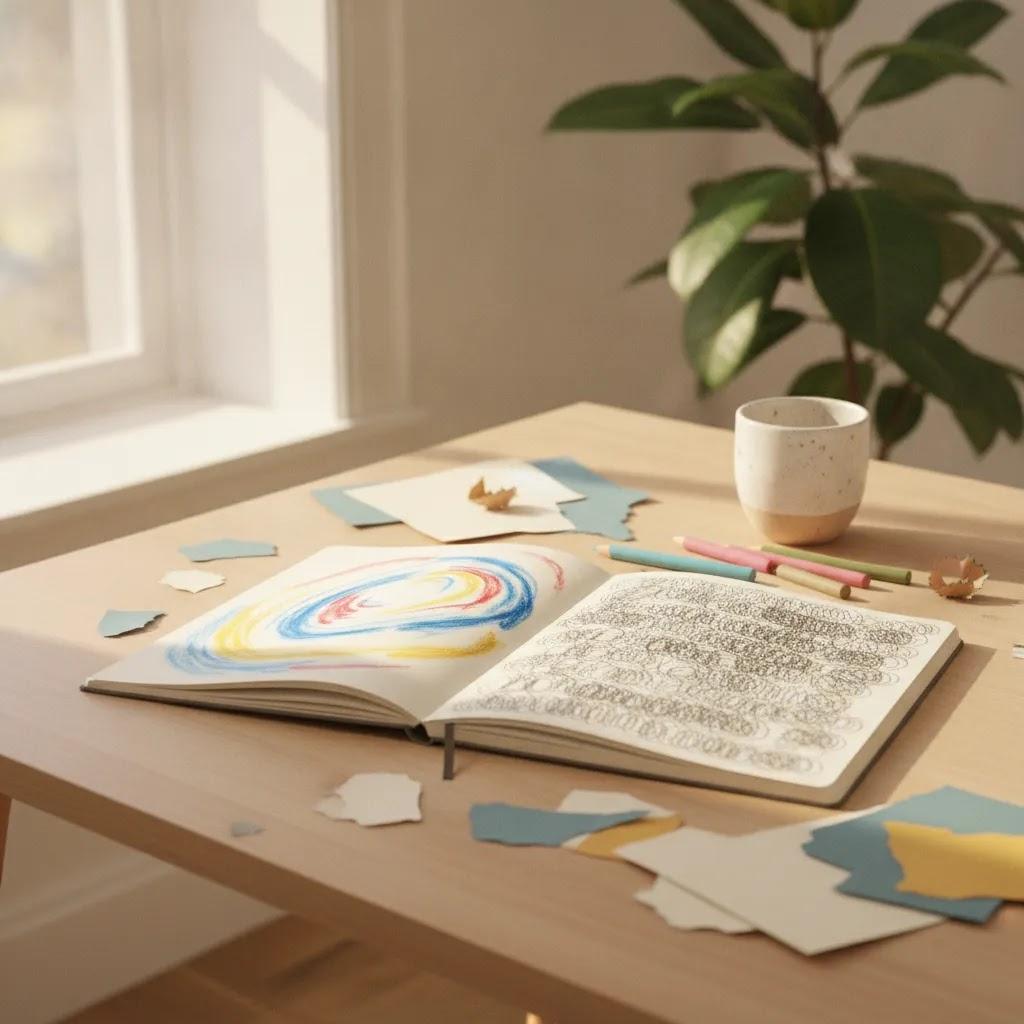
For adults, this often matters when talking feels too direct or too tiring. A color choice, a repeated shape, or even the act of tearing and arranging paper can create enough distance to look at a feeling without being swallowed by it. As a result, that distance may support insight, emotional safety, and a greater sense of control.
Research in this area usually examines outcomes such as reduced stress, lower anxiety, improved mood, better emotional expression, increased self-awareness, and stronger coping capacity. Some studies also look at pain, fatigue, trauma-related distress, and quality of life in medical settings. If you want a wider overview of related findings, art therapy benefits are often discussed across several adult use cases, not just one.
Evidence behind the benefits of art therapy for adults
The research base for the benefits of art therapy for adults is promising, but mixed in quality. That is a fair place to start. Some studies are small. Others use short programs. In addition, methods vary a lot. Even so, the benefits of art therapy for adults show up often enough in research to take seriously.
Benefits of art therapy for adults with stress and anxiety
Adults in art therapy programs often report reduced stress and anxiety after sessions or over a short series of sessions. This may happen because creative activity can slow attention, provide a structured focus, and help externalize internal tension. For some people, that shift feels more accessible than silent meditation or open-ended journaling.
Adults who are specifically looking at stress-related use cases may also want to read more on Anxiety, Stress & Emotional Wellness, our article on art therapy for anxiety, or this guide to work stress singapore if job strain is part of the picture.
Benefits of art therapy for adults and emotional awareness
Another recurring outcome is improved awareness of feelings. People may notice patterns they had not seen before. For example, they may draw pressure as darkness, emptiness as blank space, or conflict as fragmentation. That does not make every image deeply symbolic. However, it can give you a gentler way to notice what your mind and body have been carrying.
Benefits of art therapy for adults after trauma
Trauma research around art therapy suggests it may help some adults process overwhelming material in a less verbal format. This can be useful when memory is fragmented or when direct discussion feels too activating. Still, trauma support needs care. Art therapy may help, but it is not automatically enough on its own, especially if you are dealing with severe distress, dissociation, or safety concerns.
Where the benefits of art therapy for adults appear most clearly

The strongest practical value often shows up in specific life situations rather than in abstract claims. Adults do not seek support in a vacuum. They usually turn toward it when something feels hard to hold alone.
During burnout, overload, and chronic stress
Adults under constant pressure may struggle to identify what they feel until their body forces the issue through tension, insomnia, irritability, or emotional numbness. Art therapy may help by creating a contained task with sensory feedback. You work with materials, make choices, and track what changes. As a result, that process can interrupt the looping feeling of mental overdrive.
After loss, heartbreak, or major change
Grief does not always arrive as clear sadness. It can feel flat, restless, angry, scattered, or physically heavy. Creative work may give shape to those mixed states. A memory box, layered collage, or visual timeline can help adults explore meaning, connection, and change without forcing a neat story before they are ready.
If image-making through arrangement and fragments appeals to you, our piece on collage art therapy benefits explores why that format can feel especially approachable. You can also read grief therapy singapore for more gentle support options around loss.
In medical and caregiving contexts
Studies involving adults in cancer care, chronic illness care, and caregiver strain often look at emotional relief, quality of life, and stress reduction. Art therapy in these settings is not about curing illness. Instead, it may support comfort, expression, and a stronger sense of personhood in situations where life can start to feel reduced to appointments and tasks.
For older adults
Older adults may benefit through social engagement, memory cues, identity expression, and mood support. In dementia-related settings, expectations should stay realistic. Art therapy may support engagement and communication, but it does not reverse cognitive decline. Ultimately, the value often lies in connection, dignity, and moments of shared meaning.
Why the benefits of art therapy for adults can feel real
Evidence is easier to trust when the mechanism makes sense. Art therapy may help adults not because art is magical, but because the process combines several useful elements at once.
It gives feelings a form
Inner experiences can feel vague until they become visible. Once a feeling is on paper, it may seem less slippery. You can look at it, change it, describe it, or set it aside. That shift from internal fog to external form is one reason the benefits of art therapy for adults can feel immediate, even before deeper work happens.
It engages the senses
Texture, pressure, movement, color, and rhythm all matter. Sensory engagement may help regulate arousal and bring attention back into the present moment. For neurodivergent adults or people who find verbal processing exhausting, this can be a more natural entry point.
It balances structure and freedom
A blank page offers choice, but a prompt offers containment. Art therapy often sits between the two. That middle ground can feel safer than total openness and less rigid than purely verbal exercises. Adults who freeze under “tell me how you feel” may respond better to “show me what today feels like in color.”
It supports reflection after expression
The image is only part of the work. Reflection with a trained professional can help connect the creative process to your daily life, relationships, stress patterns, and coping habits. That is one reason art therapy differs from simply doing crafts alone, even though solo creativity can still be helpful.
If you are curious about styles of image-making, mandala art therapy benefits and creative art therapy benefits show how different formats may support different kinds of reflection.
Art therapy activities and prompts you can try between sessions
Here’s the thing: many adults feel a little steadier when they have a low-pressure way to stay in touch with their inner world between appointments. Small creative check-ins can help you notice shifts early. For example, you may catch stress creeping back in, feel grief getting heavier, or notice yourself becoming numb.
These ideas are not a replacement for professional care. Instead, think of them as gentle experiments in attention. If you are working with an art therapist, you can also bring what you make into session and explore it together.
How to use prompts safely
From a practical standpoint, structure keeps these exercises supportive rather than overwhelming.
- Time-box it: 10 to 15 minutes is usually enough.
- Use a stopping rule: if you start feeling flooded, panicky, or dissociated, pause and shift to something grounding, such as looking around the room and naming five objects, or washing your hands and noticing the temperature.
- End with one reflection question rather than a full analysis: “What did I notice in my body?” is often enough.
Adult-appropriate prompts you can actually picture doing
Consider this: you do not need fancy supplies. Printer paper, a pen, or a few markers can work. If you prefer not to keep physical art at home, you can tear it up afterward, store it out of sight, or use a digital drawing app.
- Emotions-in-color map: pick 3 to 5 colors that match how today feels, then fill the page in shapes or blocks. Label each color with one word, like “tight,” “foggy,” or “restless.”
- Collage: “what I am carrying”: cut or tear images or words that match what you have been holding lately, then arrange them into a single page. You can include empty space on purpose if that feels true.
- Visual timeline of a transition: draw a simple line with a few points, “before,” “during,” “now,” and “next.” Add colors or symbols instead of detailed scenes. This can be helpful after a breakup, a move, a health change, or a job shift.
- Container image for worry: draw a container, such as a jar, box, envelope, or safe. Put your worries inside it as shapes or words. The point is not to get rid of worry, it is to create a boundary around it.
- Line drawing for grounding: without lifting your pen, draw one continuous line for two minutes. Let it loop, shake, or soften. Notice whether your breath changes as the line changes.
- Clay or putty squeeze: if you have something moldable, shape it while focusing on sensation. You can make a simple “stone” shape and press your thumb into it, then notice pressure and release.
A short reflection set (keep it simple)
After you finish, pick one or two questions. More is not automatically better.
- What did I notice in my body while making this?
- What part felt easy, and what part felt hard?
- If I made this again tomorrow, what might I change?
When to do prompts solo vs with support
What many people overlook is that the same prompt can feel very different depending on your nervous system state. If trauma is active, if you are having intrusive images, or if art-making reliably pulls you into material that feels too intense to hold, some exercises are safer inside a supported session.
In those moments, it can help to choose grounding-focused prompts over memory-focused ones. Alternatively, you may need to pause creative work and reach out for qualified help.
What these benefits of art therapy for adults do not mean

Positive findings do not mean art therapy works the same way for every adult. Personal history, the therapist’s training, the setting, the prompt, and your comfort with the process all shape the experience.
Research on the benefits of art therapy for adults also has limits. Small sample sizes are common. Outcome measures differ between studies. Sometimes programs combine art therapy with other support, which makes it harder to isolate what caused the improvement. A short-term drop in stress after a session also does not always translate into lasting change.
This matters because honest expectations are protective. Art therapy may help you express emotion, lower stress, and build insight. However, it may not be enough if you are in crisis, unable to stay safe, or facing severe trauma reactions that need higher-level care. If you want a broader reading path, our collection of art therapy benefits articles can help you compare topics without assuming one approach fits every situation.
Limits and benefits of art therapy for adults
The reality is simple: a method can be valuable and still not feel comfortable for everyone. It is worth saying plainly. Art therapy may be supportive, but it can also feel exposing, frustrating, or simply like the wrong fit at a particular time.
Emotional activation is possible
Image-making can bypass the talking part of the mind. That can be useful. It can also bring up feelings faster than you expected. Some adults notice sadness, anger, fear, or body sensations rising during or after sessions. This is not automatically a bad sign, but it does mean pacing matters.
If you feel emotionally flooded after sessions, have intrusive imagery, notice sleep disruption, or feel more unsafe in your body, it may be time to slow down, adjust the prompt, or shift toward stabilization-focused work. If safety is a concern, or if you feel unable to stay safe, higher-level support is more appropriate than pushing through.
Perfectionism and self-criticism can get triggered
Adults who grew up being evaluated on performance sometimes find art-related tasks unexpectedly activating. You might notice embarrassment, harsh self-talk, or a strong urge to do it right. In a well-held process, those reactions can become meaningful information. In a poorly held process, they can become another source of stress.
Ambiguity can feel uncomfortable
Art therapy often includes open-ended prompts, and the meaning of an image is rarely one fixed thing. Some adults love this. Others feel unsettled by it, especially if they are already overwhelmed or craving clarity. If you tend to feel anxious when there is no clear answer, you may prefer a more structured session style or a therapist who offers more containment and step-by-step guidance.
Group formats are not always a match
Group art therapy can be supportive for connection and shared experience. Still, it can also feel too public. Some adults worry about being watched, judged, or compared. Privacy concerns can be real, especially in small communities. If you feel guarded in groups, individual sessions may be a better starting point.
Accessibility barriers are real
Cost, scheduling, transportation, disability access, privacy at home, and even the practical mess of materials can affect whether art therapy is workable. Digital tools can lower the barrier for some people. On the other hand, they can feel less supportive if you want in-person presence.
Expectations management helps protect you
Art therapy typically aims to support expression, coping, meaning-making, and emotional awareness. It does not promise instant resolution, and it cannot guarantee outcomes. For some concerns, art therapy may be one supportive part of care, not the entire plan. A good provider should be able to talk about what art therapy can realistically offer in your situation and what other forms of support might be better if your needs are beyond their scope.
How to tell if the benefits of art therapy for adults might fit your needs
You do not need artistic talent, and you do not need a dramatic backstory. Art therapy may be worth exploring if words tend to shut down, if you process visually, or if stress lives in your body more than in clear thoughts.
- You often know you feel “off,” but cannot explain why.
- You find journaling too open-ended or emotionally tiring.
- You want a guided process rather than random crafting.
- You feel drawn to images, color, movement, or sensory materials.
- You want support with stress, grief, trauma, identity shifts, or emotional overwhelm.
A good starting point is checking whether the provider explains their training, approach, consent practices, and scope clearly. In some regions, credentials and regulation vary. If you are comparing local options, our art therapy singapore overview may help illustrate what to look for in provider listings, programs, and practical questions.
DailyLemons also publishes gentle educational resources for people exploring non-verbal emotional support. If you want to keep reading at your own pace, the Art Therapy Fundamentals section brings together foundational topics without pressure to decide quickly.
Some adults also use digital tools between sessions or as a lower-pressure way to reflect. A resource like DailyLemons may help you notice emotions through creative prompts and self-exploration, though it should not replace licensed care where that level of support is needed.
What “qualified” can mean for adult art therapy support

What many people overlook is that art therapy is a defined profession in many regions, with training expectations and ethical standards. At the same time, titles and regulation can vary widely by country, and sometimes by state or province. That means two people can offer art-based support while having very different backgrounds, supervision, and responsibilities.
If you are seeking art therapy for stress, grief, trauma, or anything that feels tender, it is reasonable to ask simple, practical questions about qualifications. You do not need to interrogate anyone. You are just checking whether the support is held with the level of care you deserve.
A practical checklist for vetting a provider
- Training and education: What did they study, and is it specifically art therapy or a related field with additional art therapy training?
- Supervised experience: Do they describe supervised clinical hours or supervised practice as part of their training?
- Ethical standards: Are they accountable to a professional code of ethics, and can they name the organization or board that sets it?
- Informed consent: Do they explain what sessions are like, what the boundaries are, and what you can expect before you begin?
- Confidentiality: Do they clearly explain how privacy works, including limits of confidentiality that may apply in their setting?
- Experience with your concern: Have they worked with the kind of stressor you are dealing with, such as grief, trauma-related distress, caregiver strain, or chronic illness?
- Scope and referrals: How do they handle situations that are beyond their scope, and do they have a process for referring you to additional support if needed?
Regulation and professional bodies (a light touch)
Now, when it comes to credentials, you may see different letters and titles depending on where you live. In the United States, some readers look for credentialing that aligns with the American Art Therapy Association (AATA), and in some cases local licensing boards may apply depending on the practitioner’s base license and where they practice. Outside the US, professional associations and regulatory approaches differ.
If anything feels unclear, asking “What credentialing body or board are you accountable to?” is usually a good starting point. A qualified provider should welcome these questions without defensiveness. Clarity is part of creating safety, and safety is part of what makes the work possible.
Frequently Asked Questions
What is art therapy for adults?
Art therapy for adults is a guided form of emotional support that uses creative activities such as drawing, painting, collage, or mixed media to help you explore thoughts and feelings. The focus is not on making good art. It is on expression, reflection, and communication. A trained therapist may use the image-making process to help you notice patterns, process hard experiences, and build coping tools. Adults often explore it during stress, grief, burnout, trauma recovery, identity changes, or periods when words feel hard to access.
Do you need to be artistic for art therapy to work?
No. Artistic skill is not a requirement, and many adults who benefit from art therapy start out saying they are bad at art. The value usually comes from the process, not the finished image. Simple marks, colors, shapes, and arrangements can be enough to express something meaningful.
In fact, worrying about performance can soften once you understand that the goal is not aesthetics. If perfectionism is part of your stress pattern, art therapy may even help you notice how that pressure shows up and practice a different way of relating to yourself.
What are the main benefits of art therapy for adults?
The most commonly reported benefits of art therapy for adults include reduced stress, lower anxiety, better emotional awareness, improved self-expression, and a stronger sense of relief or grounding. Some adults also experience more confidence in discussing feelings after they first express them visually.
In medical or caregiving settings, art therapy may support quality of life and emotional comfort. Results vary, though. Your experience may depend on the therapist, the setting, the kind of prompt used, and whether the approach fits how you naturally process emotion and sensory information.
Can art therapy help with trauma?
It may help some adults with trauma by offering a less verbal way to process overwhelming experiences. This can be especially helpful when direct discussion feels too intense or when memories are hard to organize. Still, trauma work needs care and pacing.
Art therapy is not automatically the right fit for every person at every stage. Some people may need additional support, stabilization, or other forms of care alongside it. If creative work leaves you feeling more overwhelmed or unsafe, that is a sign to slow down and seek qualified professional guidance.
How is art therapy different from making art on your own?
Making art on your own can be soothing and meaningful, but art therapy adds a trained relational component. The therapist helps create emotional safety, offers prompts or structure, and supports reflection without pushing you to interpret everything in a fixed way. That guided process may help connect what happens on the page to patterns in your daily life.
Solo art can still be valuable for stress relief and self-expression. Art therapy is different because it combines creativity with therapeutic intention, observation, and conversation.
Is there evidence that art therapy reduces stress?
Yes, there is evidence suggesting art therapy and structured art-making may reduce stress in many adults, at least in the short term and sometimes over longer programs. Studies often measure outcomes such as self-reported stress, anxiety, mood, or biological stress markers. Results are encouraging, but not uniform.
Different study designs, populations, and intervention lengths make it hard to generalize too broadly. A calming creative session may help you feel better in the moment, but lasting change usually depends on consistency, fit, and the wider support around you.
Who may benefit most from art therapy?
Adults who struggle to put emotions into words may benefit a great deal. This can include people experiencing grief, stress, anxiety, burnout, trauma-related distress, chronic illness, caregiving strain, or major life transitions. Neurodivergent adults may also appreciate the visual and sensory structure.
That said, art therapy is not reserved for people in acute difficulty. Some adults use it for self-discovery, emotional insight, or identity exploration. The better question is often not “am I distressed enough?” but “does this way of expressing and reflecting feel accessible to me?”
What happens in a typical adult art therapy session?
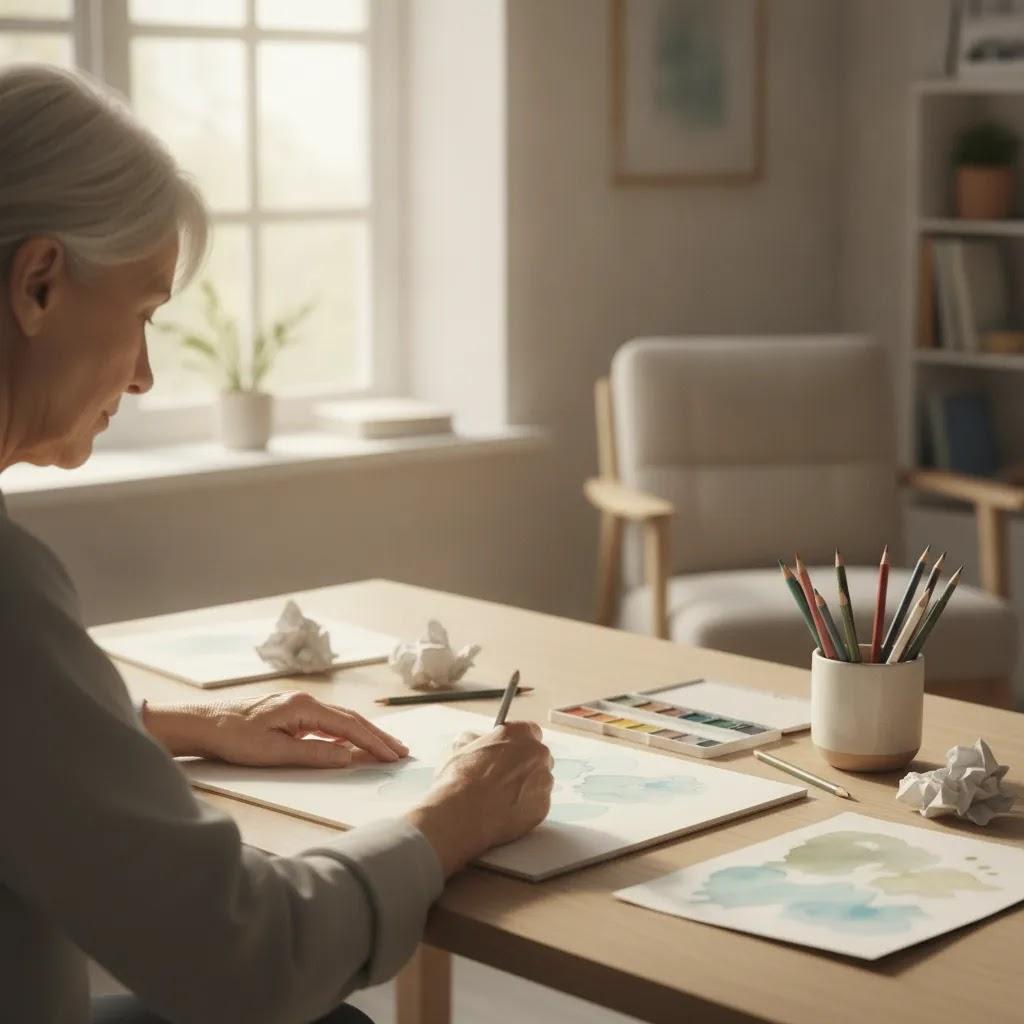
A typical session may begin with a brief check-in, followed by a prompt, open studio time, or a specific art activity. You might work with pencils, paint, markers, collage materials, clay, or digital tools. After creating, there is usually time to reflect on the process and the image itself.
The therapist may ask gentle questions about what you noticed, what felt easy or hard, and what connections you see to your life. Sessions vary widely, so asking about format, pace, and materials before starting is completely reasonable.
Can art therapy help adults with medical conditions or cancer care?
It may. In medical settings, art therapy is often used to support emotional expression, stress relief, comfort, and quality of life. Adults in cancer care, pain care, or long-term treatment settings may find it helpful to have a space where they are not only a patient, but a person with feelings, memories, and agency.
This does not mean art therapy treats the medical condition itself. The benefit is usually supportive rather than curative. It may work best as one part of a broader care plan shaped by your healthcare team.
Is art therapy safe for everyone?
Not always in the same way. Art therapy is generally low risk, but creative work can bring up strong feelings, painful memories, or unexpected vulnerability. That is why pacing and provider skill matter. If you are in immediate danger, unable to stay safe, or feeling severely overwhelmed, urgent support is more appropriate than a general wellness activity.
It is also wise to check a provider’s qualifications and experience, especially for trauma-focused work. A gentle, well-held process may feel supportive. An unstructured one may feel too exposing for some people.
What are the disadvantages of art therapy?
Potential disadvantages can include emotional activation, feeling flooded after sessions, frustration or self-criticism if perfectionism gets triggered, and discomfort with ambiguity when prompts are open-ended. Some adults also find group formats too exposing. Practical barriers matter too, including cost, scheduling, privacy, disability access, and materials.
If you notice sleep disruption, intrusive imagery, or feeling less safe after sessions, it is a sign to slow down and discuss pacing with a qualified provider, or seek higher-level support if needed.
What is the purpose of art therapy for adults?
The purpose is typically to support expression and reflection, especially when words feel limited. For many adults, art therapy is a way to externalize emotion, build self-awareness, practice coping skills, and find meaning during stress, grief, trauma recovery, identity shifts, or health-related strain. It is not about producing good art, and it is not a guarantee of any specific outcome.
It is a structured space where the creative process can support emotional communication and insight.
Does art help with Alzheimer’s?
Creative activities, including art-making, may support engagement, mood, communication, and quality of life for some people living with Alzheimer’s or other dementias. In that context, the value is often about connection and identity, not reversing cognitive decline. If you are a caregiver, it can help to keep expectations gentle and focus on the experience rather than the result.
For medical guidance, it is best to coordinate with the person’s healthcare team and any program working directly with dementia care.
Which is better, EMDR or art therapy?
It depends on your needs, timing, and what feels tolerable. EMDR is a structured approach that some adults use for trauma-related distress, and it is typically delivered by specially trained licensed clinicians. Art therapy may be a better fit if you process visually, struggle to access words, or want a creative route into emotional material.
Some people use both at different stages, or alongside other supports. If trauma is involved, the safest path is usually to speak with a qualified provider about your history, current stability, and what type of pacing and structure would be most supportive.
Key Takeaways
- The benefits of art therapy for adults often include stress relief, emotional expression, self-awareness, and support during grief, trauma, or major life change.
- Research is promising, but study quality varies, so outcomes should be viewed with care rather than certainty.
- Art therapy can help because it gives feelings a visible form, engages the senses, and creates a structured space for reflection.
- You do not need artistic skill for art therapy to be useful. Process matters far more than talent.
- Art therapy may be one helpful part of support, but it is not a substitute for urgent or higher-level care when safety is a concern.
Conclusion
The strongest case for the benefits of art therapy for adults is not that it works like magic. It is that it offers a different route into emotional life, one that may feel more reachable when language is tired, guarded, or simply not enough. Evidence suggests that many adults experience lower stress, better emotional awareness, and meaningful relief through structured creative work. That is especially relevant during burnout, grief, trauma recovery, caregiving strain, and health-related stress.
The most useful next step is often a quiet one: notice what kind of expression feels least forced for you. If images, color, collage, or guided prompts feel more natural than talking, that signal is worth respecting. DailyLemons offers gentle resources for exploring emotional expression in a non-clinical way, including educational content and creative self-reflection pathways you can browse at your own pace. If you want to keep reading, the broader art therapy fundamentals library can help you compare approaches without pressure.
This article is for educational purposes only and does not provide medical or mental health advice. Art therapy outcomes vary by person, provider, and context. If you are in immediate danger, feel unable to stay safe, or are experiencing severe distress, contact local emergency services, a crisis resource, or a qualified licensed professional right away. If you are seeking art therapy, check a provider’s current credentials, scope of practice, and local regulatory standards before beginning.