How Does Art Therapy Target Anxiety? (2026 Guide)
Anxiety does not always arrive as a clear thought. Sometimes it shows up as a tight chest, restless hands, racing images, or a feeling that words are moving too slowly to catch what is happening inside.
That is where art therapy for anxiety can feel different. Instead of asking you to explain everything first, it gives you another way to notice, express, and organize what feels hard to hold. This guide is for beginners who are curious, for caregivers who want a gentler option, and for more experienced readers who want a clearer view of what the evidence actually supports.
If you want broader background first, you can start with Art Therapy Fundamentals or this overview of art therapy fundamentals. From there, this article stays focused on one question: how art therapy may target anxiety, and which techniques appear most useful in real practice.
Who This Art Therapy for Anxiety Guide Is For
This article is for readers who want a practical, evidence-aware explanation of art therapy for anxiety without a heavy clinical tone. You may be exploring support for yourself, a teen, or a child. You may also be a therapist, educator, or caregiver looking for a clear summary of why some art-based methods seem to calm anxiety more effectively than others.
The focus here is not on making beautiful art. Instead, it is on how visual expression may help reduce emotional overload, create a felt sense of safety, and make anxious patterns easier to notice.
What You’ll Learn About Art Therapy for Anxiety
- What art therapy for anxiety means in plain language
- Why visual expression may help when thoughts feel too fast
- Which techniques are commonly used for anxious states
- What current clinical evidence supports, and what it does not
- How sessions may be adapted for adults, teens, and children
- What beginners can try safely at home between sessions
- How to spot a good fit in a provider, program, or digital support tool
- When anxiety may need more support than art-based practice alone
Why Art Therapy for Anxiety Often Uses Image-Making
Anxiety tends to be repetitive, fast, and body-based. You may notice it as looping thoughts, alertness that feels too high, or a constant search for what might go wrong next. Talking can help. However, talking is not always the easiest entry point when your nervous system already feels crowded.
Art-making may help because it adds structure. A page has edges. A shape can hold a feeling. A pattern repeats in a slower rhythm than an anxious thought spiral. As a result, attention may move from abstract fear into a physical, bounded task.
There are a few reasons clinicians often use art with anxiety-focused work:
- Externalization: worry moves from inside your head onto paper, where it can feel more observable and less fused with you.
- Sensory regulation: color choice, hand pressure, repetitive marks, and texture may support grounding.
- Pacing: drawing and collage naturally slow processing, which may reduce the speed of anxious escalation.
- Symbolic distance: a feeling can be represented indirectly, which may feel safer than naming it too quickly.
This does not mean every anxious person will respond the same way. Some people find blank pages stressful. Others feel calmer with highly guided prompts, especially if they are new to expressive work. That is one reason method matters as much as intention.
If your interest is broader than anxiety alone, the category on Art Therapy Fundamentals offers a wider starting point.
Anxiety Basics: Fear vs. Anxiety, and Why It Changes What You Draw

Here’s the thing: people often use “fear” and “anxiety” like they are the same experience. They overlap, but they do not always behave the same way in the body or attention. That matters because different art prompts tend to fit different internal states.
Art therapy for anxiety: fear vs. anxiety in plain language
- Fear is usually tied to a present threat. Your attention narrows. Your body prepares to protect you right now. In art-making, fear can show up as sharp urgency, tight focus, and a strong need for control or escape.
- Anxiety is often tied to anticipation of a future threat. Your mind tries to predict, scan, and prevent. In art-making, anxiety can show up as looping, checking, second-guessing, and images that multiply without resolving.
Neither response is wrong. The practical takeaway is simple. A prompt that helps one state can irritate another. If you are in fear, you may need quick grounding and safety cues first. If you are in anticipatory anxiety, you may need containment and slowing.
Common ways anxiety shows up (and what it can mean for prompts)
- Racing thoughts: your mind feels crowded or noisy. Prompts with repetition, borders, and limited choices often help more than open-ended expression.
- Avoidance: you keep circling the feeling but cannot touch it. Indirect prompts, such as symbols, collage, or “draw it as weather,” may be more tolerable than direct self-portrait work.
- Physical agitation: restless energy, shaky hands, pacing, clenched jaw. Large-paper movement, scribble-to-form, or firm pressure with crayons may help discharge energy before reflection.
- Shutdown or numbness: blankness, fog, low energy, “nothing comes to mind.” Gentle activation prompts often work best, such as choosing two colors and filling simple shapes, or collage selection without requiring immediate meaning.
- Intrusive imagery: unwanted pictures, flash-like scenes, or distressing symbols. This is where pacing and safety become essential. Containment exercises and safe-place imagery may be a better starting point than drawing the intrusive image directly.
Matching prompts to your current state (quick examples)
From a practical standpoint, you can often choose better prompts by asking one question first: “Am I keyed up, shut down, or mentally stuck?”
- If you feel keyed up: try a 3-minute “pressure scale” page. Use one color and make marks that match your current intensity, then switch to a second color and make marks that are one step calmer. The goal is not calm. It is one step down.
- If you feel shut down: try “two-color temperature.” Choose one color that fits your body right now and one that fits what you wish you had a little more of. Fill two simple shapes, then add one small bridge mark between them.
- If you feel mentally stuck: try a “worry categories” map. Divide the page into three zones: now, soon, someday. Place each worry as a small symbol in a zone. This keeps the mind from treating every worry as urgent.
These are not clinical tests. Instead, they are gentle ways to make the next step fit better, so you are not forcing the same exercise onto every kind of anxious day.
What Art Therapy for Anxiety Actually Is
Art therapy for anxiety is a structured use of creative processes to help you notice, express, regulate, and reflect on anxious experiences. In formal settings, a trained art therapist or licensed mental health professional usually guides the work. In less formal settings, art-based emotional support may also appear in schools, wellness spaces, and guided digital tools.
The main difference between art therapy and casual crafting is intention. The goal is not the finished product. Instead, the goal is what happens while you make it and what becomes easier to understand afterward.
What the process may target
- Physical tension and agitation
- Difficulty identifying what you feel
- Fear-based imagery or intrusive mental pictures
- Perfectionism and fear of mistakes
- Avoidance of difficult emotions
- Trouble putting internal experience into words
What art therapy for anxiety is not
It is not a guaranteed way to stop anxiety. It is not a replacement for crisis care. It is not useful only for “creative people.” Also, not every art activity is therapeutic in the same way. Coloring casually may feel soothing, but that is different from a guided process built around regulation, reflection, and emotional meaning.
Adults may respond to art therapy differently than children do, partly because goals, self-consciousness, and life context shift over time. For that angle, see benefits of art therapy for adults or this related guide on benefits of art therapy for adults. If you are supporting a younger person, the piece on benefits of art therapy for children can help you compare developmental needs.
Art Therapy for Anxiety vs. Self-Guided Art Activities
What many people overlook is that “art therapy for anxiety” gets used to describe two very different things: formal therapy delivered by a qualified professional, and self-guided or facilitator-led art activities that may be supportive but are not therapy.
What typically counts as art therapy (in real-world terms)
Formal art therapy is usually provided by someone who is trained to work with emotional material safely, not just to offer art prompts. Credentialing varies by country and region. In the United States, readers often look to professional bodies such as the American Art Therapy Association for information about training standards and ethical practice. Depending on where you live, a provider may also be a licensed mental health professional with additional training in expressive methods.
In practice, formal sessions often include three ingredients that casual art time may not:
- Assessment and pacing: the therapist adjusts prompts and materials based on your activation level, history, and tolerance.
- Containment and closure: the session is designed to open emotional material carefully and then settle before you leave.
- Reflection that stays grounded: you are not pushed to “interpret” art like a test. The meaning is explored collaboratively, often through gentle questions and body-based noticing.
What self-guided art activities can realistically offer
Self-guided art-making, school programs, community workshops, and some digital tools can still be valuable, especially for day-to-day regulation and self-understanding. The benefits tend to be more about practice than breakthrough. You may find that you can slow down, organize worry, and build a personal library of calming images and patterns.
There are also real limits:
- Safety is on you: if a prompt brings up overwhelming material, you may not have support to help you re-stabilize.
- Privacy depends on the setting: group workshops, classrooms, and some apps have different privacy boundaries than a therapy room. It is worth checking what is stored, shared, or discussed.
- Reflection can get stuck: without a skilled guide, people sometimes over-interpret, judge their art, or spiral into “what does this say about me?” rather than returning to grounding.
Art therapy for anxiety: a simple decision checklist
Consider this as a practical starting point, not a diagnosis.
- Self-guided practice may be reasonable if: your anxiety is mild to moderate, you can return to baseline after you get activated, prompts mainly help you feel clearer or steadier, and you have supportive routines or people around you.
- It may be safer to seek a qualified therapist if: anxiety is escalating, you are having panic episodes, you feel unsafe with your own thoughts, you are using art to open trauma-linked material, you dissociate or feel unreal during grounding, or daily functioning is significantly impacted.
The reality is that you do not have to choose only one. Many people use self-guided art activities between sessions. Meanwhile, they rely on a trained provider for deeper work and for emotional safety when the stakes are higher.
Art Therapy for Anxiety Techniques That May Help Most
Not every art therapy method targets anxiety in the same way. Some techniques are better for immediate calming. Others are better for identifying triggers, patterns, or internal conflicts that keep anxious states active.
1. Structured pattern work
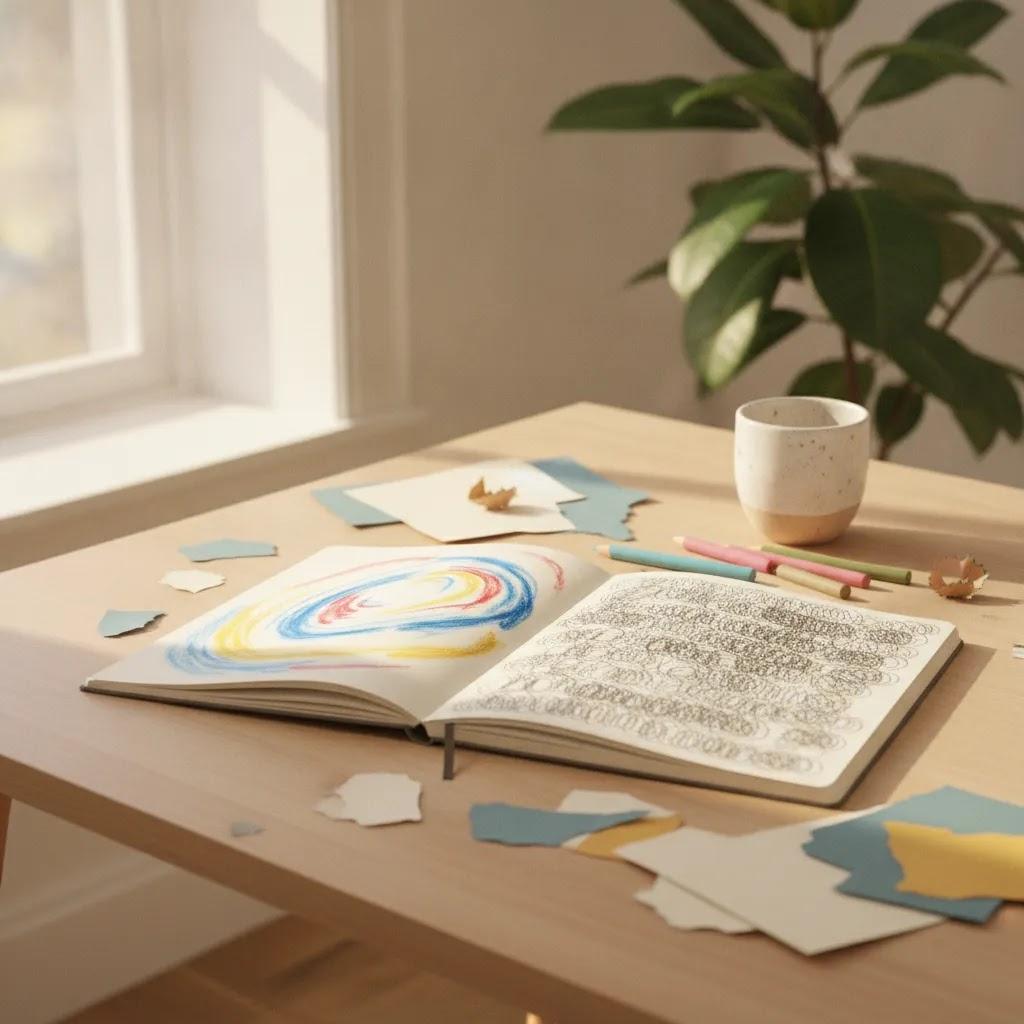
Repetitive forms such as circles, grids, borders, and slow mark-making may help reduce mental scatter. These techniques can feel especially useful for people who become more stressed by complete creative freedom. Pattern-based work gives the mind a place to settle.
This is one reason readers often explore mandala art therapy benefits. Circular formats can create visual containment, though they are not automatically calming for everyone.
2. Safe-place imagery
You create an image of a place, room, container, or scene that feels steady enough to return to. The emphasis is sensory. What colors belong there? What textures? What distance from the outside world feels right? This may support grounding and can be revisited when anxiety rises.
3. Worry mapping
This method turns anxious thoughts into shapes, lines, symbols, or zones on a page. You might draw where pressure sits in the body, which worries feel loudest, and which are more background noise. Once mapped, those worries can be sorted, resized, or reframed.
4. Before-and-after images
You draw one image that represents your current anxious state and another that represents a slightly calmer one. The goal is not dramatic change. It is noticing what shifts. Maybe the lines soften. Maybe colors warm. Maybe the page gets more space. This helps make regulation visible.
5. Collage for overwhelmed thinking
Collage can help people who freeze in front of a blank page. Selecting, arranging, and grouping images creates distance from direct self-disclosure while still revealing patterns. For anxiety, collage may be useful when thoughts are fragmented or words feel inaccessible.
6. Scribble-to-form work
You begin with unplanned marks and then look for shapes, figures, or meanings inside them. This may support nervous system discharge followed by reflection. It can be especially helpful when anxiety feels too activated for precise drawing at the start.
7. Containment exercises
You draw a box, vessel, envelope, room, or boundary line and place worries inside it. This does not erase fear, but it may give your mind a clearer sense of where the fear belongs. For some people, that alone reduces overwhelm.
What Evidence Says About Art Therapy for Anxiety
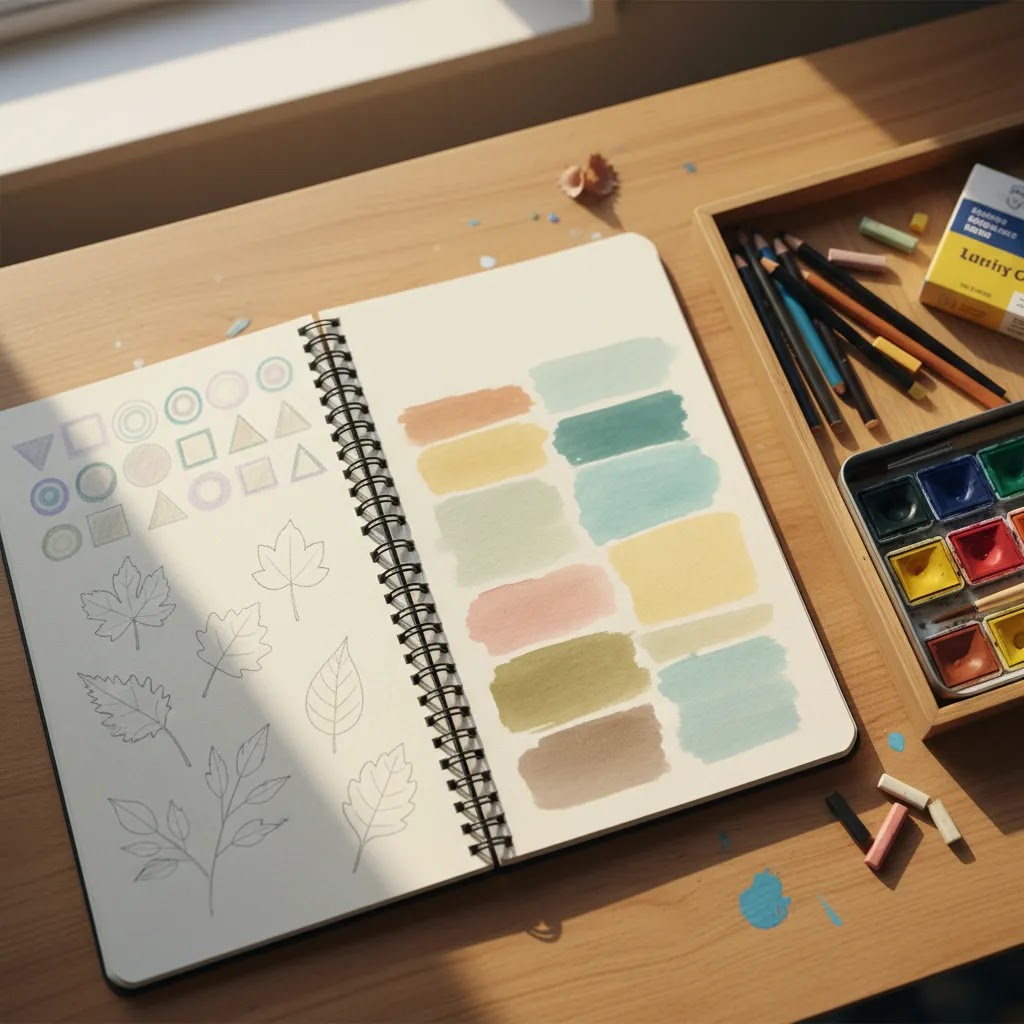
The evidence for art therapy and anxiety is promising but mixed in quality. Research across hospitals, schools, trauma settings, oncology care, and community mental health programs often reports reductions in anxiety scores or improvements in emotional regulation after art-based interventions. Still, study size, methods, and definitions vary.
Where findings are strongest
- Short-term anxiety reduction during stressful periods
- Improved emotional expression in people who struggle with verbal processing
- Better engagement in care for children, teens, and some highly avoidant adults
- Supportive benefit when paired with other forms of counseling or treatment
Why results vary
Several factors may shape outcomes:
- Whether the work is guided or self-directed
- The person’s comfort with sensory materials and ambiguity
- Whether anxiety is situational, chronic, trauma-related, or linked with other conditions
- The number and frequency of sessions
- The training of the facilitator
Clinical literature tends to support a moderate, careful claim: art therapy may help reduce anxiety for many people, especially by improving regulation, expression, and tolerable reflection. However, it is less accurate to say it “treats” anxiety on its own in every setting.
For readers seeking a softer companion resource between sessions, DailyLemons can fit as a low-pressure place to explore emotions visually and reflectively. If you want to keep reading around anxiety, the Anxiety, Stress & Emotional Wellness hub is a useful next stop. If your anxiety is closely tied to body tension, shutdown, or activation, body-based support topics may also matter alongside creative work.
What a Session or Practice Can Look Like
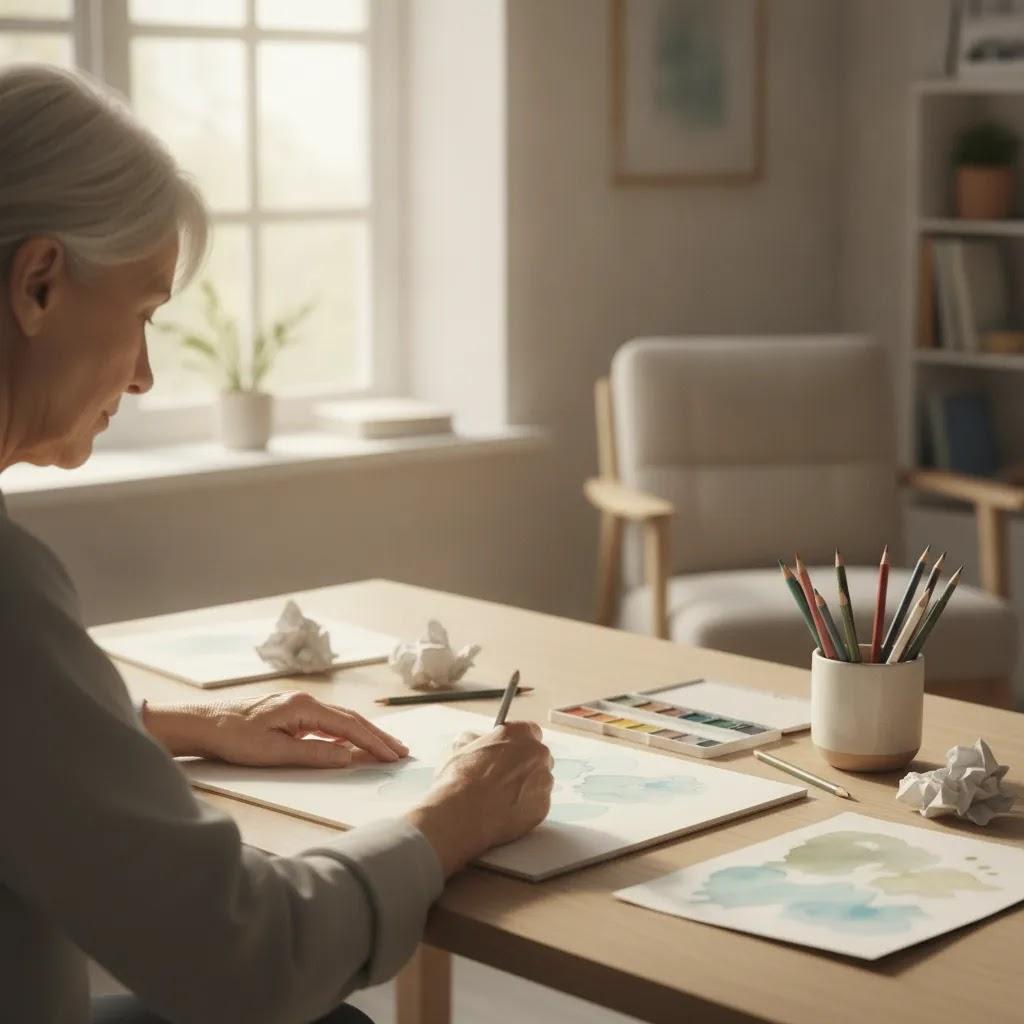
An anxiety-focused art therapy session often begins with a check-in about energy, stress, and safety. Then comes a prompt. It may be very open, such as “show what worry looks like today,” or very structured, such as “use three colors and one repeated shape to map how your body feels.”
Art therapy for anxiety: a typical flow
- Brief grounding or orientation
- Choice of materials, often based on current activation level
- Art-making period
- Reflection on images, symbols, and sensations
- Closing step focused on settling before leaving
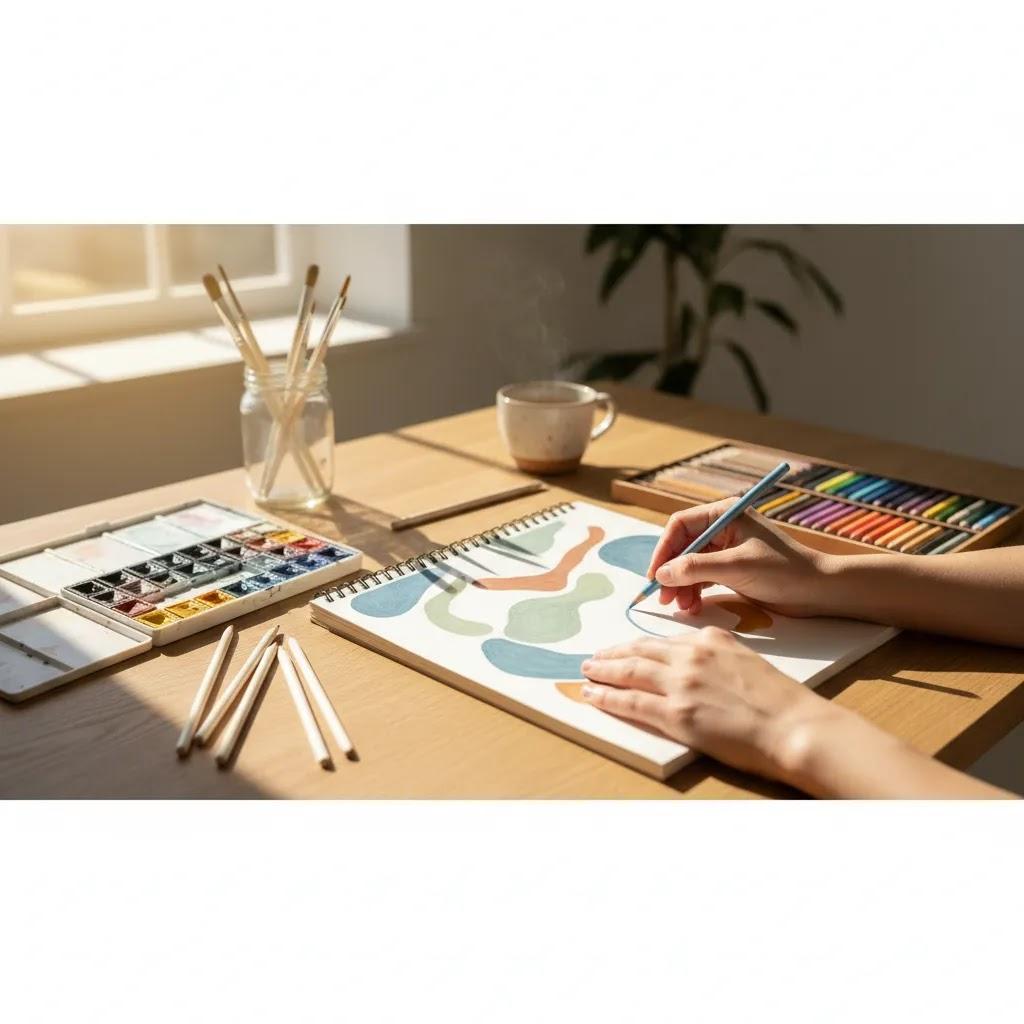
Material choice matters more than many beginners expect. Highly fluid materials may feel freeing for one person and destabilizing for another. Fine-line drawing can feel containing for some and perfectionistic for others. Good practice adapts rather than assuming one medium suits everyone.
At home, a simpler version can still be meaningful. You might set a timer for 10 minutes, choose one prompt, and finish with two reflective questions: “What feels different now?” and “What seems clearer on the page than it did in my head?”
If you are comparing regional service options, art therapy singapore may help you think about how setting, credentials, and service style affect the experience.
Quick Grounding Add-On: The 3-3-3 Anxiety Rule (Adapted to Art-Making)
If you want a quick, repeatable way to settle before you start making art, or to close a session so you do not leave feeling raw, the 3-3-3 rule is one simple grounding tool many people use. It is not an art therapy technique by itself. Think of it as a small orientation practice you can place around art-making.
What the 3-3-3 rule is
The basic idea is to bring attention back to the present through three small anchors. A common version is:
- Name 3 things you can see
- Name 3 sounds you can hear
- Move 3 parts of your body
This can be useful when your attention is pulled into future-tripping, scanning, or mental images that feel louder than what is actually happening around you.
A simple way to pair it with art-making
Consider this as a 2 to 5 minute “bookend” you can use before a prompt, after a prompt, or both.
- Step 1 (3 things you see): Look around and name them. Then make 3 small marks on the page that match those objects. They can be dots, lines, or tiny shapes.
- Step 2 (3 sounds you hear): Name them. Then choose 3 different mark types for them, such as a wavy line for a fan, short dashes for typing, or a soft smudge for distant traffic.
- Step 3 (move 3 body points): For example, roll your shoulders, wiggle toes, open and close hands. Then pick 3 colors and make a quick “3-color map” of where your body feels most present right now.
You do not have to analyze what you made. Instead, the point is to give your nervous system a clear signal: I am here, in this room, in this body, with edges and choices.
Important cautions
Grounding is usually gentle, but it does not feel good for everyone. Some people, especially those with trauma-linked anxiety or dissociation, may feel more distressed when attention turns toward the body or the immediate environment. If a grounding exercise increases distress, you can pause, switch to a different settling strategy, or seek guidance from a qualified professional. In higher-risk moments, it may be more appropriate to reach out for professional support than to try to self-manage with exercises alone.
Pros and Cons
Strengths
- May help people express anxiety when words feel blocked, rushed, or too exposed.
- Can support grounding through sensory structure, repetition, and visual containment.
- Often feels gentler than purely verbal exploration for children, teens, and some overwhelmed adults.
- May reveal patterns, triggers, and internal imagery that are easy to miss in ordinary conversation.
- Can be adapted across ages, from child-centered play-based work to adult reflective practice.
- Works well as part of a broader support plan rather than only as a stand-alone method.
Considerations
- Evidence quality is uneven, so outcomes may vary widely by method, provider, and setting.
- Some people feel stressed by open-ended art tasks or by fear of “doing it wrong.”
- Self-guided art activities may soothe in the moment but may not address deeper anxiety drivers on their own.
- Not every facilitator offering creative activities has formal art therapy training or mental health licensure.
Who Art Therapy for Anxiety May Fit Best

Art therapy for anxiety may be a strong fit if you process visually, feel emotionally flooded by too much talking, or need a gentler pace than standard verbal reflection allows. It may also help if you tend to understand feelings better once they take shape outside of you.
This approach can be especially useful for children, teens, neurodivergent individuals, and adults who feel self-conscious in direct emotional conversations. It may be less comfortable for people who strongly dislike ambiguity, sensory materials, or reflective creative tasks. In those cases, highly structured prompts usually work better than open-ended art invitations. If teens are part of the picture, this guide on art therapy for teens may offer a helpful next layer.
How to Choose an Art Therapy for Anxiety Approach
If you are trying to find the best art therapy for anxiety, the right question is usually not “Which exercise is best?” Instead, ask: “Which kind of support fits my level of overwhelm, my comfort with materials, and the depth of help I actually need?”
1. Match the method to the type of anxiety
Fast, agitated anxiety may respond better to repetitive, containing tasks. Heavy, shut-down anxiety may need gentler activation through collage, image selection, or simple color work. If anxiety is tied to traumatic experiences, slower pacing and more attention to safety are essential.
2. Look at structure level
Beginners often do better with prompts that limit choices. Too much freedom can increase pressure. A good anxiety-focused approach often offers boundaries, time limits, and one clear goal.
3. Check credentials and scope
If you want formal therapy, confirm that the provider’s credentials fit local laws and professional standards. In the United States, readers often look to bodies such as the American Art Therapy Association for professional information and guidance. For general wellness tools or reflective platforms, be clear about whether the offering is educational support or clinical care.
4. Notice how the approach handles safety
Good anxiety-focused practice does not push intense expression without closure. It includes settling, containment, or grounding at the end. This matters because creative work can open emotional material that needs gentle handling.
5. Choose support that respects pace
If you want something low-pressure between sessions or while you are exploring options, DailyLemons can be one gentle place to start. Its reflective, non-clinical style may feel more approachable if traditional journaling or verbal self-expression has felt hard. You can also browse the broader Art Therapy Fundamentals category to compare related topics at your own pace. The aim is not to force insight. It is to create enough safety and structure for insight to appear.
Common Mistakes and Misunderstandings
One common mistake is assuming any calming art activity is the same as art therapy. Relaxing creative time can still be valuable, but formal art therapy usually includes a therapeutic intention, thoughtful pacing, and reflection.
Another mistake is choosing prompts that are too open when anxiety is already high. “Draw anything you feel” sounds simple, but for some people it can make pressure worse. More structure often helps.
A third misunderstanding is expecting immediate emotional relief every time. Some sessions may feel clarifying rather than soothing. You may notice what anxiety looks like before you notice it easing.
People also sometimes overlook context. If anxious distress is severe, persistent, or linked with panic, self-harm risk, trauma, or major life impairment, art-based support alone may not be enough. In that case, it may help to combine creative work with licensed professional care.
Where to Go Next
If you want to keep exploring this topic gently, a few next reads may help you narrow the fit.
- For the broader hub, revisit Art Therapy Fundamentals.
- For adult-specific patterns and uses, read benefits of art therapy for adults.
- For child-focused applications, see benefits of art therapy for children.
- For structured circular designs, explore mandala art therapy benefits.
You can also browse related emotional support topics through Anxiety, Stress & Emotional Wellness. If you are not ready for anything formal, even a small, structured creative check-in can be a reasonable first step.
Frequently Asked Questions
What is art therapy for anxiety in simple terms?
It is a guided use of drawing, collage, color, or other visual expression to help you notice, express, and regulate anxious feelings. The focus is less on making good art and more on creating enough structure for worry, tension, and emotional patterns to become easier to see and work with.
How does art therapy help anxiety if I am not artistic?
Art therapy does not depend on artistic skill. Many anxiety-focused exercises use simple shapes, colors, repeated marks, or image selection. What matters is whether the activity helps you slow down, externalize what you feel, and reflect with a little more distance. Being “good at art” is not the goal.
Which art therapy techniques are best for anxiety beginners?
Beginners often do best with structured prompts such as pattern work, mandala coloring, safe-place imagery, or worry mapping. These methods reduce pressure by giving you boundaries. Open-ended prompts can still be useful, but they may feel too exposing if anxiety is already running high.
Can I try art therapy for anxiety at home?
Yes, many people try simple art-based practices at home, especially for reflection and calming. A short, structured exercise with a clear start and end is often safest for beginners. Still, home practice is not the same as working with a qualified therapist, especially if anxiety feels intense or complex.
How long does it take to notice benefits?
Some people feel a small sense of relief during a single session, especially from repetitive or grounding tasks. Others notice benefits more gradually, such as better awareness of triggers or easier emotional expression over several sessions. Results vary based on the method, the level of distress, and the support around it.
Is coloring the same as art therapy for anxiety?
Not exactly. Coloring can be soothing and may support relaxation, but art therapy usually includes a therapeutic intention, thoughtful prompt design, and reflection on meaning or emotional process. Coloring may be one tool within art therapy, though by itself it is usually a simpler self-care activity.
Does art therapy work better for adults or children with anxiety?
It may help both, but the form often changes by age and developmental stage. Children may respond well because visual expression can feel more natural than direct explanation. Adults may benefit from insight, pattern recognition, and emotional distance. Fit depends more on the person and the setting than on age alone.
What should I look for in an art therapist for anxiety?
Look for training that fits local professional standards, clear communication about scope, and an approach that feels paced rather than pushy. Ask how they handle grounding, emotional safety, and closure. For anxiety, structured prompts and a calm, collaborative style often matter as much as creative expertise.
How does art therapy help with anxiety?
Art therapy may help with anxiety by giving worry a visible form, slowing the pace of attention, and adding sensory structure that can feel regulating. In guided sessions, the therapist can also help you choose prompts that match your current state, reflect without over-interpreting, and end with grounding so you leave feeling more settled rather than more open.
What is the 3-3-3 anxiety rule?
It is a simple grounding exercise that brings your attention back to the present. A common version is naming 3 things you see, 3 sounds you hear, and moving 3 parts of your body. Some people use it before or after art-making to help start from a steadier place or to close a practice gently.
Which is better, EMDR or art?
They are different tools for different needs, and “better” depends on your situation, preferences, and the kind of support you have. EMDR is a structured therapy approach that is typically used with a trained, licensed clinician and may be recommended for specific kinds of trauma-related distress. Art therapy can be used for anxiety regulation, expression, and reflective processing, and it can also be adapted for people who struggle with purely verbal work. If anxiety is trauma-linked or severe, it is usually worth discussing options with a qualified professional so pacing and safety are handled carefully.
What is the 3-3-3 rule for anxiety children?
For kids, it often helps to keep the same idea but make it more concrete and playful. You might ask them to name 3 things they can see, 3 things they can hear, and do 3 small movements, such as “wiggle fingers, stomp feet, roll shoulders.” Then they can choose 3 colors and draw 3 simple shapes that match how their body feels now. If a child becomes more distressed when focusing inward, pause and consider getting guidance from a qualified professional.
Are there situations where art therapy may not be enough?
Yes. If anxiety is severe, persistent, linked with panic, trauma, self-harm risk, or major difficulty functioning, art therapy may need to be part of a larger care plan rather than the only support. In those situations, licensed mental health care or medical evaluation may also be appropriate.
Key Takeaways
- Art therapy for anxiety may help by slowing thought spirals, externalizing worry, and creating sensory structure.
- Highly structured techniques often work better for anxious beginners than completely open-ended prompts.
- Evidence is encouraging but uneven, so outcomes depend on method, context, and provider skill.
- This approach may be especially helpful for people who struggle to explain feelings verbally.
- Art-based support can be meaningful on its own, but severe anxiety may call for additional professional care.
Conclusion
Art therapy can offer something anxiety often interrupts: enough space to see what is happening without having to explain it perfectly first. For some people, that space comes through pattern, color, or collage. For others, it comes through a quiet prompt that makes worry feel less tangled.
The evidence suggests real potential, especially for regulation and emotional expression. Still, the best fit depends on structure, pacing, and the level of support you need. If you want to keep exploring gently, DailyLemons offers a calm place to read, reflect, and compare related art-based emotional wellness topics without pressure. You can begin with one small question, one page, or one image. That is often enough to start noticing what your anxiety has been trying to say.
This article is for educational purposes only and does not provide medical advice, diagnosis, or treatment. Art therapy and art-based wellness practices may support emotional well-being, but outcomes vary by person, provider, and setting. If anxiety feels severe, persistent, or connected to safety concerns, panic, trauma, or difficulty functioning, seek support from a qualified licensed professional or appropriate emergency resource right away. For formal art therapy, check current local credentialing and regulatory standards before beginning.