Art Therapy for Depression (2026 Guide)
If sadness has made words feel flat, heavy, or far away, a visual approach may feel more reachable. Art therapy for depression is not about making beautiful work. It is a structured way to explore emotion, energy, thought patterns, and self-expression through images, color, shape, and creative process. This guide is for beginners who want a clear starting point, caregivers who want to understand what this support can look like, and practitioners looking for a grounded overview of common protocols and likely results. You will learn where the evidence is strongest, what a session may include, how progress is usually tracked, and where art therapy fits beside other kinds of care. If you want broader context first, our Art Therapy Fundamentals page is a helpful place to begin.
What art therapy for depression means
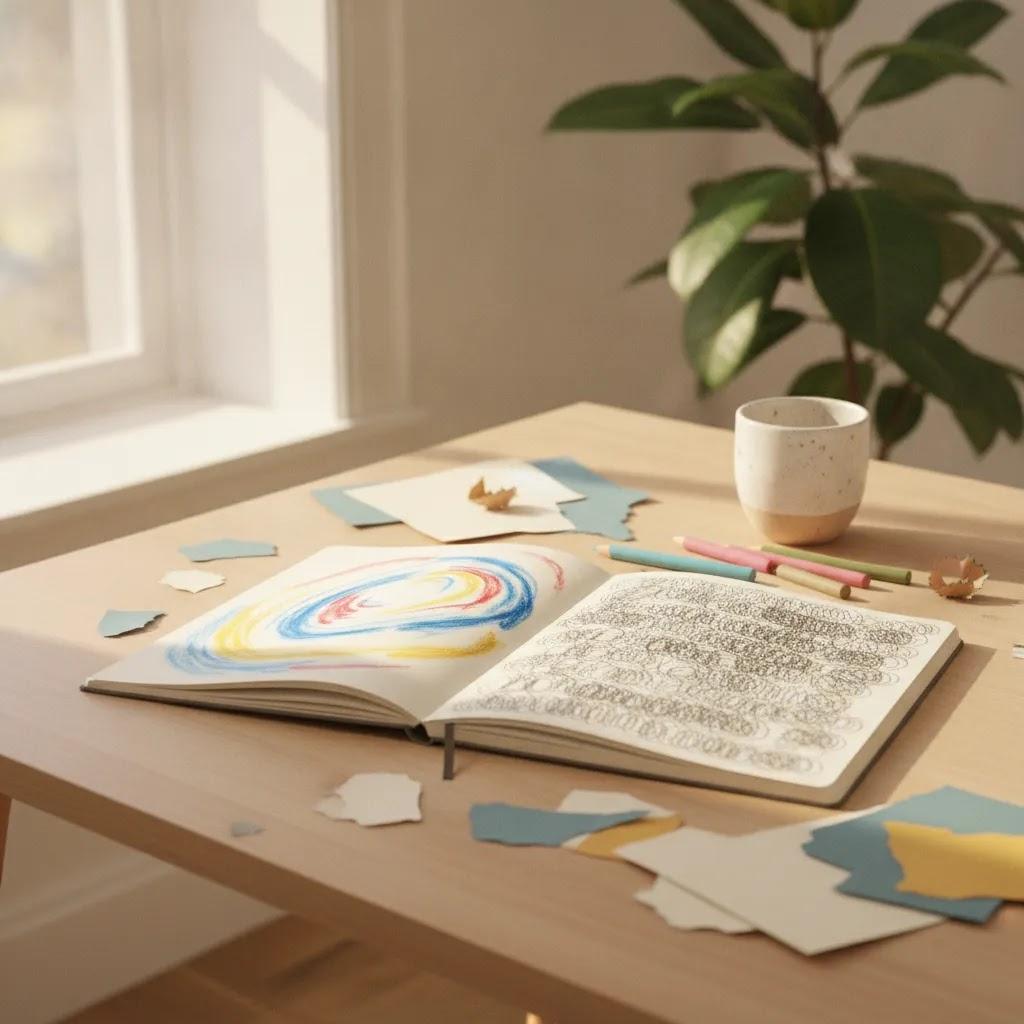
Art therapy for depression usually refers to guided creative work used to support mood, emotional expression, self-understanding, and daily functioning. The focus is not artistic talent. Instead, it is about what happens while you make, notice, reflect, and sometimes share the image. For some people, a page of repeated marks says more than a long explanation. For others, the value comes from structure, rhythm, and a small sense of movement during a low-energy period.
Depressive episodes can affect motivation, concentration, sleep, appetite, self-worth, and the ability to feel interest or pleasure. A creative process may help by making inner experience more visible and more tolerable to examine. It can also offer a nonverbal route when talking feels exhausting. In practice, protocols often combine image-making with reflection, mood check-ins, themes, and simple routines.
The current evidence base suggests art therapy may help reduce depressive symptoms for some people, especially when it is delivered consistently, matched to the person’s needs, and integrated with wider support where needed. Results are not uniform. Study quality varies. Some people experience meaningful relief, while others find it helpful mainly for expression rather than symptom change.
This topic also overlaps with other emotional states. Depression and anxiety often travel together, which is why related reading such as art therapy for anxiety can add useful context. If you want a broader category view, you can also explore Anxiety, Stress & Emotional Wellness. You can also read our art therapy for anxiety guide for another beginner-friendly overview.
Art therapy for depression vs. vision boards
Vision boards are often mentioned alongside art therapy because both use images, color, and selection. Still, they are not the same thing, and mixing them up can create the wrong expectations.
A vision board is typically a visual collection of pictures, words, or symbols meant to represent goals, hopes, values, or a desired direction. People often build them from magazine cutouts, printed images, or digital layouts. Used gently, it can be a way to remember what matters when motivation is low.
Art therapy is a therapist-led process (or a structured program run by a trained provider) where the image-making is used for emotional expression, meaning-making, and containment. The focus is not only what you choose to include, but also how it feels to create it, what comes up while you work, and how you reflect afterward. In many sessions, the most useful image is not a dream outcome at all. It might be a “this is where I am today” image that helps someone feel more honest and less alone.
Where a vision board may help during depression
Consider this: depression can narrow time. It can make the future feel blank, unreachable, or irrelevant. In that context, a vision board may support:
- Values clarity, meaning reminders of what you care about underneath the fog
- Future orientation, meaning a gentle sense that change is possible even if it is slow
- Motivation cues, meaning small prompts that help you take one tiny action
Where it can backfire
The reality is that some vision board styles can increase pressure. If the board becomes a scoreboard for “how I should be,” it can feed self-criticism, comparison, or forced positivity. That risk tends to be higher when someone feels hopeless or when the images focus on big achievement outcomes without any sense of support, rest, or real-life constraints.
How to try it more safely
From a practical standpoint, if you are using images while depressed, it often helps to shift the question from “What should I achieve?” to “What would support me?” Two lower-pressure options are:
- A needs board: images for rest, nourishment, steadiness, comfort, nature, quiet, music, warmth, and anything that helps you get through a day
- A support board: images for the kinds of help that make things more livable, such as routines, people you trust, safe places, boundaries, and small daily stabilizers
If a board starts to make you feel worse, that is useful information, not a failure. It may be a sign to move toward more containing, present-focused art tasks, or to do this kind of work with guidance rather than alone.
What you will learn in this art therapy for depression guide
- What “art therapy for depression” usually includes and what it does not include
- Which protocols appear most often in clinical and community settings
- How therapists may adapt art tasks for low energy, shutdown, or emotional numbness
- What kinds of outcomes research tends to measure
- Why frequency, safety, and pacing matter as much as the activity itself
- How beginner-friendly techniques differ from deeper trauma-focused work
- What signs suggest a person may need more support than self-guided creative practice
- How to tell whether a provider, program, or digital support option seems thoughtful and safe
Which art therapy for depression protocols are used most often
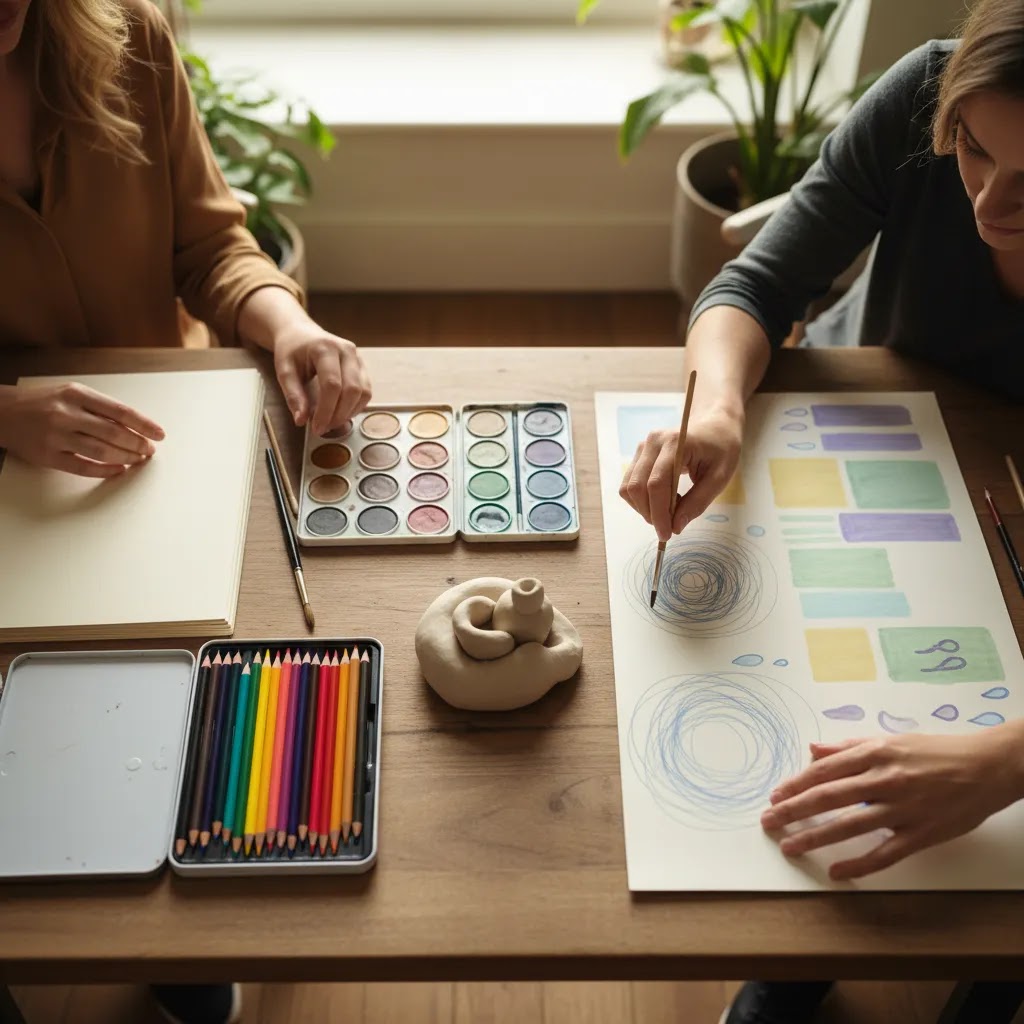
There is no single universal protocol. Most evidence-informed programs use a sequence rather than isolated prompts. That sequence often begins with emotional safety and engagement, moves into expression and reflection, and later works toward meaning-making, coping, and reconnection.
1. Supportive expressive art therapy for depression protocols
These are often the gentlest starting point. Sessions may include mood color mapping, image-based check-ins, drawing “how today feels,” collage from preselected materials, or visual journaling. The goal is often to increase expression, reduce emotional bottling, and create distance from harsh internal thoughts by placing them outside the self on paper.
2. Behavioral activation through art-making
Depression often shrinks activity and initiative. Some art therapy plans borrow from behavioral activation principles by emphasizing small, repeatable creative actions. That may mean a timed five-minute image, a weekly series, or a ritual like filling one page each morning with shapes, lines, or color. The point is not productivity. The point is reintroducing movement, choice, and gentle routine.
3. Cognitive and narrative art therapy for depression approaches
These protocols help people notice recurring images tied to hopelessness, shame, isolation, or rigid self-beliefs. A therapist may invite a “before and after” image, a self-portrait with symbols, or a comic-strip sequence that shows a difficult thought pattern. Reflection then explores what changed, what stayed stuck, and whether another version of the story feels possible.
4. Mindfulness-informed image work
Some sessions use art-making to anchor attention in the present through texture, repetition, breath-linked mark making, or careful observation. This can be especially useful for people who find silent meditation too abstract or too difficult. Circular designs and contained patterns are common here, which connects naturally with mandala art therapy benefits. For some people, the repeating structure feels steadier than an open blank page.
5. Group-based art therapy for depression protocols
Art therapy for depression is often offered in groups in hospitals, clinics, schools, and community programs. Group protocols may include shared themes, image response, witnessing exercises, and collaborative art. Benefits can include reduced isolation and the relief of being understood without needing perfect words. Still, group work is not ideal for everyone, especially if comparison or social pressure is high.
6. Developmentally adapted protocols
Children, teens, adults, and older adults often need different pacing and different materials. Younger clients may use more sensory materials and metaphor. Adults may do more reflective integration. If your question involves families or younger people, the page on benefits of art therapy for children may help clarify age-related differences. You may also find our art therapy for teens guide helpful when adolescent needs are part of the picture.
What the strongest art therapy for depression protocols share
- A predictable session structure
- Simple materials that do not overwhelm
- Clear emotional containment before and after deeper work
- Tasks matched to energy level and attention span
- Time for reflection, not just image-making
- Adjustment if sadness shifts into agitation, numbness, or hopelessness
Types of art therapy for depression mediums
Protocols matter, but the medium matters too. The same prompt can feel calming in one material and unbearable in another. Depression is not one uniform experience, so a “good” choice is usually the one that matches your current energy, attention, and emotional access.
Common mediums you may see in art therapy
Here are a few of the most common options, plus what they may be best for when depression shows up in different ways:
- Drawing (pencil, pen, markers): Often the lowest setup, easiest to repeat, and easiest to keep contained. It can work well when motivation is low or when you want something simple that still captures mood and thought patterns.
- Painting (watercolor, acrylic, gouache): Can be more sensory and “felt,” which may help when emotions feel numb. Watercolor often encourages softer movement and acceptance of unpredictability, while acrylic can feel more decisive and covering.
- Collage: Useful when you cannot generate imagery from scratch or when self-criticism is loud. Selecting and arranging can feel safer than “making,” and it reduces performance pressure because you are working with existing images.
- Clay or other tactile materials: Helpful when you feel agitated, restless, or stuck in looping thoughts. Repetitive kneading or shaping can give the body something steady to do, which can make emotional regulation more reachable.
- Mixed media: Can help with complexity, meaning you can layer marks, paper, and text as different “voices” or parts. It can also be overwhelming if you are already scattered, so it is often best introduced slowly.
- Digital art: Can be accessible, clean, and easy to undo, which some people find less threatening. It can also become a perfection loop for others, so the fit depends on how you relate to editing and control.
Matching the medium to common depression patterns
From a practical standpoint, a helpful way to choose is to start with the depression pattern you are dealing with most right now, then pick a medium that reduces friction.
- If you have low motivation or low energy: choose low-setup tools. A single pen and paper, a small marker set, or a mini sketchbook can lower the barrier to starting. Timed tasks, like five minutes of marks or one small square of color, often feel more doable than a big page.
- If you feel agitated, tense, or stuck in loops: choose more tactile, repetitive materials. Clay, simple pattern-making, or brush strokes repeated in rows can give your attention somewhere to land without needing “meaning” right away.
- If you feel shut down or numb: choose higher structure. Contained shapes, templates, coloring, or working inside a clear boundary can be easier than a blank page. Structure can act like a gentle handrail when feeling is far away.
- If self-criticism is the main barrier: choose collage, image prompts, or “no-skill” materials. Cutting, arranging, and responding to images can keep you out of the performance mindset. Prompts that emphasize noticing rather than creating, like “find an image that matches your energy,” often soften the inner critic.
What many people overlook
What many people overlook is that the “best art” is often the most doable, not the most expressive. During depression, the win is frequently consistency and safety. A tiny, repeatable practice can be more supportive than an ambitious project that never gets started.
A low-friction materials list to start gently
If you want the simplest possible setup, a basic starter kit could be:
- A small sketchbook or a stack of plain printer paper
- One black pen or pencil
- Two to four markers or colored pencils (a small set is often less overwhelming)
- Scissors and a glue stick if collage feels more approachable
If you are working with a therapist, they may recommend different materials based on safety, sensory preferences, and what tends to bring you steadiness rather than activation.
What art therapy for depression results research tends to show
The most careful answer is that art therapy may help some people with depression, but effects vary by setting, duration, therapist skill, and what outcomes are being measured. Research often looks at changes in mood scales, self-esteem, emotional expression, quality of life, social connection, and treatment engagement.
Where findings are most promising
Positive results appear most often in structured programs with repeated sessions rather than one-off activities. Studies also tend to report better outcomes when art therapy is used as part of a broader support plan instead of the only form of care in more severe cases. Some participants show reduced low mood, less withdrawal, and improved ability to identify and communicate feelings.
What “results” can mean in real life
Results are not always dramatic. You may see small but meaningful signs first. A person who could not describe anything may begin choosing colors with intention. Someone withdrawn may stay in the room longer, initiate a theme, or talk a little more after drawing. A teen may stop saying “I don’t know” and point to an image instead. Those shifts matter, even if they do not erase depression on their own.
What the evidence does not prove
It does not prove that art therapy works equally well for every form or severity of depression. It does not prove that any one exercise is best. It also does not show that self-guided art on its own is enough for a major depressive episode in every case. The quality of studies is mixed, sample sizes are often modest, and methods are not always standardized.
How this compares with adult-focused outcomes more broadly
Across adult populations, the gains often extend beyond mood scores. People may report better emotional access, less internal pressure, and more willingness to engage in support. That broader picture is explored further in our piece on benefits of art therapy for adults. For another perspective, you can also read benefits of art therapy for adults. For depression specifically, those broader changes can matter because feeling able to engage is often part of getting unstuck.
Evidence and outcomes in art therapy for depression
Research summaries can make it sound like the only thing that matters is whether someone “feels better.” Mood is important, but it is not the only outcome researchers track, and it is not the only kind of progress a person may notice first.
Outcomes studies often measure beyond symptom relief
Depending on the setting, studies may look at changes in areas like:
- Daily functioning, such as returning to routines, self-care, school or work participation, and follow-through
- Emotional regulation, such as being able to settle after distress, tolerate feeling, or recover more steadily
- Self-esteem and self-compassion, including reductions in harsh self-judgment
- Social connection, especially in groups, where reduced isolation can be a key target
- Mindfulness and attention, meaning the ability to stay with an experience without immediate avoidance
- Treatment engagement, such as attendance, willingness to participate, and readiness to use other supports
Now, when it comes to depression, these “side outcomes” can matter because they often create the conditions for mood to shift over time. If you are more engaged, less avoidant, and slightly more able to name what is happening inside, you may have more room to receive help.
What “evidence-based” typically means in art therapy for depression
“Evidence-based” in this space usually means there is a body of studies suggesting benefit, often small to moderate in size, with varied methods. Some programs are individual, some are group-based, and some are delivered in medical settings where people have multiple overlapping stressors.
It can also be hard to standardize art therapy in the way you would standardize a single medication or a scripted manual. Therapists often adapt the task, the medium, the pacing, and the reflection based on energy level, attention, and emotional safety. That flexibility is often useful in practice, but it makes research cleaner in some ways and messier in others.
Realistic expectations: concrete signs of progress you can actually track
Think of it this way: progress with depression is often visible in what becomes slightly more possible, not in a sudden “fixed” feeling. Examples of measurable change may include:
- More consistent attendance and less last-minute avoidance
- Shorter freeze periods, meaning you can start an activity with less effort than before
- Better emotional vocabulary through images, like being able to point to shapes, colors, or symbols and say “this is the part that is heavy”
- Improved coping between sessions, such as using a contained drawing or repetitive marks to settle on hard days
- More flexible self-talk, like noticing self-criticism without immediately believing it
These shifts may sound small on paper, but they can be meaningful steps toward steadier functioning, and they can help you decide whether an approach is genuinely supportive for you.
What art therapy for depression sessions can look like
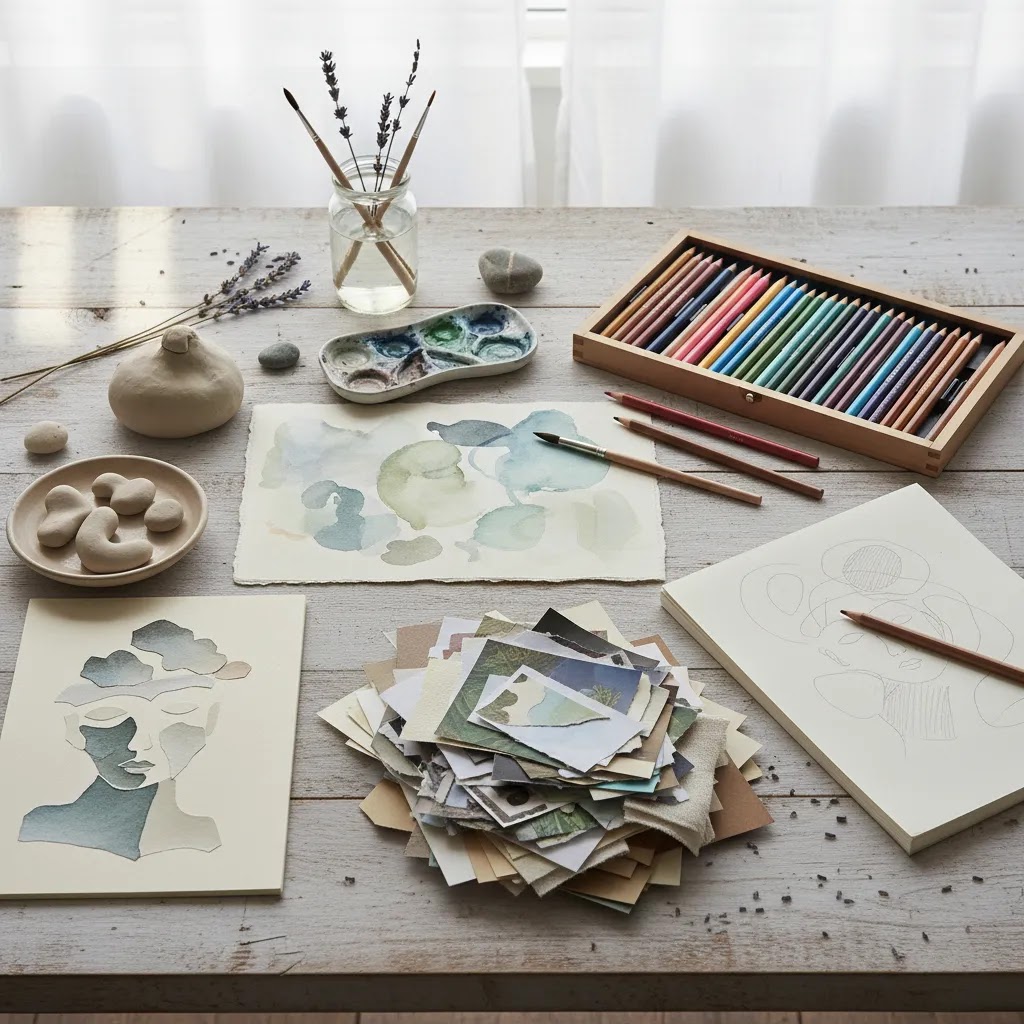
A thoughtful course of art therapy for depression usually has a shape. It does not throw someone straight into intense material and hope for the best. Instead, it builds tolerance, routine, and trust over time.
Early phase: contact and safety
The first sessions often focus on comfort with materials, low-pressure themes, and basic check-ins. Common tasks include color scales, drawing energy levels, choosing images that match mood, or making a visual “container” for feelings. The aim is to lower pressure and learn what kinds of prompts feel workable.
Middle phase: expression and pattern recognition
Once some stability is present, sessions may look more directly at loss, emptiness, anger turned inward, self-criticism, or disconnection. A therapist might use collage for identity themes, series work to track mood across time, or paired images such as “what people see” and “what it feels like inside.” Reflection matters here because the protocol is not only expressive. It is also observational.
Later phase: coping, meaning, and continuation
Later sessions often support daily use, relapse awareness, and gentler self-relationship. This may include coping cards with images, a visual plan for hard days, or a personal set of grounding art activities to use between sessions. For readers looking into in-person options, location-based directories such as art therapy singapore may help with the practical side of finding support in a specific region.
What self-guided practice can and cannot do
Self-guided art can support emotional release, routine, and reflection. It can be a very real source of comfort. Still, it may not be enough if depression is severe, persistent, or tied to risk of self-harm, inability to function, or strong hopelessness. In those situations, guided professional support is usually the safer path.
A gentle DailyLemons recommendation
If you are exploring creative emotional support and want a softer entry point, DailyLemons can sit alongside your learning rather than push you toward one fixed answer. You might start with the broader Art Therapy Fundamentals category to understand the basics, then follow related topics such as anxiety overlap or age-specific support. The tone is designed for people who do not always have easy words for what they feel. If professional care is already part of your life, a gentle digital check-in or image-based reflection practice may also be useful between sessions. You can explore at your own pace, and keep what feels supportive.
Pros and Cons
Strengths
- Can help people express low mood, numbness, grief, or shame when speaking feels too hard
- Often works well as a structured, low-pressure activity during periods of low motivation
- May increase self-awareness by making internal states visible through image, color, and metaphor
- Can be adapted for children, teens, adults, older adults, and many neurodivergent learners
- Often supports engagement with wider care by making reflection feel more approachable
- Can be practiced in individual, group, community, school, hospital, or digital formats
Considerations
- Research is promising but uneven, and not every study shows strong or lasting effects
- Self-guided art may feel supportive but may not be enough for severe or high-risk depressive episodes
- Some prompts can feel exposing, frustrating, or emotionally activating if pacing is poor
- Access to trained art therapists varies widely by region and cost
- People who dislike open-ended creative tasks may need more structure than some programs provide
Who art therapy for depression may suit best
Art therapy for depression may be a good fit if you feel emotionally blocked, tired of trying to explain yourself, or more comfortable with images than long conversations. It may also suit people who want gentle structure without a heavy performance feeling. Neurodivergent readers, teens, caregivers, and adults who shut down under direct verbal questioning often find the visual format easier to enter.
It may be less suitable as a stand-alone option if someone is in acute crisis, unable to stay safe, or so slowed down that even simple engagement is not possible without more intensive support. In those cases, art therapy may still help, but usually as part of a larger care plan.
How to choose safe art therapy for depression support
If you are comparing options, the most useful question is not “Which exercise is best?” It is “Which kind of support matches the person’s current capacity?” A thoughtful fit matters more than a trendy prompt list.
1. Look at the level of guidance
Low mood can make open-ended tasks feel impossible. Beginners often do better with clear prompts, limited materials, and predictable session flow. If a program sounds vague or overly interpretive, ask how it handles shutdown, fatigue, and difficulty starting.
2. Ask how progress is noticed
Helpful providers usually track more than one thing. They may notice attendance, engagement, emotional range, social connection, daily functioning, or self-reported mood over time. Progress in depression is often gradual. A provider who expects instant catharsis may not be a good fit.
3. Check whether the approach fits the person’s age and context
A child, a grieving adult, a burned-out parent, and an older adult in medical care may all need different materials and pacing. Developmental fit matters. So does context. School-based, clinic-based, private, and hospital-based programs often feel quite different.
4. Pay attention to safety and scope
If someone has suicidal thoughts, extreme hopelessness, major functional impairment, or possible psychosis, art therapy alone may be too narrow. Ask whether the provider coordinates with other licensed professionals when needed and what they do if risk rises. In the United States, relevant professional context may include standards from the American Art Therapy Association and state licensure or credentialing expectations where applicable.
5. Notice whether the process feels containing
Good support usually includes an opening, an art task, reflection, and some way of closing. That closing matters. It helps a person leave the session steadier than they entered. A strong program should be able to explain how it avoids leaving people emotionally raw without support.
Common art therapy for depression mistakes and unrealistic expectations
- Assuming artistic skill matters. It usually does not.
- Using emotionally intense prompts too early, especially during periods of fragility.
- Expecting one session or one worksheet to create a major shift.
- Treating self-guided art as a replacement for professional support in high-risk situations.
- Choosing too many materials, which can increase overwhelm instead of easing it.
- Interpreting every symbol too literally instead of asking what it means to the maker.
- Ignoring overlap with anxiety, trauma, grief, or burnout, which may shape how depression appears.
Where to go from here
If this topic feels relevant, you may want to keep your next step very small. You could start with a broader overview in the Art Therapy Fundamentals section, read about overlap patterns in art therapy for anxiety, or explore how age changes the approach through our pages on benefits of art therapy for children and benefits of art therapy for adults. If repetitive, contained image-making feels more approachable than open prompts, mandala art therapy benefits may be a useful next read.
Frequently Asked Questions
What is art therapy for depression in simple terms?
It is a guided creative approach that uses drawing, collage, painting, or other visual activities to help a person express and explore low mood. The goal is usually not to make good art. It is to create a safer way to notice feelings, patterns, and needs that may be hard to explain out loud.
Does art therapy really help depression?
It may help some people, especially in structured programs over time. Research suggests possible benefits for mood, emotional expression, and engagement, but results are mixed and not universal. It tends to work best as part of a thoughtful support plan rather than as a guaranteed answer for every depressive episode.
How long does it take to see results?
That depends on the person, the severity of the depression, session frequency, and the kind of support around it. Some people notice small changes early, such as easier expression or better emotional awareness. More measurable mood changes often take repeated sessions. Slow progress is still progress.
Can I do art therapy for depression by myself?
You can do art-based self-reflection on your own, and it may feel soothing or clarifying. Still, self-guided practice is not the same as therapy with a trained professional. If your depression feels severe, persistent, or unsafe, self-directed art should not be the only support you rely on.
What are the best art therapy techniques for depression beginners?
Beginners often do well with simple, contained tasks such as mood-color maps, collage from a small set of images, drawing energy levels, or repetitive pattern work. Techniques that reduce blank-page pressure usually feel easier at first. The best beginner exercise is usually the one that feels possible, not the most emotionally intense.
Is art therapy better for depression or anxiety?
It can be used for both, but the focus may differ. With depression, the work often centers on expression, activation, hopelessness, and reconnection. With anxiety, it may focus more on regulation, grounding, and externalizing worry. Many people experience both at once, so the approach is often blended and adjusted over time.
Do I need to be creative for art therapy to work?
No. Artistic experience is not usually the deciding factor. People who say “I’m not creative” often still benefit because the process is about noticing, making, and reflecting rather than performance. In fact, simple materials and basic marks can be more useful than polished art for emotional clarity.
What should I look for in an art therapist or program?
Look for clear structure, appropriate credentials, experience with depression, and a style that feels safe rather than pushy. It also helps if the provider can explain how they pace sessions, track progress, and respond if someone becomes overwhelmed or more at risk. A good fit often feels steady, not dramatic.
Can children or teens use art therapy for depression too?
Yes, though the approach usually changes by age and development. Younger people may need more sensory materials, simpler prompts, and more support with naming feelings. Family, school, or healthcare context may also shape the work. That is one reason age-adapted methods matter so much.
What if art-making makes me feel worse?
That can happen. Some images bring up strong feelings, frustration, or self-judgment. If that happens, it may help to shift to more structured, grounding activities or pause and seek guided support. Art therapy should not leave you repeatedly overwhelmed without a plan for settling and safety.
How does art therapy help with depression?
It can help by making internal experience more visible and workable. Instead of trying to explain everything in words, you can externalize mood, numbness, self-criticism, or hopelessness into shapes and images. That distance may make it easier to reflect without feeling swallowed by the feeling. It can also support routine and engagement, which matter during depression, and it may help some people strengthen regulation skills through repetition, structure, and containment.
What are 5 coping skills for depression?
People respond differently, but five coping skills that are commonly used in depression support are: scheduling one small daily activity (behavioral activation), breaking tasks into the smallest possible steps, using grounding through senses (sight, touch, sound), reaching out to one safe person for brief connection, and tracking mood and energy patterns to notice what helps. If depression includes safety concerns or thoughts of self-harm, coping skills should not replace professional and crisis support.
What type of art is best for mental health?
There is no single best type. The best fit is usually the medium that feels doable and emotionally containing for you. Many people benefit from low-pressure options like simple drawing, collage, or repetitive pattern work. Others prefer tactile materials like clay or softer movement like watercolor. If a medium tends to trigger perfectionism or overwhelm, a more structured or lower-stakes option may be a better starting point.
Which is better, EMDR or art?
They are different tools for different needs. EMDR is a structured therapy approach often used for distressing memories and strong emotional activation, and it is typically delivered by a specially trained licensed clinician. Art therapy uses creative process and reflection to support expression, regulation, and meaning-making, and it may be offered individually or in groups by a trained art therapist. Some people may use one, the other, or both as part of a broader plan. The better choice depends on your goals, your readiness for memory-focused work, your preference for verbal versus visual processing, and your current safety and stability.
Glossary
- Art therapy: A guided therapeutic use of creative process and visual expression.
- Behavioral activation: A method that encourages small, meaningful actions to reduce shutdown and inactivity.
- Containment: Techniques that help a person feel emotionally safer before ending a session.
- Externalization: Putting feelings or thoughts outside yourself in image, symbol, or object form.
- Reflective processing: Talking or thinking about what an image may show, evoke, or connect to.
- Protocol: A structured sequence or method used across sessions.
Key Takeaways
- Art therapy for depression usually works through structured creative expression, reflection, and gradual emotional access.
- Evidence is encouraging but mixed, with the best support seen in repeated, well-paced programs rather than one-off activities.
- Common protocols include supportive expressive work, behavioral activation, narrative tasks, mindfulness-informed image work, and group formats.
- Self-guided art may help, but severe depression or safety concerns usually call for broader professional support.
- Good support is usually simple, paced, age-appropriate, and emotionally containing.
Conclusion
Art therapy for depression offers something many people need during a low period: a way to approach feeling without forcing perfect language. Its value often lies in structure, expression, and the small return of movement when everything feels slowed down. The research does not support exaggerated promises, but it does suggest this approach may help with mood, reflection, and engagement for some people, especially when sessions are consistent and well matched to the person. If you want to keep exploring gently, DailyLemons has related resources across Art Therapy Fundamentals and emotional wellness topics. You do not have to sort everything out at once. One calm, clear next step is enough.
This article is for educational purposes only and does not provide medical advice, diagnosis, or emergency support. Art therapy may be a helpful part of care, but results vary by person, provider, and setting. If you or someone else may be at risk of harm, feels unable to stay safe, or is experiencing severe distress, contact local emergency services, a crisis resource, or a licensed qualified professional right away. If you are seeking professional art therapy, check current credentials, scope of practice, and local regulatory standards before beginning.